![Logo 1 Gold horiz [Converted]](https://lifestyleinvestor.com/wp-content/uploads/2019/08/Logo-1-Gold-horiz-Converted.png "Logo 1 Gold horiz [Converted]")
The playbook changed. And almost nobody realized it happened.
Ten years ago, if you were a successful startup, the goal was always the same: IPO. Go public. Make your investors rich. Ring the bell.
Today? Most successful companies are staying private forever.
And the people who figured out how to profit from that shift are making multiples of what they would have made waiting for IPOs.
What Actually Happened
The IPO market is broken right now. Companies are staying private longer, taking on more private capital, and delaying their exits by 5-10 years.
Uber was private for 9 years. Airbnb was private for 11. Stripe is still private and worth $95+ billion. OpenAI is still private.
The companies people actually want to own are avoiding the public markets entirely.
Which means if you’re waiting for IPO liquidity events to deploy capital, you’re waiting for something that’s increasingly not happening.
But there’s a problem: founders and investors still need liquidity before the exit. They can’t wait 10 years to see a return.
So a new market emerged. The secondary market.
The New Playbook
Secondary transactions are exactly what they sound like: the sale of already-issued shares before the company goes public.
Here’s how it works:
You invested in a company at Series A. It’s now Series D. You’ve been holding for 5 years. You’re making great returns, but you want some liquidity.
So you sell your shares to someone else — maybe a late-stage venture fund, maybe a secondary investor, maybe a large institution that wants exposure.
You get your liquidity. The buyer gets exposure to what looks like a Series C or D upside with a better risk profile than early-stage.
This used to be a fringe market. Today? It’s exploding.
The secondary market is now running in the trillions. And unlike the IPO market, which is hit-or-miss, the secondary market is available for literally every successful private company.
Why This Matters
If the IPO used to be your path to returning capital, secondaries are becoming a more reliable path.
Because you don’t have to wait for a public listing anymore. You can get liquidity whenever you want, as long as there’s buyer demand.
And there is buyer demand. The biggest institutions in the world are now active in secondaries. Blackstone. Goldman. Berkshire. They’re buying secondary shares of private companies because the risk-adjusted returns are better than anything in the public markets.
So if you’re an investor, the question becomes: how do I get access to secondaries?
Where This Gets Interesting
I’m involved with a venture fund right now that’s explicitly focused on the secondary market rather than early-stage. The returns have been remarkable.
Fund 1 did 50% gross IRR over about five years. 14 out of 14 investors got positive returns. We have exposure to 5 unicorns just through secondaries.
That’s not luck. That’s because the secondaries market is where the real upside is, and it’s way less crowded than early-stage venture.
Everyone wants to find the next Stripe as an early investor. But the data says you’re more likely to win in secondaries of companies that are already obviously valuable.
The Shift for You
If you’ve been waiting for the next big IPO pop, stop waiting.
If you think your venture exposure needs to be Series A and seed rounds, reconsider.
And if you’re sitting in the public markets thinking that’s your only alternative investment, understand that there’s a whole ecosystem of private company liquidity happening that the retail investor never sees.
The government is actually the largest buyer of secondaries in certain niches (defense tech, for example). That tells you something about where the real capital is flowing.
The IPO was the lottery. Secondaries are the compound fund.
Until next week,
Justin

Keep Learning
How Wealthy Families Use Whole Life Insurance as a Family Bank with Brock Fortner – EP 306
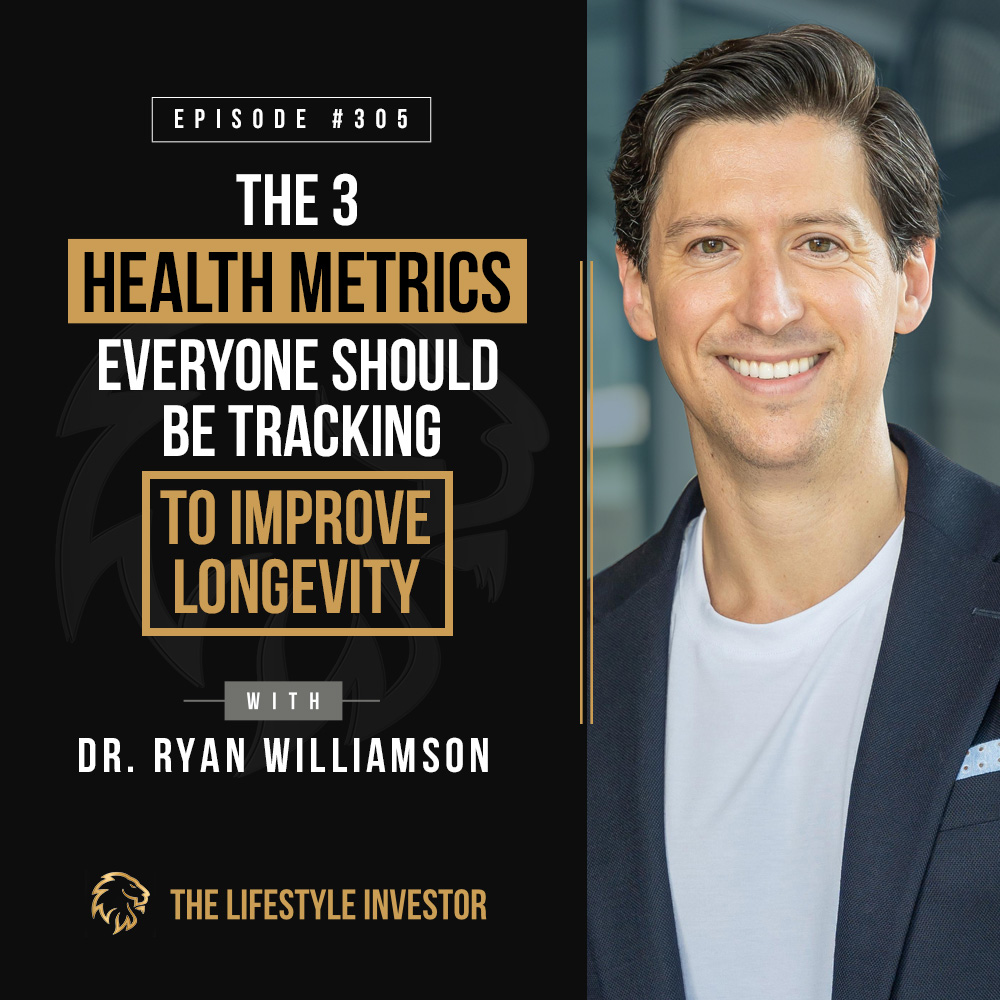
The 3 Health Metrics Everyone Should Be Tracking To Improve Longevity with Dr. Ryan Williamson, M.D. – EP 305