
Interview with Anthony O’Neal
How to Escape From Living Paycheck-to-Paycheck and Build Lasting Wealth with Anthony O’Neal
A bigger paycheck isn’t always the solution to financial stress. Despite rising incomes, millions of people—including high-income earners—continue living paycheck to paycheck because they never build the financial habits needed to create lasting wealth.
That’s why I’m excited to have Anthony O’Neal on the podcast. Anthony is a bestselling author, financial educator, and host of one of the fastest-growing personal finance platforms, The Table with AO.
After overcoming homelessness and financial hardship himself, Anthony has helped millions of people eliminate debt and build healthier money habits to achieve financial freedom. His latest book, Stop Living Paycheck to Paycheck, outlines a proven framework for breaking free from financial stress and building wealth that lasts.
In this conversation, we discuss why lifestyle inflation quietly keeps people trapped regardless of income, how eliminating consumer debt creates the margin needed to begin investing, and why true wealth comes from owning assets instead of keeping up with appearances.
In this episode, you’ll learn:
✅ Why increasing your income won’t solve your financial problems if your spending grows just as quickly.
✅ How getting financially stable creates the foundation for every other wealth-building decision.
✅ Why Anthony believes teaching financial literacy early could change the trajectory of an entire generation.
Featured on This Episode: Anthony O’Neal
✅ What he does: Anthony O’Neal is a bestselling author, financial educator, and podcast host dedicated to helping individuals eliminate consumer debt, build wealth, and achieve financial freedom. Through his books, online education platform, speaking, and YouTube channel, Anthony teaches practical strategies for budgeting, investing, ownership, and long-term financial success while also working to expand financial literacy through higher education.
💬 Words of wisdom: “The reason why I’m so passionate about being against consumer debt is because it’s simply robbing you from your future.” – Anthony O’Neal
🔎 Where to find Anthony O’Neal: Website | LinkedIn | Facebook | Instagram | YouTube
Key Takeaways with Anthony O’Neal
- Why Most People Fund Their Insecurities
- Building Margin Before You Focus On Wealth
- The Real Cost of Bad Financial Advice On Social Media
- Why Anthony Calls Consumer Debt Deadly
- Anthony’s Mission to Transform Financial Education
- The Escape Plan for Leaving Paycheck-to-Paycheck Life
- Why the Traditional American Dream Falls Short
- Ownership Is the Path to Financial Freedom
- Anthony’s Definition of Financial Freedom
- How You Can Learn More From Anthony
Inspiring Quotes
- “One of your greatest wealth-building tools are the relationships and the voices that are speaking into your life.” – Anthony O’Neal
- “We’re teaching people how to consume, but not how to own their time and own stocks and own real estate and own a business.” – Anthony O’Neal
- “Money isn’t the end goal for me. It’s never been the end goal for me. It’s always been about freedom.” – Anthony O’Neal
- “I’m in a position to do what brings me joy and peace and really give back to my community. And so, that to me is what wealth is.” – Anthony O’Neal
Resources
- AnthonyONeal.com
- Anthony O’Neal on LinkedIn | Facebook | Instagram | YouTube | X/Twitter
- Stop Living Paycheck to Paycheck: The Proven Path to Break Free from Debt, Build Real Wealth, and Live Free on Any Income by Anthony O’Neal
- Regent University
- Brian Bullock
- Wells Fargo
- Dane Espegard
Want My Team’s Help?
- Tax Strategy Masterclass
Learn the 28 most effective tax strategies the wealthy use to save thousands.
lifestyleinvestor.com/tax
- Free Strategy Session
Get a personalized roadmap to financial freedom.
lifestyleinvestor.com/consultation
- Lifestyle Investor Newsletter
Join The Lifestyle Investor Insider for curated investing insights.
lifestyleinvestor.com/insider
Rate & Review The Lifestyle Investor Podcast
If you enjoyed today’s episode of The Lifestyle Investor, hit the subscribe button on Apple Podcasts, Spotify, Stitcher, Castbox, Google Podcasts, iHeart Radio, or wherever you listen, so future episodes are automatically downloaded directly to your device.
You can also help by providing an honest rating & review over on Apple Podcasts. Reviews go a long way in helping us build awareness so that we can impact even more people. THANK YOU!
Connect with Justin Donald
Get the Lifestyle Investor Book!
To get access to The Lifestyle Investor: The 10 Commandments of Cashflow Investing for Passive Income and Financial Freedom visit JustinDonald.com/book
Read the Full Transcript with Anthony O’Neal
Justin Donald: What's up, Anthony? Good to have you on the show.
Anthony O'Neal: Hey, Justin. It's good to be back, man. It's been a while, so thanks again for having me back on. And I'll say this upfront before we get started, I got to get you at the table here sometime in Q4 this year, 2026. So, let's make that happen soon.
Justin Donald: Let's do. Well, we've been talking about kind of drilling into some of the stuff we're going to go over today for years now. I mean, I think three years, maybe, is when we started the convo.
Anthony O'Neal: Yes, sir.
Justin Donald: When we first got to know each other. And for our audience today, Anthony and I were part of a Christian entrepreneurship group early days, kind of as founding members. And we ended up becoming like we were in a pod together, so we really got to know each other, and I just thoroughly enjoy getting to know you. And your message is a powerful message that I can't wait to share because I talk about a lot of the things that you do when you have wealth.
Anthony O'Neal: Yeah.
Justin Donald: But a lot of people first need the steps before that. How do we get out of debt? How do we make smart choices? How do we avoid lifestyle creep and all that? And you're a master at this, so I'm excited to dive in.
Anthony O'Neal: Yeah. No, I'm excited about it, man. And it's like I wouldn't even say I'm a master at it. I think I'm a student at it, man, because every single day I got to remind myself, Justin, "Do not buy that.” I got to walk away. Sometimes I got to take things back, man. But at least I am mature to understand where I'm at and how to make the right decisions moving forward. So, I'm excited about it, man, and your message is absolutely amazing. I've learned so much from you as well. And so, what we're going to talk about today is going to be fun, so I'm looking forward to it.
Justin Donald: Well, cool. Well, let's start at the beginning because you've been broke before and homeless, right? And now you're helping millions of people take control of their money, take control of their life, and I think it's a beautiful thing. So, a lot has changed in your life. You've written some books, but I love the message that you are sharing. And so, we've got so many people prioritizing the appearance of wealth. Like, let me look like I am very successful. Let me look like I'm very wealthy. But the reality is they're not, and they're spending their money to look that way. And our culture, unfortunately, often rewards looking successful rather than actually building a strong foundation of wealth.
Anthony O'Neal: Yeah.
Justin Donald: So, where do you see that showing up in most everyday life for people?
Anthony O'Neal: You know, Justin, man, I think for me, if we go deeper, right, I think culture rewards us to fund our insecurities. We say, "Hey, I'm going to go finance this car. I'm going to go get this house that I really can't afford because, internally, I want to look like I am better than what I am," rather than just accepting the fact, hey, this is the season and the space that I'm in. And you're fearful to let people see the season that you're in, so you fund the insecurity. You fund this lifestyle to impress people who are probably doing the exact same thing as you. They really can't afford it. And so, what I've learned, man, even within myself, and you know this, man. I'm blessed to be around billionaires and multi, multi, multimillionaires.
And I remember this one day, man, he pulled up in a Lamborghini that cost $800,000. And I was like, "Oh my gosh, that is beautiful. I want one." And I went to the dealership the next day. I looked at a Lamborghini that wasn't $800,000, but it was a lot of money. And I got in the car, I drove around, it felt real good. I got back in my car, went home, went to see how I'm going to pay for it, and I literally told myself, I said, "Why are you buying this car? Well, this could pay off your house. Do you know what you could do with this money to invest into it, and maybe in the next 10 years you can come back and pay cash for the car, maybe?
And so, what I've learned is that, man, if we can just really help people understand that you're living paycheck to paycheck, you're going through financial stress, not because you're financially illiterate, it's just because you're not willing to live in the season and in the space that you're currently in. And be proud of it. And be okay with it. And then while you're there, just listen to Justin, listen to myself, listen to whoever you trust that has a solid voice, get the system, get the strategy, and get out of the paycheck-to-paycheck rag. Get out of the season that you're in so you can get to the next. And then I'll say this, and I'll be quiet. A lot of people think wealth is built by things and by income, but wealth is built by margin and strategy.
If you have the right strategy and system, that right strategy and system will create margin within your budget. If you have the right margin, then now you can invest, now you can build something of substance that will bring you joy and just a lot of peace down the road.
Justin Donald: Yeah. That's beautiful. I absolutely love that, and I like telling people that you have to own assets to get ahead.
Anthony O'Neal: Yes.
Justin Donald: Right? And that's part of the strategy, right? So, there's margin in that, but there's strategy. What are the right assets? What are the right prices? What's the methodology to get there? Are you finding these off-market? Are they on-market so they're bid up? Right? So, there's a lot of strategy involved in that. But let's talk about even before people are owning assets, who are still spending money to drive image and kind of project a certain look, versus genuinely creating value. Like, how do we help people close the gap? How do you specifically help people close the gap?
Anthony O'Neal: I'm brutally honest with them, bro. And I just tell them the truth. I think we have to get past the season of like, "Hey, it's going to be okay." No, it's not. If you keep making the financial decisions you're making today, your financial future is not going to be okay. When you get to 60, 70, 80 years old and you're a grandmother, you are now a financial burden to your children and to your children's children. So, I need you to snap out of it, right? And I think that if you are living above your means, the very first decision you got to do is, it's pretty much simple, look at your budget, see what do you need to get rid of. What car do you need to sell? Maybe you need to downsize on your home, or maybe you need to sell some things, and you need to get on a solid budget.
And a lot of people don't like the word budget, but for me, I think when I look at budgeting, it's just a vision for my money. And if I have a clear vision for my money, I can make clearer and better decisions moving forward. And everything that I might have sold and everything I may have sent back or turned over, man, with the right vision, I can get back to it and probably to something better. But I think a lot of people are not willing to step back, get control of their finances. You know, for a season, I talk about this in my new book, Stop Living Paycheck to Paycheck, I want you to have no consumer debt for 12 to 24 months, right?
I want you to practice spending your money, living below your means, and then after 24 months, when you're completely debt-free, you've practiced that lifestyle, okay, maybe you bring back in an Amex, and you pay that off every week or every month before the interest hits. But for the meantime, stepping back is actually the best financial decision you can make because if we're going to get into your mastermind for an example, I can't get into your group, into your community, and I got $100,000 in debt and I'm only making $55,000 or maybe let's say $100,000 a year, but I got $100,000 of debt that's going out on top of my regular bills.
I can't build wealth because I don't have margin. So, let's get on a budget, get rid of this consumer debt, get rid of the extra stuff that you're spending money on, create the margin. Now I'm going to take this margin and say, "Justin, what do I do with this margin? How do I invest this? How do I grow it? How do I multiply it?"
Justin Donald: That's good. And what's interesting is a lot of people kind of exacerbate where they are by making more. So, the common thing, and I know you see it, I see it. It's like, "Well, if I just make more, I'll be fine." So, you have all these high-income earners, and they think making more money is going to solve their financial problems, yet countless, like I know countless high-income earners that still live paycheck to paycheck. And I know you've worked with all different income levels across the board, so what are the most common money habits that prevent people from building real wealth?
Anthony O'Neal: The number one is no margin. That's the number one. They have no margin, like you said. Okay, they went from making $75,000 to $125,000. When they went from $75,000 to $125,000, they went from a $2,000 a month rent to $5,000 a month rent. They went from flying coach, spending $300 a ticket, to flying first class, spending $3,000 a ticket. So, lifestyle jumps up, which I think that there's nothing wrong with the lifestyle eventually going up because you're working hard, right? But what I tell people within our community is, let's say, if you get a pay raise within that first 12 months, you don't touch it. You don't touch your lifestyle at all. Take all that money and put that into an investment portfolio. Put that into your high-yield savings.
If you have extra money coming in and you're still in debt, put that towards getting rid of your consumer debt, the unnecessary debt. But for the first 12 months, man, you don't change nothing. You use that margin to either invest or to build. But let's just say, for example, you don't have any debt. Okay, cool, great. Now you're going to invest it. Now, maybe instead of her spending $2,000 a month on rent, maybe you can go up to 2,500, get you something a little bit nicer. Maybe go from renting to actually owning a home. But the key thing is just not having the right margin, not having the right strategy, and then maxing out everything. Then I'll say the last thing, and one of the biggest mistakes that I see is that people will have a little bit of margin, but then they'll listen to the wrong advice.
And I think if you're going to really build wealth, you got to identify the right person to speak into your life that's going to give you wisdom. Because one of your greatest wealth-building tools are the relationships and the voices that are speaking into your life. If you have someone just on TikTok who's never built anything of substance, but they're telling you what ChatGPT is telling them, that you're not going to build anything. But if you come into a mastermind or into a circle like yours, like mine, you're going to actually have someone who actually built something. We have proof of what we've built. And so, those are what some of the biggest mistakes. And I'll say this, man, I had a millionaire friend who got real frustrated with me because he came into some money, and he said, "Man, I was watching this video on TikTok."
I said, "So, TikTok is your financial advisor?" He was like, "Well, everyone's saying it's working." I said, "Okay." So, I won't say particularly what he did, but he went that route, came back to me about four months later, upset. This is a grown man in his 40s crying. He lost $1.2 million investing into something that was an overnight get-rich-quick type situation. And now he's like, "Man, I'm so sorry. Like, what do I do?" And I told him upfront, "I can't tell you what to do now because you don't have the funds. Now, you got to get yourself back to where you were."
Justin Donald: That's right. Well, it's so sad. I see it all over. And the problem is online on these social media channels, everyone's an expert, or they appear to be. You presume them to be, but most of them have never done the work. I joke that everyone is a life coach online, right? But none of them, or I shouldn't say none of them, very few of them have the background and experience to back it up, especially over the long haul. Maybe someone figured out how to make some money in the last five years. That doesn't mean they're actually good at it. That means they figured out during stimulus surplus season how to do some things right. Like, I want someone that's been doing this for 20 years, 25 years, 30 years.
Anthony O'Neal: Yes.
Justin Donald: You know, we've got a few people in our community, we've got some of our sponsors in our community that do real estate, that have been at it 40 years. Like, they've been through all the cycles, right? It's like that's the experience you want. So, something that you say that I really like, you always say that debt like I talk about debt being risky. You call it deadly, and I love that. So, why do you take such a strong stance on debt when so many people view it as a financial tool?
Anthony O'Neal: I think it was sometime last year. I had just landed, and it was about midnight, about 12:00, and I was driving home, and I was hungry, and I had this real bad hunger headache. And so, I pulled over into McDonald's, which I haven't been to McDonald's, Justin, in probably 10 years. Like, I hate McDonald's. But I was like, "Man, let me get a small fry and a Hi-C Orange just to put something on my stomach until the morning." And I pulled into McDonald's probably right around 12:30, 1:00 at night. I get to the window, and it was an elderly, probably mid-80s African American woman. And when she handed me my food, her hands were shaking to the point to where if I would not have grabbed that bag, my food would've fell.
And I asked her, I said, "Ma'am, how old are you?" And she told me her age, and I said, "And you’re working at McDonald's?" She was like, "Baby, yes." She said, "I have to, because when I was your age, I didn't make the right decisions with your money." With her money. And that hit me, man, because debt is robbing you from enjoying your 80s, your 70s, your 60s, your 90s. My grandmother should not have to work at 85 years old at McDonald's. You know how many people are going to cuss you out because you didn't put cheese on their burger? And you didn’t work all this time for that. And so, the reason why I'm so passionate against consumer debt is because it's simply robbing you from your future. And let's really think about it.
Let's go all the way back to high school. When you graduated high school, the very first thing they told you to do was, if you don't get a scholarship, get what? A student loan. But nowhere did they teach us how to start a business. What is a Roth IRA? What is a 401(k) when you get a job? When you go to school, which is why I'm so passionate right now, with me being inside of our HBCUs and being a professor there, that they're not teaching our young people what is an investment portfolio? You know, we're not having those in-depth conversations. And so, we're teaching people how to consume, but not how to own their time and own stocks and own real estate and own a business.
And so, the world taught us to consume debt. They teach us that because it keeps us in the system for so long. And at 85 years old, I do not want to be in a position, I don't want none of us to be in a position to where we have to work somewhere at 1:00 in the morning simply so we can survive. Not because we enjoy doing it, because we need the check. No. Debt puts you there. If you can get out of debt now and start investing now, man, you're going to be 80 years old, 85 years old, man, spoiling your grandchildren, buying them chocolate, and sending them home with their parents, and their parents getting upset. That's the life that I think we all deserve.
Justin Donald: Yeah. And, Anthony, let's take it a step further. Look how easy it has become to spend money. We can spend money with one click. We can spend money scanning something on our phone. We can spend money so easily. But then to save money, to invest money, it's hard. There are more steps. If you even want to make an investment, there are all these docs that you need to read through and sign. So, it's hurdles to do the right thing, and it's easy to do the wrong thing. And it's fascinating. But hey, these companies know. They study consumer behavior more than anyone else. They have more data than anyone else. And so, they know if we make it easy for you to spend, you will spend. So, got to be careful not to fall in that trap.
Anthony O'Neal: That's a fact.
Justin Donald: All right. You were sharing something, and I want to give you a moment to kind of paint your vision. Because off air, you shared this with me, and I was super inspired about what you're doing in the system, getting your doctorate, and having an opportunity to be a professor, and eventually a dean, and really making change in the school system. So, tell us what you're up to, because I think it's really cool.
Anthony O'Neal: Yeah, man. Right now, when I left, transitioned from my previous situation, it was about six years ago, seven years ago now, I was like, man, I didn't want to... Let me put it like this in a respectful way. I didn't want to be just a content creator. I truly wanted to be a thought leader, someone who not only practices what he preaches, but he has the education and credentials behind him. And so, I went back to school, finished my bachelor's in finance and accounting, got my MBA in church management and finance. And while I was there, I had the opportunity to go to a HBCU school, and while I was there, man, you'll be surprised of how many people noticed me and was asking me a bunch of money questions, and these were other classmates of mine and students.
And so, the president there was like, "Man, how about you come back and teach? Like, you've practiced what you preach. You now have the degree. How about you do it?" And man, while I was there teaching, and while I'm still there teaching to this day, I get so much joy seeing 20-year-olds, 19-year-olds come into my consumer economics class thinking it's going to be boring. 12 to 18 weeks later, they don't want to leave. Like, they're like, "Y'all, I have more questions. Like, wait, so if I put $15 into this, I could buy a fractional share?" Yes. "Oh, wait. If I save money, I can actually maybe become a homeowner?" Yes. "Wait, what is a high-yield savings account again?" Okay, great.
"Wait, what is an HSA account, health savings account?" That's attached to a high deductible. "Well, my mom said I need a PPO plan." Well, let's talk about it, right? So, as I'm having that conversation, I'm like, wait a minute, I could do this at a bigger scale and impact more people rather than just 30 people every semester. And so, I started reaching out to different people that I look up to in the educational space, and they said, "Hey, man, you should really consider being a president one day." And so, with that being said, it was like, "Hey, but a president does need to have a doctorate." And so, I said, "I will only go back to get my doctorate if I can get it in finance somehow."
So, after doing research, there were about four programs. I got accepted into all four programs, but I landed at Regent University, getting my DBA in finance and investing, because it's right in what I want to do, and I'm learning it from a Christian perspective, because I'm just, at my core, I am a believer. And so, I'm already meeting with different HBCUs, specifically, to where I will be a dean maybe by this time next year, over a school of business. That's my goal. Because in the school of business, that's where I can really impact from a financial space. But then the ultimate goal for me is, by the time I turn 50, I would love to be a chancellor or president at a specific HBCU to where I'm really sowing into the minority community and the minority culture and giving them that financial, not just knowledge, but even bringing in things that gives them access to things that minority community just sometimes doesn't have access to.
So, that's really my heart to where I'll still be on YouTube, I'll still be writing my books, but when I think about at 50, what do I want to be doing? Man, I really want to be on a campus somewhere helping this younger generation get the information quicker than the time I got it.
Justin Donald: Well, that is just so inspiring and so beautiful. I love that you're doing it. I mean, it's a total disservice, and you got to wonder if it's intentional to not have financial education or literacy. Even in middle school, I feel like we should be starting it. You rarely see it in high school. Most states don't even require it as part of the curriculum to graduate high school. You're probably not seeing it in college unless you're majoring in finance, but even that is kind of like high-level. That's not personal finance, right? So, people aren't actually learning this. So, I love that you have a heart for this and that you want to make a difference in this space. And I think that we need more schools that are teaching this.
And the earlier we can teach it, the better, and not outsource it. I feel like what happens is Wall Street uses all these big terms, makes it really complicated, makes it so that you think you can't do it, so you outsource it to them. But they're making a killing even when you're not. It's very misaligned, and we need a better education system. So, I love that you're moving in this direction.
Anthony O'Neal: Yes, sir. Yes, sir. No, I'm right there with you. It's so funny, I was just thinking the other day, I was like, man, my debt in the past was funding somebody else's legacy. I was like, "Whoa. Wait, wait, wait." And one of my good friends, Brian Bullock, he did a research, and he just started looking up family companies. And we didn't know that Wells Fargo was two different family names. Wells is a family, Fargo is a family, who came together to have this bank. So, anytime you borrow money from Wells Fargo, you're paying Wells family and Fargo family back and funding their legacy, their children's children's children's legacy, which is a great business analogy for them. But then it's robbing from the O'Neill family.
And I'm like, "Wait a minute.” So, when I started realizing that, man, my debt is funding somebody else's lifestyle and it's their passive income, I said, "What passive income am I building for myself?" "What interest is coming to me?" And I agree with you, man. If we're not teaching our kids as early as middle school and all the way through high school and college, we are honestly failing them because what are we teaching them? It's okay to borrow money because we're telling them, "Go borrow money for school. Hey, go get a credit card so you can have an 800 credit score." But we're not telling them how to be an owner of their time, resources, assets, and businesses that eventually can build them wealth. We're only teaching them to consume, which makes them a borrower, but not own, which will eventually put them into wealth status. And so, I think… Well, I'll leave it there. It is interesting that we don't teach that.
Justin Donald: It is crazy. And by the way, so for those of us that are parents, this cannot be outsourced. This needs to be an in-house deal. Like, we need to be teaching our kids this. We need to be teaching those that we have influence with. We need to teach this. And I hope that you can make waves and create a lot of energy around this, not just for the campus that you're on, but a larger scale. But I think for the rest of us... And, by the way, I didn't grow up learning this stuff. Luckily, I was just curious about how this worked. If I wasn't curious, I would have never learned this myself, because I didn't learn it from my parents. I love my parents, and we've got a great relationship, and they've taught me all kinds of wonderful things, but money wasn't one of them. And so, I'm glad that I didn't outsource my financial education to other people that could profiteer on it, but that I really was a student of it for my own well-being. And I love teaching just as you do.
Anthony O'Neal: Yeah, no, I love it, man. And I get excited about it. Every time I drive up there, Richmond, Virginia, on Wednesdays, man, I just love it. And, man, a part of me is like, man, I may want to do it full-time. I don't know yet, because I love what I do here, too. So, we'll figure it out.
Justin Donald: Well, I think you've got a big voice, and I think it's going to be great. If there's a way that you can do both, I think you're going to reach more people. But you're going to reach certain people that you're not going to reach on your YouTube channel via the schools. There's no doubt about that. And then vice versa as well.
Anthony O'Neal: Yes, sir.
Justin Donald: So, let's talk about the core framework of your new book. So, you talk a lot about eliminating financial stress, creating momentum, building lasting wealth, and so you describe something called an escape plan. So, what is your escape plan, and how does it help people create lasting financial change?
Anthony O'Neal: Yeah. So, we called it the escape plan because I think a lot of people, when you look at the numbers, about close to about 75% to 80% of people are living paycheck to paycheck. Within that 75% to 80%, these are even individuals who are making six figures, sometimes even seven figures. And so, I say, "You know what? How do we build something that helps them escape the negative side of that, which is living paycheck to paycheck?" Not escape the income, because we need them to keep the income, but leave that lifestyle. And so, there are five ways. So, I'll give them the first way, but they got to get the book to get the other four, you know?
But I give them the very first thing, and the very first one is you got to get stable with your finances. One of my good friends, she is a doctor, an ER doctor, and she came home one day, and she was telling all of us at the house because her husband is a good friend of mine. And she came in very emotional and a little frustrated, and she said, "Man, I just get tired." I said, "Why you get tired, sis?" She was like, "I just get tired every time someone comes in with a major life issue, their family members or them, they ask me, 'Fix me, Doc, fix me. Fix me, fix me in an hour.'" And she was like, "No, I can't do that." And she said, "Anthony, do you know what's the very first thing I have to do when someone comes into the emergency room?"
I was like, "What?" "I got to get them stable." She's like, "I can't fix them, because if I go in trying to fix them, if I don't have them stable, I could fix the wrong thing and that could kill them.” And so, she was like, when she said that, I said, "Wow." And I remember when I was driving home, I said, "That's just like finances." It is so easy for us to get into debt. And then when we wake up tomorrow from spending all of that money so quick, we want to fix it overnight. So, we look for this overnight quick fix, and the next thing we know, we're in a worse situation than what we were the day before yesterday, because nobody wants to take the time to get stable.
And she said, "Anthony, when I get you stable, I come back, and once your heart is beating on its own and the blood is flowing and we don't have any more major issues of concern right now, now we can look at your body and assess, 'Okay, what is the problem?' And then when we assess what is the problem, then we can go from there and identify a specialist for your specific problem." And that's the same thing with your money. When we can get you stable with your money, that's going to be just get you a good solid one month of your net pay sitting inside of an emergency account. Go ahead and get a basic will and a basic trust and a basic life insurance policy put together. Stop the bleeding as far as in stop borrowing money.
Then we can put all of your debt on the table, put your entire financial portfolio on the table, and then we can assess what is your problem, we can assess what are your goals, and we can assess what are the next steps you need to take to change your financial situation around. And I tell everyone in my book, this is not an overnight success thing. This is not going to happen today, next week, next month. This is going to take you at least 18 to 24 months to change your financial situation around. And we walk through it step by step inside the book, inside the escape plan on how to change your situation. This book is not a get rich thing overnight. It is simply, here's what you got to do to change your life around. And when you change your life around, stay the course, and I promise you, you'll be well.
Justin Donald: That's good. I love that, Anthony. Something that we have in common is we really both challenge the traditional path, the traditional way of doing things, the way that's been here forever, this 60/40 stocks-to-bonds split that in the last 100 years we've had two or three of the worst years ever, literally in a century, like worst performing. And this is touted as like the safest way to do it. So, you hear a lot of people talk about like, "Hey, I want the American dream." And by the way, a lot of people move here from other countries, and it is a dream. It is like they have an opportunity that they didn't have, and I love that. I think that's great. But you challenge the traditional path of working hard, buying a home, relying on retirement accounts as your primary wealth-building strategy. I do the same thing. I think that is a flawed strategy.
I think a lot of hope is what goes into that equation, and hope is not a good mechanic, right? I don't like hope, as like I hope the market goes up. I hope when I retire that we're not in a recession. I hope that the fees aren't as bad as what I think they are. I hope that I don't have to give up too much of today for tomorrow. I hope that that nest egg is big enough that I truly can live off it and not have to work in my retirement years. So, there's a lot that you challenge. Do you believe that the traditional American dream, as we know it, is no longer producing the financial security that people expect?
Anthony O'Neal: You know, I don't believe that the American dream ever produced financial security. I believe that it produced financial survival, if that makes sense. When I look at my parents, yeah, they had a good job. And when I look at them now, they have a decent 401(k), 403(b). When I look at my parents, they have a home, right? But they don't own anything. They can't take off whenever they want to take off. They still got to have permission, and they're in their 60s, hitting their 70s. So, I think that the American dream, as we know it, it provided a basic way of living right above survival, but the American dream never was to thrive.
And that's why I appreciate you challenging that because I don't know about you, but my mom and dad used to always say, "As long as I have food on the table, clothes on my back, and a roof over my head, I am all right." And I'm like, yeah, no, I'm grateful. I'm grateful. But no, I'm not getting up Monday through Friday, busting my rear end to only have a roof over my head, but it's not the kind of roof that I want, to only have clothes on my back, but it's not the kind of clothes that I want, to not be able to take my kids on vacation. Like, think about it. My parents lived the American dream, but we never took a family vacation. Never. We never went on out of the state as a family and got a resort and had fun. We never went to Disney World because my family couldn't afford it.
And so, I don't believe the American dream created dreams. I think it created just a standard way of living. But I think you and I are partnering on this thing together so we can create dreams and visions and some amazing things.
Justin Donald: Yeah, love that. So powerful. So, let's take it one step further. If someone wants to build a more resilient financial future today, what should they focus on instead?
Anthony O'Neal: Yo, man, number one, you got to go into ownership. And when I say ownership, I'm talking about several different paths. One, ownership of real estate, ownership of land, ownership of a business, ownership in the stock market. And watch this, another level is businesses. I was talking with one of my dear friends, Mr. Ron. He is the president of the Black Chambers here, and he said, "Anthony, one of the best things you could do right now if you really want to build wealth is go learn how to acquire a business that's already been made, that's already have some level of small success. But maybe the owner is 75 to 80 years old and ready to sell. So, now you take this old company that already has some type of foundation, bring in this new technology and AI, and you take that company up."
And so, if you really want to build wealth, you got to have, and you know this, you got to have multiple streams. But I think what I'm telling this younger generation is, man, instead of for going out there and buying this big old house or this latest or greatest car, man, put that money to the side and save up a lot of money. And then when a business becomes available to sell, man, go buy that business. Go acquire that business. Now you have ownership. Now you can really do some amazing things with your life. So, that's what I would tell this younger generation.
Justin Donald: Yeah, I love that. One of my closest friends, Dane Espegard, he does a lot with membership with Lifestyle Investor, and I just think the world of him. And I remember he was at a crossroads where he wanted passive income, but he had the income to buy a really nice house. And so, the conversation with his wife was, "Hey, we could get this nice house now, or instead of the house, we could buy a mobile home park." And kind of Justin's here to mentor us, and if we run into problems, we got someone to at least talk to. And so, they opted to buy a mobile home park instead of getting that nice house, which proved to make all the difference in the world, because now they got monthly cash flow from that.
They ended up selling it for a nice multiple, rolled that into more mobile home parks, created more passive income. And so, that one decision of delaying the nice home for an asset that produced income made every bit of difference in the world for him. So, I love that.
Anthony O'Neal: That's the goal, man. That is really the goal for myself. I just recently purchased a home, and I'm like, "Man, you know what? I'm done. Like, I'm done." It's a nice-sized home, not going to lie, but I'm like I think I'm ready to buy more assets. Like, I think I'm just ready to really invest more into that. I know I want to start a family, so we're going to start them here. But my future wife, Jessima, she may get upset because I'm saying, "Baby, we’ve been here for a long time." Because I think you really got to get focused on having more assets than liabilities. And a home is an asset, so if you can get into it, that's going to be an asset. But man, I'm like him. I had several cars. Man, I went down to just two, a real nice one and an everyday car.
Because I'm learning as I'm getting older, you were talking about this earlier, just because I'm debt-free doesn't mean that I'm automatically wealthy. It's the decisions I make after I'm consumer debt-free that's going to build the longevity of wealth. And so, I got to make sure I'm making wise decisions too. So, man, I've loved this conversation. Man, you're amazing.
Justin Donald: Well, this is fun. And by the way, it's fun. And like how old are you again, Anthony?
Anthony O'Neal: 42 years old, man.
Justin Donald: Okay. So, I knew you were younger than me. I just turned 46 a couple of days ago. And it's funny, like I had this realization. So, I have spent the last 26 years buying assets, and I've come to the realization, "Okay, I'm glad I did that. I did really well. I actually want to simplify." Like, I'm in a world where I'm like, "I want to sell some assets. I'm ready to just let stuff go." I did the multiple homes thing, which, if you're not careful, those homes can end up owning you and what you're doing and the different rental properties. And I'm thankful for my path, but I actually now, knowing what I know, there's a way to invest to get better returns than anything that actually demands your time or that you're on the hook for doing.
And so, to anyone, I'll always say when in doubt, buy assets, right? Because you can always sell them at some point in time. And if you buy them right, you're going to sell them and make money. But at the end of the day, like money isn't the end goal for me. It's never been the end goal for me. It's always been about freedom. And you share what true financial freedom looks like and how people can use wealth as a tool with greater purpose and impact and intentionality. But if money isn't the ultimate goal, and I know you're similar in thinking of this with me, what does financial freedom look like to you?
Anthony O'Neal: You know, I'm glad you asked me that question, man. Honestly, as I've gotten older, that answer has changed. I was golfing with my dad a few years ago, and man, he had me a little emotional. And we were playing golf, and if you know anything about golf, we hit off the first tee off the tee box, and we're riding to hit our second ball. He stops before we get to the second ball, and he looks at me, and he says, "You know what, son? I'm wealthy." And I looked at my dad, I said, "Hey man, I know your bank account. I don't know if that's wealth." I said, "You good though. You straight. I'm going to make sure you always straight, but I don't know if that's wealth."
He said, "No, no, no, I'm wealthy." I said, "Dad." He said, "Hold on. It is a Tuesday afternoon at 1:00, and I'm on a golf course playing golf with my son. And I'm not worried about how I'm going to pay bills. I'm not worried about am I missing a paycheck. I'm not worried about what I'm going to do tomorrow, next week. Like I'm here enjoying life with my one and only begotten son. And when I leave here, I'm going to go home to my beautiful wife, and we're going to go out to dinner tonight, and we're not going to be stressed about how we're going to pay for dinner. And I'm going to come back home and go to sleep and wake up when I want to tomorrow. And I may go play golf again tomorrow. I don't know."
He said, "That's wealth, because I get to do what I want to do when I want to do it with whomever I want to do however I want to do it." And I said, "Wow, Pops. I've never looked at it that way. I've always looked at more money, the more things I can have." But at 42 now, wealth for me is joy, peace, and freedom. And wealth doesn't mean that I have to have millions of dollars. Wealth just simply means, can I do what I want to do? Or do I have to work until the day I go home to be with my Lord and Savior? And I don't want that. I don't want that. I want to be... My goal is at 50, I'm able to do whatever I want to do, which is why, remember I said I want to be a president by the time I'm turning 50. Well, a president of HBCU, they make good money, but it's not millions of dollars.
So, I want my portfolio to continue to fund my lifestyle that puts me in a position to do something that I want to do to where I make a little bit of money off of it, and that'll be great for my family, right? But it's like my lifestyle doesn't have to change, and I'm in a position to do what brings me joy and peace and really give back to my community. And so, that to me is what wealth is.
Justin Donald: That's beautiful. We can easily wrap on that. That was just so well said. And I just think for a lot of people, they realize it later, like your possession can easily own you. And you just have to be careful that a lot of people are trying to build wealth, but they're simply accumulating more income and more possessions, and that's not building wealth. And in many regards, it's like it's stealing the joy, it's stealing the time, because nothing's going to be good enough. We're going to want more. The goalposts are going to move. It's new now, but in a year or two, it's not new anymore, right? And we want the new shiny object.
And so, I hope people hear this, and they can say, "Hey, I don't need to chase the dollar, that financial freedom trumps net worth, that I don't need more possessions. I just need to own my time. I want to buy my time back. I want to be a time billionaire. I don't need to be a billionaire. I want to be a time billionaire. I want to own my time and schedule,” right?
Anthony O'Neal: That's good, man. I like that, time billion. You may see that on my show. I'll give you credit for it, though.
Justin Donald: I like it. Well, hey, this has been awesome. Anthony, it's just such a pleasure to get together with you again. Where can people learn more about you, your books, your show? Your YouTube channel's blowing up.
Anthony O'Neal: Yeah. No, man, they can go to anthonyoneal.com. You can find everything there, our social media channels, our YouTube channel. And if you go to anthonyoneal.com/book, you'll be able to get a copy of the brand-new book, Stop Living Paycheck to Paycheck. That comes out August 25th of this year. So, thank you again, man, for having me on.
Justin Donald: This is awesome. Well, I feel like what you're doing, what I'm doing is a great one-two punch. And everyone needs to start somewhere, and then sometimes people have to redo it. You got to restart, like we talked about. So, I love that you and I can share our message, and we're totally in harmony and synchronicity together. It's just so fun. And I always end every episode with a question for our audience. So, if you're watching this or if you're listening to this, what is one step that you can take today to move towards financial freedom and move towards living the life you truly desire on your terms? So, not a life by default like most, but a life by design. Pick something that Anthony shared today, put it into practice, and move one step closer. Thanks so much. And we'll catch you next week.
Sign up to receive email updates
Enter your name and email address below and I'll send you periodic updates about the podcast.
Keep Learning
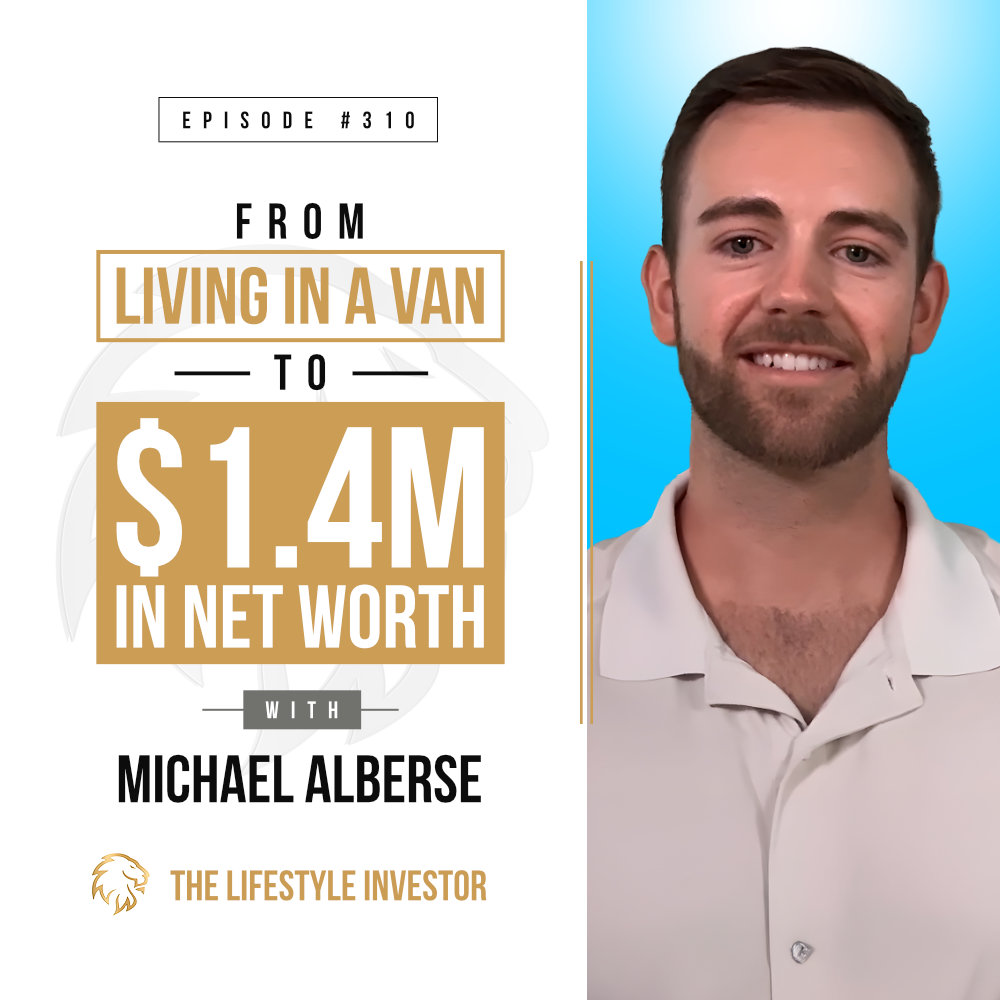
From Living in a Van to $1.4M in Net Worth with Michael Alberse – EP 310
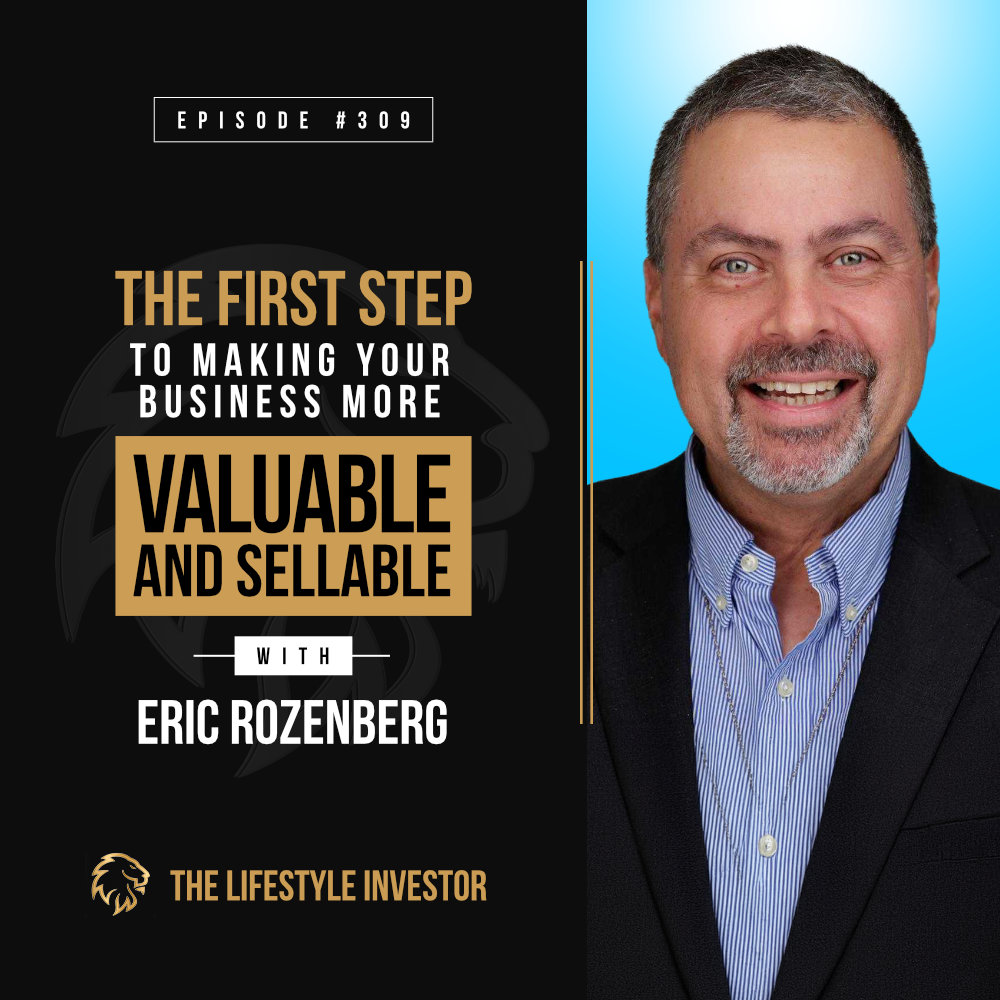
The First Step to Making Your Business More Valuable and Sellable with Eric Rozenberg – EP 309
