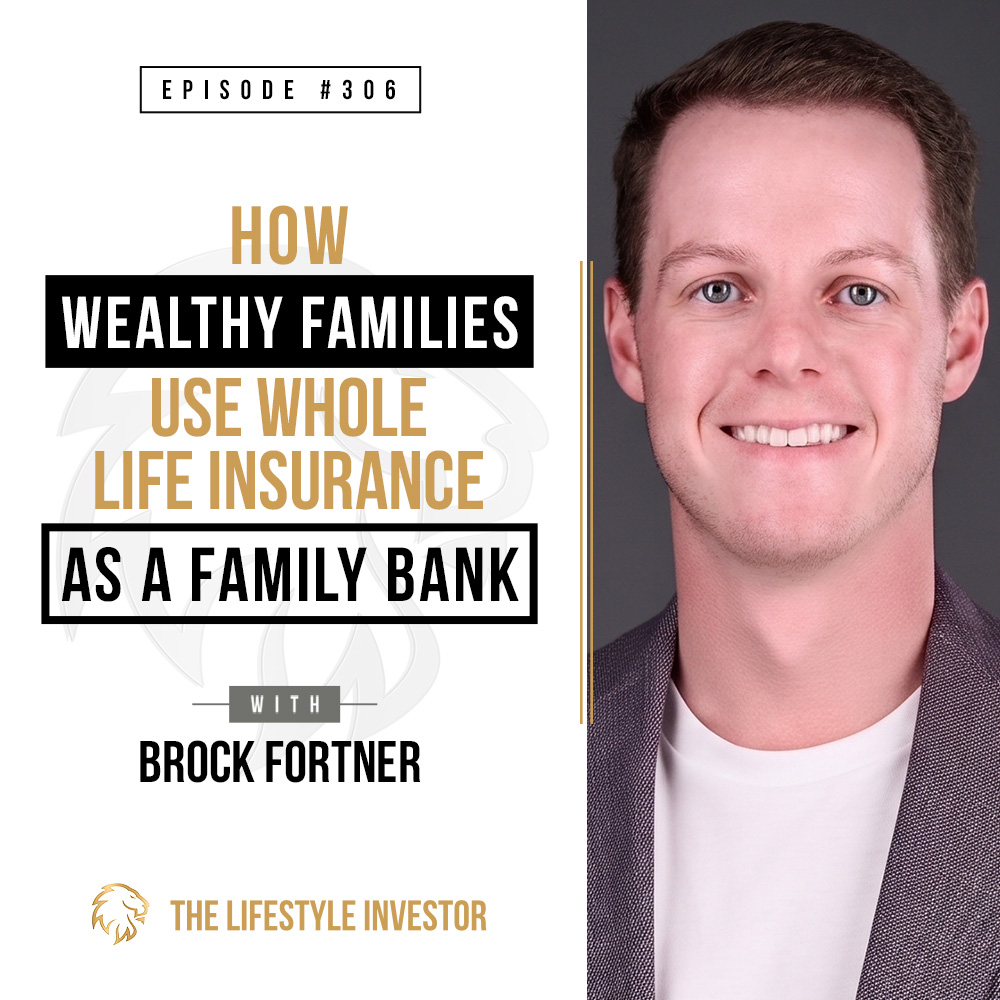
Interview with Ryan Williamson
The 3 Health Metrics Everyone Should Be Tracking To Improve Longevity with Dr. Ryan Williamson, M.D.
True wealth is about more than money. It’s about having the freedom to buy your time back and live life on your terms. But none of it matters if you don’t have the health and energy to enjoy the life you’ve worked so hard to create.
With traditional healthcare falling short in helping people prevent disease before it starts, many high-achieving entrepreneurs are looking for better ways to take control of their health.
Today’s guest, Dr. Ryan Williamson, is a physician, entrepreneur, former Navy lieutenant commander, and longtime member of the Lifestyle Investor Mastermind. He’s also the founder of Transcend Health, where he’s combining advanced diagnostics, personalized medicine, and cutting-edge technology to help people take a more proactive approach to their health.
In our conversation, Ryan explains why an annual physical isn’t enough, which health metrics you should be tracking today, and how simple habits can dramatically improve metabolic health. We also explore how AI and emerging medical technologies are changing healthcare, why more high performers are turning to concierge medicine, and how Ryan’s entrepreneurial journey transformed his definition of wealth and success.
In this episode, you’ll learn:
✅ Why proactive healthcare starts long before symptoms appear and how regularly tracking your health data can uncover risks while you still have time to address them.
✅ How regular blood work, wearables, blood pressure monitoring, movement, sleep can help you build a more complete picture of your health.
✅ How AI, advanced diagnostics, and concierge medicine are creating a more personalized approach to health that can help entrepreneurs perform better and protect their longevity.
Featured on This Episode: Ryan Williamson
✅ What he does: Dr. Ryan Williamson, M.D. is a physician, entrepreneur, former Navy lieutenant commander, and founder of Transcend Health. Drawing on his clinical experience and years of studying preventive health and longevity, Ryan helps entrepreneurs and high performers take a more proactive, data-driven approach to their health through advanced diagnostics, personalized medicine, and high-touch concierge care.
💬 Words of wisdom: “What you do right now has linear effects on where you end up in 5, 10, 30 years. And you’ve got to start now.” – Dr. Ryan Williamson
🔎 Where to find Ryan Williamson: Website | LinkedIn | Facebook | Instagram
Key Takeaways with Ryan Williamson
- Why Your Health Deserves More Attention
- Know Who You’re Taking Health Advice From
- Longevity Is About Quality, Not Just More Years
- The Health Metrics Everyone Should Be Tracking
- What Continuous Glucose Monitors Can Teach You
- Simple Habits That Improve Metabolic Health
- How AI Is Transforming Preventive Healthcare
- The Future of Medicine, Robotics & Longevity
- Why High Performers Are Choosing Concierge Medicine
- Redefining Wealth, Success & A Life By Design
- How You Can Learn More From Ryan
Inspiring Quotes
- “I think everybody should be empowered and educated on how to take care of themselves.” – Dr. Ryan Williamson
- “It is never too early to start. We age from the moment we’re born.” – Dr. Ryan Williamson
- “If you just walk between three and four miles a day, sort of that 7,500 to 10,000 steps if anybody’s heard of that, you literally cut your risk of dying of just about anything in almost half.” – Dr. Ryan Williamson
- “There are literally physiologic benefits to your health by being in a safe environment with people you love.” – Dr. Ryan Williamson
- “Think about the collective impact that has on humanity if you’ve got a whole bunch of healthier, happier people who are just the best versions of themselves doing more of what they want and can in the world.” – Dr. Ryan Williamson
- “If you’re a business owner and you’re not optimized, you’re not physically and cognitively optimized, you are leaving money on the table.” – Dr. Ryan Williamson
Resources
- Ryan Williamson’s Website
- Ryan Williamson on LinkedIn | Facebook | Instagram
- Transcend Health
- Transcend Health on LinkedIn | Facebook | Instagram
- The Incredible Brain by Ryan Williamson
- Transcend Health Programs PDF
- Transcend Health Wellness Guide PDF
- Function Health
- Oura Ring
- Withings
- WHOOP
- Apple Watch
- Fitbit
- OpenAI
- Mythos
- Neuralink
- Waymo
- Robotaxi
Want My Team’s Help?
- Tax Strategy Masterclass
Learn the 28 most effective tax strategies the wealthy use to save thousands.
lifestyleinvestor.com/tax
- Free Strategy Session
Get a personalized roadmap to financial freedom.
lifestyleinvestor.com/consultation
- Lifestyle Investor Newsletter
Join The Lifestyle Investor Insider for curated investing insights.
lifestyleinvestor.com/insider
Rate & Review The Lifestyle Investor Podcast
If you enjoyed today’s episode of The Lifestyle Investor, hit the subscribe button on Apple Podcasts, Spotify, Stitcher, Castbox, Google Podcasts, iHeart Radio, or wherever you listen, so future episodes are automatically downloaded directly to your device.
You can also help by providing an honest rating & review over on Apple Podcasts. Reviews go a long way in helping us build awareness so that we can impact even more people. THANK YOU!
Connect with Justin Donald
Get the Lifestyle Investor Book!
To get access to The Lifestyle Investor: The 10 Commandments of Cashflow Investing for Passive Income and Financial Freedom visit JustinDonald.com/book
Read the Full Transcript with Ryan Williamson
Justin Donald: What's up, Ryan? Welcome back to the show.
Ryan Williamson: Thank you, Justin. I'm happy to be back.
Justin Donald: Well, this is fun. I mean, first time we got into all kinds of cool stuff about the work that you've done. I mean, we talked a bit about your past and your service in the Navy and becoming a lieutenant commander and like all the cool things you've done. But what is really cool to me is what you have done since that call because one of our members who we all appreciate and adore, Amber, helped you write your book, which is awesome, The Incredible Brain. And then from there, you've built out a concierge medical program that I think is just, I mean, it's cutting edge, right? So, it's like today this is what people are doing. This is what I'm doing with my money. This is what a ton of people in our ecosystem are doing, and I mean, we talked about it a while back, but I love the program you've built and just the high-quality, high-touch service you provide. And I just want to dive into it today.
Ryan Williamson: Well, thank you, Justin. Obviously, like you said, you and I talk about this all the time, and health is something that's imperative to all of us, but especially if you're a business owner, if you're an entrepreneur, if you're busy, a lot of times this takes a back burner. And one of my favorite quotes goes something to the effect of the healthy person has a thousand wishes, but the sick person has one. And if anybody's ever been in a situation where they've had their health taken away, or they've been in a difficult spot, perhaps seen that happen to a family member, you know exactly what I'm talking about. And I'm excited that finally medical technology is in a place where we can actually move the needle for people on the preventive health front, staying ahead of disease, and this is a... This sounds crazy, but we have a world-class healthcare system for reacting to things.
So, yep, if you have an emergency or a trauma, we've got world-class surgeons that can fix broken bones and take tumors out and do all these things. But in my world, I mean, by the time people show up for prevention, we're often too far downstream. And I mean, this isn't just a setback. I mean, sometimes we're talking about people's lives here that are lost or at least that are cut short because of something we can do something about. So, I kind of want to frame that and set the stage for people, not to be alarmist or scary, but to highlight how important this is and the fact that you can actually do something about this through programs like what we have at Transcend Health and elsewhere. So, I'm happy to share kind of what that looks like and what I think people need to be thinking about, and what they could do on their own. I mean, we can go any number of directions with this.
Justin Donald: Well, it sounds great, and I've got a million questions for you on this, as I'm myself just curious and interested. And so, I definitely want to dive deep here today. But I also love your background for what you're doing because I see a lot of these concierge doctors that they don't really have a full background. Sometimes I see them, and they're not even medical doctors. And so, I like that you have clinical experience through academic medicine. I like that you understand complex neurological disease. You've worked there. You know this. You've worked with diverse healthcare systems across the US. So, I mean, I feel like your background already lends itself super well to kind of what we're going through. Is there anything else you want to elaborate on the background that you have and how it's prepared you in building out Transcend Health?
Ryan Williamson: Yeah, and I appreciate that. And I think your listeners need to be aware of, in general, whether it's healthcare or elsewhere, know who you're listening to. And know what that person's credentials are and what their training is, because that really does shape the lens and the capability through which they view or practice or help you with whatever their profession is. And medicine, it's a weird thing. It is so incredibly regulated in some ways, yet in others, especially in…
Justin Donald: It's not.
Ryan Williamson: It's not, right? Especially in kind of the longevity space, sort of functional medicine space. Yeah, there are a lot of, I think, rules that people can bend to, perhaps, exceed their scope, would be maybe a polite way of saying that. But yes, I'm of the mindset and the camp that not only do you need to have the credentials and the qualifications, but you need to have the training. And something also that just was shocking to me going through the traditional Western education system: I didn't have the first nutrition course in medical school.
Justin Donald: That's crazy to me. That's absolutely nuts that nutrition is not a bedrock foundational course or process inside of anything medicine. That is mind-blowing.
Ryan Williamson: It is mind-blowing.
Justin Donald: Like, you actually have to be a nutritionist to learn this stuff. And I also feel like even that is - no offense to the nutritionists - I actually think the data that they subscribe to and, I mean, really, the commentary and the books, the “science” behind it is not the highest of quality anyway. Like, really, it blows my mind. I think Big Food has a real big influence and lobby pull in our health system that does a disservice to us, those of us trying to be healthy and live a healthy life.
Ryan Williamson: For sure. And something I run into…
Justin Donald: And Big Pharma.
Ryan Williamson: 100%. And a big criticism of the Western training pipeline is that those lobbies have an influence over medical education. And I will say that, I mean, it has literally taken me a decade in practice to start to figure out and educate myself on how to properly help people with prevention. And again, most doctors that go through this pipeline, they don't have that background, they don't have that knowledge base. So, you really have to learn how to figure this out yourself, which is an uphill battle and crazy.
Justin Donald: Well, and most people aren't experts in this. And it's so comical to me. There are two paths. I mean, there's tons of places where I think people get this wrong, but there are two places I see it happen all the time, where it's like, "Hey, I heard this thing about creating wealth on TikTok. I heard this thing about building my health and longevity on TikTok or on Instagram." Like, I can't tell you how many times I hear this, and it's horrible information. By the way, I'm not even medically trained, and I know it's horrible information on the medical side or on the food side, but where I do have more expertise on the investment front, it's like, "Wait a minute, you heard what? You're trusting who? What type of credentials does this person have? They're making their money from posting these videos, not because they're actually a good investor.”
Ryan Williamson: I mean, I'm laughing, but it also makes me cringe at the same time because I deal with the same battles on social media where, I mean, or even patients that come to my clinic that go, "Hey, I heard so and so, this influencer," or, "This medicine's bad," or, "Statins are good." It's like, oh my goodness. I mean, again, just know who you're listening to because I cannot overstate this.
Justin Donald: Well, this is why I feel so good endorsing you because, number one, well, I love interviewing our Lifestyle Investor Mastermind members. So, you've been an early member. You're an OG in our community. I've known you for years and years, five years or so now. And so, I've gotten a chance to see your level of expertise. I've actually been able to sit through some of your really incredible sessions that you've done, your teaching sessions and kind of walking through, I mean, you kind of did like a deep dive one time for a whole day that was like A to Z, and I learned so much being a student because I could geek out on health stuff all day long.
Ryan Williamson: Well, thank you, Justin. I do love to teach. It's a passion. I think everybody should be empowered and educated on how to take care of themselves. And we touched on this a minute ago, but I think another big challenge when it comes to influencers, nutritionists, not to hate on nutritionists, but wherever the information comes from, it's very tough for a non-medically trained person to know the difference between quality evidence and hearsay or expert opinion, or in many cases on TikTok, non-expert opinion that just has a lot of views.
Justin Donald: And misreading the data. It's like, "Here's the data, but I misinterpreted it." Right?
Ryan Williamson: Exactly. Yes, yes, correct. And that takes time, training, and education, and of course, context, and that's something that I bring to the table, or at least I hope I bring to the table with what we're doing and really putting together an evidence-based paradigm where people can actually take a deep look at where they are on their health journey. So, what's their baseline? What are the outliers? What do we need to optimize? And how do we use medical evidence to actually help them carry through to live their best life and ideally just do more of what they want, which is I think what we're all here for.
Justin Donald: Ah, it's so good. Well, when I think about most people, and I feel very blessed that I've been pro-longevity and biohacking and learning all the stuff, eating healthy, supplementing, like all the things for years and years and years now. But most people, I think that when they hear longevity, they're like, "Oh, it's about living longer." No, no, that's not it. It could be, but that's not really it. It's about protecting the quality of the years that you're going to live. And so, you're really good at explaining today's healthcare system, and how people often just, you know, you mentioned earlier, people wait for disease to appear, and then it's like, "Okay, let me get proactive now."
But there's this new emergence for people that are taking this into their own hands, where it's like, "Actually, I want to be proactive early, before there are any problems." And so, I think about I've got a number of friends that are like, "Yeah, I had my annual checkup," right? That strategy feels wrong, that once a year you're seeing a doctor. So, why is that approach failing us? Like, that used to be exactly how you do it. I don't think it ever served us, but that's how it used to be done. Today, I love that it's not being done that way. But why is that approach failing us? And what does true preventative medicine look like in your opinion?
Ryan Williamson: Yeah, great points. So, first off, it is never too early to start. We age from the moment we're born, and that's not how we typically think about it, but our cells are aging, and that's going to continue until we die. And so, to your point, it's not necessarily about extending our lifespan or how long we live, although I do firmly believe that many of the interventions that are available that slow down our rate of aging will likely extend human lifespan in our lifetime. I used to have a more limited view on that, but the mechanisms all overlap, and I think we're going to see that. And just as an example of this, consider the fact that the average human lifespan in 1900 was about 30. Today, worldwide it's 72 to 74, depending on the data you read.
In the United States, it's a little higher, 76, 78. So, we have literally over-doubled that within a century, within really less than that, quite frankly. And again, depending on what you read, we are expected to see the equivalent of about a century's worth, like the last century's worth of technological change in the next decade with the rate of acceleration of medical technology, AI, all these things we talk about all the time in our community. So, I say that because, I mean, you know this and your audience knows this from the investing standpoint, but we are not very good at analyzing compound data. Our brains just don't work that way. And so, I think when a lot of people think about this like, "Oh, I'll get a checkup once a year, I'll worry about this later."
No. I mean, what you do right now has linear effects on where you end up in 5, 10, 30 years. And you got to start now. You have to start looking into this. And to answer your question about the kind of the annual timeframe being off or too long, we can meaningfully shift blood work, certainly blood pressure, I mean, our metabolic health, on the order of weeks and months. And I think about the optimal frequency to check kind of the regular blood work is once about every 90 days. We go longer than that, and I think we're missing an opportunity to move the needle on, say, cholesterol or hemoglobin A1C, which are very important markers of metabolic health, which, by the way, I know you've heard me say this, but 93% of Americans are metabolically unhealthy. So, if you think, "Oh, I'm healthy, and this doesn't apply to me," well, statistically, chances are some of this does. At least a lot of this does, even if you're a very health-conscious person.
Justin Donald: Yeah, or even if you look like you're in shape, that isn't... Like, you can't just fall back and be like, "Well, I'm thin," or whatever. Like, that's not good enough. And like you, by the way, I do. I mean, it's been, oh, probably about seven years now, maybe eight. For sure, seven years I have gotten quarterly blood draws, and I have made major improvements in different categories, like you said, within 90 days because I'm aware of it. And prior to that, I just wasn't aware of it, or I would see it once a year. Or I wouldn't even get my blood drawn once a year, right? Like, I would just get the checkup. So, it's kind of crazy. And so, I kind of want to take it one step further. So, for someone that wants to live a long, healthy, high-performing life, what are the first three medical metrics or screenings they should prioritize today?
Ryan Williamson: Yeah. So, blood work is an easy one, and I mean, literally you can get this done for a couple hundred bucks through a program like Function Health. If you have an Oura Ring, I know you and I are both Oura Ring users/wearers. They have a program for $99 that draws a very, I think, comprehensive lab panel that you can order as often as you want, but again, every 90 days. So, the costs have come down exponentially, which is nice, if you want to cash-pay this. If you have the right doctor with the right mindset, they can order this, and insurance can help get involved. So, if people are more cost-conscious, there's certainly a cheaper avenue to do that.
But blood work is a great place to start. Buying a home blood pressure cuff, I mean, you can have one of these for about $100. Withings makes a great product in my opinion that has Bluetooth that beams to an app on your phone. This can track, which, by the way, can also integrate with your wearable devices and other systems. And I mean, there are a lot of people walking around with high blood pressure that have no idea. And that's a silent killer. So, that's a very easy fix. And honestly, I mean, even a wearable. I mean, it doesn't have to be an Oura Ring. I mean, WHOOP, Apple Watch, Fitbit, I mean, there are dozens of these products out there on the market now.
But if you really did those three, I mean, really track your blood work, had a wearable, checking your blood pressure, that's a great place to start for a lot of people. And you're going to be surprised at what you find. To your point, Justin, if we are not looking for the data, we don't know what we're going to uncover. And I think for most people that's going to be an eye-opener as to, oh, maybe my blood pressure is on the higher side and I need to do something about this. And that doesn't even necessarily mean hop on a medicine right away. I mean, in cases that's helpful and necessary depending on the etiology or the underlying cause of high blood pressure. But I mean, be mindful of your caloric balance, your nutrition, your salt intake, making sure you're doing the right kind of physical activity.
What's your sleep look like? Which, by the way, you can order a home sleep test now for about $150. That's a one-time that'll get you a board-certified sleep specialist that'll interpret this for you, that could diagnose sleep apnea, which is another silent killer that raises blood pressure and risk of heart attack, strokes, sudden cardiac death, all of this. So, there's really just this three-dimensional landscape that I think people need to think about when it comes to their health, from basic all the way up to advanced. And a lot of this is fairly cost-effective. I think really where it gets a little pricier, at least today, and I think within the decade costs are going to continue to come down on this because they already have but even thinking about something like full-body imaging.
We've talked about this, but even doing like a basic calcium score, and then even following that up with what's called a CCTA, which is a dye-based study or a contrast-based study to look at the arteries in the heart. Unfortunately, you and I have lost friends and people we're close with at a young age who had an undiagnosed cardiac problem. And, I mean, this is preventable, and it shatters families. And I see this all the time in the hospital, and it is just absolutely heartbreaking, because this is so preventable.
Justin Donald: Yes. So true. Question for you. So, I used a continuous glucose monitor for a period of time, and I gathered some great insights from that. Like, for my body, it's much better that I eat protein first before I have anything sweet, even if it's like yogurt low in sugar that is high protein, or fruit, right? Like, so for me, my body, I would spike if I wasn't getting that base of protein first for any meal, especially for breakfast. And then certain things will react a certain way for me. For my wife, they would react differently. And so, all of our bodies are different, and so I'm curious your thoughts on that. And then to take it one step further, I've got a buddy that said, "Hey, the next evolution of these continuous glucose monitors is actually insulin monitors," and you can't get those in the US yet, and these are popular in Europe.
So, as you know, I'm about to head out of the country for a few weeks, and so I'm going to look into this while we're there. Like, I'm such a geek when it comes to my health and the things I can do, the data that I can read and understand. So, I want to look into this insulin because I guess that's even more... It's like you are tracking glucose so that you get a read on the insulin, but can't you just go directly to get the read on insulin since that's what you want? So, I'm curious your thoughts on that.
Ryan Williamson: Great question. So, I think continuous glucose monitors are a great tool, and you're 100% correct that everybody's metabolism, everybody's body's different when it comes to different food groups, meal timing, order, all of this. So, this is a great learning tool to stick one on the back of your arm or even sometimes on the kind of love handle here on the side, wherever it fits, to then, yeah, I mean, just look at over a period of two weeks or a month or however long you have the thing on, to say, "All right. I'm going to be very intentional about what I eat and when and really just learn from the pattern of the glucose spikes.” When we ingest carbohydrates, our blood glucose naturally rises, although we do want to keep that line as flat as we can.
And then as it comes down, the reason our glucose drops is that our pancreas releases the hormone insulin, as you said. And a challenge with diabetes is that the pancreas does not work well for one reason or another, whether it's through metabolic dysfunction or autoimmune disease. There are different reasons for this, so then people have to take medications to lower sugar or to even exogenous insulin or an insulin pump where they inject it or have a continuous infusion. So, the reason insulin's important is that, again, part of this metabolic health, when I was talking about the 93% that are metabolically unhealthy, a large portion of that has to do with insulin resistance. And it's estimated that about 50% of Americans are insulin resistant to some degree or another.
Justin Donald: Wow.
Ryan Williamson: Yeah, so literally flip a coin, and that's what people are dealing with. And being able to measure that is thought to be a more sensitive marker of metabolic health too, which is where that comes from. The good news is that, for those that haven't done this or think, "Oh gosh, do I need to run out and fly to Europe or catch a plane with Justin to go get an insulin monitor?” you can markedly improve your metabolic health with some basic lifestyle parameters, and it's around all the things we're talking about, right? It's being diligent about just moving every day. And we're not talking about trying to train for the Olympics or go become a powerlifter. I mean, if you just walk between three and four miles a day, sort of that 7,500 to 10,000 steps if anybody's heard of that, you literally cut your risk of dying of just about anything in almost half.
Justin Donald: Wow.
Ryan Williamson: Just by walking.
Justin Donald: That's unbelievable.
Ryan Williamson: And I have patients that have diabetes, that have a continuous glucose monitor, or that are on insulin, and they literally, Justin, can regulate their blood sugar by going for a walk after they eat. Because when you contract muscles, this is really interesting, when you contract muscles, our muscles are our biggest glucose sink, so perhaps one of the best things we can all do is maintain adequate muscle mass and adequate strength long-term, but our muscles, when we move, we know our muscles, we train our muscles to do more work when we exercise. And sugar is the fuel that they like. And so, when our blood glucose increases, independent of that whole insulin-pancreas pathway, we can upregulate these receptors that pull sugar into our muscles. And so, we can actually decrease our blood glucose levels just by getting moving, just by going for a walk, which is really cool.
Justin Donald: And what a great habit to be in anyway, and a great way to spend quality time with your spouse or your kids, right? I mean, these are like family activities. But if you just had a big dinner, what better thing could you do than just go out for a walk as a family or go out for a walk with your spouse?
Ryan Williamson: 100%. And literally Corey and I just got back from Washington, D.C. yesterday, had the opportunity to speak to Marine Corps leadership again, which has been a really fun just sort of side endeavor that we've been back.
Justin Donald: That's cool.
Ryan Williamson: Yeah, it was fun. And we were talking about not just the movement and the glucose and the nutrition but talking about communities and healthy relationships. So, being in a mastermind group, or being in a group like the one we were talking to, walking with your family, there are literally physiologic benefits to your health by being in a safe environment with people you love. Our Transcend Health Mastermind, relationships was literally the topic this month. It was the physiology of relationships. This is not some woo pseudoscience myth. It literally changes your neurochemistry, changes your biology, lowers your stress levels, keeps that cortisol spike where it needs to be.
I mean, this is a giant symphony and, I mean, if your body is just if one little violinist is off, it can throw the system out of whack, so to speak. But yeah, I mean, going for a walk with the family after a meal, one of our favorite things to do and one of the best things you can do, for sure.
Justin Donald: Oh, that's great. Well, Ryan, I know healthcare is really just rapidly evolving through AI, advanced diagnostics, personalized medicine. You've hinted at some of this already. But I know you spend a lot of time studying where healthcare is headed, right, just in general, and even in a more granular way. So, what advancements over the next five to ten years are you most excited about, and how will they change the way that we manage our health?
Ryan Williamson: Well, yeah, man, this is really exciting to think about, obviously. Before I pivot there, though, everything we're talking about is available today, and with the rapid advancements in AI, this is one of the neatest things that we can all do. We can plug in imaging, labs, wearable data, nutrition, exercise. All of this can actually go into a platform that's overseen and managed by an AI, and we can now extrapolate these trends for people where, I mean, literally, they've actually, there are peer-reviewed medical journal studies on this, where you compare an AI system, and by the way, this is already with GPT-4, and I mean, literally, OpenAI just announced 5.6 today, right?
So, I mean, as good as Mythos or better, which was just banned by the government two weeks ago. So, I mean, we're talking orders of magnitude less powerful already, and this is outperforming not just the best doctors, but the best groups of doctors when they collectively analyze a case compared to the AI.
Justin Donald: That's so incredible.
Ryan Williamson: So, we're already there, and that's been there for months, if not the last year or two. And the reason I say this is that this is not a replacement for clinical thinking or judgment. Of course, I and I certainly hope my colleagues are still in the driver's seat, but it gives us far better tools. It gives us more access to better continuous data, and it gives us, again, we can trend people's wearable data, so their sleep, day in, day out. If people are managing their blood pressure, if they have a continuous glucose monitor. If we can bring all this into one place, I mean, using these AI insights, Justin, I mean, we create a much more real-time, accurate, three-dimensional picture of someone's health.
And again, backed outcomes, this is a massive, massive difference in terms of where people end up as far as what are they able to do today, how can we optimize today, which is obviously relevant, but then where do we end up in the future? And so, I mean, that is very exciting, and that is today. That is not five or ten years away. So, I just want to double-click on that, and share, and that is literally what we are doing at Transcend Health, for what that's worth. But where are we headed in five to ten years? I mean, it's just, again, it's almost impossible to know because it's just of the possibilities and the math involved. But when we think about, okay, what does the regulatory landscape of peptides look like, or stem cells, perhaps exosomes?
What are the next or new biological products that are going to be available, developed, and, at least more mainstream? I think that's all going to be on the table. There are people who feel that technology will progress to the point where we'll have nanobots in the bloodstream that can literally go do microscopic repair on heart valves or blood vessels or things like this. Which this sounded crazy to me, Justin, even two years ago, but the more I look into this and read about it and think, well, again, do the math, it's pretty wild to contemplate.
Justin Donald: Well, if you have Neuralink that's doing this for the brain, why can you not have these nanobots in your blood cells doing repair work? Like, to me, a long time ago, I was like, there's no way someone that couldn't speak could get some chip put in and can learn to communicate, and now we're seeing that. We're seeing many examples of this, not just a one-off thing. So, this to me, I'm a believer in this type of technology, and I'm also an investor in this type of technology. Like, this to me does some of the best stuff for the world that's out there. And so, I love this for me and just to be in great shape and to know what's coming and be preventative, but to do all the things. And then I love investing in this space to help fund what can be life-changing. It can be legacy-changing. It's so inspiring to think about what's happening right now.
Ryan Williamson: Yeah, that's one of your philosophies that I love, is getting to the point where you can make money matter. And that really is what that's all about. And take even the humanoid robots, right? So, Optimus and things like this have been put an AI brain in one of these. You know, we are creating not only digital super intelligence, but the hardware for this to sit upon, that if you can imagine, again, the world's best surgeon that takes, I mean, a decade and a half to train, that goes through so many practices, so many surgeries, you can collectively upload not just that level of experience into a machine or into a robot, but you can network the collective experience of all robots that have ever done a surgery and train that, train that individual humanoid surgeon or whatever you want to call this thing.
And so, now you've got orders of magnitude higher quality with lower rates of error, with more experience, and even perhaps a better set of eyes and hands that could get through a more delicate procedure. This maybe ruffle some feathers with my surgeon colleagues. But I mean, as a clinician myself, I'm willing to accept if our roles shift, I mean, I think doctors are always going to have a role. I think we're always going to be, well, hopefully be desired at the bedside to hold someone's hand because no one can replace the human experience, even if we have a better robotic surgeon or better drugs or nanobots or whatever, but if it elevates the level of care, opportunity, quality of life.
And think about the collective impact that has on humanity if you've got a whole bunch of healthier, happier people who are just the best versions of themselves doing more of what they want and can in the world. I mean, who wouldn't want that future?
Justin Donald: Yeah. I mean, robotics are going to for sure play a part in this. We're already seeing it. I mean, we're also already seeing robotics playing a part in full surgeries, right? And so, it's interesting. Like, I talk to people, and they're like, "Well, I would never want a robot working on me. I want human hands." But it's like we don't know. So, the number one thing that doctors have to get is malpractice insurance, right? We know there are all kinds of issues and suits, and unfortunately that is a thing. But you also don't know how did your doctor sleep last night? Are they in a huge fight with their spouse? Did they just get divorced? Did they just lose all their money in an investment? Do they have something health-related going on? Like, do they have narcolepsy or whatever? There's just so much that I think people don't even take into account.
And it's like any place that we can get more precision, more consistency, it's like let's use that as a tool and an aid. We can have surgeons in the room. Let's make sure the surgeons are the ones studying this and see how it's working, and we do plenty of trials and tests and split tests. But, I mean, this is making our medical system, our healthcare system better. It just is.
Ryan Williamson: No question. And it's kind of the same logic or perhaps fear around fully self-driving cars, right? I hear this all the time. "Oh, I wouldn't want a robot driving me around or a Tesla or pick a Robotaxi," whatever. It's like go look at the data.
Justin Donald: I know. They're better than drivers
Ryan Williamson: This is far safer.
Justin Donald: It's crazy. I sat in a Robotaxi. My wife is still kind of freaked out about it. So, she doesn't like taking them, but so in Austin here, we have had Robotaxis for a while, and I'm always happy to do it because I'm like, "These guys are better than the drivers out there." They just are. I've done a bunch of Waymos, like I like it. And I can kind of just not… Sometimes I love chit-chatting it up, but other times, I just kind of want to chill, do my own thing, and it's kind of fun getting into a car in the front seat with no other driver, getting whisked around the city. I mean, I've taken umpteen Robotaxis, and it is great.
Ryan Williamson: It's fascinating. And I feel like I'd be remiss if I didn't say this, but in Atlanta we have Waymo. I don't think we have Robotaxi here yet, at least I'm not aware of it if we do. But we get a lot of pretty heavy rainstorms here in Atlanta, and there are a lot of hills. And the Waymos hadn't quite had the puddles and the deep water figured out, so we've had some that have stalled out. So, there'll be kinks along the way, but I mean, again, just it's not going to take long for this to really be the norm.
Justin Donald: And same thing in the medical space, you know? Same thing. Work some kinks out, but pretty soon this is going to be the best tech that's out there. Now, something I do want to talk a little bit about is why so many high performers are choosing concierge medicine. So, I know a lot of successful entrepreneurs, business types, they invest in coaches, they invest in advisors, they invest in wealth managers, but many still rely on a reactive healthcare model. And you talk a lot about high achievers are really turning to concierge medicine. You're seeing it in your own practice. I've seen it with some other friends as well. I'm part of a handful. I mean, I've been split-testing concierge practices for the better part of seven years now. And I love seeing a proactive partnership with a physician that can improve both performance and longevity.
So, I'm curious for you, what inspired you to leave the traditional healthcare system and launch Transcend Health? And then also, what gaps were you determined to solve by starting Transcend Health?
Ryan Williamson: Well, the reason I left was really twofold. One, it was frustration with the current healthcare system, which is reactive, and it's broken. I think we all know that. And it's sick care. It's not healthcare. And that really was a back-burner item for me that I had this idea for the book, and the concierge practice kind of came later. But really, it was a loss. I mean, it was the loss of my best friend, my lifelong best friend, that kicked me into gear. And I said, "How much longer am I going to wait around and not do this?" So, that was two years ago this month, actually, June 10th, what was 2024. So, that's what got me to here. And why entrepreneurs, why high performers? You hit the nail on the head when you're talking about the surgeon that may not have slept well or maybe has something going on at home.
If you're a business owner and you're not optimized, you're not physically and cognitively optimized, you are leaving money on the table. And so, to make sure that you're dialed in, that you've got the right health trajectory, that you're showing up every day, you're performing at your absolute best, that's really the hack. That's the win. Because if you're not thinking at the highest level possible, your business is suffering and you're chasing your tail. And I see this all the time, Justin. I mean, we talk about this all the time in our community, but how many people sacrifice their health for years to go on a grind, to go build a business, and they end up with some pretty scary stuff, and then they've got to work backwards.
Whereas if you start from day one, you're not only not going to end up in that situation, or at least you're much less likely to end up in that situation, you're going to perform better along the way anyway and probably have a substantially more successful business because you're showing up every day doing better work.
Justin Donald: Yes. So, let me ask you this. So, I guess, I want to figure out how I want to articulate this best. How does having a concierge physician change the experience for a busy entrepreneur and for a busy investor compared to just the standard annual physical?
Ryan Williamson: Yeah. So, it really is frequency, quality, and then I think accountability. And what I mean by that is if you go back to that annual model we were discussing where you kind of go in for a checkup once a year, it's limited in scope, so the quality is really not there. We're not doing the quarterly blood work, we're not doing the ongoing analysis of the wearables and the AI integration, all this stuff. So, we're missing... There's opportunity costs there, but then when it comes to accountability, doctors in the traditional system or the legacy system are just too darn busy to have the time to reach out or call you or text you and say, "Hey, Justin, we need to talk about your last blood work or that cardiac image."
And it's very easy for people to fall through the cracks even if they do this on their own because they're busy. You really need somebody in your corner who, again, has the training, has the background, has the perspective, the experience, and then has the time to actually be able to stay on top of this and help you do this. And that is why, literally, this is also the culmination of four or five years of conversations I've had with you and people in our community and our friends, family, and just listening to really what everybody has told me and their frustration with this system, and then having things happen that are completely preventable. So, yeah.
Justin Donald: I love that, and I appreciate you sharing it. And I'm a big believer. Like, I am a participant in exactly that. So, I hope that everyone listening to this takes a more proactive approach with their health, with their life. I just think that people are going to be better off for it. One last question I have for you is when I think about Lifestyle Investor, I started this, and I had a big vision and big dreams, but it's all about creating freedom and living life intentionally. So, how has your entrepreneurial journey changed your own definition of wealth, success, and living a meaningful life?
Ryan Williamson: Man, I feel like that could be a whole another episode, Justin.
Justin Donald: Oh, it could. It totally could. We could go deep here. We don't have to, but I mean, I've seen so much transformation in you and Corey, and it's just been an honor to have a front row seat to it all. And I know because you've had such massive change and shift and growth, you're just a walking, talking best-in-class example of it. And so, I just want people to hear your perspective here, because I feel like you're living a totally different life. You're living an epic life. Not that your life wasn't good before. You had a good life. You're just living, I mean, at the level of preeminent or epic or however you want to call it.
Ryan Williamson: I appreciate you saying that, Justin, and it has been just an incredible journey. When people ask me about Lifestyle Investor, what's our experience has been, the words that always come to mind are life-changing, and I truly mean that because it has been: the education, the relationships, the experience, the perspective. I think you say this, but people get interested because they're interested in deal flow and the tax strategy, and like, yeah, like we got that, for sure. I mean, I could show you the numbers on the compounded tax savings that we've had over five years. Been absolutely incredible. That's been a great wealth generator. The access to the deals, absolutely.
But really, I think the single greatest ROI has been personal development, growth, change, mindset, and that has ultimately led me to the point where I've had the perspective and just the experience and the confidence to say, "You know what? I mean, I can certainly do better than what the medical system's currently offering. I don't need to be stuck in a miserable system where..." I think most of my friends that went to medical school, my med school classmates, co-residents, they're stuck in a system that's just not optimal, that they're stuck dealing with. And it's fun to go be a light and an example for them, and just say, "Hey, here's what's possible, guys." It's a lot of work, but it's totally worth it. And I was on a Zoom earlier with Jake and Laura Meyer. You know them.
Justin Donald: Oh, love them. Yeah. Great couple.
Ryan Williamson: Wonderful people. They sure are. And I said, "How cool is it that on a Friday afternoon we can sit here on Zoom and have a meaningful conversation because the three of us aren't stuck in some job that we hate?" And, I mean, Corey and I can go travel. We were just in Europe last month, and we were talking about that. It's just incredible. So, thank you, Justin, for what you do and for the education and the opportunity to just be around so many incredible people. You say this too, but I think your superpower really is just connecting folks, I mean and just getting everybody in the right room. So, yeah, just love the community and what we've been able to do.
Justin Donald: Well, thank you certainly for such kind words, and thank you for building out Transcend Health. I'm just blown away at what you guys are doing and how quickly you're scaling, and how high quality the services that you're offering. So, thank you for that. Where can people learn more about you and more about Transcend Health?
Ryan Williamson: Absolutely. So, our website is transcendhealthmedical.com. Certainly, can give that to you to post in the show notes. And then we've got a couple of free guides and some outlines we could certainly give people as well. That'll link you to our social media, LinkedIn, Facebook, Instagram, all the other websites. But yeah, the Transcend Health Medical would be the place to send people.
Justin Donald: Awesome. Well, I just highly, highly encourage anyone who is serious about taking their health to the next level to reach out, dig into the company, dig into Ryan. At a minimum, take him up on the free guides, but I would encourage you to take him up on more than that and get your life to not just good, but absolutely great. So, thanks for joining. And, as you know, I love ending every episode with a question. So, if you're watching this or if you're listening to this, what is one step you can take today to move towards financial freedom and really just move towards living the life you desire on your terms, not a life by default, but a life by design? And what's one thing you can take from Ryan today to practically apply to your life that gets you moving in that direction? Thanks for joining us again, Ryan. Thanks for tuning in for those of you watching or listening. And we'll catch you next week.
Sign up to receive email updates
Enter your name and email address below and I'll send you periodic updates about the podcast.
Keep Learning

What Two 9-Figure Exits Taught a Serial Entrepreneur About Investing with Ben Rubenstein – EP 308

Why Asking for Help Is a Superpower for Success with Nathan Thomas – EP 307