
![[Justin Donald] - Optin Preview](https://lifestyleinvestor.com/wp-content/uploads/2020/12/Justin-Donald-Optin-Preview-e1607533704966.png "[Justin Donald] - Optin Preview")

![Logo 1 Gold horiz [Converted]](https://lifestyleinvestor.com/wp-content/uploads/2019/08/Logo-1-Gold-horiz-Converted.png "Logo 1 Gold horiz [Converted]")
Interview with Jon Ostenson
How Franchising Is a Faster Path to Cash-Flowing Business Ownership with Jon Ostenson
Building a business from scratch might seem like the obvious path to financial freedom, but it comes with a unique set of challenges. And in many cases, it can be one of the slowest and riskiest ways to create consistent cash flow and income, especially without the right systems, support, or experience in place.
That’s why I’m excited to introduce you to one of our newest Lifestyle Investor Mastermind members, Jon Ostenson. Jon is the Founder and CEO of FranBridge Consulting, where he helps individuals identify, evaluate, and invest in non-food franchise opportunities and has spent years helping investors transition into business ownership through franchising.
His firm has been recognized twice on the Inc. 5000 list, he’s the author of Non-Food Franchising, and he is a highly sought-after expert who helps investors navigate the franchising space with a disciplined, strategic approach.
In our conversation, Jon breaks down why franchising can offer a faster and more structured path to business ownership, why due diligence is critical before investing hard-earned money, and why “boring” businesses are often more profitable than well-known companies.
In this episode, you’ll learn:
✅ Why franchising gives you a huge advantage when acquiring other business and scaling multiple locations.
✅ How Jon helps identify high-demand, recession-resistant franchise opportunities in today’s market.
✅ What most investors overlook when evaluating franchises and how to avoid costly mistakes.
Featured on This Episode: Jon Ostenson
✅ What he does: Jon Ostenson is the Founder and CEO of FranBridge Consulting, where he specializes in helping investors transition into franchise ownership. With experience as a corporate executive, franchise president, multi-unit owner, and investor, Jon brings a unique perspective to identifying scalable, cash-flowing business opportunities across a wide range of industries.
💬 Words of wisdom: “If business ownership was easy, everyone would be doing it. There’s a reason why you can make outsized returns and have that potential, but it’s not going to run itself. It comes down to having a good operator, whether it be you or someone else.” – Jon Ostenson
🔎 Where to find Jon Ostenson: Website | LinkedIn
Key Takeaways with Jon Ostenson
- Jon’s Journey From Corporate America to Franchising
- Why Business Ownership Belongs in an Investor’s Portfolio
- How to Properly Vet a Franchise Before Investing
- The Best Franchise Industries to Watch Right Now
- Why Service-Based Franchises Often Beat Food Concepts
- Franchising vs Starting a Business From Scratch
- Why Hiring A Franchise Consultant Helps Avoid Costly Mistakes
- Entrepreneurship Through Acquisition vs Franchising
- Franchise Costs, Margins, and ROI Potential
- Emerging Niches & Scaling Through Franchise Stacking
- How To Learn More and Work with Jon
Why Buying a Business Is Harder Than You Think
Inspiring Quotes
- “Your competition is not going to be passive. So, if you’re not the one driving the day-to-day, you better have a really good operator in that seat.” – Jon Ostenson
- “I joke that non-sexy is the new sexy when it comes to business ownerships.” – Jon Ostenson
- “It is a unique time out there right now because the demand is strong. It’s a blessing and a curse. Territories are moving fast.” – Jon Ostenson
Resources
- FranBridge Consulting
- FranBridge Consulting on LinkedIn
- Jon Ostenson on LinkedIn | YouTube | X/Twitter
- Non-Food Franchising: The Better Path to Business Ownership by Jon Ostenson
- ShelfGenie
- Hans Box
- Orangetheory Fitness
- Two Men and a Truck
- Art of Drawers
- Princeton Equity
Want My Team’s Help?
- Tax Strategy Masterclass
Learn the 28 most effective tax strategies the wealthy use to save thousands.
lifestyleinvestor.com/tax
- Free Strategy Session
Get a personalized roadmap to financial freedom.
lifestyleinvestor.com/consultation
- Lifestyle Investor Newsletter
Join The Lifestyle Investor Insider for curated investing insights.
lifestyleinvestor.com/insider
Rate & Review The Lifestyle Investor Podcast
If you enjoyed today’s episode of The Lifestyle Investor, hit the subscribe button on Apple Podcasts, Spotify, Stitcher, Castbox, Google Podcasts, iHeart Radio, or wherever you listen, so future episodes are automatically downloaded directly to your device.
You can also help by providing an honest rating & review over on Apple Podcasts. Reviews go a long way in helping us build awareness so that we can impact even more people. THANK YOU!
Connect with Justin Donald
Get the Lifestyle Investor Book!
To get access to The Lifestyle Investor: The 10 Commandments of Cashflow Investing for Passive Income and Financial Freedom visit JustinDonald.com/book
Read the Full Transcript with Jon Ostenson
Justin Donald: What's up, Jon? Good to have you on the show.
Jon Ostenson: Hey, Justin, excited to be here.
Justin Donald: Well, this is fantastic timing. I don't know that I've ever had someone on the show so quickly upon becoming a member of the Lifestyle Investor Mastermind. I was sharing that with you off-air, but the timing's just great. First and foremost, you're a friend. Secondly, you just joined the Mastermind. And third, I'm so excited to tell your story because you have an incredible story.
Jon Ostenson: Well, I appreciate you having me. No, it's funny how things work out, and I've got booking agents that when they brought the opportunity to me to join, it was a no-brainer. So, funny timing.
Justin Donald: Well, this is so fun. All right. So, for people that don't know you, you are, well, maybe we should start with the fact that you're an incredible golfer and your son is an incredible golfer, and that's something cool that you guys get to do together. So, beyond just like the business pedigree, you are a tall guy that can hit the heck out of the ball, okay? But you are a top 1% of franchise consultants. Your franchise consulting firm, FranBridge, has been a two-time Inc. 5000 firm. And I think you're a former Inc. 500 franchise president. So, you've also owned many franchise locations. You've been a franchisee. So, we can go all the different directions here today on what you like, what you don't like, what to stay away from, what industries are in right now, and what are kind of ones to stay away from.
Jon Ostenson: Yeah. No, there are multiple directions we can go. And I think it's helpful to first share my background. I spent many years in the corporate world. I was helping others build their empire. Very thankful for the experiences. I can really resonate with a lot of our clients because I've been in their shoes, I had the golden handcuffs and really fell into franchising about a decade ago. And for me, when I'd hear the F word, franchise, I would think fast food. And it was eye-opening to me to see all these industries that existed outside of food. Like you said, had the opportunity to step in and serve as president of ShelfGenie franchise system and support franchise owners all across North America.
And really, for me, that was a light bulb moment where I fell in love with the model and just saw how all these diverse backgrounds could come together under a shared system of support. And since then, as you mentioned, have invested in multiple franchises myself. I've got good people overseeing those today and allows me to spend most of my time helping others explore opportunities, top opportunities in their market.
Justin Donald: So, I think it's interesting to point out. So, number one, you are a franchise consultant with a background in corporate America. Number two, you're a franchisee. You've kind of had higher-ranking positions even inside of your franchisee positions, but let's just call it, you own many locations. And then three, you're a passive investor. You invest in a lot of LP deals. We've talked about this. And in fact, before we got on the call, you had said you just went through the due diligence like vetting deals course that Hans Box and I put together for those that really want to get serious about their Lifestyle Investor pedigree and forward movement. And I think you had said it, it helped you make a decision not to move forward on a deal recently.
Jon Ostenson: Yeah, I had a couple of pre-IPO deals. We went with one, but chose not to go with the other ones, strictly because I was going through that course, and I couldn't justify to myself that it made sense. So, I'm an all-of-the-above kind of guy when it comes to investing. I'm all about diversification. I believe in finding good sponsors, good partners across different asset classes, whether it be private equity, private credit, real estate funds, syndications, crypto, precious metals, really, everything out there, certainly the public markets as well. And I think everything has a place. My belief is that business ownership has a place in investors' portfolios as well.
And it's not always that they're in the driver's seat running the day-to-day operations. Sometimes it can be more passive. I say that carefully, because I never want to sugarcoat it. Your competition is not going to be passive. So, if you're not the one driving the day-to-day, you better have a really good operator in that seat. And that is one of the things I love about franchising, is if you have a good franchise system, and franchise were on the sidelines, supporting that operator, it allows them to carry a lot of the daily support water for you, so you don't have to spend too much time.
Justin Donald: Yeah, I think that's a really good point. I talk about this all the time, that if you are buying a business or starting a business, really, you're buying or starting a job. If you don't have an operator, you are the operator. And so, it's imperative that you find someone and have some sort of succession plan, just in case, because it will be your job unless you find someone great that is skilled and there's longevity, they can continue doing well and grow in that role. I've been blessed with some great operators over the years. I'll say that I'm a little bit gun-shy on some industry franchises. I'm not going to badmouth anyone.
I have experience on the franchisor side. I have experience on the franchisee side. And I would say, with my three last franchises, I would call them O for three, not in terms of performance necessarily, although one for sure, but dealing with corporate, like I have had some of the biggest headaches, some of the biggest just, I'll call them knucklehead moments with people that I'm like, how on earth are these individuals running a franchise? And I just think, if you're going to get into this space, there are great ones to get in the space with. You just have to, like, do your research, do your due diligence, and find the ownership groups that are great at what they do, and treat their franchisees well. And I'm sure you know a lot about that.
Jon Ostenson: 100%. End of the day, franchising is like every other industry out there, and I struggle sometimes when franchising is grouped together, either in a positive light or in a negative light, because, end of the day, it's several thousand businesses, right? And each has its own unique characteristics, its own leadership teams. There are franchises that provide outstanding support to their owners. There are ones that don't, right? And that's where we come in. And kind of like we're talking about the due diligence course, I mean, there's a process designed so that you can get, really, an eyes-open view into the franchise through a series of, oftentimes, around two months or so, where you're actually talking to other franchisees in the system and hearing about their experience, asking them questions.
So, you definitely want to do your due diligence going in. And certainly, that's where we come in to help. And it's entirely free to work with us, very much like if you were buying a house and using a real estate broker. It's a very similar model, but you're exactly right. And do we have a perfect record? No, but we're very proud of the record that we do have. Very, very proud of it.
Justin Donald: Well, and you know what I'd say, Jon, the big miss that I made is I didn't hire someone like you. I didn't get the pros and cons of each side of the equation. I had friends that were in different industries that had franchises, and I went based on their success or their perspective, without doing my due diligence and my homework on the franchisor. Anyone that was in corporate and anyone that could have some sort of controlled influence over my outcome, beyond just what we do on our location. So, I think that hiring someone like you is a wise move. Like, that's a good expense to make sure that you're getting into the right space. And let's talk about it. Like, what are some of the industries that you feel really good about right now?
Jon Ostenson: It's funny, a couple of years ago was all about what are the COVID-resistant businesses, right? Feels like forever ago. Now, it's what are the AI-resistant businesses? So, a lot of people are either losing their jobs around AI. I mean, we see the headlines in the Wall Street Journal every day, or they're being asked to do more with less, and they're concerned about kind of what the future looks like. So, we definitely see that driving part of the demand in the market. But they're reaching out to us and saying, “Hey, we want understandable cash flow and businesses, things that aren't going out of style, non-trendy.” I joke that non-sexy is the new sexy when it comes to business ownerships.
Justin Donald: Yeah, that's good.
Jon Ostenson: People are gravitating towards things in the home services and property services around everything from dumpsters to niches like environmental testing after restoration work's been done, to artificial turf, to I've had several pool cleaning deals in the past month, flooring, roofing, all these different niches. A lot of private equities flowed in there, too. A lot of smart money in the trades and trade-related businesses.
Justin Donald: And paying a high multiple, too. I mean, they're really spending here on the home services side.
Jon Ostenson: A hundred percent. Health and wellness is a big area. Everything around longevity and different modalities, around health and recovery is big. Anything related to seniors these days, just catching the macro demand that's not going to be slowing down. People have been turning 65 every day for many years. You always hear about the 10,000 people every day. And so, it's not just in home senior care, but there are other ways to play that space too. Like we've had clients get into in-home senior care, and then they've come back and said, "What would be a good complementary business?” It's what I call franchise stacking. And they've gotten involved in things like wheelchair ramps and stair lifts and mobility solutions in the home, great tie-in to that in-home care business.
People will always spend on their kids, their pets. And so, it's not just tutoring. In the kids' space, we've had clients do very well with youth soccer. Quite a few clients do well in that space. There's a teen driving school now. Well, that's required in 35 states, a highly fragmented mom-and-pop industry. So, again, it's not what you had on your bingo card when you start thinking of franchising. And franchising tends to be a little more B2C oriented, I'd say, from a volume of opportunity standpoint, but at any given time, there's a good grouping of B2B services, whether it be freight brokerage, business coaching, insurance adjusting, hydraulic pipes, again, niches that you wouldn't think of until they're right in front of you.
Justin Donald: No kidding. Well, it was really fun. I was in Antigua for our spring break this year, and I met a guy and his wife that are the franchisors of the learning center. They were staying at the resort, at one of the two resorts that we were at, and we just had a great conversation. It's been neat seeing them scale. And they're up to, I think, 76 units now, but some of these concepts are super simple concepts. The build-outs are super simple. So, I look back to like Orangetheory Fitness. We spent like $800,000 on our build-out. I mean, if we did it again, we would just never do that. That definitely was not the best way to spend those funds. But we are just having a hard time getting it done for less.
Compare that with our, I remember I was talking to, I became friends with someone that runs a joint, asking all these questions, and he has a whole bunch of them here in the Austin area, coolest guy, but their build out costs are next to nothing. And so, like that's an important category that our team overlooked when we were first opening up, because we are in such a hot franchise that everyone was just willing to do it.
Jon Ostenson: Yeah. And there are a lot of people out there like the idea of not having a physical location. It's what I would call a service-based franchise. And probably two-thirds of those that we work with go into something where you don't need that build out and that kind of retail location, as you would think about it, for exactly that reason, that overhead.
Justin Donald: Yep. And so, I would imagine in the restaurant or fast food franchising space, you're going to have a lot of overhead. You're going to need to figure out the real estate aspect. So, is that why you kind of lean away from food franchises?
Jon Ostenson: The million-dollar question. I've got nothing against the food guys. Some of the top food guys out there are good friends of mine, and we joke about it. But at the end of the day, my humble belief is there are easier ways to make money, opportunities that don't require the same level of CapEx or the same number of hourly employees, or oftentimes carry higher margins because you don't have food waste and they're not susceptible to consumer whims, too, right? I mean, frozen yogurt was big until it wasn't. So, we like these more long-term, stable type industries.
Justin Donald: Yeah, be careful of the fad, right? And even workout concepts. You see that shift over time, but there are a lot of things that are sticky, that are going to stand the test of time, or like in home services, you are not handy, which most people are not handy. You are going to need someone that fixes the roof, the plumbing, the electric, the gutters, whatever it is, the windows. You don't want to wash windows. I mean, whatever it is like that, to me, is sticky and has longevity, and AI is probably not going to disrupt that industry too much. And the way that it may disrupt it may be able to like enhance those brands, because there's a physical, manual aspect that I think just must exist. I don't think we're having robots that can do all this stuff anytime soon.
Jon Ostenson: You're exactly right. And I think that's going to be harnessed by good franchises. Again, I say good franchises, knowing they're not all created equal, right? The good franchise wars are going to be innovative, really tap into AI from a lead generation standpoint, from a back-end support standpoint, and bring that to their franchisees. And oftentimes, you are in industries that are less sophisticated. Maybe they're a highly fragmented mom-and-pop type operation. So, if you're able to come in with not a brand name, I think brand names are big in food and hotels, but a lot of these other industries, like insulation, that's a $52 billion a year industry. Most people keep name a brand of insulation. But it's all support and the marketing and everything else that goes with it. I think AI will have a big home in the franchise world.
Justin Donald: Yeah, I think so. And so, I think from the standpoint of, so, there are a lot of people in our mastermind communities that have transitioned from W-2 into franchisee, and that is a great transition for a lot of people. I'm curious. And by the way, a lot of the same skills that help people be successful in the corporate world are going to allow them to be successful in franchise, because they don't have to come up with the playbook. The playbook’s there. You run the playbook, right? So, like it is, in most instances, a pretty unique and pretty smooth transition. But let's kind of compare that against starting your own company. Why do you lean franchise over starting your own company? There are pros and cons on both sides.
As for me, in general, I've started companies, I've bought companies, I've sold companies. I much prefer taking a concept that is already there, already working, already has customers, has proof of concept, has revenue, ideally, has profit. I wouldn't buy one if they didn't have profit for one that I'm owning myself, buying completely, or having a large interest in. But I'm curious like, what are your thoughts on that, the startup life versus the franchise life?
Jon Ostenson: Yeah. Well, franchising is not right for everyone, right? Some people are too entrepreneurial, and they want to put their thumbprints all over it. My humble belief is that for the vast majority, it does make sense, at least for that first time out of the gate. Some of the benefits of franchising that oftentimes get overlooked, yes, you've got the playbook, yes, you've got the support in the franchisor, but oftentimes it gets overlooked that you've got a mastermind, essentially, that you're stepping into of other people running the same thing day in day out. You really can learn from each other. We know the power of being in the right room, right? We're also able to step into a technology stack, day one.
Now, could you create that technology stack on your own? Potentially, but it takes some time. It's just one more thing to do. You also step into marketing that oftentimes has been optimized because they've opened other locations before. They figure out what works, what doesn't. So, again, you're not starting from scratch. So, the idea is that you're starting on third base to be cliché, rather than starting on first. And again, every franchise system is different. Everyone provides different levels of value, and we encourage our clients, as they go through the process, to really push the franchisor on, "Hey, if I'm paying this royalty stream, what are you bringing to the table from a support standpoint, things that I might have to pay for anyway, if I were to just go through the startup?”
Essentially, when you look at exiting the business too, when you kind of start with the end in mind, we all know how it works exiting a regular, non-franchise business, but there's been research done that shows in franchising and like kind industries, franchises typically trade at a higher multiple, slightly higher multiple than non-franchises. So, I think there's value in that resale buyer's eyes as well.
Justin Donald: Well, you have a captive audience, too, right? So, if someone is doing well inside that franchise, they want to buy your franchise, right? That's nice, versus a whole bunch of people that don't know the space. Now, you can get some of that too, but it's nice having people that are experts at that thing, and you've got a whole pool of them. Let's talk real quick about your role. So, I would imagine, and I don't know all the details of this, but I would imagine that there are some hacks to working with you and having someone like you on their bench when it comes to like negotiating contracts with a franchisor, negotiating, starting leases. Like, I feel like if we had had some of that, we would have done things differently and probably a lot better.
But I'd love for you to elaborate on what it is that you provide as a consultant to someone that wants to get in the space where you give them a leg up as they get started.
Jon Ostenson: Yeah. First off, from a 30,000-foot level, I think I've seen a lot, right, having been a franchisor, multi-brand franchisee as well. So, I provide those perspectives to them. And I think we're able to cut to the chase a lot faster, even in the beginning. I want my clients to see everything out there. I want them to see all the top opportunities in their markets. We'll probably look at 10, 12 opportunities out of the gate, exposing them to different industries, only getting them looking at businesses that are actually available in the market, right? You can spin a lot of wheels out there, and if you just start googling around, every company is putting their best foot forward.
Now, even if you see a top 100 franchise list, companies are paying to be on that list. It's a PR move. So, we're able to get them to peek behind the curtain. And then outside of the perspectives that we share, having the relationships with the franchisors, oftentimes, I'm calling in favors, trying to get my client ahead of another candidate in the pipeline for the same territory. That's the biggest thing that we're up against today, because we are seeing a lot of interest. It's trying to secure those territories before someone else does so. And then also reaching out to the franchisor there at the end, saying, "Can we get this favor? Can we get this pulled in? Can we get this exception made to the franchise agreement?” So, yeah, there's kind of the tangible and intangible side. I love our model because, again, it's entirely free to our clients.
So, I'm the least salesy person you’ll ever encounter. They're working with salespeople on the franchise side. Even though I'm compensated that way, I get through referral fees in the day, I consider this my client, and we're playing the long-term game. So many of our clients come back and buy additional locations, additional franchises. That's what we call franchise stacking, and that's what gets me excited.
Justin Donald: Yeah, that's awesome. So, today, more than what I ever recall seeing in the future or in the past, and really what I see being kind of the norm in the future is ETA, entrepreneurship through acquisition. This is something that's now being taught in colleges and universities. This is curriculum that it sounds like is here to stay. So, instead of having no agenda, no coursework, nothing to teach people to become entrepreneurs, just go out there and figure it out, trial and error, or join some different groups in the process, now you have schools that are like, “Hey, let's build a curriculum around this. Let's bring in adjunct professors that have actually done this before, so it's not just theory.” And I'd love to hear kind of your thoughts on that and how that parleys into a lot of what you do in franchise consulting.
Jon Ostenson: Yeah, and I'm a huge supporter of the idea, and love how it's getting… There are a lot of talking heads out there. A lot of them are doing a good job, you know, really getting the word out there around ETA. Justin, it's interesting. Where I sit, I have guys and gals reaching out to me every day that have been looking for an existing business for a while. Now, it can be a great proposition if you find the right business. There are four different Harvard MBAs I'm working with right now that have been in the ETA game for years, trying to find an opportunity. And they come to me and say, in some cases, they've been under LOI five or six times, due diligence didn't shake out, or they've paid people for several years to go out and look for businesses.
So, it can be a needle in a haystack oftentimes, and all that time they could have spent building a business. So, that's one of the things I love about franchising. It allows you to get in the game. And so, I always encourage people to think about what's right for the next season, and maybe it's you launch a franchise, you could still buy a business down the road. You could still start a business. What's right for the next season? What's going to provide the platform to build off of? One of the things that's interesting about ETA is people think it totally de-risked the situation, right? But whenever you buy someone else's business, there's going to be a change in ownership, change in culture. You may lose key employees or key customers. And here you paid a premium for it.
And so, I love the fact that franchising, again, allows you to kind of start. Yeah, there's a little more work in the beginning, getting the business off the ground, but then once you're in it, it also opens up the door to kind of what you alluded to a few minutes ago, the potential to buy other franchisees' businesses. The fact is, you're going to get first line of sight into anyone else that's selling. And here you already know what to look for. You know the business and allows you to really accumulate a larger empire. I think of my client, Nathan, in South Carolina. Nathan's the largest franchisee of Two Men and a Truck moving service. Started with one location. Bought other franchisees over time. He now has 12 locations doing $45 million a year in revenue.
Justin Donald: Wow.
Jon Ostenson: And what's really cool in his situation is, every year or two, he comes to me and says, “Hey, Jon, what are you liking out there? I've got a young, 27-year-old guy in my organization that I want to get more responsibility to. I'd like to give him some equity in a new business and let him go make us proud,” and then he coaches him from the sideline.
Justin Donald: That's cool.
Jon Ostenson: A lot of our clients are on that continuum. Maybe not the point that Nathan’s at, but I think it's a great case study to show what the potential is.
Justin Donald: I love it. He's taking care of his people, paying it forward. I mean, that's super cool. We need more people like your client. That's awesome. So, let's talk a little bit about financials around franchises. What is the investment amount? I know that varies per brand. What is the revenue? What is profit potential? What does it look like in year one versus year two or year three? We can talk about exits. And the more you have, the higher the multiple is, right? So, the more you roll up, if you have two franchises, you're probably going to get a higher multiple than one. If you have five, you most certainly are.
Jon Ostenson: Yeah. And to finish that, though, you're exactly right. The larger you build it, typically, you also see a rise in the multiple as well. End of the day, franchising, it gets grouped together, for better or for worse, it's a bunch of different types of businesses, different industries. So, I'll just kind of speak in some general terms here. If you're getting into one that is that retail brick and mortar component, oftentimes, from an all-in investment range, you're looking at 400,000 or 500,000, maybe even a little bit higher. There are some that are retail light, as I call them, that might be 250, 300. If it's more of a service-based, non-retail business, you're all on investment, typically, it's that 150, 200-ish range. A lot of people like to move to more territories where you buy the right to kind of expand over time. We do have some sub-$100,000 brancher, some of those B2B services falling.
Justin Donald: Wow. That's incredible to be able to start a business for that little and not even have the upkeep of a home base.
Jon Ostenson: And what that includes would be your franchise fee, your startup cost, several months of working capital, usually about three months of working capital built in. And it's not that everyone is funding it with cash. Some are, but a lot of people like the idea of leveraging, and SBA loans tend to be the most common form of leverage, and obviously, banks prefer lending to franchises. So, SBA loans are very common. Retirement rollovers are another way that people are getting in the game, where you can kind of self-direct in a way through what's called the ROBS program around the tax implications. So, some will use it in conjunction with the SBA. So, a lot of different ways to make it happen. But that's what it looks like from an investment standpoint.
On the financials, gosh, I mean, across the board, right? I'd say most of the franchises that we look at, you're probably in the 15% to 20% ballpark, somewhere north of that, but 15% to 20% margin end of the day, post royalty, essentially your EBITDA prior to any debt service. But depending on your revenue, I mean, if you're doing a million dollars and a lot of our clients, some will do a million dollars in year one. Quite a few hit that run rate. The run rates, at some point in year two, or maybe early year three, but if you're doing 20%, that's 200,000 on an investment that may have been 200,000. Great ROI. Now, in exchange, you're putting some effort in, right, where's it’s a reason why everyone's not doing it. It does take effort.
If it was easy, I always say, if business ownership was easy, everyone would be doing it. There's a reason why you can make outsized returns and have that potential, but it's not going to run itself. It comes down to having a good operator, whether it be you or someone else.
Justin Donald: And then top-line revenue royalty payments are pretty consistent across the board, I think, like, what, 5% to 7%, maybe as high as 8%?
Jon Ostenson: Yeah. Most of what we see these days is 6% to 8%.
Justin Donald: Six to eight, okay.
Jon Ostenson: And that would be reflected in the financials. So, we're netting down to that 15% to 20% range after royalties.
Justin Donald: Okay. And so, there are some franchises that really only want you to have one or two or three locations. There are other ones where they want you to really scale up. What are your thoughts around that? Are there ones that you like for scale better than others?
Jon Ostenson: Yeah, the logic behind that, ultimately, a franchisor would love to have fewer franchisees with larger territories. It's just from a support standpoint. However, they don't want you to bite off more than you can chew, right, and then be sitting on land that could be farmed by someone else. That's kind of the trade-off between the two. So, I think it depends on the individual. There are some systems that say, "We're only going to start with one.” There are others that say, “Hey, take down the whole market.” One of the ones that I'm invested in, a business called temporary walls, it's containment walls around renovation projects and construction sites.
Some clients of mine in New York got into it, got off to a great start, decided they wanted to buy the rest of Manhattan. Needed some investor cash. Certainly, I was the first call they made, thankfully, and I jumped on it. But we own all of Manhattan. I mean, that's probably the equivalent of 11 or 12 territories in that case. But it was the right operator. We had a good team in place, and it made a lot of sense for the franchisor to approve us.
Justin Donald: What other franchises have you done, or are you getting into?
Jon Ostenson: Yeah, I've got one that does line striping and asphalt paving. So, parking lots, again, I like these dirty type businesses. Those are doing well. I do have one that's challenged at the moment. We're trying to figure out how we get the cost of customer acquisition down, and it is a retail-based business, down in Delray, Florida. I don't have any partners on it. It's just me, and the franchisor is kind of leaning in helping, but it provides custom orthotics and footwear. We use 3D printed orthotic printing for the insoles. A neat case study, I'm invested on the franchisor side. I helped start one called Art of Drawers a couple of years ago. It's custom pull-out shelving for your kitchens and pantries.
Justin Donald: Very cool.
Jon Ostenson: We're up to about 45 franchisees, 130 territories, rocking and rolling. I've had franchisees coming back by more locations, and it's been a lot of fun to not be the daily operator on that one, but I'm the second-largest shareholder and help get it off the ground, and it's kind of been counseling from the sidelines.
Justin Donald: So, you're the franchisor on that side, right? And for people tuning in, the franchisor, if you can ever get there, is where you want to be, because you're getting the royalty from everyone. You got to have the right systems, and you got to be able to provide the value. But if you can get to the ‘sor side, that's really good. Most people start on the ‘see side, the franchisee, and try to work their way up and over. So, well done. You're playing both sides, which I think is brilliant. And obviously, you're playing kind of that middle play too, where you're advising people, consulting to help people get in. And obviously, you've got a ton of knowledge being in the space and having done it yourself.
Jon Ostenson: Yeah. No, it's been a great run, and we're seeing more interest in franchising than ever before. I'm also more excited about the models that we're seeing out there, just so many different niches.
Justin Donald: Well, it's funny, we're seeing AI kind of revolutionizing everything, but we're also seeing like these new ideas in the franchising space that are revolutionizing everything. So, it's like, “Hey, there's this new niche economy here that we can capitalize on that no one's ever done before.” I mean, we're seeing, like, some of the franchises that I've seen pop up, I'm like, “Whoa. I would have never thought of that, and they're just crushing it.”
Jon Ostenson: Yeah, and we like ones I would never show a client a mosquito company or an in-home cleaning company. Those are commoditized, right? And you already have a lot of large brands. It's more of the unique ones. I mentioned the temporary walls. I mean, there’s not another franchise in that space, right? I mean, we have competition, but it's oftentimes less sophisticated. That's what we like to see. And, Justin, we're at a point right now where there is so much interest in franchising, and opportunities are moving incredibly fast to markets like yours, in Austin, Atlanta, where I am. We're always working oftentimes with emerging companies, right, newer ones that still have a little bit of space left, territory-wise.
And so, there's a little bit of science, a little bit of art to the diligence. We're looking at the leadership teams. We want to see not only industry experience, but also franchise experience on the team, people that have been there, done that, supported successful franchisees in their backgrounds. Certainly, the profit models got to be there, competitive advantages, all those things, but it is a unique time out there right now because the demand is strong. It's a blessing and a curse. Territories are moving fast.
Justin Donald: They are, and it really pays to have great operators. I'm just going to give a shout-out to Jasmine and Zan, who run a couple of our kids' strong locations. They’re partners and are doing an incredible job. And it's nice seeing private equity come in and really make a large investment into that brand. That's been a big move, and I'm excited to see the fruit from that. But our team has really grown these locations over the last year and has done an awesome job. So, I'm thrilled about that and thrilled about taking a couple of locations that were really struggling and getting them back on track. They're already back on track, but really moving in a good, positive direction for the long run.
Jon Ostenson: I think you'll be pleased with Princeton Equity, who got behind that one. I know those guys will think highly of them.
Justin Donald: That's awesome. Well, good news there. So, Jon, where can people learn more about you? This seems like the most like no brainer move ever. They can hire you. It doesn't come out of their pocket. It comes out of the franchise's pocket. You give advice, you're helping them get kind of leaps and bounds ahead of where a typical person coming into a franchise would be. So, how do they learn more about you? You wrote a book. Where can they get that? Give us all the goods.
Jon Ostenson: Yeah, come out to FranBridgeConsulting.com, share your email address. My assistant will reach out and talk about next steps, what it looks like to jump on a call, but she'll also share a downloadable copy of our book, Non-Food Franchising, which would love to share a free download with all of your listeners. It's only 90 pages, packed a ton of content in there. It's been a great resource to thousands of folks out there. And certainly, if you'd rather purchase it on Amazon, all the profits and proceeds go to Hope International, which is a great nonprofit that we support. But I'd also say, connect with me on LinkedIn. I put a lot of content out there that I think can be helpful for those that are considering this path.
Justin Donald: Well, I love it. Well, I'm so excited that we're getting a chance to share your business, your skill set, with so many people right out of the gates. I mean, you've been a member, I think, now, a lifestyle investor, for just what, two weeks. So, so excited to have you in, so excited to see all the cool things you're going to do and the people that you'll have access to. And I really hope people take advantage of reading your book and digging in with you. And if you're really trying to make the move, if you're watching this or listening to this, and you for a long time have known, "Hey, I'm grinding it out, and I just don't want to be doing it anymore,” you might as well grind it out in something that can be yours instead of someone else's.
And I just think this is a very smooth transition onto the other side, from being on the corporate side to going into the business ownership side. So, let Jon help you, and at least read the book and learn some things from there. So, thanks, Jon, for joining us.
Jon Ostenson: It was a pleasure. Thanks for having me.
Justin Donald: Yeah, I'd love to just wrap it up with one last question for our audience. So, every week I ask you a question, same question, but what is one step you can take today to move towards financial freedom and really living life on your terms, a life that you truly desire, not by default, but by design? We'll catch you next week. Think of one thing, though, that you could take from Jon's message today and put it into action. Catch you next week.
Sign up to receive email updates
Enter your name and email address below and I'll send you periodic updates about the podcast.
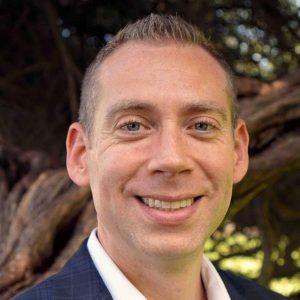
Keep Learning
The Invisible Riptide That Pulls Entrepreneurial Dads Away From Their Family with Jeff Zaugg – EP 293

The Firefighter Who Walked Away From Early Retirement And Chose Entrepreneurship with Jesse Flocken – EP 292
