![Logo 1 Gold horiz [Converted]](https://lifestyleinvestor.com/wp-content/uploads/2019/08/Logo-1-Gold-horiz-Converted.png "Logo 1 Gold horiz [Converted]")
I had a realization about seven years into building wealth, and it completely changed how I think about risk.
The strategy that got me from zero to my first million is the exact opposite strategy I need to protect that million.
Let me explain what I mean.

How You Got Here
If you’ve built any real wealth, you know how you did it. You went all-in on something. Maybe it was your business. Maybe it was a specific real estate market. Maybe it was a company you believed in.
You concentrated capital on a single thesis, and you won.
The data backs this up. Ninety-one percent of people with a net worth above five million dollars made that money through concentration. Not diversification. Not balance. Not the thing personal finance books tell you to do at twenty-five.
They picked something, went all-in, and compounded it until it worked.
The problem? That works great for building. It’s terrible for keeping.
The Problem Nobody Talks About
Here’s what happens next, and I’ve watched this play out a hundred times.
A founder sells his business. He walks away with $20 million with part being cash and part being equity in the acquirer. He invests the cash into the stock market and follows the old playbook. He’s rich now, right? He’s diversified, right?
No. He’s 100% diversified into one investment sector, public equities, with most of it being in his company he sold. If that company tanks, or the market tanks, he’s back to zero.
Or an entrepreneur who built a multifamily empire. She’s got 50 properties, thousands of units. Super successful. But she’s got 100% of her capital in one asset class, in one market, subject to the same interest rate cycle, the same lending cycle, the same regulatory risk.
Concentration made her rich. But it also means she’s one policy change away from catastrophic loss.
This is why family offices look nothing like what most of us do.
What the Ultra-Wealthy Actually Do
Family offices — real ones managing $50 million plus — typically allocate something like this:
- 25-35% private equity
- 15-30% public equities
- 15-20% real estate (broken down by asset class)
- 10-15% fixed income / private credit
- 5-10% other (hedge funds, crypto, commodities, etc.)
Notice what’s missing?
The all-in on one thing.
Notice what’s there?
Multiple asset classes. Multiple risk profiles. Multiple bets.
They made their money by being concentrated. They’re keeping their money by being diversified.

The Most Common Mistake I See
Most successful entrepreneurs are still operating under the concentration model, even after they’ve built wealth.
They sold the business, and now 80% of their net worth is in the public stock they received or other publicly traded companies they invested into. Or they exited one company and immediately went all-in on the next one. Or they put everything into real estate because they understand that market.
That’s not diversification. That’s just concentration with a different vehicle.
The shift from building mode to keeping mode means you have to rewire how you think about risk.
What Changes
When you’re building, you want:
- One clear thesis
- All capital flowing toward that thesis
- Willingness to lose it all if you’re wrong
- The upside to outweigh the risk
When you’re keeping, you want:
- Multiple independent bets
- Capital spread across uncorrelated assets
- Downside protection more important than upside
- Stability and income
These are not the same game. And using one strategy for both will cost you.
I’ve seen entrepreneurs who built empires lose them by trying to apply the concentration logic to defense. It doesn’t work.
What I Did
About seven years in, I made a conscious shift. I said: “What if I kept just enough in the business to stay engaged, and moved the rest into a diversified portfolio designed to protect what we’ve built?”
That was the moment I stopped playing the all-in game and started playing the compound-and-preserve game.
Some of my best investments came after that shift. Not because they were better bets, but because I could evaluate them clearly without my entire net worth riding on the outcome.
Until next week,
Justin

Keep Learning

How Wealthy Families Use Whole Life Insurance as a Family Bank with Brock Fortner – EP 306
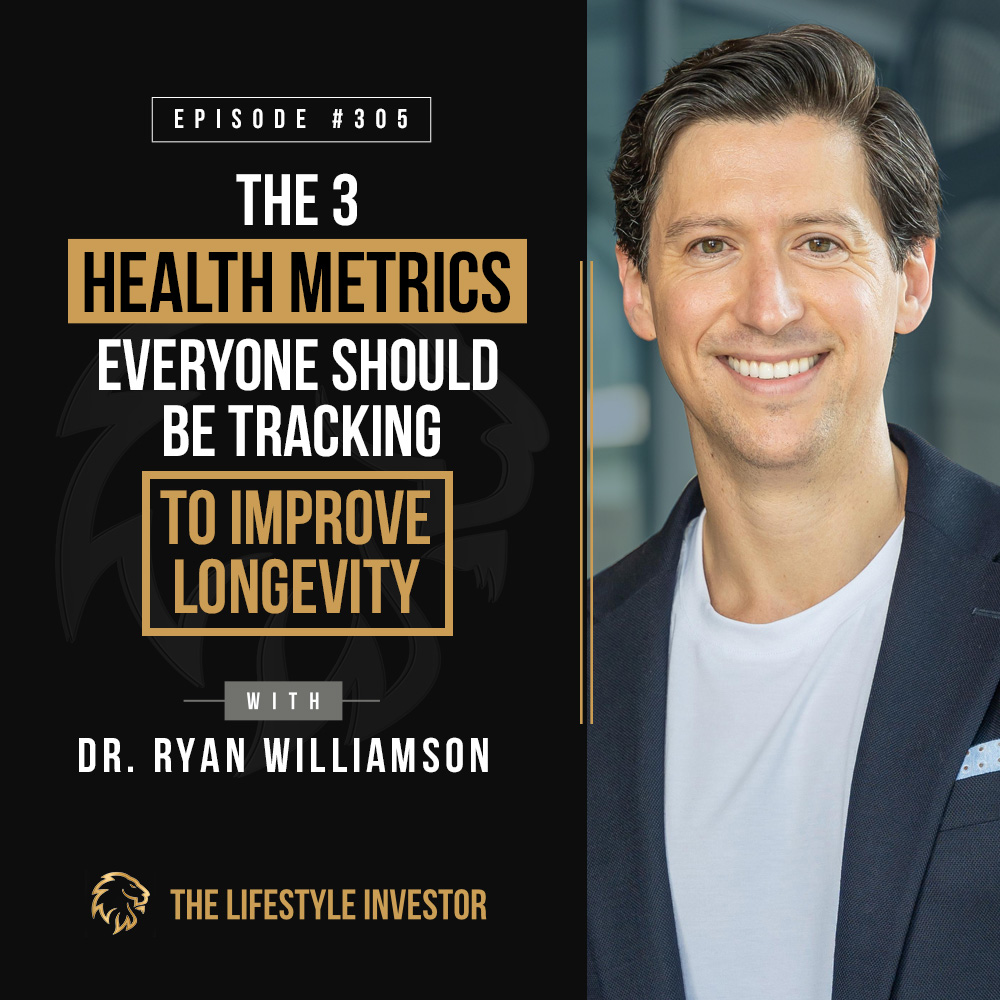
The 3 Health Metrics Everyone Should Be Tracking To Improve Longevity with Dr. Ryan Williamson, M.D. – EP 305