![Logo 1 Gold horiz [Converted]](https://lifestyleinvestor.com/wp-content/uploads/2019/08/Logo-1-Gold-horiz-Converted.png "Logo 1 Gold horiz [Converted]")
I want to step out of the tactical for a minute.
Most of what I write about in this newsletter is structural. Cash flow. Asset allocation. Tax strategy. The mechanics of building a portfolio that actually works.
But the question that sits underneath all of it is one most of us avoid until much later than we should. What’s the money for?
I went to a small event recently with John Maxwell. Small enough that he was just kind of hanging out with us, not on a stage. And he told me something that stuck with me.

The Line He Drew 35 Years Ago
About 35 years ago, John picked a net worth number.
He sat down, decided what number was enough for him and his family, and committed that the goalposts would never move. Anything above that number, every year, he gives away.
I want you to sit with that for a second.
Not “I’ll give away a percentage.” Not “I’ll be generous.” A specific dollar line, drawn 35 years ago, that he has not moved once. Every additional dollar of net worth that crosses that line goes to impact.
He’s a successful guy. He’s earned a lot since he drew that line. Every cent of it has gone somewhere else.

The Other Two Men at the Table
At the same event I met two other guys. David Weekley and Terry Looper. Good friends with each other. Both have done extraordinarily well in their businesses over the last few decades.
For 35 years, the two of them have been giving away half of everything they make. Every year. Half.
David Weekley gave away around $16 million last year alone.
I sat with these guys and listened to them talk about it like it was the most obvious thing in the world. Not “look what we do.” Not performative at all. Just… this is what we decided, this is how we live, this is what the money is for.
And then I thought about another guy I’ve followed for years. David Green, the founder of Hobby Lobby. He’s been giving away 50% of corporate profits since 1973. Fifty percent. Of one of the biggest companies in his space. For more than 50 years.
If a business school case study described a company that gave away half of its profits every year since 1973, the professor would tell you it’s impossible. The company couldn’t compete. The math doesn’t work.
Hobby Lobby is one of the largest players in the entire arts and crafts category. David gave away over a billion dollars last year.
What That Did to Me
I’m not going to pretend I’m at that level. I’m not.
I grew up in a faith tradition where tithing was part of life, so giving has always been there. But I’ll be honest. The first time someone said to me “you can give more than 10%”… I’d never really considered it. The thought hadn’t crossed my mind. Ten percent was the ceiling I’d been handed and I’d just accepted it.
Sitting with John, David, Terry, and the example David Green has set… I don’t have a ceiling anymore. I have a direction. I want to be a radical giver, not just a generous one. And I’m working on it.
I’m not where they are. I don’t know if I’ll get there. But I know that being in the room with people playing that game at that level changes how I make every other financial decision.
The Connection to the Rest of This
Here’s why I’m sharing this in an investing newsletter.
When you don’t know what the money is ultimately for, the goalposts move on you. Every time. You hit the net worth number you said would be enough, and within six months you’ve quietly raised it. Then you hit the new one and raise it again. You’re never actually arriving anywhere. You’re just running.

A few weeks ago I wrote about the four quadrants. Make, manage, multiply, matter.
The reason quadrant four matters… and why it isn’t a “someday” thing… is that it’s the only quadrant that stops the goalposts from moving. The moment you know what’s enough for your family and what the surplus is for, the chase ends.
You make better decisions in the other three quadrants. You stop reaching for deals you shouldn’t be in. You stop comparing your portfolio to people who are playing a different game. You stop confusing acquisition with arrival.
That’s the real ROI on figuring this out earlier rather than later. The peace of having a destination. The clarity of knowing what each additional dollar is actually for.
An Honest Place to Sit
I’m not telling you to draw a line at a specific number. I don’t know your situation. And I think the journey to that answer is personal in a way that doesn’t fit in an email.
But I’d offer this. If the number that would feel like enough for you has been moving for years, that’s worth noticing. And the fix isn’t another deal or another exit. It’s an honest conversation with yourself and the people closest to you about what you actually want all of this to be for.
That conversation, for me, is more important than any single investment I’ll make this year.
Until next week,
Justin
P.S. If you’ve ever drawn a line – or if you and your spouse have ever had a real conversation about what enough looks like for your family… send me an email and tell me about it.
I’m not asking for the number. I’m asking how the conversation went. I’m collecting these because I’m still figuring out how to have it well in my own life.
Part of why this is on my mind: we just kicked off our first Mastermind cohorts, and “what’s enough” is exactly the kind of thing these groups work through together. Small groups who move through their first year side by side, each one paired with a veteran member who’s already walked the path… so new members know where every resource lives and how to put our tools to work from day one – the tax GPT, the investment-criteria builder, all of it.
This cohort closes in the next few weeks and has space for 2 new members. If you’re interested to learn more, head here to get some details.

Keep Learning

How Wealthy Families Use Whole Life Insurance as a Family Bank with Brock Fortner – EP 306
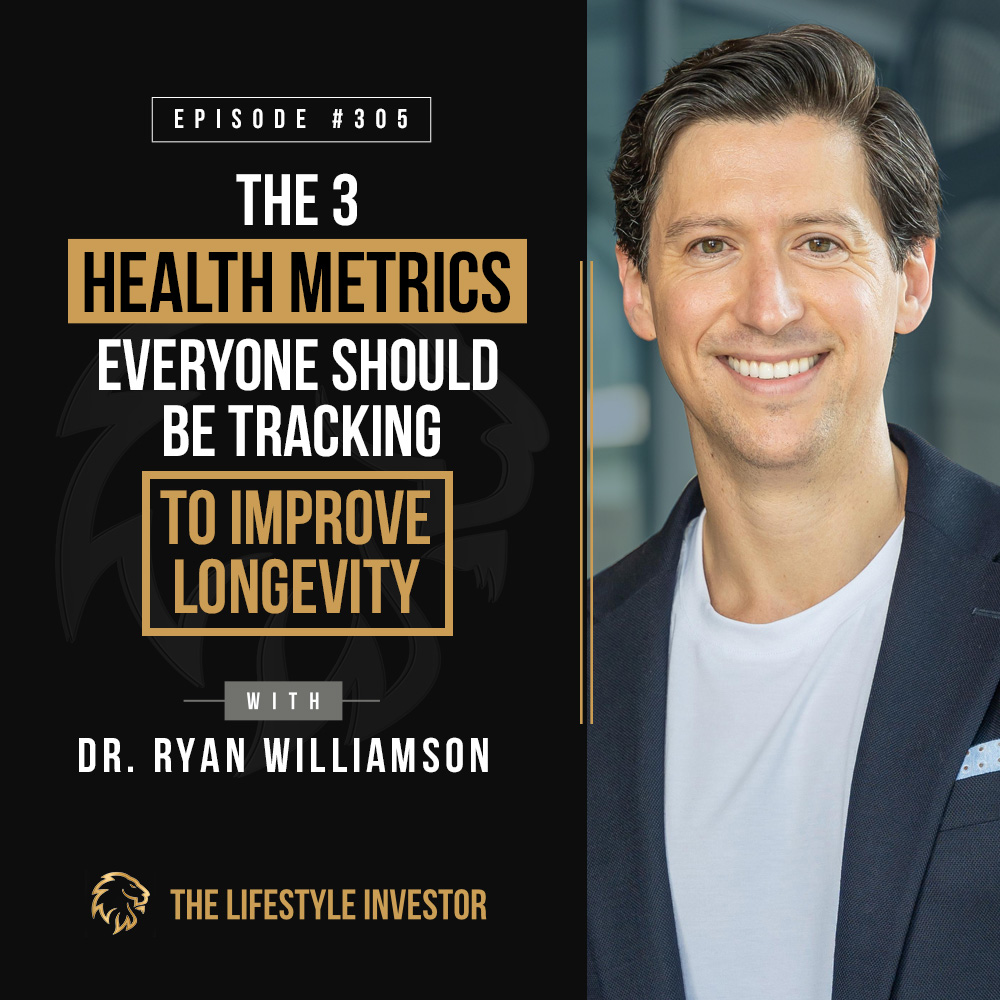
The 3 Health Metrics Everyone Should Be Tracking To Improve Longevity with Dr. Ryan Williamson, M.D. – EP 305