![[Justin Donald] - Optin Preview](https://lifestyleinvestor.com/wp-content/uploads/2020/12/Justin-Donald-Optin-Preview-e1607533704966.png "[Justin Donald] - Optin Preview")

![Logo 1 Gold horiz [Converted]](https://lifestyleinvestor.com/wp-content/uploads/2019/08/Logo-1-Gold-horiz-Converted.png "Logo 1 Gold horiz [Converted]")
Interview with Will Duke
Member Spotlight – The Fundamentals of Wealth: How to Build and Protect Your Financial Legacy with Will Duke
Today, I’m thrilled to be speaking with Will Duke, a successful entrepreneur turned investor and a valued member of the Lifestyle Investor Mastermind. Will shares his incredible journey from running two businesses to selling them for significant exits, all while transitioning into a successful investor. What makes his story unique is his thoughtful and patient approach to investing—focusing on building a solid foundation before diving into deals.
We explore the lessons Will learned from exiting his companies, his insights on how to approach private investments with caution, and the importance of continuous education. Will’s journey is a masterclass in how to strategically grow wealth through smart investing, while avoiding the common pitfalls that many fall into.
In this episode, you’ll learn:
✅ The exact vetting process Will uses to minimize risk and maximize returns, ensuring each investment aligns with his risk tolerance and long-term goals.
✅ Tax-optimization strategies that have saved Will millions during exits and investment deals.
✅ How to determine whether your business is ripe for exit, structuring the exit for maximum profitability, and the often-overlooked challenges of transitioning from an entrepreneur to investor.
Featured on This Episode: Will Duke
✅ What he does: Will Duke is an entrepreneur, investor, founder of Duke Coaching and Consulting, and member of the TLI Mastermind who has decades of experience in founding and running successful companies in different sectors.
💬 Words of wisdom: “If my intention is to be a great investor, a great father, or a great husband, I will for sure be that, because I will do the work to become that.” – Will Duke
🔎 Where to find Will Duke: LinkedIn
Key Takeaways with Will Duke
- Transitioning from entrepreneur to investor
- Lessons learned from selling two businesses
- The importance of education in private investing
- Avoiding emotional decision-making in investments
- Why private investments can outperform public ones
- The power of due diligence and background checks
- Building wealth through diversification
Inspiring Quotes
“There’s always this thought of like I’ll be happy when I get to THIS, when I achieve THAT. And that’s just not life. Life is an ongoing fluid process. There’s no endpoint.” – Will Duke
This Investment Mistake Will Cost You Millions
Resources
- Will Duke on LinkedIn
- Pitney Bowes
- Monday.com
- Arthur Brooks
- From Strength to Strength: Finding Success, Happiness, and Deep Purpose in the Second Half of Life by Arthur C. Brooks
- Build the Life You Want: The Art and Science of Getting Happier by Arthur C. Brooks and Oprah Winfrey
- The Infinite Game by Simon Sinek
- Kary Oberbrunner
- My First Million Podcast
- Sam Parr
- Tim Ferriss
- Gary Keller
- Joe Hudson
- Modern Wisdom Podcast Ep #813 with Joe Hudson
- Ed Mylett
- Hans Box
- Rory Vaden
- Take the Stairs: 7 Steps to Achieving True Success by Rory Vaden
- Ben Horowitz
- The Hard Thing About Hard Things: Building a Business When There Are No Easy Answers by Ben Horowitz
Tax Strategy Masterclass
If you’re interested in learning more about Tax Strategy and how YOU can apply 28 of the best, most effective strategies right away, check out our BRAND NEW Tax Strategy Masterclass: www.lifestyleinvestor.com/tax
Strategy Session
The Lifestyle Investor Insider
Rate & Review The Lifestyle Investor Podcast
If you enjoyed today’s episode of The Lifestyle Investor, hit the subscribe button on Apple Podcasts, Spotify, Stitcher, Castbox, Google Podcasts, iHeart Radio, or wherever you listen, so future episodes are automatically downloaded directly to your device.
You can also help by providing an honest rating & review over on Apple Podcasts. Reviews go a long way in helping us build awareness so that we can impact even more people. THANK YOU!
Connect with Justin Donald
Get the Lifestyle Investor Book!
To get access to The Lifestyle Investor: The 10 Commandments of Cashflow Investing for Passive Income and Financial Freedom visit JustinDonald.com/book
Read the Full Transcript with Will Duke
Justin Donald: What's up, Will? Good to have you on the show.
Will Duke: What’s happening, buddy? Nice to be here. Thanks for being here.
Justin Donald: Well, yes, this is always one of my favorite shows to do where I bring on actual members from the Lifestyle Investor Mastermind, where we get to talk about some of the cool things we're up to. But for me, it's really special because, with you, I didn't know you before the mastermind. Now, I consider you a friend, someone that I love spending time with, and really one of my favorite people to hear from because you're so articulate and you have so much wisdom and I'm excited to just dive into your story and your experience on this episode today.
Will Duke: Yeah. Thanks, Justin. It's been a fun ride. The group's been phenomenal meeting all the cool people. And, even earlier today, I've had three different lifestyle calls today. So, it's been a Lifestyle Investor day.
Justin Donald: It’s so cool. Well, you recently did a session for the mastermind where you kind of talked about your journey and some of the things that you've experienced. You're an entrepreneur at heart. You have transitioned to become a very successful investor, but you've taken your time along the way to really learn it, to build your foundation. You didn't rush into it, which I respect and appreciate. But I think it would be fun to kind of share some of your story of how you got to where you are because most people, they don't really have the confidence or courage to start a company. The ones that do, generally, the majority don't have an exit. You not only had an exit from one business, but you started two and had two exits. And I'd love to talk about the different businesses in life before becoming an entrepreneur and life after.
Will Duke: Yeah. So, I mean, I could go all the way back but I'll start with my first sales job was in working for Pitney Bowes, so I was slinging postage meters and selling mailing systems. And I learned how to sell in that company. That company was extraordinary. And one of the things I learned is get to the top sales conferences because only the top of the top get to those. And we're in Naples, Florida at a conference, playing in the golf tournament. I was probably 23 in my early 20s and all the homes on that golf course were extraordinary. I was like, "Oh, I wonder what these people do.” And I researched. And there are two things that either on their own business or they were executives in large corporations.
So, as it turns out, I was not really a corporate guy and bounced around a couple of different companies. I got into the golf business during 9/11, which is bad timing. And then I met my business partner through a friend of a friend. We started a security integration company. And the beginning was home security. So, think of ADT home security, and we sold satellite TVs and we did that for a couple of years. And I wanted to be more business to business and so we converted all of our business over to, in the beginning, selling the small businesses. And then we moved up and towards the end there. For 20 years, we're doing pretty much enterprise-level only. So, some of our largest clients had 50,000, 60,000 IP cameras.
And so, we would design, install, support, and everything in between the software, the hardware. And then probably about I'm going to go back a couple of years. So, maybe like seven years, eight years ago, we started a software company to keep track of all of our stuff. There was nothing in the market. You know, Monday.com and all these project management platforms are all too generic for what you're looking for. And so, another entrepreneurial seizure. We started the software company mostly in the beginning just to keep track of all of our stuff. And there are like, “Oh, I think this could be a company.” And so, we turned it into a company and then we had both companies go at the same time.
And so, if you fast forward to 2021, we decided in the middle of the summer to explore. Like, what would a sale look like? How does that even work? Keep in mind neither one of us have ever done this. We don't have a clue. We don't know what a data room is. We don't know what Q of E is. We barely know what working capital is, rolling 12, historical three years. And so, we found a broker. We call him Barry the Hammer. He’s an amazing broker. He's such a good dude. And he helped us find I think we spoke to ten companies. We had five LOIs, and we're like, "Whoa,” And the offers kept going higher and higher and higher. And it was exciting and scary and fun and definitely the most stressful time of our life.
But we were lucky enough to bring it to close and I sold my shares of our software company back to my business partner. So, we negotiated together and against each other at the same time simultaneously and close in the same day. The north star for me was, you know, because he and I are still good friends. Our wives are good friends. We spent a lot of time together for 20 years. The north star for me is when we're done with this deal and both deals, our families will be playing together on the beach. And that was the north star.
Justin Donald: That's cool.
Will Duke: I mean, to this day, I just had dinner with them last week.
Justin Donald: That’s amazing because you don't hear that. Usually, you hear the bad breakup with partner story, right? I mean, most partnerships don't last. I mean, they talk about how high the divorce rate is but it's even higher in partnerships, right? The business divorce. So, great job. Hats off to you guys for maintaining a strong friendship from start to finish. I'm sure there are bumpy, turbulent patches along the way. But to be this close from start to finish and to still be this close after exit, that's really something special.
Will Duke: Yeah. And then also, his wife was in the business for 15 years, and she was just an extraordinary partner to me. I learned so much from her. And it was a great ride. You get to that spot. You ring the bell. You look at your bank account and go, "Wow,” and then you think, "Oh, everything is going to be amazing for the rest of our lives.” And it was like because I still had to stay inside the company that I just sold. And that was tough.
Justin Donald: Classic earnout, right?
Will Duke: It wasn't an earnout, but it was an employment agreement and we have employees that work for us for 15, 16, 17 years. I wanted to help them get transitioned over to the new company. And it was not great for me. It didn't help that the supply chain in 2022 was jacked up, and like you couldn't get any product, and it was the perfect storm. I call the CEO of the company that bought us, a $1 billion company. I said, “I have to go like my people are not thriving. I'm not diving into them as much as I used to. And I really felt I'm in the way.” And so, I exited April of, I don’t know, March 31 of 2023, it was time to go. My beautiful wife was like, "Well, are you running away from something or towards something?” I said, “I don't know. I don't know. I have to go. I don't know where I'm going. I just have to go.”
But that was the ride. I'd say to folks that are trying to sell their company, it's hard as hell but it's not impossible. You know, I documented. I actually have over here I documented every meeting that we had over the six-month period, what the topic was, how I felt what the outcome was, because I'm like, “I've got to keep this.” This may be helpful to other people someday.
Justin Donald: Yeah. What a great resource. That's incredible.
Will Duke: Because it was like if you think about the negotiation, it was me and my business partner, two guys have never sold a business, negotiating against a full team, an M&A team. I think we were there 27th or 28th company they bought in the last three years.
Justin Donald: Wow.
Will Duke: Like, how is that a fair negotiation? It was helpful to have our broker. He was amazing. But it was a ride. It was just like I would tell people it's an out-of-body experience. There were times when I thought they're going to re-trade the deal. They wanted to push it at one point. They wanted to move it until January or the following year, December 14th, and we're like, "No, we got to close this deal.” And so, they closed. It's beautiful.
Justin Donald: Oh, it's so great. Well, congratulations. It's always a funny thing when you close because for anyone that this has ever happened to and you had two exits, your exits are bigger than mine. I've only had small exits. But what's interesting is there's this expectation of what it's going to be like, what it's going to feel like, what having a ton of money in the bank, what that experience is going to be. But expectations just never meet reality on that one. You always think it's going to be greater than it is or last longer than it does, but it's almost like. Okay. What's next?” You know, and it doesn't take long until that happens.
And then if you're not careful, you can get into this scarcity mindset, which is you're the wealthiest you've ever been, but now you feel like you have to be more protective of your money and spend as little as you can because you're spending it down. So, it's a fascinating dichotomy and overall experience that we hear from members and just friends that I know that have gone through it.
Will Duke: Yeah. So, Arthur Brooks, he wrote two books, Strength versus Strength, which the subtitle is Finding Meaning and Purpose in the Second Half of Your Life. Amazing book. And then his most recent book is with Oprah, pretty good person to partner up with.
Justin Donald: No kidding.
Will Duke: And that was a really good book. It's Build the Life You Want, Arthur C. Brooks. Yeah. And so, he talks about the concept of whenever you achieve something extraordinary, right? So, it's summertime, the Olympics are here. When those athletes hit gold, they all go through extreme emotional ups and downs when they come back and the parades are over and the interviews are gone. And so, he's saying that whenever you achieve something that's extraordinary, happiness and unhappiness are in two different parts of your brain.
So, in my case, now converting two companies into boatloads of cash make me happier? I don't know. I'm pretty sure yes but for sure, I'm a lot less unhappy on a lot of things I no longer have to do. And so, that really helped me kind of put that in context to go, "Oh, okay. Now, that's what I'm feeling.” Because it turns out all my buddies that still work don't really care. Like, they're still working. They don't really care. And so, you have to understand the flow. There's always this thought of like I'll be happy when I get to this when I achieve that. And that's just not life. Life is an ongoing fluid process that there's no endpoint.
What Simon Sinek’s book, The Infinite Game, which so many people are playing the finite game where they get the raise, they get the girl, they get the whatever, and they get it. They're like, "Wow. This is not what I thought it was going to be.”
Justin Donald: Right. Totally.
Will Duke: I didn't know what I thought it was going to be other than I did have massive anxiety. I had all this cash, felt deep responsibility to make sure my family's taken care of, created first-generational wealth for both of us, my wife and I. And now I'm like, "Wow. What do I do here? Like, how do I evolve and go to the next level?” And for me, it's always the default is I got to get educated. Education solves, well, education and breathing reduced my anxiety or walking around the neighborhood. Just any kind of movement.
Justin Donald: Yeah.
Will Duke: But mostly education is like, well, if I'm going to be an investor, I've got to learn how to do that. And that's when I came across your book. I was listening to your book. I was hitting golf balls. I heard Kary Oberbrunner interviewing you in between the chapters. I thought, “That's my buddy Kary from Strategic. Wait, I know him.” And so, I called him. I said, "What's going on with this guy? This book is interesting. Like, what is this?” And he said, "He's the real deal.” What a nice thing to say about another human, right?
Justin Donald: That's so cool. I love Kary and what a great thing to say and what a great guy to work with. I've done a bunch with him, with his company, with both of his companies. That's awesome.
Will Duke: In this world of, like you talk about this a lot too, is the influencer who's like the know-it-all who's never actually done it.
Justin Donald: That's right. That's right. Big social media following but they haven't actually done the thing.
Will Duke: Yeah. I mean, they're everywhere. And so, it's such a nice change of pace for someone like you who's done hundreds of investments. Like, you're speaking from a place of let me walk you through where I lost on this deal. And like, this is what I learned from it. And you can't fake that.
Justin Donald: Well, I do love and appreciate in my life the people that have really done it, and I feel like those are the people that I've learned to take wisdom from versus I think, unfortunately, today a lot of people follow and chase those that have a big social media following, thinking that they're experts when they're really not. So, I appreciate those kind words. And, yeah, I've made so many mistakes. I just want to tell everyone about it. If I could help them shortcut in their life, that's what I want to do.
And your story's tremendous because when we have people join the mastermind, they are racing to get into deals, and we're always trying to slow them down. We're always trying to say, "Hold on.” Before you ever invest in a deal, you've got to figure out your investment criteria and make your list of criteria, questions of what needs to be true or what needs to be checked off in order to do this deal so it's got to be fact-based, not emotion-based. You've got to come up with your goals in life and in business and in investing and in passive income, like figure out what it is that you want out of life.
And then you really need to know where your asset allocation is today and where you want it to be in the future. And so, most people were trying to slow down so that they don't just jump into deals. What I loved about you is you came in and said, "Hey, I want to get an education first.” And in your whole first year, you only invested in one deal. And then if memory serves me correctly, you invest it in like 24, 25, 26 in year two. So, it's like year one in Lifestyle Investor was like a foundational building year. And then year two it's like, "Okay. I've got the base, I've got this education. Now, I can really start digging into the deals.”
And I think it served you well because one of your cool facts is you make more money today in passive income than you ever made in both of your businesses, even during the boom time when you paid yourselves really well.
Will Duke: Yeah. For me, like when I first joined the group and I would get on there to listen to some of the pitches, I didn't know the language, right? I didn't know words have meaning. And so, they start spitting out these acronyms. And so, I've started writing the words down. I mean, I'm talking like IRR cash-on-cash. I'm talking about like really basic things. I'm like, I'm embarrassed. I don't even know what those words mean. I don't even know what they mean. And so, I throw them in ChatGPT and I say, "Explain these things to me like I'm a fifth grader and give me examples,” which ChatGPT is amazing for that, by the way. So, thank you, partner.
And so, I learned it. I'm a big spreadsheet guy. I put together different models. And then I started to understand more and more what they were saying, diversified. What's interesting about the group is like a diversified portfolio to me is completely different than something than you, than my buddy, Jonathan, or Chip. And so, it starts by saying like, "Well, what's the diversified portfolio for me right now? I don't have any active companies. I don't have any active income.” So, like, where does it make sense? How much risk do I want to have out there in the market? The economy is on fire right now, allegedly, right? It feels like it's on three toothpicks, right? Just waiting to fall.
Justin Donald: That’s so true. House of cards.
Will Duke: Oof! And so, election year and all the stuff that goes up and down. And so, I think about if I'm going to do this, I'm going to be educated. I have to be able to explain investments to my wife. She loves the meetings and the get-togethers but she doesn't want to listen to investment pitches. And so, it's kind of like just basic criteria is, “Though, I understand what they're saying, where does this fit into my puzzle? Am I too heavy here or too light?” And then the last piece is people have died from FOMO. They've financially been killed because of FOMO.
Justin Donald: That's right.
Will Duke: And so, I would watch a presentation, I would get super excited and I said like, "Wait a minute, wait a minute. You're just getting excited because it's software or technology. That's the industry that you used to be in. Like, do you even understand what the investment is?” And so, this is me having a conversation with myself. And so, I talked myself out of a lot of stuff and every new member that joins our group, I'm like, just take a minute, decide three things you want to learn. Learn those three things. Go to the next. Because I know we all have 100 things on our list. And that really helped me too. When I think about education and learning, I have to be able to internalize it, write it down, and then tell it back to you so that you understand it at a fifth-grade level.
And there's oftentimes when I'll have a call with a sponsor and I'll say, "All right. I'm going to email you back what you just told me in writing and you tell me what parts I've missed.” It's my way of like confirming, “Do I understand what I'm investing in or not?” And most people won't do that.
Justin Donald: Yeah. That's cool.
Will Duke: I don't care what they think about me. I mean, obviously, relationships are super important to me. But if I'm going to hand over money to an investment, I have to understand the economics of how money flows through the company. I was just in Miami yesterday looking into a business that's a different industry. And I said, “I just want to come to your warehouse. I want to talk to some of your people. I want to understand, product comes in, it goes out. How often?” So, I understand the flow and this is where only a company for 20 years, I can look in people's eyes and see if they know what they're doing pretty quick. And like 15 minutes and look at their P&L, another 30, and I could tell you like this is a train wreck or this is a company with a lot of upside.
Justin Donald: I love that you have that gifting. You have the years of experience, which is great, but I love that you're also going to the business. You're physically there to meet people, to talk to people, to see it with your own eyes. And I like your stance. If you don't understand it, if you can't figure it out, if you can't rationalize it, and if you can't, then regurgitate it. Then there's a missing element of simplicity or understanding, and it's like a red flag. Beware. Like, you need to learn more or this deal just doesn't work. So, I like that you do that. I also like, I mean, your wife, Avery, is amazing. She comes to everything. She's such a people person. And I love that you guys do this together. And that one of your things is I have to be able to explain it to her, right?
You have to know it well enough that you can explain it to her so that Avery gets it and you're on the same team, and you both say, "Yeah, let's do it. This makes sense.” And I like that step that you have in that keeps you guys growing together and making decisions together. That's really cool.
Will Duke: Yeah. I tell all the new members like, "Bring your husband, bring your wife like Justin and Ryan encourage it. You guys get it. This is a family sport. This is a family game. Like, that everything we do impacts our families here.”
Justin Donald: Totally. It drives me crazy when these groups, there are so many masterminds out there that don't allow you to bring your spouse. I'm like, “What are you talking about can't bring your spouse? They should go to everything with you that they want to go to.” It should be optional and ideally, you have people opting in because when you're talking about building wealth, making investments, tax strategy like these are things you should be doing together anyway. Like, this is a great way to learn and grow as a couple. So, yeah, being in a ton of masterminds, it always drives me nuts when they're like, "Nope, can't bring your spouse,” and not that my spouse wants to even go to that much stuff, but I want to know that she's invited everywhere.
Will Duke: Yeah. She likes meeting all the other wives. She's even friends with Zorema here in San Antonio, one of our members in San Antonio. I like that.
Justin Donald: Yeah. That's amazing. Something that we didn't talk about yet, a lot of people join the Lifestyle Investor after they've had a big exit because now they're like, "Okay. I've been a business owner for all these years. I know how to be an entrepreneur but I don't know how to be an investor. And I'm sitting on all this cash. I don't feel good about giving it to a financial advisor. I don't know what to do. And we should get into that, too. Because instead of outsourcing financial education, we can talk about in-housing it.
But one of the things that I think is a missed opportunity is that we don't have more people joining us before they sell their company because the things that we can do, the things that we teach, the members that we have, there is so much we can do on the tax strategy side that can literally save millions and in some cases with people like you, tens of millions of dollars in taxes that could literally go into your pocket upon exit.
Will Duke: Yeah. I was listening to the podcast, My First Million with Sam Parr and they were talking about QSBS, qualified small business stock. I almost drove my car off the side of the road. I didn't even know that was a thing. So, I immediately picked up the phone, called my old business partner. I said, “Joseph, like listen to this podcast. Go figure out what this is. Get this software company over into C Corp.” And literally like last week we had dinner. He's like, "Yep, I did it.” Like, I want my friends to win. I want them to prosper, right? And so, I mean, that would have saved us millions of dollars. They say that, I was at an event, 80% of business exits are unplanned.
Justin Donald: That makes sense to me.
Will Duke: And so, ours wasn't super planned. I mean, from the time we started until the time we wired, it was six months, which is not a lot of time.
Justin Donald: Right. There are so many unsolicited offers that can come at any time. And sometimes it's just like, "Hey, let's just see. Let's just see if anyone's interested. Not like we're really going to sell it.” And then it's like, "Oh, maybe we have something here.
Will Duke: That's kind of what happened to us. And so, if you listen to any consultant who is in the space, they say start three to five years out. Okay. That's a perfect world. Now, if you were to do that, you can do tax loss Harvard. You can have almost, well, at least for the qualified small business talk, you need five years but you can remove $10 million right out of the gates in capital gains plus you can put stuff in your family's names and you could essentially wipe out all the capital gains.
Justin Donald: That's right. We can actually say start with at least $10 million in gains because it's actually a minimum of 10 million or 10X your investment. So, yeah, there are people that extend that out with putting shares in names of their family in different trusts. So, I know someone that's done that and saved 70 million, and I know someone else that's done it with 130 million.
Will Duke: You know, I think about the…
Justin Donald: All tax-free.
Will Duke: You know, we talked about this at the event in May but the IRS sets up the rules. It's like playing Monopoly, knowing the rules, and they want you to take advantage of this stuff.
Justin Donald: That's right.
Will Duke: Now, here's a challenge. You have to be interested in it. I'm interested in saving $10 million. I don't know about you. I think you are, too. I'm interested in saving $10 million but you have to know the combination to unlock that. IRS isn't going to just give that to you. And so, it's just fascinating. There was a period of time in my life where I used to read the tax code book every year. I don't do that anymore. I was a little bit nuts, and I just wondered, like, how does all this work and how do we maximize stuff?
Justin Donald: This is the whole reason why we built the Tax Strategy Masterclass so that people don't actually have to read the tax code. They can just go and learn from the 50 strategies that will technically, I think, we covered 28 in there and then I think we got 60 that we use in the mastermind. But it's like, "Hey, let's just give you the shortcut guide to it.” And in fact, you recently got back from one of our events where we recorded our due diligence vetting deals course. And I know that that was a great event for you from a learning standpoint. And you made the comment that this event alone is worth years and years of membership dues because of all the money it's going to protect that you're not going to lose, right, from not investing in bad deals.
Will Duke: Not only, I actually think it'd be millions of dollars, Justin, but it's also too like I'm a big believer in positive energy/negative energy. The negative energy surrounding a bad investment can just suck the life out of you. It's hard to be like just super pumped up when you're in the middle of a lawsuit, right?
Justin Donald: Yeah, 100%.
Will Duke: And this just sucks. So, it's just like even this deal I was looking at in Miami yesterday, it's not a lot of money. I told you guys. So, this is not a lot of money. I just don't want to get wrapped up in something long-term that it doesn't produce positive economics for me and my family, and it turns into a goat rope or I've got to come down here once a month and see, like, what's going on. And so, he understood that, right? So, I think there's a lot of different people that are worried about how much it cost to invest. I'm worried about like afterwards, three years from now. What happens when you guys triple the size of your company and you haven't readjusted your systems and processes? That's how I kind of look at stuff.
Justin Donald: I love that your long-term thinking that, I mean, you even see this on the way that the complexity in your investment criteria is going to be a little bit deeper because of your business knowledge, where instead of it checking the box just based on today's numbers, you're actually looking, you’re future pacing it, and saying, do they have the capabilities to do what they need to do in order to scale it? Like, does this team have what it takes? Is this system one that can support it or is it going to be a major revamp and it's going to literally break the company?
Because most people don't get that a business that, like most people are like, "Oh, I just want a ton more sales. If we could just have this windstorm of sales.” But what they don't get is that actually will break the model, right? The system is built for the way the business is today. But as you scale, that system does not work. You have to retool it.
Will Duke: Yeah. I was having lunch with a good friend of mine last week and I said, “Randy, there's only two types of problems in business, too much business and not enough.” Now, definitely too much business is that much more fun one to be able to work on. But the real like there's no perfect storm where the business just lands in and you've got the perfect resources and all plays out. And that's not reality.
Justin Donald: Yeah. And there's even the Tim Ferriss effect where when he promotes stuff on his show, it basically breaks the model of these companies and a lot of them go out of business. So, he has to be careful on like what companies he promotes these days because he's taking good companies that have been awesome businesses but weren't built for scale, they couldn't handle the demand, and they literally went belly up.
Will Duke: Yeah. So, from the due diligence class, I told you this around 3:00. I said, I can't believe this was so interesting. If I were to tell the average person I was in an all-day event on due diligence, they probably look at me like I was crazy. It's because I was learning something new. And so, I bet I have 120 questions and I throw them in a spreadsheet. And depending on what the investment is, real estate or whatever, I throw them in one column and say, "Here's the questions.” Before the call with the sponsor, I said, "This is the stuff I want to cover. I don't want to look at your deck again. I already saw your deck. I saw the presentation. This is the specifics I want to cover. This will be our agenda. If you could please send it back before the call.”
The response is back. And so, I'm gauging, first of all, how quickly do they get back? Do they give me a hard time about it? If they do, like before I'm going to have the call. And are the answers generalized to placate me to see if I'll just be like, "Okay, cool”? And that's been super helpful. But I got a lot of those questions from the masterclass. And there's just so much power in that.
Justin Donald: Oh, there is. Just that one tool, that spreadsheet, that list of investment criteria is going to make you millions of dollars and save you from the stupid tax of losing millions of dollars. So, both sides you're going to win just based on that one move. And I want more people to learn that and understand that and recognize that if you can get your investment criteria and investment decision-making to be fact-based and eliminate all emotion, it will serve you really well because you should be saying no a heck of a lot more than you should be saying yes. And that's the difference between the optimist versus the investor.
Will Duke: You know, I also think too I kind of changed my mindset to probably in the last six months, as I think about, I think of myself more as a detective, like Crime Dog McGruff. I'm trying to figure out where the body is buried. I use a background check company on this most recent investment. And, wow, the stuff I got back, I'm like, "Whoa. Like, that's super interesting.” They don't do it for free. Again, can I spend $1,500 or $3,000 on an investment that could be millions of dollars in the back end, plus the energy plus the…? Like, I want to know right now if this is bad, not three years from now after 17 flights and angry emails and attorneys, right?
Justin Donald: That’s right. Well, it's an insurance policy. Let's say you can do it for $1,500 to $2,000. Maybe you got to spend more for a deeper dive. It's an insurance policy on this being a good investment or not. I mean, I can't even believe there is a day and age where I did investments without doing a background check. I mean, we share the company we use with you guys and the deals that we do. We put them all through it. Anyone that is a sponsor that has a GP interest, a general partner interest. And the things that come back is eye-opening. It really is.
Will Duke: And it's quick too. I mean, I'm sure I could have gotten there through Google at about 3 or 4 weeks but like I don't want to do that.
Justin Donald: That's right. But you hit the nail on the head when you said you're the detective trying to figure out what skeletons are in the closet. Because I tell people all the time, I used to say, "Hey, this is a good deal. Let me see if there's any reason why I won't invest in it.” That was not serving me well. When I transitioned and I had an attorney help me with this, my attorney was super skeptical, super cynical. But he's like, "You really have to look at every deal as if it's going to go bad because most deals go bad.” So, now every deal I say, "This is a horrible deal unless I can prove otherwise.” And that's been a huge flip-flop for me.
And even in the success rate of the deals that we've done as a mastermind or the deals that I've done myself, ever since switching that methodology and incorporating investment criteria, incorporating background checks, focusing on starting as a no, and only becoming a yes if I can prove it all out, that has had a resounding positive impact on the deals and the results from those deals that we've done.
Will Duke: Yeah. The podcast, this is a couple of years ago, Gary Keller was on Tim Ferriss's podcast, and he was talking about legal agreements, and he says, "You might as well just call them disagreements because the only time you look at them is when you disagree on something.”
Justin Donald: That’s a good point.
Will Duke: And I was like, "That's a good way to put that.”
Justin Donald: Really good point.
Will Duke: And so, it's like when I look at a legal agreement and I have attorneys for it, but I still understand most of the language is like, "Where do I disagree with at a macro level? Where do I disagree with them on certain things?” I was looking at deals. There was a five-year contract for the five-year renewal. I'm like, "All right. Five-year contract, one-year renewal.” I don't want to renew another five years. Like, why do you do that? And then all the cancellation stuff and I'm a big X’er like I don't believe in like convenience cancellation, cancellation on convenience just because you don't like me anymore or whatever. But I learned all that through signing contracts for years.
Justin Donald: Well, and the funny thing is about contracts, almost everything is negotiable. Even with these big shops, these big companies, I mean, people think that I'm crazy but like I've made negotiations to my home mortgage. I've made negotiations to real estate property. Like with the banks, I've made negotiations, like negotiated terms on all kinds of stuff, lines of credit. I mean, certainly in deals and subscription docs and even getting side letters. I mean, I can't remember the last time I took a contract as is.
Will Duke: Yeah.
Justin Donald: Everything, even with banks, everything is negotiable. And you've got to do your best to protect yourself. Now, something I definitely want to dig into. You contemplated taking your fortune and potentially giving it to a financial advisor to invest it. This is back early on when you were new in the mastermind. This is a brand new thing. You didn't know what you were doing in investing yet. So, it totally makes sense. If you don't have the education, then the easier to outsource it than not. But you didn't feel good ultimately about doing that. And I'd love to hear kind of your thought process through it and what made you decide, “No, I'm not outsourcing this. I am going to take my financial education seriously.”
Will Duke: So, it was really a function of, and it's very basic form. When I read your book, I'm like, "That sounds a lot more fun. That feels a lot more interesting and engaging. I'll have to get educated. But that's a path I want to explore.” And the stuff I was in, no cash flow. And it was like set it and forget it. Like what?
Justin Donald: No utility today, right?
Will Duke: No utility and it just didn't line up with who I was back there, who I wanted to be. And so, it was a bit of an identity shift to say like, "Wait a minute, can I really do this?” Because there's like I was listening to this podcast on Modern Wisdom. This guy, Joe Hudson, is talking about the critic in our head. So good. He's talking about the critic in our head that tells us, "You can't do that. Who do you think you are?” And like, what if that critic in your head was your boss? And like for three years was your boss. Well, do you believe the critic in your head or can you turn around and say to the critic like, "Go away”?
And so, you have to start saying to yourself, like, well, what do I believe is true? What do I believe is true? So, what I believe is true is like you can learn anything, you can do anything, and one serious concept, you have to know what you're doing. You can't just start swinging for the fences and like I'll just sign these subscription agreements. I don't know what they mean. I have no idea what this investment is. Well, I don't even know my allocation of where my assets are at. Oh, 50% of my net worth is in crypto. Probably not a good idea. And I'm a crypto fan. I know you are, too, but I'm about 7% in crypto and I love crypto, but I'm not going to go crazy with it. Now, because even the little bit that I have swings like it moved up and down $30,000 or $40,000 a day last week. Because it's a small percentage of my overall net worth, I just know it's going to do that.
Justin Donald: Yeah. Well, success leaves clues. The wealthy, they leave clues. There's a rhyme and reason. And if we just follow their model, we just follow what they do, we're going to get there. And it's not being over-allocated in anything where one single thing can sink the ship. You know, I think that that is just absolutely so important. But I love that you said, "No, I'm going to learn this. I'm going to figure this out and I'm going to get good at investing. This is not something I need to outsource.” And by the way, the fruit of your labor is showing because you're making the most money you ever have right now and it's all passive income, and it's allowing you to be a husband and father first and an investor second, which is really cool.
Will Duke: Ed Mylett talks about this too. He’s saying, I'm paraphrasing here but, "Connect your energy to your intention more so than the outcome.” And I'm like okay. And so, one of the things that I do believe is if my intention is to be a great investor or a great father or a great husband, I will for sure be that because I would do the work to become that. Now, it's not this fake it until you make it. I don't believe in that nonsense. You actually have to do the work. But if my intention were to say like, “I am a great investor,” now, that may have not been completely true early on. And even today, the more I learn, the less I know. Like, the books I've read, the stuff I learned from you and people in the group like there's still so much to learn. And that's the learning mentality and that's definitely one of my superpowers. I know it is for you too. I definitely get that off you.
Justin Donald: Yeah. Eternal student, I always want to learn. I know you do. But we both have bookshelves behind us full of books that have had a huge impact on our lives.
Will Duke: Yeah. It's this concept of I want to be in a group. I want to be around people who can learn from each other, share from each other. And the fact that's one of my criteria in investment is I usually talk to three to five other members that are either already in the deal or know them or like, and it's the questions like knowing what you know right now. Would you invest the same amount? More or less. Why? How is the communication? All the basic questions of, and it's evolving around making decisions, logically, but also gut like, what does my gut tell me about this investment and these people? This is a little bit judgmental, but did I like them when they're presenting? Like, did I believe what they're saying? Because I'm going to be in business with these guys five, six, seven years and I'm going to have to be around them to some extent.
Justin Donald: Be careful of the amazing salesperson, that you’re not wooed by their sales skills, that you’re drawn in by a truly outstanding investment opportunity.
Will Duke: So, that’s one of the things you said at the due diligence that I wrote this down. This is actually one of the questions. I don’t send this question, but the question is, is this person an amazing salesperson? Or does he know how to operate his business or both? Or does he really not operate his business? Like, the deck’s cool. It’s nice and pretty. Well, let’s open the deck and get into it.
And so, even in some investments I looked at recently, I’m like, this guy is an extraordinary salesperson. Let me talk to his operations guy. And I’ll ask his operations guy the same questions I just ask him to see if the answers line up. How many customers do you have? What’s your time of delivery? I’m not trying to catch him, but maybe, in a sense, I am, to save energy, to save life force, if you will, right?
Justin Donald: I love it, I love it, and I just love building that course out and hosting the masterclass, that Vetting Deals course live. That was a blast. Hans did a great job, but just building it out and sharing, because I feel like I have so many experiences and so many, like a lot that went well and plenty that didn’t, but it’s like I have hundreds of deals, hundreds of data points, hundreds of experiences. And I want to share the commonality and I want to share the dangers and risks that exist because every deal, I write down my takeaways, what I learned. And I got to be honest, the deals I do the best in, I don’t have the best learning from because it didn’t shock the system enough to really stick, right? It feels good. It’s almost like you can say, “Oh, look how good I am. I nailed that one,” versus when it doesn’t go well. And luckily, knock on wood, my track record has been very strong and, hopefully, it continues in that path.
But I’m not blind to recognize that times change, seasons change. But in this day and age, we have a lot going right and a lot going for us. But what I will say is, I’ve learned the most in the deals that have gone bad. And I like to tell people, I make a lot of mistakes, but I rarely make the same mistake twice.
Will Duke: Yeah. It’s interesting, too, because I don’t know if you’re familiar with Rory Vaden’s work. He wrote the book Take the Stairs.
Justin Donald: Yeah.
Will Duke: Boy, he is so articulate. He was on my last podcast, and he said something so profound. He’s good at those little one-liners, right? He said you’re most powerfully positioned to help the person you once were. I’m like, wow. You think about that.
Justin Donald: Good.
Will Duke: And so, for you, you’re most powerfully positioned to help investors who are just trying to figure out how to piece this all together. Like, you’re a different version of your younger self, many years ago, even those for years. And I’m positioned to help people sell their businesses, if that’s what I decide to do. And I think about that statement a lot because it rings true over and over and over again.
Justin Donald: I love it. Yeah, that’s powerful. Well, I have had a blast hanging out with you, Will. I always do. I look forward so much to our time together and to the impact that you have with our community. I’m curious if you had any last thoughts for our audience today or even insights that you wanted to share that you haven’t yet shared before we wrap things up.
Will Duke: Yes. I would say to the folks that are thinking about going down the path of private alternative investments, let’s just say, against the norm, get educated, read your book, listen to your podcast. You can reach out to me on LinkedIn. I’m there. But it’s a life where it’s possible. I do believe there’s a lot of clowns in the investing world where they promise things that aren’t there, so you have to be conscious of that. But get part of a group where you can bounce stuff off other people that are trying to achieve big things. And then it’s not so scary, because there’s a lot of fear involved with, like, wow, this money just hit my bank account. My job is to grow it. I hope I don’t light this on fire. I don’t want to be like an NBA star who just retired, and three years later, they’re broke.
So, community is important. You guys do a great job of community. So good. And you make it about us. And I’ve learned a ton from you. I’ve learned a ton from all of our other members. And I’m glad I’m part of the group, and I’ve learned so much. And so, for folks that are trying to figure out, do I want to just stick it in an index fund and let it flow or do I want to learn how to be an investor? Get educated. You got all kinds of stuff that’s like, I mean, your masterclasses are basically giving those things away and they’re so good. Like, has the due diligence course come out yet?
Justin Donald: Any day. It’ll probably be out when this recording’s out.
Will Duke: Oh, my God, it’s so good. Just like, I mean, that alone is so good. And so, get educated. You can do it. It’s your responsibility to take your family and yourself to the next level if that’s what you choose to do. I think, as humans, we’re built to evolve, to be something bigger and better. And you learn that through retrospection, learning back introspection, looking in introspection, looking forward. And so, that’s it.
Justin Donald: That’s so good. I appreciate you sharing that. And it’s interesting because most people don’t realize this, but if you look at the data, private equity outperforms public equity, the stock market, by 50% year over year. Look at the past 30 years. I mean, it’s very obvious. So, what cracks me up when we talk about alternative investments, that is a Wall Street coined term to make the average person think that that’s a small sliver of their portfolio, when in actuality, the wealthiest people in the world, and specifically in the US, have approximately, according to all the reports we dig into, 59% of their net worth in alternative investments because they outperform.
And so, it’s funny to me that the stock market, which Wall Street is the biggest proponent of that, which there’s about 4,400 or so public companies, and I think there’s 220,000 private companies, so it’s a big contrast. But the stock market is actually more the alternative investment in the class of the wealthy. And it’s also interesting when you study more of the data and you look at the top 1%, top 0.1%, top 0.01%, like, the more you dig into that data, you’re blown away that the majority of income is actually derived from investment income. The wealthier someone is, the more it’s investment income.
And then as you’re moving backwards to the less wealthy, you’ve got a component that’s business income. And then if you move all the way out to the top, 99%, you get into wages. And so, when you think about what really creates the majority of wealth in the US, well, the data is there. It’s investments first and foremost, businesses second.
Will Duke: Yeah, there’s a Ben Horowitz’s book, The Hard Thing About Hard Things, what a good book. There’s a chapter in there, he talks about everybody’s looking for silver bullets. He says there are no silver bullets. There’s only lead bullets. And so, the investing world or the lottery or any gambling industry, this get rich quick stuff, it’s like there’s no such thing. Now, you can get rich by being smart, but there’s no get rich quick, easy button silver bullet. This one investment has me set enough of that nonsense in this world. Like, do the work, read the books, meet the people, and make informed decisions.
Justin Donald: That’s right. One of my investment criteria is no more than 10% of my net worth in any specific industry or sector and no more than 5% of my net worth in any single deal. And that way, if something goes belly up, you don’t go belly up. So, what a great way to end it. This has been awesome. Will, where can people find you and learn more about you?
Will Duke: I’m on LinkedIn. A lot of people reach out to me through LinkedIn. So, I’m happy to chat with folks, and especially people that want to be part of our group. I like to talk to incoming potential folks and tell them what the group’s about. And so, that’s it. That’s where I’m at.
Justin Donald: Well, I love it. Thank you for always being willing to share your experience and your advice, whether someone’s a member or not a member. And it’s cool because we brought in a lot of people to the community that talk to you, and that just makes the community that much better. So, it’s a total win. So, we appreciate you so much. I love ending every podcast episode with a question to our audience. And that question is this, what is one step you can take today to move towards financial freedom and move towards living a life that you desire, one that’s on your terms, not by default, but by design? Thanks. And we’ll catch you next week.
Sign up to receive email updates
Enter your name and email address below and I'll send you periodic updates about the podcast.
Keep Learning
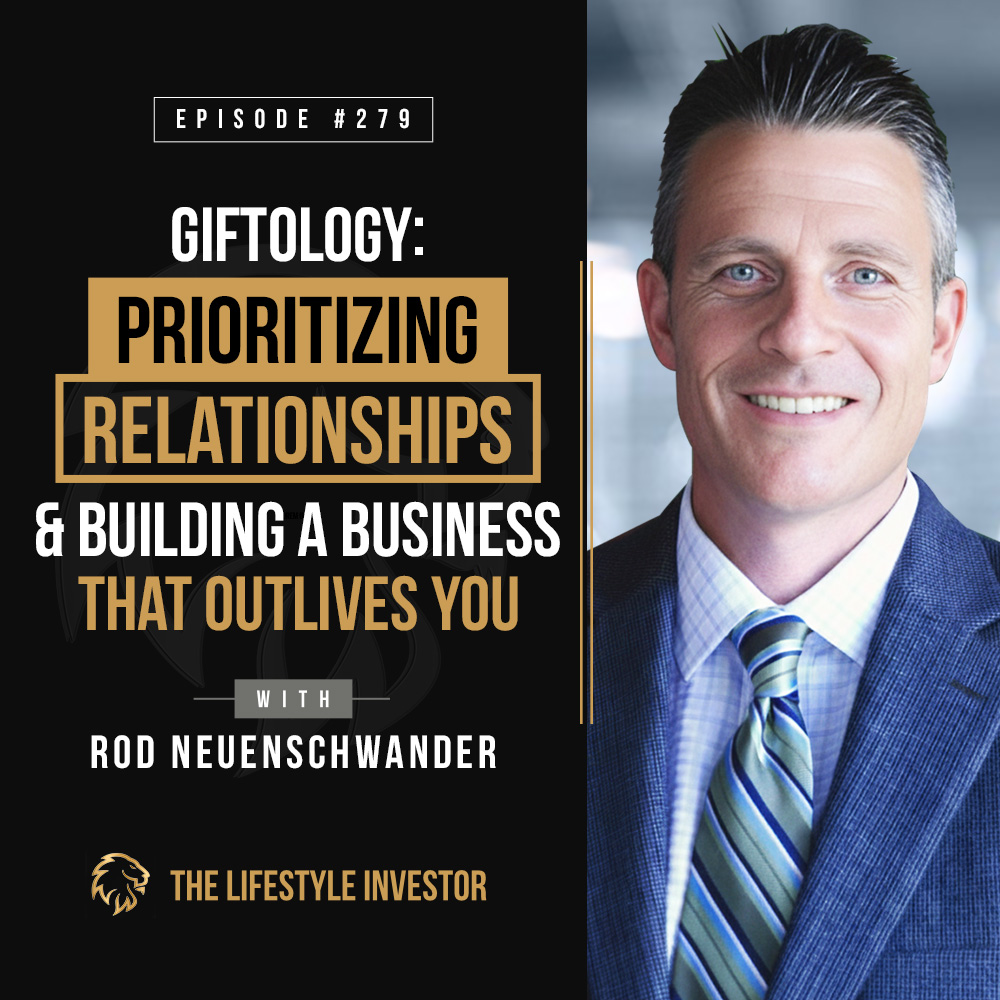
Giftology: Prioritizing Relationships and Building a Business That Outlives You with Rod Neuenschwander – EP 279
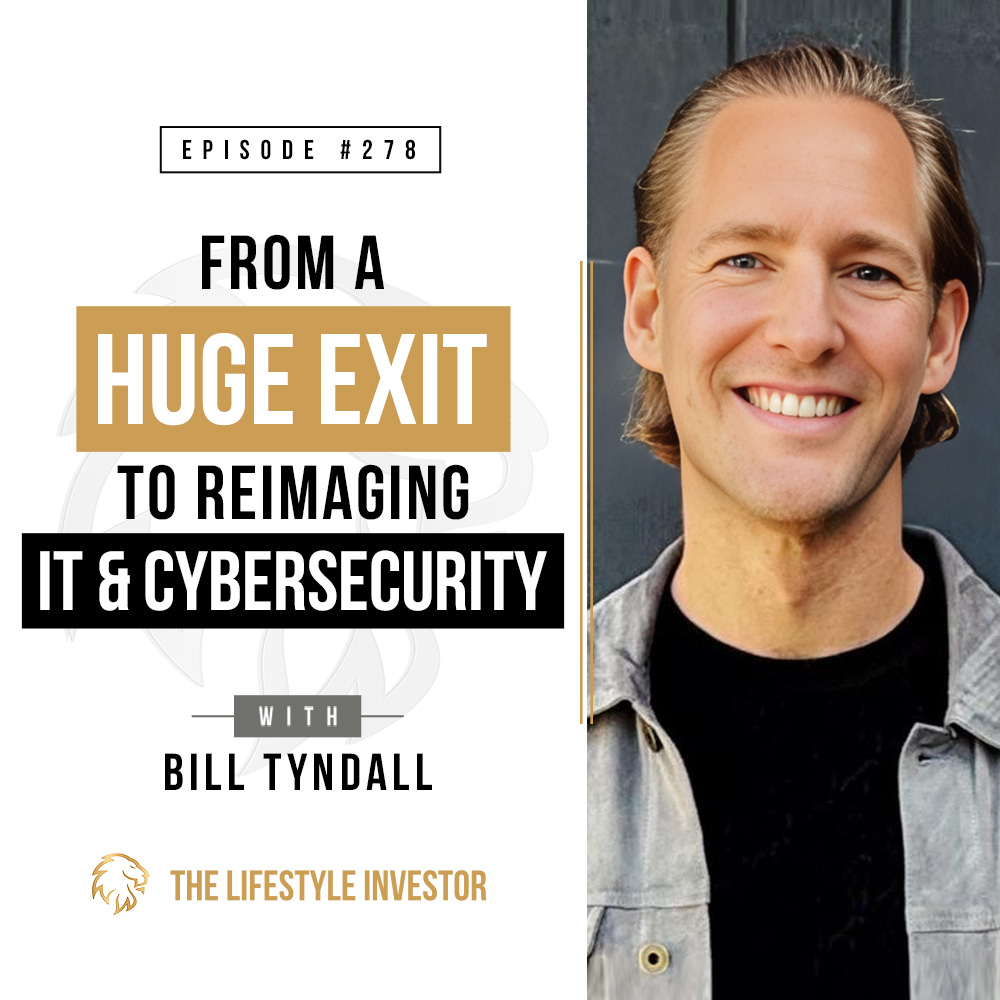
From a Huge Exit To Reimaging IT & Cybersecurity with Bill Tyndall – EP 278