![[Justin Donald] - Optin Preview](https://lifestyleinvestor.com/wp-content/uploads/2020/12/Justin-Donald-Optin-Preview-e1607533704966.png "[Justin Donald] - Optin Preview")

![Logo 1 Gold horiz [Converted]](https://lifestyleinvestor.com/wp-content/uploads/2019/08/Logo-1-Gold-horiz-Converted.png "Logo 1 Gold horiz [Converted]")
Interview with Tom Zheng
Pro Sports Investing & Helping Athletes Build Real Wealth with Tom Zheng
Imagine signing a $10M contract, only to see $2M after taxes, fees, and cuts?
That’s the reality for most pro athletes. And for many, it’s just the beginning of financial missteps that can lead to bankruptcy just a few years after retiring.
Today’s guest is Tom Zheng—a former NFL sports scientist turned investor. He’s also the Co-Founder & CEO of The Players Company, a platform helping professional athletes build real wealth through education, access, and smart investments.
In this episode, Tom shares a behind-the-scenes look at how professional athletes are financially coached (or often misled), the growing role of private equity in sports, and how he’s guiding athletes toward smarter financial futures through education and access to exclusive investment opportunities.
Whether you’re a sports fan, investor, or entrepreneur, this episode is packed with lessons about leverage, legacy, and building financial intelligence.
In this episode, you’ll learn:
✅ How Tom went from NFL sports science to investing in pro teams and building a player-owned private equity firm.
✅ The financial traps most pro athletes fall into—and how The Players Company is solving them.
✅ Why investing in sports teams and NIL assets isn’t just for billionaires anymore—and what this means for everyday investors.
Featured on This Episode: Tom Zheng
✅ What he does: Tom Zheng is a former NFL Sports Scientist most notable for his years at the 49ers. He is the Co-founder and CEO of the Player’s Company and the founder of Tomco Holdings, a private firm specializing in sports ownership and real estate development. He currently serves as a board member and advisory member to his various portfolio companies and partnering firms.
🔎 Where to find Tom Zheng: LinkedIn | Instagram | The Players Company
Key Takeaways with Tom Zheng
- The Harsh Reality of NFL Contracts
- From Sports Scientist to Private Equity Investor
- Inside the Jordan Sports Group NIL Deal
- The Democratization of Pro Sports Ownership
- Teaching Pro Athletes How to Invest & Build Wealth
- Taking Athlete Investing Worldwide
- The Vision for The Lifestyle Investor
- Crowdfunding Deals: Justin’s Take
Why NFL Players Go Bankrupt
Inspiring Quotes
- “Maximize as much as you can during your time as an athlete and be smart with the decisions you make and with the people you surround yourself with.” – Tom Zheng
- “It’s never too early to start building a proper knowledge base for financial identity.” – Tom Zheng
Resources
- The Players Company
- The Players Company on LinkedIn | Facebook | Instagram
- Tom Zheng on LinkedIn | Instagram
- Pro Athlete Community
- ESPY
- Devon Kennard
- 49ers
- Sheldon Day
- Adam Peters
- ATS Innovations
- Téa Phillips
- Jordan Sports Group
- Miles Jordan
- Chris Pronger
- Sportico
Tax Strategy Masterclass
If you’re interested in learning more about Tax Strategy and how YOU can apply 28 of the best, most effective strategies right away, check out our BRAND NEW Tax Strategy Masterclass: www.lifestyleinvestor.com/tax
Strategy Session
The Lifestyle Investor Insider
Rate & Review The Lifestyle Investor Podcast
If you enjoyed today’s episode of The Lifestyle Investor, hit the subscribe button on Apple Podcasts, Spotify, Stitcher, Castbox, Google Podcasts, iHeart Radio, or wherever you listen, so future episodes are automatically downloaded directly to your device.
You can also help by providing an honest rating & review over on Apple Podcasts. Reviews go a long way in helping us build awareness so that we can impact even more people. THANK YOU!
Connect with Justin Donald
Get the Lifestyle Investor Book!
To get access to The Lifestyle Investor: The 10 Commandments of Cashflow Investing for Passive Income and Financial Freedom visit JustinDonald.com/book
Read the Full Transcript with Tom Zheng
Justin Donald: What's up, Tom? How are you?
Tom Zheng: I'm doing great, Justin. How are you doing today?
Justin Donald: I'm good, man. It's good to have you on the show. Your story is a fun story so I cannot wait to get in it being just a former NFL sports scientist. I don't know that I've ever met anyone else that has done that, and I'm excited to dig in.
Tom Zheng: Absolutely. I appreciate you having me on today.
Justin Donald: Yeah. Well, you and I, we've connected on a number of things. I think we share a similar passion for helping educate the world in investing. You've done very well as an investor. You're doing a great job as an educator. And I notice that there's this big overlap because I've got my big Lifestyle Investor mastermind and extended community. You've got your players club, which we're going to talk about, The Players Company. And sometimes it kind of intertwines because I get athletes in our community.
I just spent some time at PAC, the Pro Athlete Community, and got a chance to meet a ton of those players and share some thoughts with them. And have recently been asked to run an event at the ESPYs where we're going to be bringing in a bunch more pro athletes and teaching them how to invest, how to create cash flow, how to just do things in a smarter, better way, and make less mistakes and have more fruitful interactions and investments.
Tom Zheng: That sounds wonderful. I do think we definitely have a lot of synergies in what we're trying to do. I mean, at the end of the day, it's helping our communities build wealth, whether that be through empowerment, education, access, or anything like that. So, I'm glad to be talking to you today.
Justin Donald: Well, Tom, it's interesting in the world of pro sports, I mean, I learned so much from DK's podcast because he kind of got into the weeds on what really happens with pro athletes. What do they really make? It's a lot less than you think. It's a lot less than was publicized in terms of their take-home. Learning some of the predatory practices involved, especially on the financial services side of things and just how taken advantage people can be, but also just sometimes how naïve, and this can be anyone, not just pro athletes, but people that are not in the investment space are because there's so much to know and it's so easy to take advantage of people. And so, I'm sure you've seen a lot of this. I'm just curious your thoughts. I'm sure this is part of the motivation for starting The Players Company.
Tom Zheng: Yeah, absolutely. I think that's a very highlighted point, particularly in the finances in professional sports, is you see a lot of these high-dollar contract values, but I think for general population, you might not understand that not all of that capital is actually attributed to the athlete, right? And in the NFL, in particular, most of the bottom I'd say 80% of the contracts fluctuate between minimally to non-guaranteed. So, what that means is like if you sign a $10 million contract, you have $2 million guaranteed. If you get hurt or cut any time in that duration of the contract, that extra $8 million gets wiped off the books. Essentially, you just end up with 2. And that's not including taxes, travel expenditure, as well as kind of everything you need to pay for to be an athlete to play in a market because you don't have a house in every market. You have to rent. You have to rent cars. You have to rent furniture. So, there's a lot of expedited cost that comes with being a professional athlete.
Justin Donald: No kidding. Yeah. What they see at the end of the day is a lot less than what people think. So, tell me, how on earth did you first and foremost get into NFL Sports Science? And then how did you have this idea to start The Players Company and kind of what's your end-all goal?
Tom Zheng: That's a great question. So, I'm going to start way back, all the way to high school Tom, right? So, I played high school basketball and I ran track, but when I realized I was five foot five and a senior, I quickly thought, "Oh, man, I'm definitely not going pro.” So, I picked UC San Diego as my undergraduate college and my alma mater to go there to study medicine, actually. So, being from an immigrant-parent household and Asian as well, they were always either be a lawyer or be a doctor. So, I did take that route. And then after going through the gamut of pre-med into graduate applications into MS degree, I realized sports medicine or actually medicine as a whole may not have been the route for me. I still wanted to be around sports. I still wanted to work primarily in the performance and the health field.
So, I went a slightly different route and went after a PhD but still it fluctuated around health and sports. Got the great opportunity to work with the 49ers as one of the first sports scientists of the NFL.
Justin Donald: Wow. That's awesome.
Tom Zheng: Yeah, it's grown a lot since my day, and I'm sure they're a lot smarter than I was, right? But I went down the gamut for about three and a half or four years with the Niners until we had our beautiful little daughter. And Devon would probably have told you professional sports schedules are not meant for families. They're extremely demanding.
Justin Donald: No, they're grueling.
Tom Zheng: Yep, like seven days a week grueling. And then the travel. So, I exited the club, started my own consulting firm that worked with the five major sports as well as a lot of the athletes. The Players Company was something I actually kind of backed into. Like, I understood the trivialities of player negotiations, contracts, and kind of like the negative implications on the guys. But it wasn't kind of like a sticking point. So, a part of my consulting business, I learned a lot of entrepreneurship and specific leadership traits and kind of grew an interesting circle of team owners, of athletes, of high net worths. I actually got approached by Sheldon Day, who I would say is the actual founder of The Players Company. I'm just kind of his friend.
Justin Donald: Well, good friend to have.
Tom Zheng: Absolutely.
Justin Donald: Tell everyone about him.
Tom Zheng: Yeah. Shell is a freaking amazing human being as well as a football player. He's approaching his 10th year in the league. Fourth-round draft pick. I think this is his fifth team. He's playing for the Washington Commanders.
Justin Donald: Good team to be on right now. They're on the rise.
Tom Zheng: Yes, they are. Yes, they are great. Young QB. Amazing new GM, Adam Peters. Big shout out.
Justin Donald: Yep.
Tom Zheng: And building up a system done right. But he saw a huge gap in the NFL not being a top 10% kind of like salaried player, the bottom 80% of the league with those minimally guaranteed contracts, even worse for practice squad guys, like a lot of guys weren't managing finances appropriately nor did they have the background or the resources. And as you mentioned earlier, there's a lot of predatorial kind of people out there in the financial field that do want to take advantage. So, sometimes there's a huge rift in the trust aspect.
So, that's the biggest connotation of why we started The Players Company was to help, basically, not your $500 million QB but maybe the middle of the pack or the end of the pack guy that actually needs to spend his money wisely, invest well as build a good financial repertoire so that post-athletic career, they can grow their money still.
Justin Donald: Yeah. Well, I love that you guys are making moves in this space. We'll have to get Sheldon on the podcast sometime and riff on some stuff. But it's so needed. And by the way, I want to jump back into this, but I feel like we've got to take a pit stop because before you started The Players Company, you did really well in investing and I know you still invest and because of some of your knowledge, some of your relationships, some of your access, you've been able to get some pretty incredible deals, and I'd love to just have you showcase some of what you've worked on, some of what you've done. I mean, I know one of the deals that you did and it's incredible. So, I'd love for you to just kind of brag about some of the cool stuff you're up to there.
Tom Zheng: Thank you for the segue. Yes, I've been in a very fortunate spot where I've gotten a lot of exclusive deal flow and been able to work with a lot of great people and a lot of great partners. That actually leads to my side business. It's kind of like a private investment firm where we primarily focus on professional sports assets, so like teams and the five major leagues as well as some of the emerging leagues. And then kind of the big kicker associated with it is the commercial real estate development or purchase abilities that helps you offset the kind of a dead cash locked up in a professional team. You're able to get the cash flow from the real estate as well as you can depreciate the hard asset if you will.
But before I got into that, I did do a lot of venture investing. We've built a pretty nice little portfolio. I'll actually spotlight one of our portfolio companies. It's ATS Innovation. It's started by Téa Phillips. Phenomenal founder. She's a very smart girl, and she was able to actually get a patent while she was still an undergrad, which is extremely impressive. And that's usually what I look for in any company I work with either as an investor, an advisor, or a board member is what the capabilities and the background and demeanor of the founder is.
Justin Donald: Yeah. And you guys were able to take a minority stake in the Jordan Sports Group, right? Like, that was one of your more recent acquisitions, which to me is a pretty big-time deal. Talk about that.
Tom Zheng: Thank you. Thank you. Yeah. Jordan Sports Group is a NIL agency. They represent about 65 or 70 college athletes, mostly centered in football. So, you can kind of see the alignment there, right? We've been growing our community and organization over the last three years, and it's grown pretty rapidly. It currently consists of a lot of current and former athletes, high net-worth individuals, a couple of multi-offices and family offices, and a lot of entrepreneurs. But with the evolving aspect of the NIL landscape where kids are getting six to seven-figure deals per annum like…
Justin Donald: And that's only going to go up. I mean, we're in the beginning days. So, I love that you got in on this because I see this being just this can go to the moon.
Tom Zheng: Absolutely. Yeah, it's a shifting landscape and if you're kind of like investing in anything, it's kind of like a pivotal position in the market. So, we acquired a portion and partnered with Jordan Sports Group primarily because their founder, Miles Jordan, is a good human being. And being a former collegiate athlete himself as well as an attorney, he's able to kind of help his athletes the way we would like them to be helped. Like, there isn't any predatorial nature. It's fair and everything is fully transparent, which is the biggest aspect. And doing this deal helps give us a cornerstone in that market because traditionally, we've stayed professional, right, enough in college. It's been the Wild Wild West. But having an asset and a partner that has area expertise in that area helps us serve our community a lot better and grow it.
Justin Donald: Yeah. That's awesome. Well, I love kind of what you're getting into. And for those of you that are unaware, I mean, everything is changing in the world of sports investing, private equity getting in. I am now an investor in several pro sports teams but on a minority scale. I'm investing through one of the six qualified PE firms that are allowed to invest in the NFL. I've invested in a handful of other deals and other funds over the years that have given me access to some nice exits as we've seen kind of more teams change hands in the last few years than we had in a long time. So, that's really exciting, the democratization of pro sports investing. And then secondly, we actually just had Chris Pronger speak to Lifestyle Investor Mastermind on all kinds of sports investing and all the stats and all the details. And so, I'll probably get him on the show to do a session, kind of focused on pro sports investing.
But the second thing that I'm really excited about that I think most people don't even know is a thing is that there is now going to be investment opportunities into college sports teams and specifically, and especially these big, huge state programs and some private schools, but I'm just shocked that on the state level, it's kind of working out, right?
Tom Zheng: Absolutely. I think, okay, so to your earlier point, just shedding a little light on the NIL landscape, they're instilling a salary cap this year which changes kind of the dynamics of how much money goes into the colleges and what they have to funnel out. So, they have to change their model to be more of a professional sports model, which entitles investments into teams, sponsorship revenue, partnership revenues. That's a big reason why we acquired a portion of Jordan Sports Group as well is we're going to be launching a way to help colleges build revenue through like naming rights of a stadium, for example.
Justin Donald: Yeah, that's really cool. I love that. Yeah, a lot of opportunity here. Let's dovetail back to The Players Company because I want to talk about some of the impetus for this and what you're doing on a regular basis to have a positive impact on the pro athletes that are entering. So, you have some rookies. You have some people that are kind of graduating out or retiring out, by the way, sometimes by choice, sometimes by force because a contract wasn't renewed or injury, right? And so, you've got all these athletes that are great at this one thing, probably don't even know how to leverage their name, their brand, especially if they're not as big of a name or not as well-known maybe if they're second string or something like that.
But there are so many opportunities as I'm diving into the pro-athlete community. It's so cool seeing just what is happening and what they can do to leverage. And by the way, I had the honor. Thank you, by the way, for letting me write an article in your Players Company publication on investing in cash-flowing deals and talking about real estate. And hopefully, that was well received, but it was really fun for me to write.
Tom Zheng: 1,000%. And I want to thank you for the contribution. I know it means a lot to the community and it's kind of the impetus of a lot of the EDU we do is diversification in different segments as it relates to finances and investments, which you've done an amazing job at. Read the article. Blown away as always by professionalism and knowledge base.
Justin Donald: Thank you.
Tom Zheng: As it relates to The Players Company, you're exactly right. You never know as an athlete, especially in the NFL, when basically the string is cut, unfortunately. In the locker rooms, the NFL is usually emphasized by “not for long” because you're not in the league for very long. Especially if you're kind of like a little bit on the lower tier or if you're undrafted, there's a lot of uncertainty there.
Justin Donald: Average play time, for those of you that are unaware, is three years. It's just a shade over three years. Like, 3.1 or 3.2 years is literally the average playing time for all athletes. So, it is short-lived for most.
Tom Zheng: 1,000%. And the injury risk is excremental, right, coming from a sports medicine and science side. And Sportico actually came up with a very interesting statistic that I think 80% by year three of retirement, NFL athletes unfortunately declare for bankruptcy.
Justin Donald: Oh, my goodness. That is brutal. And I love that we're both working on solving that and helping players along the way so that don't become part of the statistic.
Tom Zheng: Yep, 1000%. So, when we started The Players Company, a couple of executable ideas and what we've built out on the EDU side was niche area expertise because as an athlete, you not only get a lot of opportunities, but you also have a lot of ask from like early-stage founders to be like an advisor, to be kind of like an ambassador to all of these things that leverage your platform. So, what we primarily focus on was kind of like niche areas where you can build your knowledge base without it being overwhelming. A good example is what a cap table is. What's the difference in stock issuance between a grant and an option? What's an 83(b) election to save on taxes?
So, we delve down into that over the period of around two to three years that’s onboarded phenomenal partners like yourself, Justin, that's been able to shed light on area expertise to help our community empower themselves and learn about different ways that they can build wealth while they're playing, retain, and even build further wealth post-career because that's the most tricky part is it's very common that your platform significantly shrinks once you're out of the league.
Justin Donald: Yeah, that makes sense.
Tom Zheng: Always advise people. Yeah. Even in college, right? You have a four-year league. Maximize as much as you can during your time and be smart with the decisions you make and with the people you surround yourself with.
Justin Donald: Yeah. And so, you've got a number of players that are part of this and I am curious what some of the biggest takeaways you've heard. Like, I think you and I, we look through it through a lens of like 83(b) election, yeah, of course, we're doing that. Most people don't even know about that, so that's like a technicality where you actually have to file a form, mail it in.
But I would imagine that's not the big takeaway from the players. What are they saying, “Wow, I had no clue,” or, "This was really impactful for me”?
Tom Zheng: I'll be honest with you. I've had better conversations than not when I relate to that just because when you're able to communicate it in a non -- what's the word -- complicated manner. So, what I mean by that is you pick one specific subject and don't diverse into everything else. It becomes a lot easier and a lot more digestible. Even for myself, right? Being from a sports science background, I've had to basically build my knowledge base significantly. So, with that being said, that's actually one of the biggest topics is 83(b) election. A lot of people would get stuck. I've had a lot of athletes showing me, "Oh, here's an advisory contract. They're giving me 30,000 shares in NSO options.” And I'm like, "Okay. Like, what's the price per share?”
Justin Donald: Yeah. How many shares? Yeah. That might be a lot. It might be little.
Tom Zheng: Right. Is there a double trigger? Like, what's your tax inclination like that? So, I think once…
Justin Donald: What’s vesting? Are they vested all at once? Can they take them away? Yeah.
Tom Zheng: Exactly. So, going down the rabbit hole and plain-day conversation like that and just really asking questions without any kind of assumptions has been the best route to go and merited a lot of good growth and responses, if you will.
Justin Donald: Yeah. Well, I love that. What are you most excited about with the future of The Players Company? Like, what gets you up in the morning and excited for the day? I know off-air, you're like, "Man, I just got done with a whirlwind of meetings. I've just done so many meetings recently.” For you and I, I don't think meetings light us up. It's just like a necessary evil unless it's just a life-changing or business-changing conversation. But what is it that you envision for The Players Company that really lights you up?
Tom Zheng: That's a great question. I would actually love to ask you about that, about your community as well. But for myself, it's our kind of growth trajectory. Like, I'll be honest, the last three years has been kind of like setting up the tent poles, growing strategically, but not really hitting kind of like a place where we can go wherever we want, if that makes sense, right? Luckily, this year, I believe, through all our events, through our media, through our EDU, and through all of our investments we've made, we're able to kind of digress and go into new markets like your college market. But one of the biggest things we're working on periphery Q2 of this year is kind of an international expansion.
I can't talk about it, but we're going to be able to be the only private organization athlete-owned to have tent poles in multiple countries and use sport as a unifier. That's what's kind of like kicking down the road for us.
Justin Donald: That's so cool. Well, I'll flip it back and I'll answer it since you were curious about us and our community and what we envision for the Lifestyle Investor brand. So, over the past few years, we've been making some big moves in branding and kind of moving away from a company or a brand but really to a community. We don't want to be a place that's guru-led, guru-driven. We want to be a place that's community-led, community-driven because the people in our community are brilliant. And moreover, to that, we really think that we can be the modern-day Rich Dad Poor Dad. That had a huge impact on me and my life and my trajectory. And we just feel like that today's messaging, today's investing, just all the things that we do we just feel like this could be so good for the masses.
Now, we, of course, have niched down and we've got the Lifestyle Investor Mastermind, the Tribe of Investors Mastermind, and our young adults program called Lifestyle Investor Foundations. And so, we're serving three different distinct groups but our larger community is a few thousand people, anyone that's ever purchased any course, any book, any anything. And then we've got a huge email list as well and a pretty large social media following. And so, what we're excited about is just teaching people that there's another way. You've got the financial services industry that basically beats the drum of Wall Street and managing your money where they get paid on assets under management.
So, whether you make money or not, they make money. So, it's a very misaligned way to invest. And the wealthiest families don't even put more than about 15% to 25% with money managers and in the stock market, and I've seen it as low as 5%. I've actually seen it as low as 0% but I've seen a strong contingent at just 5% in the stock market with money managers. Often when it is in the market, it's not with money managers. And so, we want to help democratize what these wealthy people are doing. What do centimillionaires do? What do billionaires do?
And we want to teach your everyday folks and then especially your high-flying performers whether it be athletes, entrepreneurs, or just people making waves in whatever their corporate role is, we want to teach them that you can do it a different way, you can do it a smarter way, and you don't have to play the net worth game or the lock it up and wait until retirement game where you get no utility and other people are getting paid on that. And we want people to get utility today, live a great life today, and we want that education out in the world. So, that's really what gets me up and keeps me excited.
Tom Zheng: I love that. I sense a little bit more collaboration down the road, of course.
Justin Donald: I think so.
Tom Zheng: I think it's a great vertical you're going after, particularly on the youth side. I think simultaneously that kind of goes hand-in-hand with our thoughts on the collegiate market because, I mean, coming from immigrant parents, it's never too early to start building resources and a proper knowledge base for financial identity. So, I love the community aspect that you're building through your words, democratizing wealth.
Justin Donald: Yeah. I think that's so important and I think that we're going to see a lot more people under this administration. You started seeing a little bit under the last administration, but where you have non-accredited investors being able to invest in the deals that accredited investors can invest in. So, before, it was totally like off the table. You had to have a certain net worth, had to make a certain income to be able to invest in those deals. And now I see that changing and I do think we're going to be in a place where anyone gets a fair shot. And I do think Wall Street kind of put this in place as it's a disservice to the people, but certainly, it handcuffs your average everyday person to the stock market and to financial advisors and to Wall Street, and I don't think that's right or fair.
If 60% of the net worth of the wealthiest people in the world falls into alternative investments and only, let's call it, 15% to 25% in the stock market with potentially money managers, and probably not money managers, then help me understand how that serves the average everyday person to keep them out of all the deals that the wealthy are doing.
Tom Zheng: I'm with you. Just out of curiosity because we went down the tangent a little bit, what are your thoughts on crowdfunding? Because that is one way where you're allowing non-accredited investors to get into kind of the private market deals, right? But it's really substantiated at less favorable terms, of course. And there's a lot of a big chunk that goes through origination fees. What are your thoughts on that?
Justin Donald: Well, I like that it's a partial democratization of that type of investment. Right now, it's really your only channel for non-accredited investors to get exposure. What I don't like is that any investor would call those retail deals, meaning you're appealing to a retail audience, you're going to charge higher fees, you're going to have higher splits, you're going to have, I mean, it's just going to be misaligned. The sponsor or the GP is going to make a lot more than they would in a typical deal because educated investors would never go with those terms. They would never invest at those terms. So, part of me liked that we're moving down that path to fully opening up deals to non-accredited investors, but part of me feels like a lot of garbage deals are out there and you really have to do your homework and you have to do your due diligence.
Just because it's on a crowdfunding site or platform doesn't mean it's a good deal, and often it's there because they couldn't raise money from educated investors or institutional investors and so the default was to go there. So, I would say the scrutiny on the deals has to be at an all-time high. You're going to have way fewer deals that you would ever want to invest in but that doesn't mean you can't find good deals. And it doesn't mean you can't find good sponsors. You just have to learn how to vet deals. And by the way, we have a vetting deals course where we teach everyone how to do this. So, check that out if you haven't yet.
Tom Zheng: Great negative knowledge right there.
Justin Donald: Love it. Well, as we're wrapping up here, Tom, tell us where we can learn more about you and where we can learn more about The Players Company.
Tom Zheng: Absolutely. You can check us out at ThePlayersCompany.co, so co not com. Common mis-notion. And I am on social media for LinkedIn, Instagram, Facebook, if you're an elder millennial like myself. But, yeah, happy to always connect and figure out if there's any type of potential collaboration down the road.
Justin Donald: I love it. Well, Tom, I think the world of you. I think the world of The Players Company. I think you're doing great things in the world. I'm glad we could showcase you and all the cool stuff you're up to. I love your investment thesis and the private equity position that you have, some of the moves you're making there. You are on the cutting edge of a lot of things, education side, but also on the investment side. So, we appreciate you being here and thank you for your wisdom today.
And I'd like to wrap up the episode asking our audience one question. What is one step you can take today to move towards financial freedom and move towards a life that you desire so a life by design, not by default? Thanks! And we will catch you next week.
Tom Zheng: Thanks, Justin.
Sign up to receive email updates
Enter your name and email address below and I'll send you periodic updates about the podcast.
Keep Learning
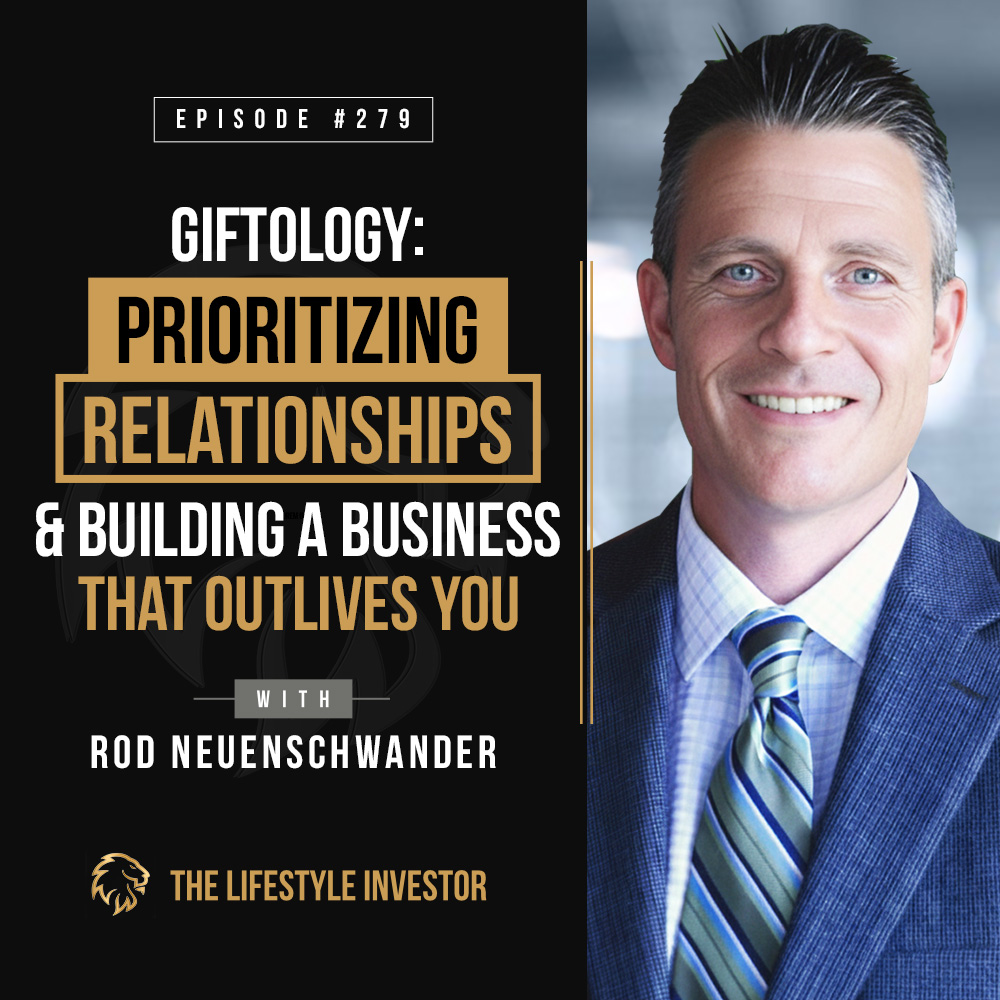
Giftology: Prioritizing Relationships and Building a Business That Outlives You with Rod Neuenschwander – EP 279
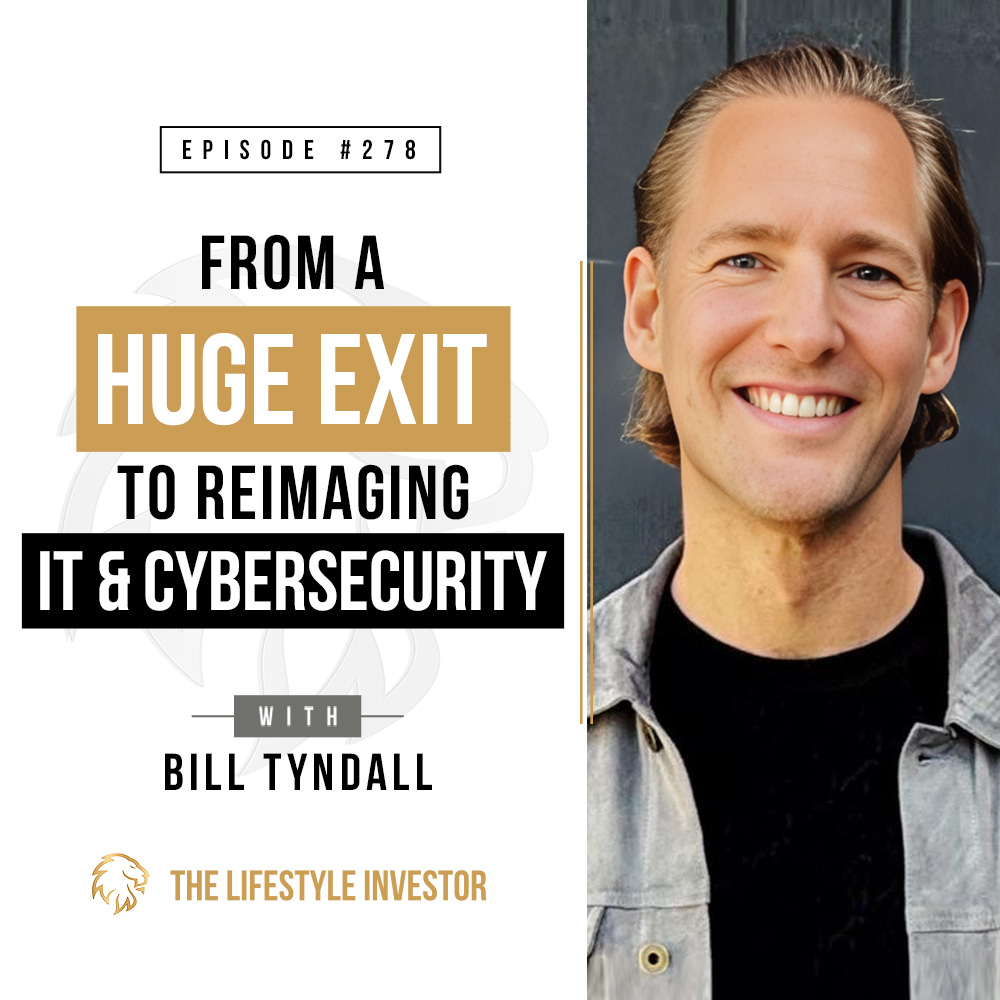
From a Huge Exit To Reimaging IT & Cybersecurity with Bill Tyndall – EP 278