![[Justin Donald] - Optin Preview](https://lifestyleinvestor.com/wp-content/uploads/2020/12/Justin-Donald-Optin-Preview-e1607533704966.png "[Justin Donald] - Optin Preview")
![Logo 1 Gold horiz [Converted]](https://lifestyleinvestor.com/wp-content/uploads/2019/08/Logo-1-Gold-horiz-Converted.png "Logo 1 Gold horiz [Converted]")
Interview with Pat Flynn
A Fresh Perspective for Vetting New Business Deals with Pat Flynn
For any entrepreneur, the most valuable currency to buy back is time. Yet many remain trapped, losing time with family and struggling to break free from the business.
But today’s guest has become the embodiment of building freedom through creativity, community, and leveraging advisory opportunities.
Pat Flynn is the creator of Smart Passive Income, bestselling author of Will It Fly? and Superfans, advisor to top tech companies such as Teachable, Circle, SquadCast, and Riverside, and one of the most respected voices in online business.
Since being laid off as an architect in 2008, he’s built multiple 7-figure businesses, generating millions of podcast downloads, and launching a wildly successful Pokémon YouTube channel with almost 2 million subscribers.
In this episode, Pat shares how he identifies winning opportunities, his Airport Test framework for evaluating business ideas, how advisory shares became one of his highest-ROI wealth builders, and how he’s intentionally designed his life so that work supports family—not the other way around.
In this episode, you’ll learn:
✅ How Pat turned a layoff into a launchpad for building multiple passive income businesses.
✅ A simple framework to evaluate business ideas before investing time or money.
✅ Why advisory shares became one of his highest-leverage income streams—and the criteria he uses to decide which companies to work with.
Featured on This Episode: Pat Flynn
✅ What he does: Pat Flynn is a creator, entrepreneur, bestselling author, advisor, and founder of Smart Passive Income. He has built multiple 7-figure businesses across digital products, courses, communities, physical products, and media. His podcast has nearly 100M downloads, and his Pokémon channel Deep Pocket Monster has become one of the top channels in its category.
💬 Words of wisdom: “It’s no longer trading your time for money. It’s investing that time and money up front to get more time and money back in the end.” – Pat Flynn
🔎 Where to find Pat Flynn: Website | LinkedIn
Key Takeaways with Pat Flynn
- Pat’s Journey from Architect to Entrepreneur
- Growing a 1.8M-Subscriber Pokémon Channel
- Why Masterminds Are The Ultimate Cheat Code
- Pat’s New Book: A Framework for Testing Business Ideas
- The Airport Test: A Filter for Life & Business Decisions
- Simple Strategies to Test If There’s a Market
- Where to Find Pat and His Newest Book
- How Pat Designed His Life Around Family & Freedom
Don’t Start a Business Until You Do This
Inspiring Quotes
- “You can’t read the label when you are inside the bottle.” – Pat Flynn
- “ I met so many people who are at the top of a ladder, but they realize that they’re at the top of the wrong ladder.” – Pat Flynn
- “We’re not at a poker table where, if you win, that means I’m losing or vice versa. We’re at this table, where the more we pour into this community that we’re a part of, the more chips will just appear.” – Pat Flynn
- “If you align with a business that maybe doesn’t align with who you really are and where you want to go in life, well, then it’s never going to work out anyway, even if you do all the right things.” – Pat Flynn
Resources
- Smart Passive Income
- Smart Passive Income on LinkedIn | Facebook | YouTube | X/Twitter
- PatFlynn.com
- Pat Flynn on LinkedIn | Instagram | YouTube | X/Twitter
- Smart Passive Income Podcast
- Superfans: The Easy Way to Stand Out, Grow Your Tribe, and Build a Successful Business by Pat Flynn
- Will It Fly?: How to Test Your Next Business Idea So You Don’t Waste Your Time and Money by Pat Flynn
- Lean Learning: How to Achieve More by Learning Less by Pat Flynn
- Leadpages
- Clay Collins
- Kit
- Nathan Barry
- MastermindTalks
- Teachable
- Circle
- Matt Gartland
- Super Advisors
- SquadCast
- Descript
- Riverside
- E-junkie
- SwitchPod
- Kickstarter
- Pokémon
- Card Party
- Jay Papasan
- The ONE Thing: The Surprisingly Simple Truth About Extraordinary Results by Gary Keller and Jay Papasan
- Decisive: How to Make Better Choices in Life and Work by Chip Heath, Dan Heath
- Chip and Dan (Heath Brothers)
- Made to Stick: Why Some Ideas Survive and Others Die by Chip Heath, Dan Heath
- Tim Ferriss
- The 4-Hour Workweek: Escape 9-5, Live Anywhere, and Join the New Rich by Timothy Ferriss
- Jay Abraham
Want My Team’s Help?
- Tax Strategy Masterclass
Learn the 28 most effective tax strategies the wealthy use to save thousands.
lifestyleinvestor.com/tax
- Free Strategy Session
Get a personalized roadmap to financial freedom.
lifestyleinvestor.com/consultation
- Lifestyle Investor Newsletter
Join The Lifestyle Investor Insider for curated investing insights.
lifestyleinvestor.com/insider
Rate & Review The Lifestyle Investor Podcast
If you enjoyed today’s episode of The Lifestyle Investor, hit the subscribe button on Apple Podcasts, Spotify, Stitcher, Castbox, Google Podcasts, iHeart Radio, or wherever you listen, so future episodes are automatically downloaded directly to your device.
You can also help by providing an honest rating & review over on Apple Podcasts. Reviews go a long way in helping us build awareness so that we can impact even more people. THANK YOU!
Connect with Justin Donald
Get the Lifestyle Investor Book!
To get access to The Lifestyle Investor: The 10 Commandments of Cashflow Investing for Passive Income and Financial Freedom visit JustinDonald.com/book
Read the Full Transcript with Pat Flynn
Justin Donald: All right. Pat, we finally made this happen. Welcome to the show.
Pat Flynn: Thank you for having me, Justin. This has been a long time coming, I know.
Justin Donald: Well, I had a blast on your podcast just a little bit ago and hope people can check that out. And really, I just want to pay tribute to you because you're an OG in the podcasting space. Your podcast, the Passive Income podcast, has been one of the top ones out there. I have listened to many episodes.
Pat Flynn: Thank you.
Justin Donald: I met you years ago at Traffic & Conversion, was super impressed. I think I heard you speak at that event, and then we chatted afterwards, and have just a laundry list of mutual friends. And I love the content you have created in the space because I really feel like you helped create the liftoff of this passive investing revolution.
Pat Flynn: Yes. And I know you and I both have kind of different approaches to it, which is really neat. In fact, we had a wonderful conversation on my show about the asset allocation that you pay attention to. And then for me, it's about spending your time investing and creating businesses and then automating them, whether with people or tools, to then be able to get more time back, because really, that's what it's all about. And you and I, I know we always talk about this. It's no longer trading your time for money. It's investing that time and money up front to get more time and money back in the end. And, hopefully, sooner than later.
Justin Donald: Yeah. Well, it's fun. I was going to start at the beginning with your story, but off-camera here or off-air, before we hit record, we started going down the path of advisory shares. And you and I have done a ton there, and so I love knowing. So, for anyone that's part of the Lifestyle Investor or Tribe of Investors or Lifestyle Investor Foundations, our three different masterminds at different kind of levels, we use this circle platform. We think it's the best, most robust platform out there. And it was really fun hearing how you have been an advisor to Circle and really built your first community there because nothing else was functional enough for the way that you wanted to develop and grow your community. And I'd love to talk about advisory in general, and the things that you've enjoyed about it.
Pat Flynn: Yeah. I mean, this takes me back to 2014, actually. My first advisory work was done with a company called Leadpages, a sort of opt-in-based tool back then for email. A guy named Clay Collins reached out to me, and he said, "Pat, you are one of our top affiliates. We need to talk about having you come on to be an advisor.” And I said, “I don't know what that means. Can you tell me more?” He said, "Well, for a share of the company, we'll give you a percentage and we'll talk, and you'll kind of use your relationships and your superpowers to help the company grow.” And I was like, “I can do that. Sure. Like, how much work is this going to require?”
And he said, "Well, maybe a call per month, and if I need you to fly out for anything bigger than maybe that, but that's about it.” And I was like, "Really?” Like, this is semi-passive income, I guess, but I'm not making any money upfront, but we're hoping for a big payout down the road. Now, there are some adviserships that I have that do pay a profit share because I do have a share of that company. But in general, it's an investment of a little bit of time in exchange for, again, my superpowers, focus, energy, relationships, et cetera, to help better the company. I came on with Kit, the email service provider company, back in 2014, as well, with Nathan Barry.
Justin Donald: Love Nathan Barry. Such a stud. Such a great guy.
Pat Flynn: Yeah. And what he's done with that to turn it into what it is today, this behemoth of an email service provider that serves creators all around the world in the best way possible. It's been great to be an advisor and not just get like a front row seat to it but actually have the ability to help shape the company itself. And it's been so neat. And then later…
Justin Donald: And he's so open to feedback and wanting to grow and partnerships. And like he's just, I'm in another mastermind, MastermindTalks, MMT, with him, and I'm just blown away by his savvy, by his big vision culture. Like, the guy is just incredible.
Pat Flynn: Yeah. He's wonderful. To get to Circle from Kit, then word started to spread that like I helped Kit go from a certain dollar amount to a much bigger dollar amount. And that's when Teachable reached out to me, a guy named…
Justin Donald: That's a big platform. Yeah.
Pat Flynn: A big platform, and it was just getting started. I was starting to get coursework done around 2017. He's like, “Pat, I want you to use Teachable, and I want you to be an advisor to help us shape it.” I said, "Okay, I know what that means now.” So, I went on and did that, and they had an acquisition, I think, in 2020 or 2021. So, that was my first sort of big, big, big paycheck as a result of doing that.
Justin Donald: That was a huge transaction, too.
Pat Flynn: That was. I mean, that was like nine figures or something like that. Not nine for me, but for the company, which was cool.
Justin Donald: I'll take any piece of nine figures someone wants to give me. That is a nice payday.
Pat Flynn: All day long. And then a couple of people who worked at Teachable had then branched off and started their own company to start the community portion that didn't exist in Teachable, and they called that Circle. They were just starting that out around 2020. And that's when my CEO, Matt, and I came on board with Circle and said, “Hey, it's not quite where we want it to use it, but if it had these things and it did this, that would be great. In fact, what if we worked together even more, and we became sort of co-advisors to your company?” And they're like, "Yes, of course,” because they’ve seen what I did with Teachable and with Kit. So, we came on and we've helped shape it. It's been amazing.
And now Matt and I both, actually, we have a company called Super Advisors, where we kind of tag team advise companies now. And it's just been so much fun to not just have more net worth as a result of this, but rather to see these companies grow and take our advice and use it but not actually have to work in the companies.
Justin Donald: Yeah. I love it. And please let the founder of Circle know, we just think the world of it. In fact, I forgot, we actually built our free community on that platform as well. So, we've got four different communities that we are using Circle for, and we just think the world of it. It's funny because when I first learned about Advisory, I was like, "What a great gig. Let's help out once a month. Let's show up for these quarterly investor meetings. This sounds great.” And so, I made a big mistake where I just kept saying yes to everything that came in the door, because early days of my life, I was very much an optimizer and a maximizer.
I have learned to be less of that over the years, but it got to be so much that I felt like it was now taken away. I built all this, this time freedom, but I was on the hook for these different things. And then some of them wanted me more than what we had originally agreed to. And then some of the deals didn't turn out, so it was like I spent all this time, and the company didn't make it, and I was like I got to redo this. Now, I've had a handful that have done really well, and I'm thankful that I did it, but now I'm way pickier on who I will advise than ever before, and it's got to be the right fit. And I have criteria. So, when someone approaches me, my criteria is literally this.
If it is based on time, me spending time helping, the answer's no. If it's built and based on me helping connect you to people that will be key players for you, whether it be on the capital raise, whether it be on strategic, it could be smart money, it could be smart capital, but also just like movers and shakers, good. I feel like my gifting is in the professional matchmaker space, so I often see a lot of opportunities there. So, now I have structured all my advisory agreements in the last five years that have zero time constraint, and it's all about making the intros that I think will benefit them, or they let me know strategic people that they'd love to be connected to. And I find a way to connect them. And that's been really fun.
Pat Flynn: That's a great thing to bring up, and where most of our deals lie now exactly, and in the beginning, just similarly as hungry. And some of those deals went well, I advised SquadCast, which got bought out by Descript, which was cool. Now, I'm on Riverside.
Justin Donald: Descript’s a cool platform, too. I love that platform.
Pat Flynn: Yeah. Descript is great. So, then I have pass-over shares now with them, but the time thing is really key. It's easy to say yes to these opportunities because when you get a certain level of success, it can be easy to just be like, "Yeah, I can help you, and I can help you, and I can help you, and I can help you.” But create those rules, create that criteria for yourself first before you dive into this too much, because it could get out of hand very quickly.
Justin Donald: Yeah. Well, let's talk about your story a bit because you're an OG in the passive income space. You built a monster podcast. You have a huge YouTube platform. You're a Wall Street bestselling author. You have so much going for you. But where did it begin for you? How did you actually get to the point where you said, “Hey, I want to stop trading time for money”? Because it's not, I mean, I feel like most people just fall in that trap, and they do that the rest of their life, and they want to climb up the ladder. They don't know that there's another option. And I love that you're teaching people that there is, but I'd love to hear your story.
Pat Flynn: I didn't know there was another option until I had no choice but to look around because in 2008, I got laid off. And I was on that path. In fact, I look back and I am so blessed that I got let go, even though at the time it was the worst thing that ever happened. It allowed me to explore and find the world of online business and being my own boss. I was in the world of architecture, and I loved it. It was my dream job, but it was so many hours per week, 60 hours per week. It was very severely underpaid. We didn't get paid as much as like the engineers and stuff, at least at the levels that I were. But I was still doing really well.
I was the highest-paid and youngest person to be job captain in our firm. And all this stuff was going for me and then the rug got pulled out from under me. And it wasn't until I found a podcast called Internet Business Mastery, and there was an episode on that show. The show no longer exists, but there was a podcast episode with a guy who is teaching people how to pass the PM exam or the project management exam. And he was making over six figures a year doing this. And I couldn't believe it. I was just like, "What?” By the way, you said OG. This is 2008. So, this stuff wasn't normal back then to generate that kind of income by just sharing your information.
And I was like, "You know what? I've taken a number of different exams on my way to becoming an architect.” And there was one in particular that was very difficult, that had very little information about it. It's called the LEED exam. And I decided to create a website about that. And within three months, it started to rank really high in Google, and I started to get search engine traffic. And then I joined this mastermind group and got told that I should probably publish an e-book study guide. And I said, "What is an e-book? I have no idea what that means.” And lo and behold, in a month and a half, I had this PDF file that I sold through a tool called E-junkie to collect payments on my website. And I had generated two-and-a-half times more in a single month than I would normally make as an architect in a single month by selling a book. I made nearly $8,000 from a $19 PDF file.
Justin Donald: That's a game-changer. Yeah.
Pat Flynn: It just blew me away. I thought the FBI was like going to swap my house because it didn't feel right. Like, I went to school for five years to be an architect, and then I was supposed to wait until I was 65 to see this kind of overnight income, waking up with more money in my bank account. And it was happening here, and it just happened in such a short, short time. So, then I started the website where most people know me from now, which is called Smart Passive Income, to show people how I did that. And it was cool because at the time, a lot of people were talking about online business and marketing and all this kind of stuff, but they were holding their secrets in a vault, a vault that you had to pay to get access to.
For me, I was just like, “I already have my architecture business thingy. It's working, so I'm just going to share all this information for free.” And I did, and I started sharing how much money I was making, how many customers I was getting, different campaigns I was trying, what was working, what wasn't. And of course, because it was so transparent and out there, that blew up. And so, I started to get found on podcasts, and I started to be asked to do guest posts and just kind of started speaking. I started writing my first books, and the YouTube channel, the podcast, which now is approaching 100 million downloads, which is pretty insane.
That started in 2010. I helped people like Tim Ferriss start their podcast. He actually asked me for advice on that. So, I became known in this space and just continued to want to serve first. That's what I've always found worked. The architecture case study was so great at like proving myself as somebody teaching entrepreneurship and showing that passive income was possible, that I decided that I was going to just continue to create new businesses publicly. So, that's what I did. In 2010, I started a security guard training website and showed people how to do keyword research, how to build the website, how to make money. In 73 days, I got that to making about $100 a day out of nothing.
And from there, my affiliate revenue for the keyword research tool, the website stuff, and all the stuff that I used, and again, I just gave all that information away for free, but because I shared the tools as an affiliate, that blew up, especially when I hit number one for security guard training on Google. I’ve since sold that website. Started a website about food trucks. 2017, I created an invention, like a physical product called the Switch Pod. It's like a tripod, and the legs kind of fold together to become a handle. That launched on Kickstarter two years later to the tune of $418,000 made in 60 days. And that became a case study. Just like all the things I'm doing there just kind of lend itself to more of like, "Oh, yeah, Pat is just figuring it out and showing us, and it doesn't always work out pretty, but eventually he finds a way to do it, and now I'm inspired too,” and that's kind of how I teach.
I'm not the greatest salesman. I don't write great copy, but I can share my results and kind of lead people along the way. More recently, I started a YouTube channel about something completely separate, something I didn't know anything about, but because my kids were getting into it. And you know what this is. This is Pokémon. And started a YouTube channel after joining the communities, and I was even a moderator for certain channels. I just loved the community of people who were locked in their homes, but like talking about Pokémon and getting interested in it. And there's a whole investment side to it. There's all this history behind it.
And then I started to notice that there were people who were basically all talking about the same thing, who weren't bringing any good stories or cinematography to it. And I knew from having been on YouTube for over a decade that I could bring something new to the Pokémon space. So, I did. I started that channel in January 2021. It got to 100,000 subs in November, that same year. Today, it's at 1.8 million subscribers. It's the most profitable thing I've ever done because the team is super lean. It's generating five figures a month in AdSense revenue, not to mention brand deals to the tune of $30,000 to $40,000 for a 60-second ad spot on a single video to now me having a relationship with the Pokémon Company, me having a relationship with eBay, me having a relationship with TikTok, and all these other big brands.
Even to the point now, I'm literally following the steps that I talk about in my book, Superfans. One of the steps in Superfans to cultivate your community is to bring them together, like create events for them to connect with one another. So, I started an event in 2023 called Card Party, where people who are Pokémon nerds can just come. It celebrates the fans and the YouTubers in that space as well. I'm not the hero of the story. The fans and the other creators are. And what's really cool is when I positioned it that way, all those other creators who are also Pokémon YouTubers promoted the event without me even asking. And they just wanted to come and meet their fans. So, this event was 2,500 people in Anaheim in 2023. It was 3,500 in Orlando in 2024. We just had 5,500 people in Tampa, and we're going to have 6,000 in Seattle this October.
Justin Donald: You’re literally running the size event of what Traffic & Conversion used to be, which was like the biggest online event space that existed. That's incredible.
Pat Flynn: And it's getting easier and easier each time I do it because I'm putting team members in place to help operate it. And I can just go in half. I wanted to create an event that I'd want to bring my kids to, and that didn't exist because everything felt so transactional. This feels like camp. It feels like community. And it didn't exist, so I was like, I'm just going to build it.
Justin Donald: Well, it's brilliant on so many levels. So, a few things that I want to point out. Number one, you said something really important, which was this is about the community. This is about bringing people together, and that's how I feel. I don't want to be a guru in anything of anything. I just want to bring world-class people together because that's where the magic happens. And it sounds like you are facilitating that. I think being a great facilitator and bringing awesome people together can be a game-changer. Number two is you do what I talk about, which is finding invisible deals, finding what are the things that people want that most others don't know that they want it. Like, it's a wide open space.
And so, you're obviously filling that space, which is great. But I want to take a step back. You said something right at the beginning of getting into your story that I think is so important. You had said you joined a mastermind, and that mastermind, like those members, really poured into you in a way showing you things that you hadn't thought of or didn't even recognize you should be doing. And to me, masterminds are the ultimate hack, like that is today's version of a country club, but even better because it's specialized. And people from all over can be there, versus just like one town or one metro. And I'd love to hear you talk about just the importance of what masterminds have done for you.
You've obviously built some communities, have some events, like maybe you don't call yours a “mastermind,” but certainly there's a bit of the genesis of that in what you're doing. But I think it's probably because it's been an instrumental part of your life to help you get to the next level.
Pat Flynn: Yeah. I mean, the brain trust, the knights of the round table, the mastermind, these are all things that help everybody level up. And I would not be where I'm at today if it wasn't for the other people I've surrounded myself with. And I have been in two mastermind groups, formal mastermind groups, about five to six people each that have been together meeting every single week for over a decade each. I mean two of them. And it's like at the top of my list, God and family, mastermind members, and then friends, because these mastermind members have been with me through thick and thin. They know me sometimes better than I know myself.
They have helped me come up with great ideas. They've knocked down ideas that I didn't know were poor, and I needed to see those things from the outside, and that's what they're there for. You can't read the label when you are inside the bottle. And so, even in the Pokémon space that I'm in, there's a certain group of creators that I always want to talk to, and we hang out. We text each other. We support each other. And although we might be “competitors,” what we really are, are we're complementary to each other.
Justin Donald: Yeah. You're collaborators, for sure.
Pat Flynn: We're collaborators. Exactly. And we can grow faster together. I approach life like this. We're not at a poker table where, Justin, if you win, that means I'm losing or vice versa. We're at this table, where the more we pour into this community that we're a part of, the more chips will just appear. This is the world of abundance, that I feel like so many creators, at least ones that I see, they're just stunting their growth because they're in it just for themselves when they could all grow faster together. So, yeah, the mastermind is absolutely key, and we've gone through various members every once in a while. There are some people that weren't maybe good fits, but we've landed on two groups of about five or six that have been just keystone for all of our successes.
And it's not just like, "Here's the business strategy that's working today,” or, “Here's a launch coming up. Can you read my sales page?” It's like, "Guys, I'm suffering from depression right now and I don't know why.” And then the guys poke holes and try to figure it out, and are there, and can kind of we can all lean on each other. And many times, they're also brutally honest, and that brutal honesty doesn't come from friends who want to make sure you're always happy. They're there because they know they would want the same in return. It's so powerful. So, I'm glad you brought that up and pointed that out.
Justin Donald: Well, to me, it's the ultimate cheat code. If you can find a way to upgrade the… So, I'm always trying to upgrade everything like wealth creation, business acumen, health, and wellness. And even buying time back. If I can just keep upgrading that, upgrading my software on it, I'm going to continue to do more cool things and have more impact. And the way that I do that is peer group and mentorship. And masterminds are the place that you get peer group and mentorship. And you made a comment where and I agree with you, God, family, mastermind friends, because the people in the mastermind have become such close friends for me. Like, they've actually become my inner circle.
And in many instances, it's the most relevant information because we're helping each other level up. I want to be around people that challenge me, that inspire me, that keep me intellectually curious. So, I love that you have done that. I love that you're 10 plus years in. And I have two, and there are several that I'm in that I'm part of. And obviously, I have some of my own, but I just think you have made another comment where it's like, instead of being competitors, let's work together. And that's, for me, what it is in the world of mastermind. People ask me all the time, they're like, "Well, how's your mastermind versus this other mastermind?”
And I always say, "Every mastermind, if it's run by a competent person that cares about what they're doing, that's bringing awesome people together, every mastermind's a good mastermind. It's not about what one is better. It's about what one is the right fit for you right now.” And I think everyone should find a way to level up at whatever it is. Like, find the price point you need to be at, find the type of people you want to be around, values aligned, and then find the categories that you want to grow in, in your own life. And I just think everyone should be in a community like that.
Pat Flynn: Yeah. And if you can get together in person at least twice a year, that just takes it up a whole new level because you actually can feel each other's energy. You see each other. You go back home with even more energy to help each other out and serve each other. And that all trickles down into each of each other's families and communities, and audiences. It's such an important thing.
Justin Donald: Yeah, for sure. Now, you wrote a book that you speak on a lot, where you've just listed all these different businesses that you have started or you have engaged with, you've become an advisor of. And so, you're seeing things in a different light than what most people see. And I love that. So, your book, Will It Fly?, you built this framework of like, "Will this business fly? Will it work or will it not work?” And I'd love to talk a little bit about, like, what do you do to vet a deal or a business to understand if it's going to work long term?
Pat Flynn: Yeah. So, the book subtitle, How to Test Your Next Business Idea So You Don't Waste Your Time and Money, really, this was just an answer to the number one question that I was getting and the number one struggle. I mean, this is just from a creator and personal brand point of view. This was just the number one struggle people had when I asked them a survey. It was just like, "Oh, I don't know if I'm wasting my time here. I don't want to waste my money.” Cool. Let me write the book on this so that you can figure it out. So, this book goes through a number of different exercises to help you determine whether or not the choice that you're making for a business or any really decision, for that matter, is one that makes sense for you.
And it's interesting because a lot of people, when they open the book, they expect to start to see some market research type stuff, right? How do I make sure there's money in this space, or da, da, da. That's later in the book. The first part of the book is first understanding, like, do you know enough about who you are and what you want, and what gets you excited? Because if you align with a business that maybe doesn't align with who you really are and where you want to go in life, well, then it's never going to work out anyway, even if you do all the right things. I met so many people who are at the top of a ladder, but they realize that they're at the top of the wrong ladder.
So, before we climb, let's first make sure we're climbing up the correct ladder. So, there's a lot of experiment. Well, probably my favorite experiment is one called the airport test. It's a little thought experiment that I have in the book that was inspired by Jay Papasan and the book, The ONE Thing.
Justin Donald: Love Jay. He’s the best.
Pat Flynn: It's such a good book. When I spoke with him, he gave me an interesting tidbit about how he and Gary Keller hire employees. They run through the same experiment. And so, you take a piece of paper, you fold it into four quadrants, and in each of the four quadrants, you title it with one of the four most important things in your life. So, it could be family, finances, health, hobbies, or just whatever, any four things. Usually, it's family and finances are there for sure, and health. And then under each of those, just bullet point five years from now, if, for example, five years from now you were at the airport, you see a friend who you hadn't seen for a while, and they go, "Oh my gosh, Justin, it's been so long. Like, what are you doing here at the airport? Like, how are things going in life right now?”
You have to say, "Things are awesome,” and when they go, "Oh, why? Like, tell me about it,” you write those bullet points of why in each of those quadrants. Why would life be awesome for you five years from now under family? Because you are still walking your kids to school or taking them to school and picking them up every day. Or because you have the ability to have deep conversations with your son and daughter, even though it can be scary sometimes, or you have a date night every Thursday with your wife. Great. Those are things that make that awesome. Even if they're not happening yet, this is not a wish list. This is what would make life awesome five years from now.
And you take this piece of paper, and this becomes your filter for decisions that you make. If you have an opportunity or an investment or whatever it might be, and you run through your sort of DeLorean experiment, you travel into the future five years, and you go, "Okay, if everything works out with this decision that I'm working on right now, does that future state align with the future state of my airport test?” And if there's a disconnect there, then it's an easy no. For example, I had mentioned earlier I was doing a lot of work with helping people build websites, and there was a particular website hosting company that reached out to me, and they wanted me to come on in a very, very high-up role for very, very good pay.
And it was a dream job, really. And I had my version of an airport test at the time, and I could clearly see that this would not be the path I should go down. Because then I wouldn't be with my family anymore. I would have to wear a suit and coat to work every day. I'd have to worry about servers and not sleep at night, wondering if something was going to go down. So, it was very clear for me to say no to that decision, even though it was a seven-figure deal. And I was okay with that because that's not where I want to go. But most people, we see these opportunities, especially if you're a young entrepreneur or early investor, you see an opportunity, you say yes right away.
And one thing you taught me in our podcast episode together is the more that you can say no, the better, right? You’ve got to be a little bit more picky and choosy to begin with. So, this is where that comes into play with relation to who you are and the kinds of things you're good at. Another fun test in the book is kind of looking back, I ask you a series of questions about your first jobs and what you loved about them, and what you disliked about them, to make sure you incorporate those things into the future in whatever it is that you do.
And then when it comes to the market research part, there’s one exercise I could offer that at least for entrepreneurs that has been really helpful. It’s called the market map, where you create a list of the three Ps. If you’re diving into a particular niche or market, the first P are places, what websites, what conventions, where do people in that space go to to get together? Where do they find their information? Write all those things down.
The second P is all the people. Who are the people? Who are the leaders in that space already? The authorities, the influencers, write them all down. Some of them may overlap with the websites. And then the third P is all the products that they purchase. Which ones are being offered to them? On Amazon, websites, courses, digital, physical, whatever it might be, write them all down. This becomes your market map because if you’re traveling to a space, you want to know what is the lay of the land before you kind of plant yourself and build your home.
So, a lot of times, this market map exercise, when people are thinking about going down a particular route, they see this market map and they’re like, this isn’t the kind of crowd I want to be around. I don’t want to associate myself with these people or, wow, look, this is not what I’m interested in. Better to know now than after you’ve committed time and money into it, right?
Justin Donald: That’s right.
Pat Flynn: And that’s the whole thing. A lot of people struggle and I’ve seen people cry. When they made a decision in their head, then they dive into the research and they go, “Oh, I guess this is not for me,” because they’ve had these dreams and visions and the what ifs, which are good to have, but you need to get the full story first before diving completely in. That being said, it’s okay to experiment and try things out and dabble. You don’t need to be perfect. You don’t need to go all in. In fact, there’s a book called Decisive by Chip and Dan Heath, which is really, really great. I love Chip and Dan Heath. They wrote also a book called Made to Stick, if you might remember that one from back in the day.
They said that we humans, we have this ability to easily fit into sort of a binary decision-making process. It’s either a yes or a no. It’s either this or that, but there’s such a huge wide spectrum between the two. And there might be a place where you fit in, in between. It might be a little bit of this and a little bit of that, or somewhere in between. And it’s important to think about those options and realize that there is opportunity and success that can happen at the halfway point in many cases.
So, again, we’re getting a little deep into it, but these are all concepts from the book that can help a person make a decision and test things first. The ultimate test, at least in the business world, is would a person pay for this thing, right? So, at the end of the book, we talk about, okay, you have this idea, you’ve done a little bit of market research, you’ve had people commit to some things that require a little friction, right? Like, subscribing to an email list to get more information about it. That’s a good sign because people don’t just give up their email easily, or better yet, attending a webinar because they want more information about something. If nobody shows up, that tells you something.
Justin Donald: That’s right.
Pat Flynn: If a lot of people show up, that also tells you something, great, let’s keep moving forward. But the ultimate test is similar to Tim Ferriss’s 4-Hour Work Week. He talked about selling. I think it was some sort of clothing material on a website as if it existed to get people to pay for it and say, sorry, it’s out of stock right now. Put in your email, we’ll send you when it gets back into stock, just to validate if that book or if that thing worked. Similarly, you can pre-sell your product first and if you get a certain amount of people, great, you can build it and let people know you’re honest about it. If not, you just refund the people and that’s okay.
I think it was Jay Abraham who once did an experiment where he was trying to figure out which of five books to write or something like that. So, he took out classified ads. Each with the title of each of the five different books he wanted to write with a phone number and he just figured out which one had the most calls. That was the book he wrote. It’s kind of like that.
Justin Donald: That’s awesome. I love Jay. We had Jay Abraham at one of our live events a couple years back and actually, I think it was last year. It was fantastic. I did something like that in my market research when I was buying new real estate to find out if there was a market for renters in that space, and I would place ads at different price points to understand, is there a market rent here? And so, then you have a list of people that call to say, “Hey, I’m interested.” And that validates that that market can support the real estate that you either want to build or buy. For me, it was always buy. I wasn’t trying to develop anything. So, I love that strategy. Something…
Pat Flynn: And there are other signals too, if you don’t mind me interjecting real quick.
Justin Donald: Yeah, please do.
Pat Flynn: That just reminded me of something which does relate to real estate a bit. I was getting and dabbling into real estate just a little bit, and somebody told me once that I should pay attention to the trends that– this was a while back though, trends of where Starbucks was building.
Justin Donald: That’s good.
Pat Flynn: And kind of like using signals like that, that means something else, right? The hidden investment opportunities, right? So, okay, if Starbucks, who has all these people and research and all this money and data are building here in this location, that tells me that they probably know something about this location that many other people might not. So, maybe I might look toward those locations to see if it’s worth investing in opportunities there. It doesn’t mean a yes, but it just means, okay, I’m going to pay attention to that a little bit more than I didn’t before. So, things like that are really cool.
Justin Donald: And we did that with Walmarts because our demographic, especially on the mobile home park side, was a little bit different. And Starbucks may not have been the right market fit for our clientele, but Walmart most certainly was. And so, we use that for sure. Like, that was huge for us. If there was no Walmart anywhere around, no way. We’re not even going to do it. We’re not even going to try it.
Pat Flynn: Good stuff.
Justin Donald: Well, this has been just an awesome session and I really appreciate you spending time with us. Where can people learn more about you and all the things that you’re up to? It sounds like, you’re juggling and balancing a lot of plates, but where would you send people for the various things that you’re doing, to buy your books, to learn more about Pokemon, for those that are interested in that, to understand your cash flowing businesses?
Pat Flynn: Yeah, I appreciate you for having me on once again, and it might seem like I’m juggling a bunch of balls, but the metaphor I use is, you know when you have like a hair dryer and you could put a ball on top of it and it kind of just floats there?
Justin Donald: Yep.
Pat Flynn: My job is to just find more hair dryers, put these bulbs on, and then I move on to the next one, into the next one, and let these things ride on their own.
Justin Donald: That’s cool.
Pat Flynn: So, that’s what I’m doing. So, if you’re interested in the Pokemon thing, it’s a very fun thing, deep pocket monster on YouTube. We’re approaching 2 million subs there, and I have another Shorts channel that’s seeing about 10 million views a day, which is really neat too. My books are out there on Amazon. You could check out Will It Fly? which we spoke about, but Superfans may be more relevant for some. And my latest book, Lean Learning, which…
Justin Donald: Lean Learning, yeah. We didn’t even get into that.
Pat Flynn: I mean, we talked about a lot of those principles already today. So, Smart Passive Income, probably the home base that you can go to, to check out all the things. So, again, Justin, this was such a pleasure and I had the honor of having you on my show. So, I hope everybody will go check that out. That was super fun. And just thank you again for having me today.
Justin Donald: Yeah. And one thing we didn’t talk about that we have to talk about before we close out, you’ve done all this to create an epic life for you and your family. And I would just love just the backstory on what having these cash flowing businesses has done for your time. You’ve been able to buy your time back. You have been super intentional with time spent with your family, and then even creating epic moments and experiences like we talk about all the time on this show, instead of buying stuff, buy experiences, create relational equity, create magic moments. So, I’d love to just hear you share a little bit on that because you have built an incredible life for yourself, one that I think if anyone knew what you were up to, they would want your life.
Pat Flynn: Thank you. I appreciate that, Justin. Ever since the kids started going to school, my wife and I take the kids to school, pick them up. They’re getting old enough now where they can drop themselves back home, but we still want to take them to school every day and just let them know we’re there for them. And that’s really special to us. And it was very special, especially early on, that both of us take them. We’d often have parents come to both of us because we were usually together and they were alone. Like, what do you guys do? Did you win the lottery or something? And we’re like, no, I have business, but I have shaped my business around the life that I want.
Justin Donald: So cool.
Pat Flynn: Now that the kids are older, we’re able to travel, in fact, we’ve been traveling a lot. We go to Japan every single year to give them more experiences and different cultures and understandings of parts of the world that just were so foreign to me until I was later in life. And then the other thing that I love to do is involve the kids in the business. I mean, they are both employees of my Pokemon business actually. They get on camera every once in a while, but usually, they’re behind the scenes and helping with shipping and script writing and all this kind of stuff, photography. I do save some on taxes as a result of having them as employees. If people want to go deep down into that sort of tax strategy, you could, but more so, it just gives us experiences together, working on something and seeing what entrepreneurship could do. Not to say that I want them to become entrepreneurs, I want them to do whatever it is that they feel compelled to do, but to know that that is an option and what it’s like and how open a person’s world can be when you dive into the world of not trading your time for money and what it’s like to serve people and literally see the results of that up front.
When they come to events with me and they see me speak, they see, like the people in the crowd and how they respond to that. When they come to events and they hear somebody come up and say, “Pat, you changed my life. The way that you did this meant so much,” and they see that, then they know why I’m doing what I’m doing at home. And that means a lot.
Justin Donald: That’s awesome. Well, I love you traveling to Japan. We’re taking a Lifestyle Investor trip to Japan in October, so it’s coming up soon.
Pat Flynn: Oh, they’re going to love it.
Justin Donald: White glove trip, all the Michelin star restaurants. We’re going to have a blast. And then I forgot to mention this on your show, and I really haven’t even mentioned it much on my show, but I am in the process of completing my very first Lifestyle Investor kids book that is going to go live in three weeks, and I am so excited. It’s all about using money and mindset and scaling businesses in an applicable way for different age groups and we do 40 lessons with an actual story. But then like, how-tos, technical action steps people can take with little snippets from a big-time entrepreneur that early in their life, 10 to 15 years old, made certain decisions that got them to where they are today, that some of them are good decisions, some of them are bad decisions, but it’s pretty powerful stuff and I’m…
Pat Flynn: That’s so cool.
Justin Donald: I’m just thrilled.
Pat Flynn: Congrats on that.
Justin Donald: Yeah, thank you. Well, I love ending every podcast episode with a question for our audience. So, if you’re watching this or listening to this, my question for you is, what is one step you can take today to move towards financial freedom and really just move towards a life that you desire that’s on your terms? So, not a life by default like most, but a life by design. And more specifically, what is one thing that you can take from Pat today that can move you towards that space? I think there were tons of gems to pick from. Pat, thank you for being on the show, and we’ll catch you all next week.
Pat Flynn: Thank you for having me.
Sign up to receive email updates
Enter your name and email address below and I'll send you periodic updates about the podcast.
Keep Learning
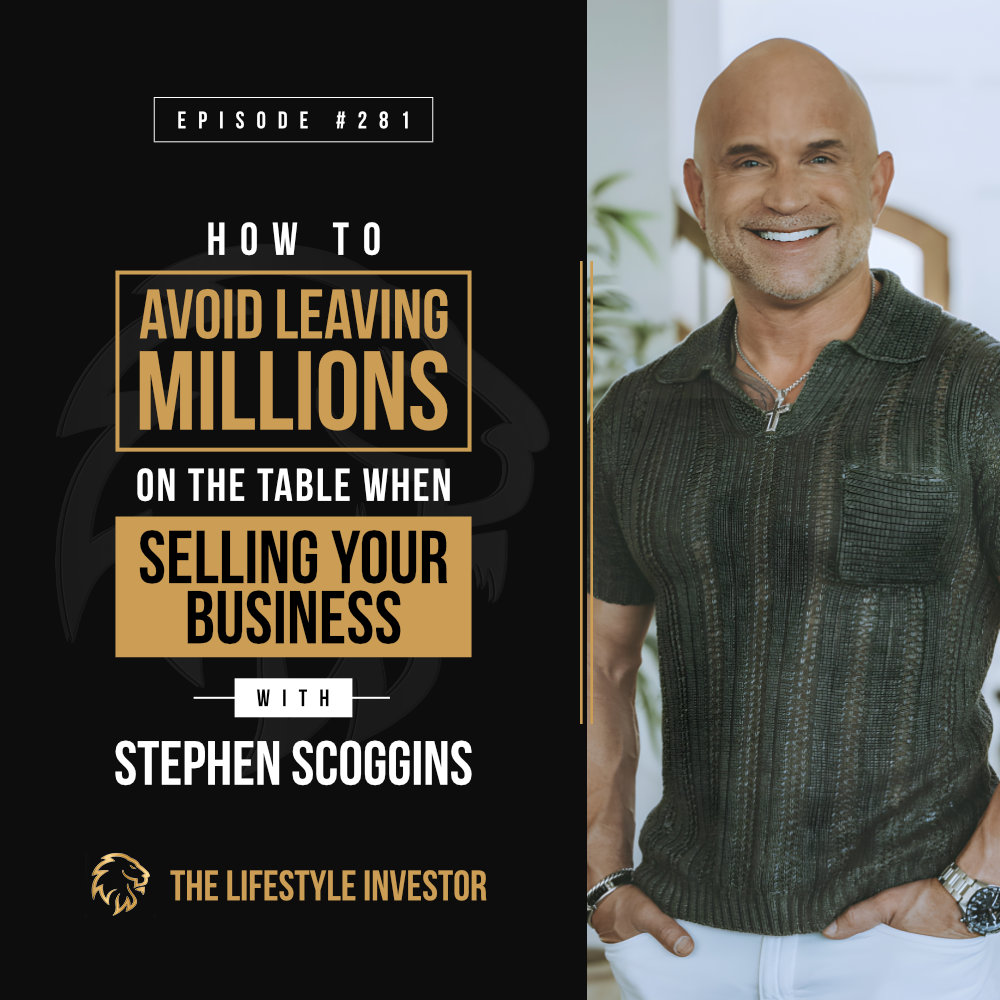
How to Avoid Leaving Millions on the Table When Selling Your Business with Stephen Scoggins – EP 281
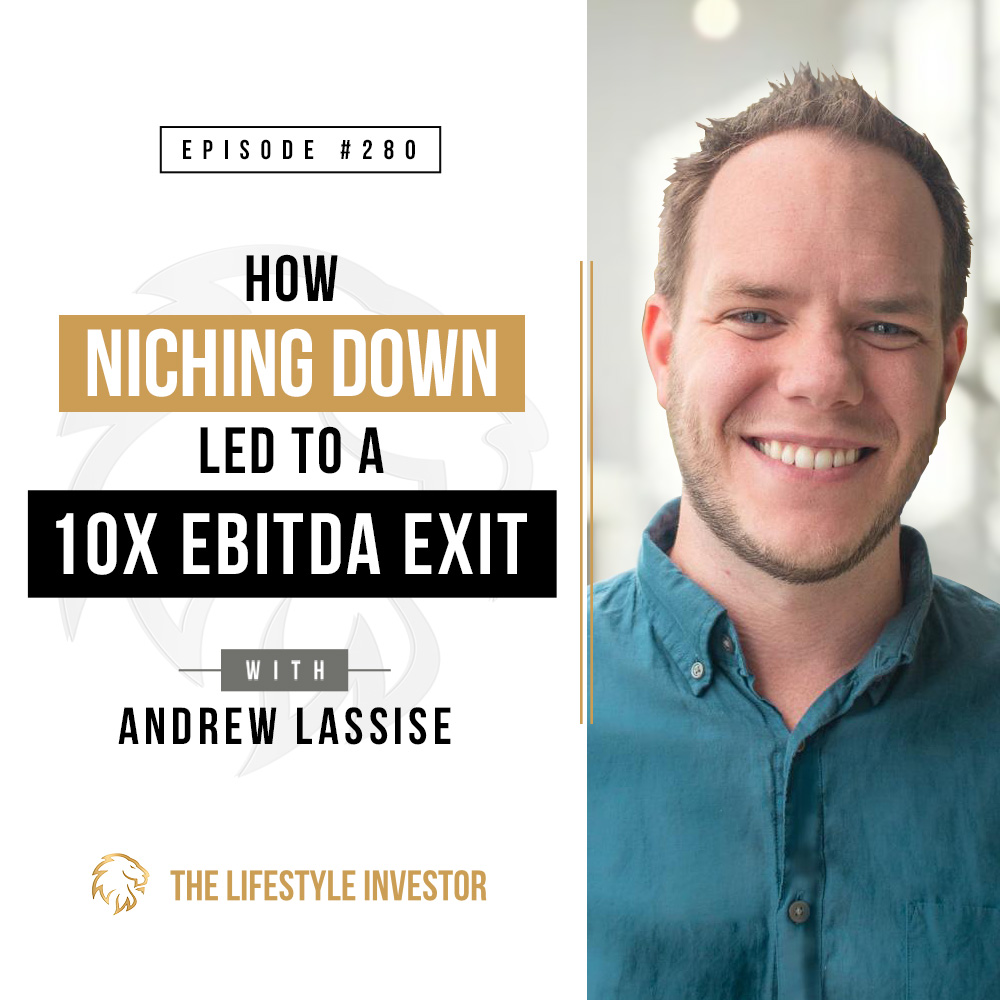
How Niching Down Led to a 10x EBITDA Exit with Andrew Lassise – EP 280