![[Justin Donald] - Optin Preview](https://lifestyleinvestor.com/wp-content/uploads/2020/12/Justin-Donald-Optin-Preview-e1607533704966.png "[Justin Donald] - Optin Preview")

![Logo 1 Gold horiz [Converted]](https://lifestyleinvestor.com/wp-content/uploads/2019/08/Logo-1-Gold-horiz-Converted.png "Logo 1 Gold horiz [Converted]")
Interview with Pasha Esfandiary
TLI Member Spotlight: Investing in Mobile Home Parks with Pasha Esfandiary
Today, as a part of the Lifestyle Investor member spotlight series, I’m speaking with Pasha Esfandiary.
Pasha has been a part of our mastermind group for a few years now and has brought a ton of wisdom, experience, and opportunities to our community of investors.
In this episode, I wanted to chat with him about his investing journey. You’ll hear how he transitioned from playing professional poker to building a real estate empire with over $250M in transactions across multiple asset classes. These include residential homes, boutique motels, large multifamily properties, mobile home parks, and more.
You’re going to hear why he decided to double down on mobile home parks, how he syndicates deals for investors, his process for managing operations for his real estate business, and the benefits he’s gotten from being a part of our mastermind group.
Featured on This Episode: Pasha Esfandiary
✅ What he does: Starting his career in real estate in 2011, flipping homes found at auctions, Pasha has since been involved in over $250 million in transactions across multiple asset types. These include residential homes, boutique motels, the purchasing and management of large multifamily properties, and working with housing programs in vulnerable communities.
In early 2021, Pasha founded Evoke Capital with the primary objective of helping others achieve financial freedom through real estate investing. His lifelong philosophy is what drives Evoke Capital to excellence – People First. Treating each investment as his own and each tenant as family, Pasha has developed Evoke Capital within 24 months to include a portfolio of over 1650 units.
Throughout Pasha’s successful professional ventures, the unfolding of his dream focuses on his value of sustainable community development. This goal in building low-income housing is to provide much more than a roof overhead. The future includes an NGO where all the Evoke properties provide nurturing and interconnected community for his residents. The plans are for valuable educational resources within finance, nutrition, and emotional intelligence. Pasha is committed to building an environment that empowers and encourages its residents to grow, achieve and thrive.
💬 Words of wisdom: “Mobile home parks are the only sector of real estate where the demand is increasing and the supply is dwindling. In no other sector is that happening whatsoever.” – Pasha Esfandiary
🔎 Where to find Pasha Esfandiary: LinkedIn | Instagram | Podcast | Email
Key Takeaways with Pasha Esfandiary
- Lifestyle Investor spotlight series
- Lessons learned from playing professional poker
- Traveling the globe and experiential meetups
- 1Surrounding yourself with those who will elevate you
- Lifestyle Investor Mastermind
- Building a real estate empire
- Investing in mobile home parks
- Why Pasha went all in on mobile home parks
- The greatest real estate investor of all time
- Real estate syndications vs real estate funds
- Operations: In-House vs Outsourcing – which is better?
Surround Yourself With the People Who Will Take You to the Next Level | Pasha Esfandiary
Free Strategy Session
The Lifestyle Investor Insider
Pasha Esfandiary Tweetables
“I always want to do right by my investors all the time. I just want to be treated the way I would want to be treated if I gave my money to somebody.” – Pasha Esfandiary Share on X “Environment is stronger than willpower.” – Paramahansa Yogananda Share on XResources
- Evo Capital
- Pasha Esfandiary on LinkedIn | Instagram | Podcast | Email
- Road to 100 Podcast
- Chris Moneymaker
- Phil Hellmuth
- Phil Ivey
- World Series of Poker
- Liar’s Poker (Norton Paperback) by Michael Lewis
- Hans Box
- Jo’s
- Blackstone
- Brookfield
- Carlyle
- Sam Zell
- Equity LifeStyle Properties
Rate & Review The Lifestyle Investor Podcast
If you enjoyed today’s episode of The Lifestyle Investor, hit the subscribe button on Apple Podcasts, Spotify, Stitcher, Castbox, Google Podcasts, iHeart Radio, or wherever you listen, so future episodes are automatically downloaded directly to your device.
You can also help by providing an honest rating & review over on Apple Podcasts. Reviews go a long way in helping us build awareness so that we can impact even more people. THANK YOU!
Connect with Justin Donald
Get the Lifestyle Investor Book!
To get access to The Lifestyle Investor: The 10 Commandments of Cashflow Investing for Passive Income and Financial Freedom visit JustinDonald.com/book
Read the Full Transcript with Pasha Esfandiary
Justin Donald: What’s up, Pasha? So good to have you on the show.
Pasha Esfandiary: I’m so excited to be here. It’s always great having conversations with you, Justin.
Justin Donald: Hey, we’re going to have some fun. And one thing that I know that is going to be fun for our audience here is your back story is incredibly fun, but there’s so much about you that I resonate with that you are such a great example of someone who’s living a life with passion and with purpose. So, I’m thrilled to share your story. And I’m also thrilled because we’re doing more of our Member Spotlight. And so, you’re officially the second Member Spotlight that I’ve done, and I just love interviewing Lifestyle Investor Mastermind members and learning more about them and their story in a way that can benefit the entire community and then the larger Lifestyle Investor community.
Pasha Esfandiary: Well, that’s exciting. I don’t know I was number two. All right, this is great.
Justin Donald: Number two.
Pasha Esfandiary: I’ll try not to mess it up.
Justin Donald: Well, this is the brand-new initiative we’re rolling out where it’s like, hey, let’s just feature people in our community because they’re impressive, they’re cool, they’re interesting. They’ve got so much going on. And with many of them like you, I know a lot of your story because, through the interview process, I got to know you. We got to meet in person. I got to go through your application. I got to read and learn and understand what makes you tick and how you got to the level of success that you have achieved. So, it’s fun for me to kind of dive in even deeper.
Pasha Esfandiary: Yeah, it’s fascinating. I love when we can dive deep with others, and everyone has such an incredible story. It’s never just been easy. And the beautiful thing about this podcast and these member highlights is everyone has a unique story that made them who they are and just so wonderful to dig into, so.
Justin Donald: Oh, totally. So, what makes you who you are today? You were not this great, incredible investor. You actually started in a completely different profession. And by the way, maybe there is even a profession before you became a professional poker player, too.
Pasha Esfandiary: I mean, other than just being a server and a professional gamer, not so much. It’s a unique path I definitely went. So, I always knew being young, I was able to absorb information very well. Concepts really intrigued me. I could pick up things on that very well, but if it didn’t invigorate me or make me excited, I just didn’t want to study, right?
And so, college was really, really rough for me. I just knew I couldn’t do it. It was too tedious. And I quickly dropped out of college. And at that time, fortunately, my brother right in that 2004 time frame won a big tournament. He won $1.4 million. This is right when poker started to blow up, started getting on TV. And at that time, I was a server. I didn’t have this grand plan of what I was going to do at that time. And I just realized, hey, if he could do it, well, I could do it. It’s just the competitive spirit within us, right?
And so, I quickly started to play poker and I took the main concepts really well, play position, be aggressive. And I think because of my childhood, I was able to be very keen on observing humans and patterns. And so, at the poker table, that’s really all it is, just your patterns will come out in the poker play. And so, I was able to really pick up on that. And being young and making the kind of money that I was making up until about 26 years old, it afforded me a lot of freedom. I was making more than most college graduates by far. But that was a really unique path and I learned a lot, but the lifestyle wasn’t for me, the ups and downs weren’t for me.
And so, around right at that 26 years old mark, I just realized, hey, I’ve always wanted to be in real estate, and let me go ahead and take a few steps back from how much I’m making and get into real estate and let me just go learn. And that’s what I did. I interned for essentially a family friend of mine for three months at his office, just learned everything I could. And then I went and started flipping my own home sight unseen at auctions. And then it just kind of started from there.
Justin Donald: Well, that’s a really fun and interesting story. And so, I’d love to even get into some of the highs and lows of poker because that’s what it is, right? And by the way, I remember Chris Moneymaker making his big debut. And I mean, I watched all of that. I mean, it was awesome, and so many different stars along the way, and the Phil Hellmuths of the world and the Iveys of the world. And I mean so many of them, like, I had so much fun learning the characters and watching the tournaments, World Series of Poker and all the bracelet tournaments.
Pasha Esfandiary: Yeah. It was more exciting back then because people were aggressive. They weren’t afraid of making mistakes. It’s all more about reading the person. And it’s fun and it’s glorified and that poker table is dramatized. But when you’re in the everyday grind of it, the emotional swings are massive because you can’t control short-term results by the look that happens in the cards. All you can control is your decision-making time and time again. And so, you could really just play your best poker and still lose every single session for months. And that’s the brutal thing. And you start to question yourself, am I doing it right? Am I doing this well? And you just keep coming back and you start to kind of get this like Teflon-like armor, where it’s like, okay, this doesn’t affect me. It doesn’t affect me. How do I come back stronger? How do I keep coming back stronger?
But when you want to create a family and you want to have a healthy lifestyle, poker is not inclusive of that. It just wipes you out. It’s just not what it is. And I really started to realize, if I want to build what I want to build in life, not just monetarily, but with my family and to have children in the future and to have a successful relationship, I really need to start something else that I could build, that I can work on. And that was the reason why I got to poker. But man, super, super highs, super, super lows, but lots of great lessons.
Justin Donald: Yeah, and it’s interesting that both you and your brother had tremendous success there. And you got to wonder, like, is some of this genetic? Is some of this learned? Are some people predisposed to reading rooms and reading people? Or is that completely a learned skill? I mean, there’s probably nuance to both, right?
Pasha Esfandiary: Yeah, I think it’s really tapping into what makes you the best you. Okay? There’s certain types of, let’s say, basketball players and they’re better at one thing. And so, when you’re playing a poker table, you really just need to maximize what you’re good at and minimize what you’re bad at, just like in life, right?
And I think I’ve been very fortunate enough that I was able to pick my brother’s brain about what to do. And I learned very quickly on what to do. One of the main things my brother would just say to me is basically, when you’re in doubt, just be aggressive. And at that time, when I was playing professionally, everyone was very tight. And so, it trained me to see others’ patterns. And then how can you take advantage of their patterns or their weak spots? And you’re always working with incomplete information.
But as hard as you do anything, you need to apply yourself. And it’s just that mentality. And I think we got that from our father essentially about how to work hard, how to get better. And in the poker world, you’re surrounded by everybody else who’s doing well in poker because they’re always learning. And so, you just pick it up naturally. Let’s read this book, let’s pick this person’s brain. And so, that’s a quality that I’m really fortunate to have and to take with me into all of the facets of my life.
Justin Donald: I love it. Yeah, that’s cool. I read a book called Liar’s Poker, which is a pretty famous book that I thought was incredible. There are a couple of others that came from the poker world that I read that I’m kind of drawing a blank on, but it’s a fascinating world. It’s tough because the schedule is not conducive to family life. It’s kind of like the entertainment industry, like nights and weekends and long stretches, long games, emotional highs and lows.
You and I, we met through our mutual friend Hans Box. And we met here in Austin at Jo’s coffee shop. And we sat outside. It was a gorgeous day. And we started talking about travel and living life. And I found out that you plan these really epic trips. And I want to get into some of these, but one of the things that we talked about was, and later, we hung out in Jackson Hole on one of these trips. But before we pivot to that experience, I remember you telling me in Jackson Hole, which by the way, is gorgeous. If anyone hasn’t been there, put it on your list.
Pasha Esfandiary: Oh, it’s incredible, yeah.
Justin Donald: It’s breathtaking. Even when you land, you land on the airport strip, and you’re literally surrounded by mountains, it’s just wonderful.
Pasha Esfandiary: Yeah, it’s really just you’re looking at this piece of beautiful land. When I was landing, too, it just looked like it was out of the movies. It was like something out of the Yellowstone. You’re so instantly humbled. And that’s what the feeling that I got. I was like, wow, these mountains and this scenery is incredible. We don’t really get that here in Los Angeles or I’m sure in Austin as well, too. So, it was breathtaking. I was so happy to have you there.
Justin Donald: Oh, so fun. And I remember a conversation that we had while we were there, and there are a few of them that I remember, but one that really stood out was you had said, you don’t like who you have to become in order to win at the poker table. You don’t like how you basically have to make yourself feel and believe that everyone is out to get you and you can’t like them. You actually have to dislike them to put yourself in the mental framework to be able to beat them. And I thought that was really interesting.
Pasha Esfandiary: Yeah, it’s true. I mean, I think if you get to know me, I just love people. I really enjoy and I love people and I love getting to know them. And I think everyone is unique. And so, I’m just a social person and I love it. I love bringing people together. When I’m at the poker table, your natural tendencies want to come out. But if I was to play my best A game poker, I would have to tell myself, everyone here is my enemy. I don’t like them. I’m going to find patterns. And I essentially have to trick myself to get mad and angry so that I can have more adrenaline and go to my brain so I can be more focused. And that’s the way I played my best poker.
I wasn’t talking to anyone. I was essentially in my mind working myself up. But that’s not a good state to be in physically. That’s not fun for me. I don’t like that, whatsoever. And that weighs on you, right? Like, just this Lifestyle Investor, do I want my lifestyle for the rest of my life to play poker and take other people’s money while I have to be angry internally to do well? No, it’s the opposite of what I want to do.
And so, there are so many different reasons why I got out of poker and I’m really happy about it. But it was awesome while I was in it. And so, I’ve taken so many beautiful lessons from it. But I mean, I don’t want to be angry while playing poker, right? That’s so fun.
Justin Donald: And what’s great is, and I honor you for making the tough decision, and maybe it wasn’t that tough, but it’s my experience, at least in what I hear from people I’ve worked with, that it’s often tough to walk away from something you’re good at, something that you make good money at. So, it’s a brave move to get out of your comfort zone, do something that you don’t know as well, where the income is questionable. You know other people that have done well, but there’s a ramp-up. It’s not like you’re just going to step in and make a whole bunch of money. And it’s certainly not like you’re going to step in, and all of a sudden, you’re going to replace your poker winnings. It doesn’t work that way. It’s a slower process. So, a nice job making that move.
Pasha Esfandiary: It’s kind of funny because the first flip that I did, thinking about it now, I made $3,000 net after everything, that’s before taxes also. But that was easily one bluff or one bet or just one call on the poker table per night. But like you said, I had the bigger vision in place. And so, I knew that 10 years from now, that’s going to be a different story. But even though I made $3,000, I caught the bug. And so, then it was just like, all right, let’s go. Let’s see what else I can do.
Justin Donald: When you’re rewarded for honoring your values, like you had clarity on what was important to you, what you wanted life to look like, who you wanted to be, how you wanted to live, and when you have that clarity, it becomes much easier to pivot and move away from something that is known into something that’s unknown. And I’m sure, by the way, that reading people and all the things that you had to do to be successful in poker has come in pretty darn handy on the investment side of things. Am I right?
Pasha Esfandiary: It’s definitely helped. I really genuinely feel blessed for the way I’m able to look at things and to how to really essentially plan out what I’m going to do. Negotiations have always been really well for me, so I take a lot of lessons from poker into what I do now in real estate investing, for sure, the discipline, making all the small right decisions over and over again, and just the mentality of always having to improve and get better and always improving on yourself, investing in infrastructure, all of these things that are so important, and then always temperament. So, temperament is really important not to get caught up in what everyone is saying and all the clickbait that is happening. And so, being very even-keeled. So, it’s been really wonderful. There’s a lot of lessons in poker that will teach you and force you to make good decisions over and over again that will compound in the long run.
Justin Donald: I love it. Well, we’re going to get more into investing, but before we do, we’ve got to start talking about your travel. You’ve traveled all over the globe. You’re a world traveler or globetrotter. But even more over than that, you’re about experiences, you’re about living life, you’re about having these moments and sharing experiences with people who are really important in your life.
And I’ve had the privilege of attending one of your really cool experiential meet-ups, and your reputation had already preceded you because I had heard that the last one was incredible and that you brought in this world-class chef that cooked every meal and that the people that you brought together were just next level, and the content that was discussed is great, but that it’s done in more of an organic fashion with experiences tied in. And so, in Jackson Hole, that was a cool experience, and that chef that you brought in was just unbelievable. The food was unbelievable. I mean food that you don’t think should be paired together is the most delicious thing you’ve ever eaten. And then also, the toughest stuff to cook, he did in mass for 20 people.
Pasha Esfandiary: Which is tough to do. We were scaling it that way. He’s such a brainiac. And shout-out to Chef Daniel on that. He’s so meticulous about every little detail that he does. And he loves doing private events like this. So, I’m very fortunate to have found him and to get him there. And he loves it.
And the cool thing is, in those settings too, which I really love, is he gets as much as we get from him. He’s learned so much too. And he just was so thankful how everyone was so vulnerable and open. And then you, I want to give you kudos to you because you’re such a teacher. That was one thing that I really got from you. The essence of who you are. You are a natural teacher and a mentor to everybody. And I really, really respect that. That was an awesome, awesome trip.
Justin Donald: Well, thank you. I love to teach. And when you have a room full of eager learners and eager people to grow, and these are people that are very successful, they don’t have to. They could check out, but they don’t. They’re still in the game. And it is a game. It’s not a grind, it’s a game. And that is just some of the most fun people, I mean, this is why I loved Lifestyle Investor Mastermind so much is because it just brings the greatest people together and you create depth and relationship when you can be open and vulnerable and real, like that authenticity is palpable.
Pasha Esfandiary: It really is. It’s such a quality that I know at least in my life and let me speak for myself that I look for, I mean, and I don’t know where that stems from, but it just bothers me so much when you can tell that somebody is being fake. At the end of the day, it’s all about human connection. That’s just a primary reason for all of us.
And these trips that you were on with 20 other guys who are successful, who are all super authentic and let their guards down, and talking about real things that we think about and coming together as a tribe is just insane. And this is also why I love being a lifestyle investor. And any group where you can come together and have a commonality but grow from each other. And that’s what community is all about. And now, this is the modern-day community, this is the modern-day tribes that we had in the past, these communities like these. So, I think it’s wonderful.
Justin Donald: Yeah. Back in the day, and it’s funny to say that now because I remember my parents saying that, but truly back in the day, you didn’t get to choose your community the way that you do today. You had a family. The people didn’t move the way that they move today. They didn’t travel the way that they travel. Like where you grew up had a very big impact on who you are, who your surroundings, like what and who were in your surroundings, right?
Today, you can pick whatever community you want. You can be intentional and create your own community or you can join many of the various communities out there that attract all kinds of incredible people. But that choice for peer group and mentorship is yours. And that’s a powerful thing that we’ve got going right now in this day and age.
Pasha Esfandiary: It’s so true. One of my favorite quotes of all time is that environment is stronger than willpower until willpower is stronger than environment. And the great thing about that is now, we can choose our environment. As we get connected with the Internet and social media and these groups, you can choose your environment, so you can really choose who you’re going to model and you’re going to pick up subconscious cues from, and so, that’s the wonderful things like Lifestyle Investor, and that’s the reason why I joined. I wanted to elevate myself and to be in it. So, this is why I also do those masterminds and bring men that inspire me to be like. So, even though we throw it, I throw it with two other guys, it’s like I get way more than anyone thinks out of those, so.
Justin Donald: Well, it’s part of the fun of curating and facilitating because, like you, I show up to all the things that we do. And yeah, I may have put it all together. I know what’s going to happen. I know who’s speaking, but I’m sitting down as a student like anyone else, getting my notepad out, ready to take notes, and I love it. That’s so cool. So, what would you say are one or two of the bigger takeaways you’ve had since joining the Lifestyle Investor Mastermind?
Pasha Esfandiary: For me, it’s always a combination of what’s the ethos and what can I be inspired by. And that’s really just the most beautiful thing. I think I’ve never been in a group previously where everyone is so elevated on everything they’re doing and the way they’re speaking on the top level and what to look for, right? I think the low-hanging fruit is learning about all kinds of different investments and getting into the question, getting into that because I’m really good at real estate.
And in my past, when I first started making money, I invested in some businesses. I’ll be the first one to say that track record there was not so great. And learning all that, that is a skill I definitely wanted. But it’s about being inspired about what others are doing and just picking up on what is that person doing, how is that person thinking. And it’s not just one thing, it’s an elevation that takes me to a different level of knowing what’s possible. And that’s what really inspires me because every conversation is so elevated and that’s what I love and that’s where I’m headed, that’s where I’m working towards and taking my game in all facets of my life.
And that was one thing that was really important to me too, is everyone is so willing to help, everyone I’ve connected with also, and everyone’s just so willing to give information and teach others. And that stems from the top. And so, it’s more of an osmosis, it’s more of a level-up than anything.
Justin Donald: I love it, yeah. And that’s so important to me. One of the fatal flaws of anyone showing up trying to get in is ego or pride or something where they are better than someone else because that is an automatic no, you can’t get in. I don’t care how much money you have, I don’t care how successful you are. That doesn’t work well in a group setting. So, I like to guard and protect against that.
So, let’s talk a little bit about building your real estate empire. So, you transitioned. Your first deal was a lackluster $3,000, but it was a positive return. It was fun. You got the itch. You’re ready for your next deal. Now that you’ve gone through one iteration of the whole process, you know that there’s more upside to be had and there’s also volume to be had. So, what did that look like as you built out your real estate portfolio?
Pasha Esfandiary: Yeah, it’s funny. Actually, at that time, I got really serious with my now-wife. And so, she’s like, “Hey, listen, I don’t want to date a poker player.” I was like, “It’s fine. I’m transitioning.” But she’s like, “I don’t know. You have to get a real job, essentially.” So, I ended up getting a valet job just to prove to her that I was serious about the relationship. And so, every month, I was like, “Babe, how do you feel now?” And after eight months, she was like, “Okay, you can go ahead. You make more poker and go do your real estate thing.” And so, that was really fun.
But really, I got the itch. So, I was buying properties sight unseen at the auctions. And so, after the first one, I said, “Okay, I don’t lose money. My numbers were right. There were some things that I could have done better. I could have upgraded this instead of that. I could have had a better negotiation with this person.”
But that’s the beautiful thing about anything, right? You have to do it. You have to get your data points and be like, what could I do better next time? How can I optimize this? And then it was just I took that money, bought another property. I was playing poker at the same time, take any money that I want to poker. Then it just started to slowly snowball. And I was doing a lot of flips in Las Vegas for about four years, transitioned to Los Angeles. I flipped one home here and essentially put all my money into that one home because obviously, the home prices here are all so much more. And I felt like such a small fish in a big pond.
But going back to my poker teachings, I would always chase the easier games, right? I never tried to play tournaments. I never tried to play with the best players. I just wanted to make money. I never wanted to get in front of the camera, nothing like that. So, I just decided, hey, there’s less competition in land-up construction in this area that I’ve identified. And I started to go buy up land in this area and learn on how to develop land on hillside luxury homes north of downtown, which seems like a big job. But again, I had a lot of mentors. I made sure people checked my math. And again, just like the same thing, I had to learn by just doing it. That’s just me. But I’m always secure in my numbers.
And so, I did the first one, made really good money, and then I just started developing and buying all the land, knew it was a path of progression, did that for about five years. And then as my wife and I started getting really serious about having children, I just said, “Hey, this has to change.” The net worth game compared to the passive income is just so lopsided. And if I want to be a father who has time for my children and if I wanted to be a stay-at-home father, I could be. And so, then I started to really get the bug for that, and I went and bought essentially a 74-unit. Quickly thereafter, I bought 180-unit. And then I started to realize, hey, cap rates are compressed. There’s so much competition. I’m beating my head here, I don’t know how investors are liking these numbers. I just don’t get it.
And so, if I’m really a cash flow investor, what else gives me good cash flows? And luckily, I had partners who had bought mobile home parks before, had managed a massive portfolio and their W-2, and we all bought a mobile home park together. And after we bought that first mobile home park, I looked at it as a multifamily operator. I said, “We’re buying on top of market. I don’t get it.” They just said, “Trust us. We’ve done this before many, many times.” That one property brought in bigger cash flows, more equity than all my apartment complexes that I bought.
And I bought my apartment complexes out of steel, in my opinion. And I just said, “Oh, if I’m having this stigma and other people are thinking the same way I am, there is a play here.” And then so, I just dove in really deep, and me and my partners kept buying as many as we could. We built out a deal flow and it just quickly took off. And we got more and more investors. We syndicated for deals. Then we created a fund. And now, we’re just we’re at now and we’re at 14,150 lots and units at this point where we’re strictly mobile home park.
So, it’s really taken off in the last two years, which is really wonderful. But I have amazing partners to help out and we really are tackling this sector very vigorously. And that’s kind of the evolution of the real estate game.
Justin Donald: I love it. And by the way, it’s great. Your aha moment was similar to mine because my friend said, “Hey, Justin, do you want to go to a mobile home park boot camp with me? I’m going to sell all my single-family homes. This is way too much work. I’m going to get into the mobile home park game.” And I was like, “No way. That sounds horrible” because the stigma was there. And the more you learn it, the more you understand it, you realize the stigma is actually not accurate. I mean, there are instances where it can be, but that’s like the exception to the rule.
And I remember my first park, and really, it was vicariously through my friend. I remember his first park, I was like, “Oh, my goodness. That is unbelievable cash flow,” right? And so, the first park, it’s like, “Oh, okay, I’m no longer going to be so picky or have these preconceived notions, like, this is a legit play, this is a legit asset class.” And I got into parks not quite two decades ago, but early on, when people thought I was crazy, I mean, truly crazy. And I just love now that the Blackstones of the world, the Brookfields of the world, the Carlyle groups, like all the big private equity shops, they’re buying them. They want them. And so, it’s interesting to see.
Pasha Esfandiary: It’s such a wonderful asset. It really is.
Justin Donald: It is. What are some other things that you see? Why did you pivot exclusively to this? I mean, I know all of it. I want to help our listeners and those watching kind of learn.
Pasha Esfandiary: Yeah. I think really, it comes down to what is your investor profile. What are you looking for? And what are you trying to achieve? And so, first thing was first, for me, it was just cash flow. I love higher cash flow properties. I think it’s safer. I enjoy that. And that’s what I was trying to build. Secondly, the depreciation, and to be able to write that off against my income, comparatively speaking, to other real estate investing, which was just an incredible bonus. So then that became a second nope there.
Justin Donald: Because it’s accelerated over 15 years as opposed to double that for most real estate. And you can accelerate it even faster with bonus depreciation, cost, segregation, all of that.
Pasha Esfandiary: Yep, 100%. And I live in California, so the more I could write off, the better. And then thirdly, really, the big aha moment for me was I like stability. I want to know what’s coming in every single month and then learning the essence of the non-transitory nature of mobile home parks was an absolute no-brainer for me, coupled with the fact that I’m always investing for 10 years from now. And in my opinion, and just take it for one man’s opinion, it is the only sector of real estate where the demand is increasing and the supply is dwindling. In no other sector do I see that happening, whatsoever.
Justin Donald: 100%.
Pasha Esfandiary: And so, all of these reasons, it was just like no-brainer, no-brainer, no-brainer. And I like to invest in no-brainers. And so, it was a very easy transition. And now, this is why I’m all in. This is why I have a lot of tenacity of what I’m attacking because I’m still buying from mom and pops. You don’t get that anywhere else, except maybe some self-storage. I’ll get that sector, and it’s a great sector as well. But everywhere else, typically, is not mom-and-pop sellers anymore, so.
Justin Donald: That’s right.
Pasha Esfandiary: Yep.
Justin Donald: Least consolidated asset class out there, the least defaulted asset class. A lot of people don’t know that. A lot of banks don’t even know that. I educate banks all the time to let them know, “Hey, by the way, you probably want to lend on this because this asset class has the lowest default rate of all real estate.” That’s just not commonly known.
And I love the supply-demand kind of trade-off or equilibrium. You’ve got 44,000 mobile home parks in the United States, about 100 get redeveloped every year. Way less gets developed because cities don’t want it, right? So, it’s hard to get the zoning. So, it’s hard, it’s expensive, it’s very rare. In some pockets and instances, you can do it with favorable, I guess, government’s legislation around zoning.
But as a general rule, you’re losing about 100 parks a year to repurposed land or repurposed development. But the cost of housing is going up and the available housing is less. And this is the most affordable housing in affordable housing.
Pasha Esfandiary: 100%. There is no other product like it. One other thing I like to touch on is that it’s because it has a stigma on it and because it’s not a harder barrier of entry, but because there is a perceived harder barrier of entry, less and less players are going to get to it and I like that. I like where there’s less competition.
And sometimes, the parks are a lot of work when you first buy them. I’m not going to sugarcoat that. Everything I do is not sexy. It’s not this luxury A-class. I’m going to do this and remodeling. No, I’m just going to go and do the grunt work. But because of that, we’re going to get rewarded more on the back end. And so, that’s another reason why I love it. The psychological factor of most people don’t want to do that work and the stigmas. And so, any time now, I hear that there’s a stigma around anything, it just pops my ears up. Oh, well, let me go dig into that and see if there’s a business model there.
Justin Donald: Yeah, totally. And it’s interesting. Like, when you think about the level of consolidation in multifamily and apartment complexes, it’s about 90% institutionalized. So, you’ve got like 10% mom and Pop, right? And it’s a flip-flop. And mobile home parks, it’s about 10% institutionalized. So, even with the huge portfolios, the greats in the business, I think of the late Sam Zell who just passed away this past week, and what a positive impact and influence he’s had on so many and for me. I mean, as a young kid from Chicago, watching what he did, learning what he did, watching him.
And by the way, I had this incredible experience where I got to hang out with him and spend time with him earlier this year, which was really cool, and just to kind of pick his brain and hear how he says. And by the way, if you don’t know Sam Zell, Sam Zell not only was one of the great pioneers of the mobile home park space, like mobile home parks and investing in mobile home parks and lending on mobile home parks wouldn’t be what it is today without him.
But he was not only the number one largest owner of mobile home parks, he was the number one largest owner of commercial real estate and the number one largest owner of apartment complexes. So, most people are never going to be number one in this. He was the largest in three separate asset classes and most would consider him the greatest real estate investor of all time.
And the cool thing about him is he said, the number one investment that he ever made, his greatest investment, the best return, the most pivotal investment he ever made, was in 1982 when he bought his first mobile home park. The return on that, how amazing that was. And then his recognition that this was something he wanted to go into, started building a portfolio for the next 10 years, went public 10 years later, and that became the largest mobile home park holding out there. ELS is publicly traded, it’s a REIT. And he has given his investors a 17% net IRR across the entire life of his investment, right?
Pasha Esfandiary: That’s incredible. I love that. I love thinking about a young Sam Zell buying his first mobile home park while everyone else probably thought he was crazy because think about the stigma back then about it and the lease information. And it’s just about doing your due diligence and having conviction in what you’re seeing and to just shut out the naysayers, right? And because of it, he was able to consolidate and become the biggest mobile home park owner to date. So, it’s pretty incredible.
Justin Donald: And by the way, for some people that think that mobile home parks are all trashy, go check out some of Sam Zell’s parks. Those are some of the nicest places. Like, I would imagine most people would want to live in half of the properties he has. We’re talking gated community mobile home parks. We’re talking about mobile home parks. He basically bought on the coast, so each side, right? These are gorgeous. These are overlooking the ocean. These are just super high-class luxury living in many cases.
Pasha Esfandiary: Yep, absolutely.
Justin Donald: It’s really a fascinating thing, just even the different levels, just like there is class A, B, C and everything and almost all types of real estate. So, question for you here, you started in syndications, and then you pivoted to a fund. And maybe you still do syndications one-off here and there if they’re not the right fit for the fund. As you see it, what’s the pro and con of each? Like, why syndicate versus do a fund? I mean, both of them, and just so everyone knows, if you’re doing a deal or maybe a small portfolio and you’re raising for just that, that would be an example of a syndication, right? So, you’ve got a one-pack, a two-pack, a three-part portfolio, maybe you’re just syndicating for that and you’re raising money for that specifically versus a fund, you’re going to put in 10, 15, 20, 30, 50 properties depending on goals and whatnot. So, why one versus the other?
Pasha Esfandiary: Yeah, I think for us, so as we were doing our syndication deals, I think it was twofold. I’ll tell you on my business side and then the investor side. On the business side, because we operate, essentially, in a niche within the mobile home park space. We go after smaller parks, 30 to 90-unit, versus typically underneath institutional money and a little bit above most mom-and-pop buyers who want to come in. But there’s still about that $3 to $8 million range. On average is that $5 million range. So, what we found after our fourth syndication is that it was difficult to keep coming back to the same investors for the smaller deals over and over again.
And secondly, investors do like diversification, right? And we’re okay with smaller markets. And when I say smaller markets, I mean 50,000 population and over, anchored by good jobs. But really, what we found is in the fund model, we can put in 10 different parks, and so that investors can now be diversified between all of the parks as well, too. And with the capital raise, we don’t have to keep coming back to the same investor over and over and over again.
So, it really helps the investor because of the diversification, because of the markets that we’re in, typically, most people that come into this space, at least that I found, again, not everyone has a ton of education in mobile home parks, so then I’m doing a lot of education. I’m letting them know that this is not an apartment complex. People don’t move out of their homes. In fact, and I’m sure you’ve heard of this, is that 50% of all mobile home park tenants have lived in that same park and the same home for 14 years or above. So, it’s very non-transitory. So, we’re okay with finding secondary and tertiary markets that we buy.
But again, that’s just an educational piece that I tell my investors. And on the fund level, it’s very more operator dependent, right? I tell people that if you’re going to invest in a syndication, you’re going to go look at the property at the property level and the operator needs to do a good job. On the fund level, you’re really just trusting the operator. You got to make sure who they are. You really got to vet them. You really got to make sure that they’re going to do good because now, they have a bigger job at hand and they got to make sure that they can execute on a bigger level, right?
So, there’s more trust that has to go into that operator on the fund level. But I know for a fact, all my investors like to be diversified. They really enjoy that aspect of the fund, especially with the properties that we’re buying.
Justin Donald: Yeah, there are pros and cons of each for sure. And from a risk standpoint, I mean, funds win all day every day because you can have several go bad, but you have the majority that go well and it still produces a positive return overall. Question for you on this, and I know what you do because when you have a fund, you then have the question, okay, are we going to outsource operations to a third party? Or are we going to in-house operations? And how can we make sure that we build that to be an effective team? Because that’s a whole different skill set than the acquisition side of it, then the sell side of it, then the pro forma side of it, right? It is a whole different skill set. So, I’d love to hear your thoughts on maybe why one over the other. And I know you’ve chosen to go in-house and I generally prefer that.
Pasha Esfandiary: Yeah. At the end of the day, I guess the biggest thing is that we just like full control, right? There is never a property manager that is going to be good as the owners themselves, are going to care about the properties themselves. And so, we want full control of our properties. We want to be in there. We want to know every single piece of information that’s coming our way. It’s about full control of the properties. And we don’t think that anyone’s going to be able to do a better job than us.
Luckily, I have a partner who’s been doing this for the past 10 years. He’s incredible. He’s managed over an 8,000-lot portfolio before, so he really is on top of his game and we’ve really built out a team underneath him for that. But at the end of the day, every property management company that we’ve worked with, like in my apartment complexes, we have to micromanage them to really do the things that they know that they should be doing, but then they have other properties or they’re never going to do a great job like we would do it.
So, it’s a different game because then you have to really be good at cohesive energy within the company, you have to really build out the infrastructure as you do. And then as you’re growing, it’s really wonderful when you acquire properties, but you always have to be making sure that you have enough human capital and the infrastructure to be able to support everything. So, then it’s also about not only about acquiring good properties and that pipeline and acquiring homes and the property management, but it’s also making sure you’re building a business and to make sure that you’re ahead of the game as well, which it becomes a different game.
And so, every new property comes on, we are scaling our company and we are hiring. We do have a road map. But everything is a challenge. And that’s what’s so beautiful about business, is that challenges present itself and you figure out the best solution to overcome that hurdle. And so, that’s what we’re doing and we’re always going to be in-house, comparatively speaking, to somebody else. So, that was a really long-winded answer just to say we want full control, we know how good we are. And that’s essentially an area that I believe we are experts in and we shine in that area.
Justin Donald: And this is really important. Operations is one of the things that I scrutinize to the nth degree when I’m investing as an LP into someone’s syndication or fund. I want to know that the team has experience, that the team can get this done, that the team can manage across multiple locations, different sizes. And to me, this is a sticking point where a lot of syndicators go bad and a lot of funds go bad as they miss this piece, they mess this piece up, and if you mess this piece up, you mess up the returns.
Pasha Esfandiary: Yeah, it’s true. It’s like a football team. You have to execute and you have to do your job and you have to be prepared for what’s happening. Like I said, the sexy thing is to acquire and to keep taking things down and getting the unit count out. But one thing that we keep implementing into our culture is that we’re going to grow slowly. We’re going to buy the right properties. And we incentivize ourselves that way. We’re not, have a ton of fees. And so, I’m consistently always asking my partner and every single person on our team, what do you need help in? Are you overloaded? Because we know we’re going to grow and to always get ahead of that.
Justin Donald: I love it. Well, I appreciate you hooking up lifestyle investors and giving us a chance, our larger community, to learn about you, learn about what you’re doing, learn more about mobile home parks, and for the mastermind community itself, just the opportunity to get first look and first access and really just have the opportunity to see under the hood and be kind of first movers on this new find. So, I’d love to have you share where people can learn more about you and more about what you’re doing.
Pasha Esfandiary: Yeah, absolutely. You can go to my website at EvoCapital.net. You can also just email me at pasha@evocapital.net. I will always answer to everybody. One of the things that I really take pride in is just education, meeting all of my investors one to one, and not having you just become a funnel system. And so, that is just something I take a lot of pride in. I always want to do right by my investors all the time. I just want to be treated the way I would want to be treated if I gave my money to somebody, so yeah.
Justin Donald: Well, I love it.
Pasha Esfandiary: You can find me.
Justin Donald: That’s not always the way it works. So, it’s refreshing when people actually want to forward face instead of just hide behind some other people. So, awesome stuff. I love ending my podcast every week with a question, hopefully, a thought-provoking question for our audience. So, those of you that are listening, those of you that are watching, my question for you is this, what is one step you can take today, something that you learned today from Pasha, something tangible that you can take to move forward and to conquer the milestone of financial freedom and financial security in living life on your terms? You can live life on default or you can live life by design. And I challenge you to pick something. And let us know what that something is. What’s the stand-out today that you can take actionable steps moving forward on? Thanks so much and we’ll catch you next week.
Keep Learning
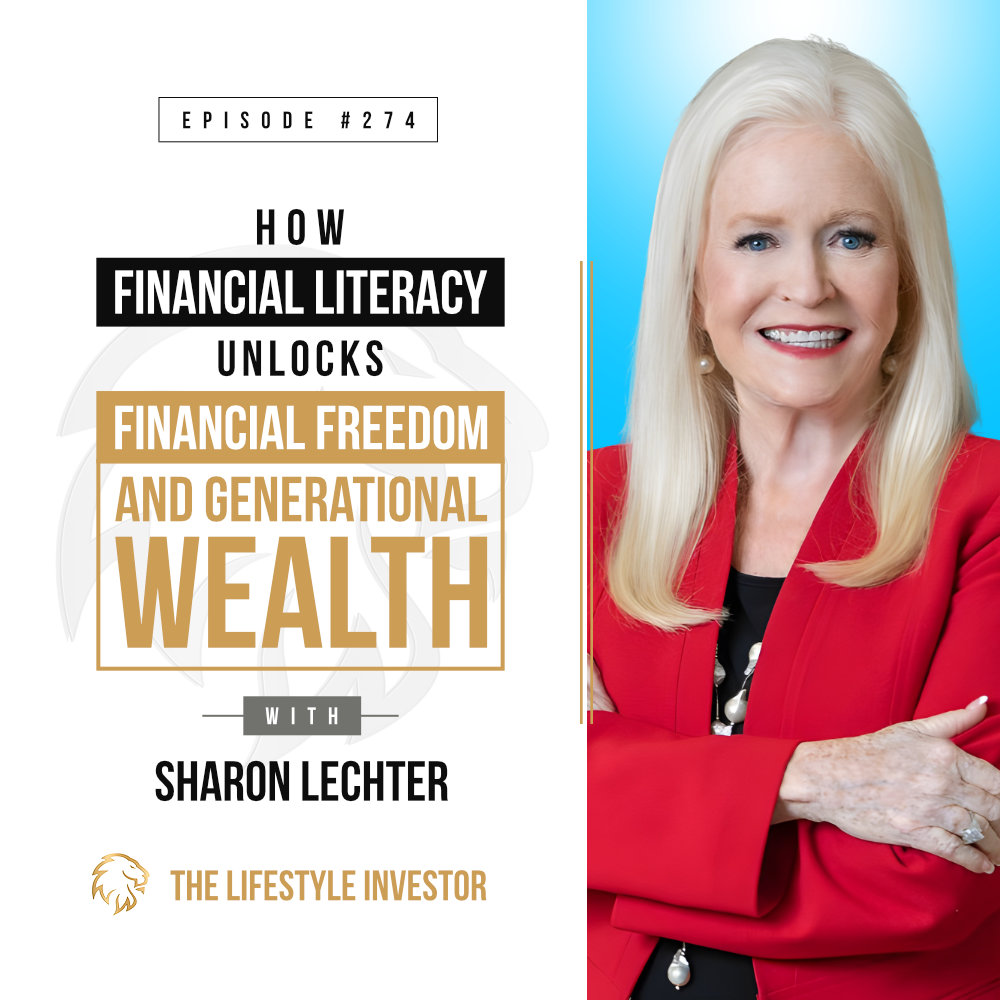
How Financial Literacy Unlocks Financial Freedom and Generational Wealth with Sharon Lechter – EP 274
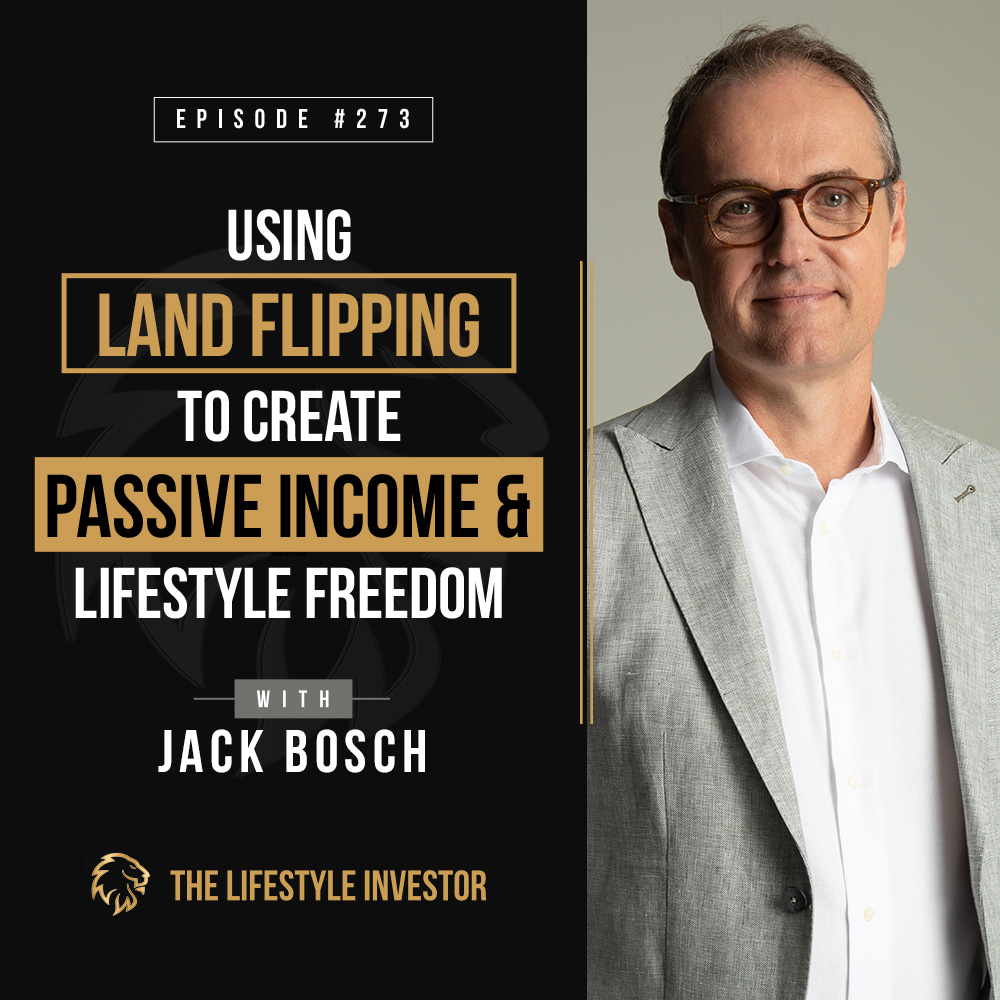
Using Land Flipping to Create Passive Income and Lifestyle Freedom with Jack Bosch – EP 273