![[Justin Donald] - Optin Preview](https://lifestyleinvestor.com/wp-content/uploads/2020/12/Justin-Donald-Optin-Preview-e1607533704966.png "[Justin Donald] - Optin Preview")

![Logo 1 Gold horiz [Converted]](https://lifestyleinvestor.com/wp-content/uploads/2019/08/Logo-1-Gold-horiz-Converted.png "Logo 1 Gold horiz [Converted]")
Interview with Nick Najjar

Member Spotlight: Tax-Free Investing Strategies with Nick Najjar
Today, I’m speaking with Nick Najjar, an investor, entrepreneur, and the CEO of ACS Communities and Elephant Capital Partners. His company manages five mobile home parks with over 270 lots across Missouri and Illinois. They specialize in securing excellent deals for clients while streamlining the process, saving them significant time and effort.
In today’s conversation, Nick shares the tax-free strategies he used to secure his first mobile home park acquisition, and how that set the stage for a series of successful ventures allowing him to create multiple streams of passive income. He also shares some of his lessons learned through direct mobile home park ownership along with his top tips for those looking to invest in this sector.
Plus, Nick also discusses the transformative experience of being a member of the TLI Mastermind and how it reshaped his thinking around investing and passive income strategies.
In this episode, you’ll learn:
✅ Nick’s preferred tax-free bank replacement investing strategies for freeing up wealth and generating multiple passive income streams.
✅ The benefits of seller-financing over traditional lending options with fluctuating rates and short-term debt.
✅ The strategic advantage of assignments for both novice and seasoned real estate investors and how they help investors take advantage of market fluctuations.
Featured on This Episode: Nick Najjar
✅ What he does: Nick Najjar is the CEO of ACS Communities and Elephant Capital Partners, responsible for oversight of all business development, acquisitions, operations, and property management. He currently owns two other passive businesses he founded, www.stlrealproducers.com and www.mycompanygifts.com. Nick received a B.S. in Business Management from the University of Missouri-Columbia in 2006 and is a proud husband and father of 4 children.
💬 Words of wisdom: “I am constantly surrounding myself with the people that I want to be. The whole Lifestyle Investor mindset, there’s so much to that. I think all of us have this path of knowing where we want to be. Everybody in this community, whether they have a job or not, they all have that mindset of creating cash flow, creating passive income, and not just being an investor, but really having a lifestyle, spending time with family, and not sacrificing things a lot of people sacrifice.” – Nick Najjar
🔎 Where to find Nick Najjar: LinkedIn | Twitter | Facebook
Key Takeaways with Nick Najjar
- Learning from parents’ hard work and dedication
- Nick’s first mobile home park acquisition
- Whole Life Insurance to generate passive income
- Making life easier for buyers through assignments
- The benefits of being a TLI Mastermind member
- Raising interest rates: When to hold back, when to be aggressive
- The advantages of using seller-financing
The Mindset of a Lifestyle Investor
Nick Najjar Quotes
“Everybody in this community, whether they have a job or not, all have that mindset of creating cash flow, creating passive income, and not just being an investor, but really having a lifestyle, spending time with family, and not sacrificing things a lot of people sacrifice.” – Nick Najjar
Resources
- Elephant Capital Partners
- Nick Najjar on LinkedIn | Twitter | Facebook
- TLI 102 – Leveraging Life Insurance to Build Tax-Free Wealth with Will Duffy
- Cutco
- Brian Beers
- Real Producers Magazines
- Stathis Edel
- Due Diligence Partners
- Mobile Home University
- Jason Ramshaw
- Jon Berghoff
- Front Row Dads
Tax Strategy Masterclass
If you’re interested in learning more about Tax Strategy and how YOU can apply 28 of the best, most effective strategies right away, check out our BRAND NEW Tax Strategy Masterclass: www.lifestyleinvestor.com/tax
Strategy Session
The Lifestyle Investor Insider
Rate & Review The Lifestyle Investor Podcast
If you enjoyed today’s episode of The Lifestyle Investor, hit the subscribe button on Apple Podcasts, Spotify, Stitcher, Castbox, Google Podcasts, iHeart Radio, or wherever you listen, so future episodes are automatically downloaded directly to your device.
You can also help by providing an honest rating & review over on Apple Podcasts. Reviews go a long way in helping us build awareness so that we can impact even more people. THANK YOU!
Connect with Justin Donald
Get the Lifestyle Investor Book!
To get access to The Lifestyle Investor: The 10 Commandments of Cashflow Investing for Passive Income and Financial Freedom visit JustinDonald.com/book
Read the Full Transcript with Nick Najjar
Justin Donald: What's up, Nick? So good to have you on the show.
Nick Najjar: Happy to be here.
Justin Donald: Well, this has been a long time coming. You and I have been friends for almost two decades or maybe right at two decades. And I think it'll be fun to talk about kind of where we were in life when we first started and first became friends, first met each other, and kind of where we are in our lives today because we started from a similar place and we also have ended in a similar place, or at least currently where we are today is very similar.
Nick Najjar: Yeah. I like it.
Justin Donald: Yeah. So, what was the impetus for you to get into business or I guess sales or entrepreneurship? I mean, I guess we both worked at Cutco and that was a way that you paid for school but I'd love to hear that story.
Nick Najjar: Sure. Yeah. So, I was a sophomore in college, sleeping until noon every day and my dad basically said, "If you're going to live in our house, you need to get a job." And I somehow found the Cutco interview and went to that and got hired and I had pretty good success with that. I hit the field sales manager ranks, which is like the highest level of commissions you can make within a few weeks, and then kept doing that. And then I’ve known of you because you were kind of famous, had broken all the records in Cutco or were breaking the records at the time that I just had got into the business or shortly after. And then I remember I guess it was my senior year of college, you had got promoted from Chicago and you moved down to St. Louis and that's where we had gotten a lot closer and got to know each other and all that. So, just kind of funny how the world works like that.
Justin Donald: Oh, it is. It's such a blast. And living in the same city, we got to know each other well. I knew you as a single guy. You knew me as a single guy. We got to watch each other as we found the one, got married, had kids, just really growing the family, and still doing family trips together. So, it's just been such a blast to see where you were, where you are, how we're doing it together. So, it's so much fun. Now, did you know at some point that you were going to be an entrepreneur based on maybe the fact that your dad was an entrepreneur and had his own business?
Nick Najjar: Yeah, probably. I always kind of had that entrepreneurial kind of mindset, I think. So, I was like bussing tables and pizza delivery driver, but I kind of just had it in me in a way. And I worked in my dad's business a little bit as well prior to that. So, yeah, I think there was something in me there for sure.
Justin Donald: I think your dad had like a couple of mechanic shops or at least one mechanic shop, right?
Nick Najjar: Yeah, auto. It started when I was younger. It was gas stations and then he had over time transitioned to just auto repair. So, he kind of sold his last gas station and then had five auto repair shops in the St. Louis area. And he's been retired for probably six or seven years now but yeah.
Justin Donald: Well, he hasn't been retired from the pickleball court from what I hear. So, that's fun. I hope he's listening to this and really enjoying himself. I just have such admiration and appreciation for both your parents, getting to know them over the years. You know, it's fun seeing the way that the lineage of entrepreneurship and I think working in the business, you can gain some appreciation for the hard work, the grit, the grind. But I think you also can pick up like, "Hey, maybe if I were doing it, I would do things a little bit differently." And I'm curious if you saw some of that and how that played into you starting your first business.
Nick Najjar: Hard to say. You know, I remember when I was younger, he was definitely, you know, he would leave before I woke up and get home really late and really worked long hours. His gas station was probably about 45 minutes to an hour from our house so he had a long commute every day. And as he kept building his business, I saw him scaling back more and more. So, yeah, I mean, I'm sure that that made an imprint on me over time. I'm very lucky to have a mentor like that.
Justin Donald: Yeah, no doubt. And he's a great teacher and so is your mom. And so, yeah, just super cool to see that. And you decided to kind of go a different path. So, instead of taking over the family business or instead of... And by the way, one of my last guests that I just had on, you know, it's Brian Beers, you know, owns a whole bunch of I think there's like 30 or 40 different Midas locations and has done very well in that space but it seems like you kind of found a different path. And I'd love for you to talk about it because it's the path I found and I had a lot of fun as we worked together and as you picked my brain about getting into mobile home park investing.
Nick Najjar: Yeah. So, yeah, it started with Cutco and then I guess about six, seven years ago I made a little pivot and we started launching the Real Producers Magazines. So, we host events and produce a monthly publication for the top real estate agents in certain markets. And then about that same time, I bought my first mobile home park. So, I think that was like five years ago now, almost six. And it's just a little bit of a slower start because I was starting a business and then I bought the park so I was doing kind of both. But then once I decided that I, hey, I don't love the business but I like it enough and I see a lot of paths that really like creating wealth. You know, you can go out and you can work a job or you can go out and buy a property and double, triple. I was looking at we bought my third park for 450,000 on the seller finance note and we've added a lot of value since. I think there are 20 occupied. There's now 39 occupied, raised rents, and just done all the things that you would want to do and it's been cool to see what we've created and built in terms of equity and value for ironically, my dad and I, he's my partner in that deal which has been fun too but, yeah, that's kind of been the path is getting my first park and getting a couple more.
Justin Donald: And what was it like just having that single park before you bought anything else? Like, what was the cash flow like and what did you improve it to? I mean, it sounds like you probably doubled up.
Nick Najjar: Great question. Yeah, there wasn't a whole lot there. I mean, it was a heavy-value add type of project. I think when we bought it, there was what we thought there's 25 occupied. There was only 20 though. We ended up moving in four homes over a couple of years. We just sub-metered and billed back the water. We raised the rents about two years ago or no, I guess it was last year or not a little less than a year. Back in the day when rates were at 3.5%, we ended up refinancing that so I was able to... That park hasn't really been a cash flow generator at least the first few years but we were able to get back all of our initial capital that we put in at that refinance and now it is actually cash flowing fairly well for a smaller part. So, did that answer your question?
Justin Donald: Yeah. And then so what did you do with that cash? You got that cash back. You, I think, used that to buy another park, right?
Nick Najjar: Yeah. So, there were three partners in the deal and we all had like a third of the money in and I borrowed money from a whole life insurance policy, something I know you talk about a lot. So, I ended up paying back that policy. And if I had to think about it, yeah, I've since invested it in something. It's kind of been a cool journey because I had just had the mobile home parks and the magazine stuff but then since I joined your group, kind of shifted my mindset a bit around getting additional streams of passive income come in. Really, I've been much more aggressive on trying to hit my monthly cash flow number. I made some private investments. I ended up selling one of our parks and then seller financing that now. So, that's yielding me about 2,400 a month. And basically, income is that all the money that we've invested has been paid back then. So, yeah, it's been cool to kind of recycle the cash over time.
Justin Donald: Oh, I love it. Well, I always have fun interviewing friends. It's really fun when they're also members of the Lifestyle Investor Mastermind. So, we'll definitely talk about that but I just want to talk a little bit more about your story because I think there are some more layers to it. And one of the cool things that you just mentioned was utilizing whole life insurance as kind of like a bank. It's your own personal bank, a bank replacement strategy. And for those of you that want to learn more about this, I've been doing this for what, about 20 years now? And you can check out the episode I did with Will Duffy. Go ahead and look that up. It was fantastic. That guy's a wealth of knowledge in the space and I think crafts some of the best policies out there of anyone. But talk about your experience with whole life and kind of where it leads you today. A lot of people have heard from the who's who that maybe are on the debt side of things. They're trying to help people get out of debt and saying, "Hey, whole life isn't the best investment." But you talk to any wealthy person or most wealthy people and it is most certainly a component of their portfolio.
Nick Najjar: Yeah. I mean, if you look at all the big banks and corporations too, if you look at how much life insurance these big banks have, I mean, it's almost like, well, if they're doing it, why not? So, my journey was interesting. So, my first real introduction to the whole life concept was I was fairly successful and I was probably 20, 21 years old. I met a Northwestern Mutual representative and she had basically pitched me this deal. And then I brought it back to an Edward Jones advisor. He was my advisor at the time and he's like, "That's a bad idea." My dad was very against it too, and I just kind of let it go. I'm like, "No, I'll just kind of stay the course." I let those influences say, "This is not a good thing to do it," but then I just kept getting these signs and I remember I had asked you as like, "Hey, where should I be investing my money? I'm only doing this like Roth IRA right now." And he's like, "You got to meet Russ." So, I met this gentleman, Russ, that you and I worked with for a while, and he educated me to the point where I understood it and probably could explain it in a better way than the Edward Jones guy understood it as an example. So, this kind of built my confidence up. But even after I met him, I didn't pull the trigger right away. It's still a couple more years because of all the negative influences. It's like, you know, they're overloaded with these and it's a lot of money but I knew that being able to utilize that money in two different ways and have it be liquid and being able to have full control over that was just the path that I wanted to take. So, I started building that up and, yeah, it was really cool to be able to buy my first real estate property with that component to it.
Justin Donald: Oh, 100%. I mean, I can't even imagine investing the way that I have if I didn't have it because I've done over 50 deals borrowing against that policy. It's just been incredible. So, to have a bank replacement strategy that you can use to fund anything that you do and to get two returns with the same dollars is just incredible. So, you can have fees and commissions that come out but when your dollars earn you two returns in two different places, it's bound to over time more than compensate for that. Not to mention that it has tax-free growth, tax-free distribution, and tax-free death benefit. So, not many things out there and not many vehicles that have all three of those.
Nick Najjar: And protection from creditors. We can cover it all.
Justin Donald: That's right. So, you use that to help buy some real estate and you ended up buying some parks. You sold some parks. I think you even have one listed right now if memory serves me correctly. And you started another business that I think is brilliant. And I was hoping someone would do this. We had a good friend who I probably should have on the show, Stathis Edel, who, I mean, this guy just loves due diligence and details and geeks out on it. And I remember just being like, "Man, I need someone that loves that and wants to do that." Like, I hope you start a company and you just do this because that would be really cool. And of course, in time he realized, yeah, he'd be really good at it. And of course, I hired him for every deal I've ever done since he started his company called Due Diligence Partners. So, nice shout out to him. But same for you is I love the idea of someone that is finding deals, putting them under contract, and then sells the assignment. I've paid a lot of assignment fees over the years and they're some of the happiest dollars that I ever spent because I know what I'm getting and it's taking a lot of the work out of it, which is just finding the deal. So, I'd love to have you talk about your new company, your new acquisition company, an assignment company, and even maybe elaborate more on what an assignment is.
Nick Najjar: Yeah. So, it's funny. Two thoughts come to mind. One, we're actually doing our fifth deal coming up here, Justin. I kind of done the math the other day. I'm like, how much money Justin's made and how much he's paid in fees and it's been a fair deal. I'm like, "We should have asked for money. We should just ask for like 2% equity in all these deals." And it's been a pleasure working with you for sure. We've had some, well, most of the deals have been fairly smooth, except for the one that you're still kind of dealing with. But anyway, so the way it started, I was on the hunt for deals of my own, and I ended up getting a property under contract about 30 minutes from the property that I own up in Indiana and I got under contract. When I went to visit it, I was like, "Oh, I might be in over my head." It was one of those deals, I don't remember the exact number. This was probably like four years ago now, but we were under contract for like $2 million. This was a big park under contract for like $2 million but when it was all said and done, it needed about $2 million with capital improvements. So, I drove it and there was a bunch of people sitting out in the middle of a random Wednesday. I probably spotted 15 pit bulls and you just can tell that something was just a little off with this park, and it's just going to be a lot of work. Give me an idea.
As I was driving and I was leaving, I had three guys jump in a car and they were following me with a GoPro camera chasing me. And I literally was like, okay, I'm just going to pull over and be like, "Hey guys, what's going on? Like, what are you doing? Who are you here with?" I'm like, "Guys, guys, I'm just with the survey company. I'm just, you know." "Yeah. Do you have a business card?" And I'm like, "Oh, no, I don't have any with me. It's no big deal, no harm, no foul. I was just checking out the property and nobody's in trouble." And usually, we say we're either with the survey company or the insurance company, we're on-site, because most owners don't want people to know who's on site. So, that was funny. But anyway, we got that under contract. I just realized I was in over my head. I was in Frank Rolfe's Mobile Home University. So, I always encourage people that are looking at parks, thinking about parks, anything, go to Mobile Home University, check out one of those boot camps. It will save you a ton of time, effort, energy. Whether you buy or don't buy parks, it will help you get clarity. I've had friends that have gone through that and have been like our mutual friend Jimmy, Justin, he's like, "Yeah, I don't want to do this." He went to the boot camp. His sister was with him that he calls me on the Tuesday after he gone through that. He's like, "I don't want to do it." Most people like, "Yeah, I like this," and they end up doing it.
But anyway, we had the property under contract, then we assigned the contract. So, a lot of people are probably familiar with single-family homes wholesaling. I would say it's fairly common where basically you get the property under contract, but you're not the end buyer. You will assign that contract to the end buyer. So, for simplicity, we have a park under contract. We assigned that park to Justin. Justin ends up taking over all the rights of that contract. He usually will pay a fee for that and then he ends up closing the deal. So, that's kind of how we do it. The owners of mobile home parks are typically underserved, especially with smaller parks. So, most brokers are only doing deals that are like $1 million and up. So, we kind of found this sweet spot for some of these smaller parks. Nobody will help them. Either they want to sell so we'll work with them and help them find a buyer. And that's essentially what we do. So, done a handful of those deals since, about a little over two years ago now. I had called a friend of mine, Jason, who I basically said, "Hey, man." I remember texting him. He was either in between jobs or I can't remember exactly where he's at, but it's actually like, "Hey, there's an opportunity here. I think we should do this together." And he's like, "I'll start tomorrow," so, literally, over text. I'm like, "Well, slow down a little bit." We had a handful of conversations, but since he kind of runs point on all of those deals, typically we'll have anywhere from 7 to 10 parts under contract available for assignments. So, yeah, it's fun.
Justin Donald: Yeah. Big-time shout out to Jason Ramshaw, who is just great operationally and great at details and just locks these parks up under contract and does a great job. The volume is there. I'm just constantly impressed with how many parks you guys are getting under contract and how many assignment fees you're doing. So, nice work with that. And especially for people like me that don't really have the time or have the desire to do the hunting that we once did early on in our careers, you've got a business now that supports you guys buying the ones that you want. And the ones you don't want, you can just sell the assignment. It's brilliant. I'd love to talk a little bit about your experience being part of the Lifestyle Investor Mastermind. What's that been like for you in terms of education, in terms of network, in terms of tax strategy, or anything else?
Nick Najjar: Oh, man. Yeah. So, I still remember when you had first launched, it was just a group that was like free for your friends and family kind of thing. And eventually, you decided to turn it into something, which is great. You know, I think once the book came out and I just love, Justin, the value that you've added to the world. I mean, it's just amazing. Blows my mind, quite frankly. But when I ended up saying, "Hey, this is a path I want to take," I joined and for me, there's been a handful of things. I think, one, just the proverbial like iron sharpens iron, right? Like, I am constantly surrounding myself with the people that I want to be. Like, that whole Lifestyle Investor mindset, there's so much to that. I think all of us have this path of knowing where we want to be. We had a little meet-up that I've enjoyed hosting and we did that last week and there's two guys there that were like, they had W-2 jobs, very high-paying W-2 jobs. And it's hard when you're making $500,000, $600,000 a year to give up that income and be an investor, right? But everybody there, whether they have a job or they don't, they all have that mindset of creating cash flow, creating passive income, and not just be an investor, but really having lifestyle, spending time with family, and not sacrificing things a lot of people sacrifice.
So, that whole mindset shift has been great. A lot of tax strategy. I remember I told my CPA, I'm like, "I don't want any active income anymore." I removed myself enough from my businesses to say, I'm just going to say my businesses that I have, it's a passive venture at this point. So, that's been good in terms of tax savings. The deals are incredible every day. I think most people say like they wish they could invest in every deal, but you can't. Unless you are Justin, it's hard to invest in every deal. There is a lot of really good deals out there. But that's been fun, the events, I mean, all of it. It's just top-notch. Everyone is ranked as one of the top five mastermind communities in the world. I mean, I was like, "Oh yeah, that makes sense." So, yeah, it's been a fun, fun journey.
Justin Donald: Well, it's an honor to have you part of it. I mean, it's really special for me seeing my friends getting to experience all the cool stuff, the world-class speakers, best-in-class in whatever their expertise is, you know, so kind of advisors. But then the members that, you know, they just want to give off their gifts and then everyone's hungry to learn and get better. And then something really cool about you as you showed up and said, "Hey, I want to add value." You know, you said you're certified in facilitating groups because you went through Jon Berghoff's certification program. I can't remember what it's rebranded to if it's Lead for Flourishing Leadership Institute or whatever it's called. You can correct me on that one. But you have skills to kind of run some functions and you've run several amazing meet-ups for the community with 15 to 30 people over the course of this year. And so, that's been really neat. I'm curious what the experience has been like for you being a facilitator.
Nick Najjar: Yeah. I enjoy it. When I was working more in my publishing business and the Cutco business, I was speaking a lot like a few times a week, literally, two or three times a week, small presentations, the real estate agents, business owners, whatever. I was involved with the local mastermind. So, that really fills my bucket getting out there and getting in front of people. But it's kind of and basically, when COVID happened, I stopped and I haven't really gone back, nor do I really want to at this point. But when I joined, I was like, "Hey, let's do a meet-up in St. Louis, and let's utilize these things I've learned." I didn't actually go through the whole formal process but I had sat through enough meetings because he had trained the Cutco people, he trained the Real Producers people, Front Row Dads like I've been part of three or four organizations that I have directly seen. And then in these meetings I'm like, "Okay. This is the way to run a meeting and to do what we call crowdsource, the collective wisdom of the audience." Like, you don't need a speaker. We all will learn from each other and there's a method of how to facilitate that. And that's been really fun. So, we did one in St. Louis. And then I remember, Justin, like we should do more in this year. I'm like, "Yeah, let's do it." So, did a handful, and it's been great. I don't know what else to say.
Justin Donald: Well, props to you because you really kind of led that movement where, at that time, we were doing all kinds of events via Zoom and we did our big annual retreat and you said, "Hey, I think members would get even more value if we just did some regular meetups." And so, we did that. We tested it out. And then you were right. We asked the group. We said, "Is this a value add that you would like?" And people like, I mean, the feedback we got was incredible. And so, we actually decided that we would do some quarterly meetings, and then people volunteered to host some on their own. And so, this year we're going to end up hosting somewhere between 10 and 11 meetups across the year. And I think we're probably moving to a point where we're going to have a monthly meet-up in 2024, which is just fantastic. And people, the feedback's been incredible. And when you have high-performing people that have been very successful at whatever their niche, whatever their industry is, and you just ask for them to share what their biggest expertise is and the biggest gift they have to give the group is and have them share. And then people get a chance to ask what their biggest question is or what their biggest need is and have other people serve and solve for it, it's just a powerful process.
Nick Najjar: Yeah. No, I agree.
Justin Donald: That's so cool. So, one of the other things I think is neat is as we have continued to go in different directions, I mean, we're kind of in a similar industry but definitely different directions. We've continued to hang out. And I love seeing the events, the Lifestyle Investor mindset, lifestyle, everything that you lead. Our wives are super close friends and so we make intentional trips to come out and visit you guys. You guys make intentional trips to come out here to Austin and visit us. And it's really just been a fun friendship. I'm curious what are your plans for the future? You got a company that's booming. You've got all kinds of demand. We're in a really funky market right now with crazy interest rates. Someone just quoted me 8.5%. I mean, this is just the most ridiculous thing I have ever heard of. And it's hard to wrap your mind around it but you've got a lot of sellers that they don't think that cap rates have changed and they can get the same price that they used to get. So, I'm curious your thoughts on kind of where we are, where we're going, and how you're going to service that market.
Nick Najjar: Yeah. We got a loan approval today and he gave us the loan terms, but he didn't put the interest rate. I thought that was funny. Usually, it would be like interest rate, and like all this stuff is just, "We'll loan 66% loan to value." You know, it's interesting.
Justin Donald: So, did you figure out what it is? What's the interest rate?
Nick Najjar: I have to email him back. Literally, it just happened. I've been to meetings and stuff.
Justin Donald: That's so funny.
Nick Najjar: Yeah. But, yeah, I was talking to another lender, same deal, different lender. And he's like, "Yeah. We're typically prime plus the half percent. He's like, "Prime's at 8.5 right now." I was like, "Oh sh*t. So, you're saying 9% easily get this where it's at?" Yeah, it's been a really interesting path. Really, I guess, the eight, nine months it started hiking up. It's hard because a lot of people know what their park is worth long term but they want to sell now but there's just such a big gap. I mean, I was talking with an owner probably a month ago and he's like, "I want $1.2 million for it." And I was like, "Yeah. We could have done that last year. Literally, at this time last year, easy, all day, every day. Now it's like, well, with interest rates where they're at, they're literally double." So, it's been a crazy time. And I was talking to, actually, Jason and he's like, "Oh, you buy them and then the rates are going to go down and then we'll refinance them." Like, I'm not totally convinced these rates are going to go down. I mean, maybe a point or two, but I don't know. I'd be curious what you think if we'll see the... I think the threes, they're probably out of our lifetime, unfortunately, would be my guess. But you see a point where the next 5 to 8 years they get down to 5% and 6% again or is this going to be a, what are your thoughts? Throw it back at you.
Justin Donald: Well, keep in mind, we even haven't gotten the twos, right? So, I've got something locked up in the twos.
Nick Najjar: Oh, yeah, on the residential. I didn't see in commercial. Yeah.
Justin Donald: Yeah, it's just crazy. But, yeah, I mean, I think rates are bound to come down but are they going to come down to that? Probably not. They'll definitely come down a few points. I mean, the risk of tying things up at that high of an interest rate like it's got to work. It's got to cash flow. You've got to have a two or three-point spread between the cap rate and between. And know the cap rate like a real cap rate and the interest rate. And if you don't have that, it's risky because you can't just bank on the fact that interest rates are going to come down. I mean, they will come down but they might only come down half a point over the next year. Maybe they come down a full point, but maybe that's it and maybe that's not enough based on some of the underwriting. So, I wouldn't ever do anything speculatively where, "Hey, I know I'm going to be able to refinance this. It doesn't work now, but maybe it'll work next year." It might not be, you know, until four or five, six, seven years before it gets to a place that many of us would consider reasonable.
Nick Najjar: Yeah. I think we'll see a lot. It was somebody had sent me a TikTok video of a real estate investor or something. Basically, the whole point was that there's like $2 trillion that is probably going to default in some way, shape, or form. Guys that bought these parks three years ago and when their note comes due in a year or two, they're not going to be able to meet new interest rates and new debt service coverage. So, I think it's a good time to kind of be patient and just kind of sit, be patient, and know that those deals will come over time.
Justin Donald: 100%. A ton of people use floating rates, bridge lending, or short-term debt with an anticipation that they could refinance at a reasonable rate for long-term debt. And that's just not going to pan out. And you're going to see a lot of people in every industry that are going to feel the pain of that. I mean, we're already starting to see it. I met with someone recently who invests on behalf of some of the largest family offices in the U.S. and he said that he, for the first time this month, started seeing some real opportunities, some real stress. And they're kind of getting in on some deals that are about to implode. So, yeah, we'll keep seeing it over the next number of months, number of years as these notes as the short-term debt comes due. So, yeah, it'll be interesting but at the same time, these environments are great opportunities. They provide more opportunity, in my opinion, for seller finance, because if you can't get the bank loan, you get these sellers that recognize that you can't get the deal done without them being willing to carry the paper on it and at a much more reasonable rate. And by the way, that's also good for them because then they have some sort of income stream that they can count on with an asset that they wouldn't do it with unless they believed in that asset, right?
So, with the example of these mobile home parks, you and I have done a bunch of seller finance deals, no park owners doing a seller finance deal with someone that they don't really know if they don't actually recognize that their park is worth that, right? So, I like that. I like them having some skin in the game. And I think it's just great to not have, you know, it's a non-recourse loan. You don't have to get a bank involved. You can close much quicker. So, I think it creates opportunity and the defaults that will come and I guarantee there will be defaults in virtually all asset classes. This is an opportunity for those that are poised and ready to pursue purchasing those hopefully at a discount.
Nick Najjar: Yep, I agree. Yeah, we're really pushing for seller finance. As pricing terms, we'll get a deal done and we're really pushing on terms of being encouraging to finance that and they want their seeing 1.2 million, well, hey, we'll do it if you finance us. It works.
Justin Donald: I love it. Well, Nick, this has been so much fun. I appreciate you sharing your story and what you're up to today. Where can our audience learn more about you and learn more about your company that's doing the wholesaling and assigning these contracts?
Nick Najjar: Yeah, great question. I think the easiest thing is just our website. It's ElephantCP.com. Elephant CP as your Capital Partners dot com. So, most of our available deals are up there and easy to contact us and inquire. If you're a buyer, just fill out the form and we'll put you on our list. And whenever we get other opportunities, we'll send them your way.
Justin Donald: I love it. Well, I've done a bunch of deals with you guys. Highly recommend. I can't recommend enough what you guys do and the time that you save. And just I think you guys go the extra mile. You know, you guys don't just assign it. You do all this diligence, all this homework, gather all this information to make sure that you're actually getting it at a good price and you're handing it off in a really good situation and saving the prospective buyer in many instances, me and my team, a tremendous amount of time, energy, and effort. So, well done and I just want to wrap up this episode the way I wrap up every week, and that's with a question to you as the audience. And my question is similar every single week but let me say it again this week. What is one step that you can take today to move towards financial freedom and really living a life that you truly desire, one that's on your terms so not a life by default like most people live, but truly a life by design? Thanks so much and we'll catch you next week.
Sign up to receive email updates
Enter your name and email address below and I'll send you periodic updates about the podcast.
Keep Learning
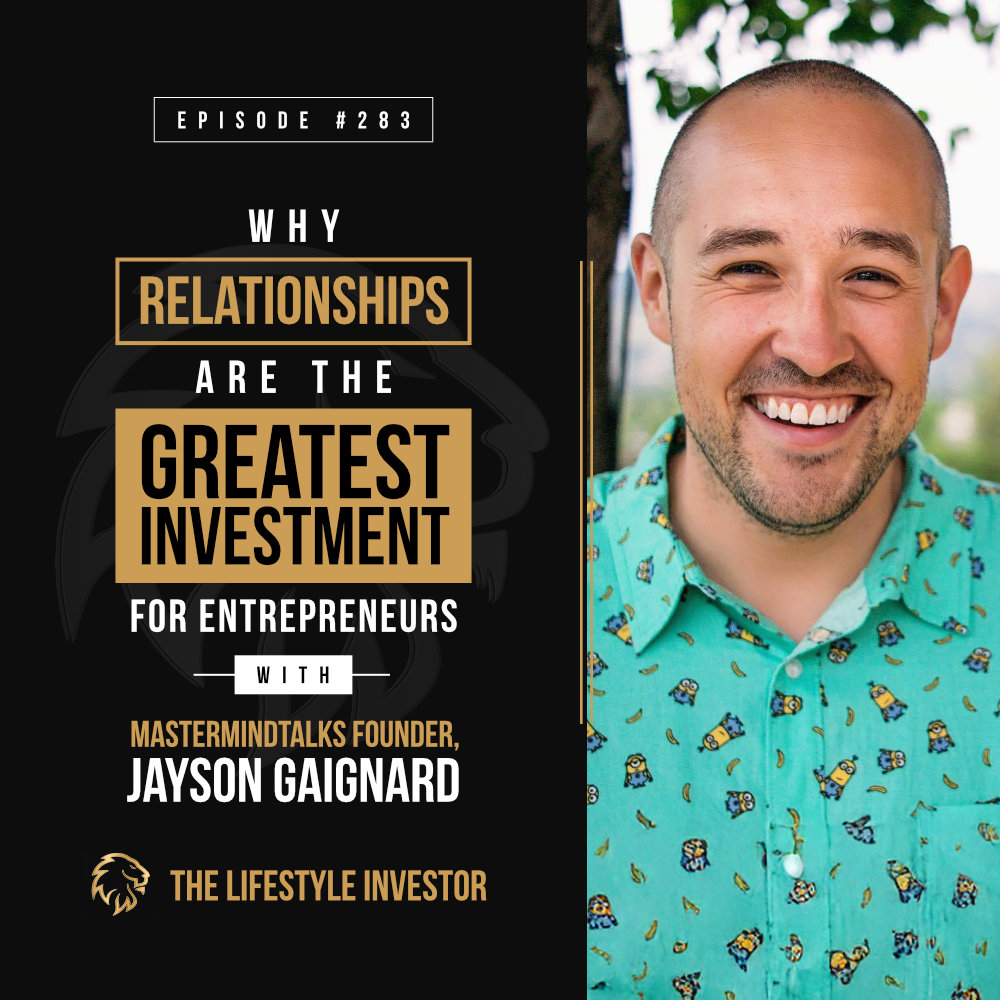
Why Relationships Are the Greatest Investment for Entrepreneurs with MastermindTalks Founder, Jayson Gaignard – EP 283
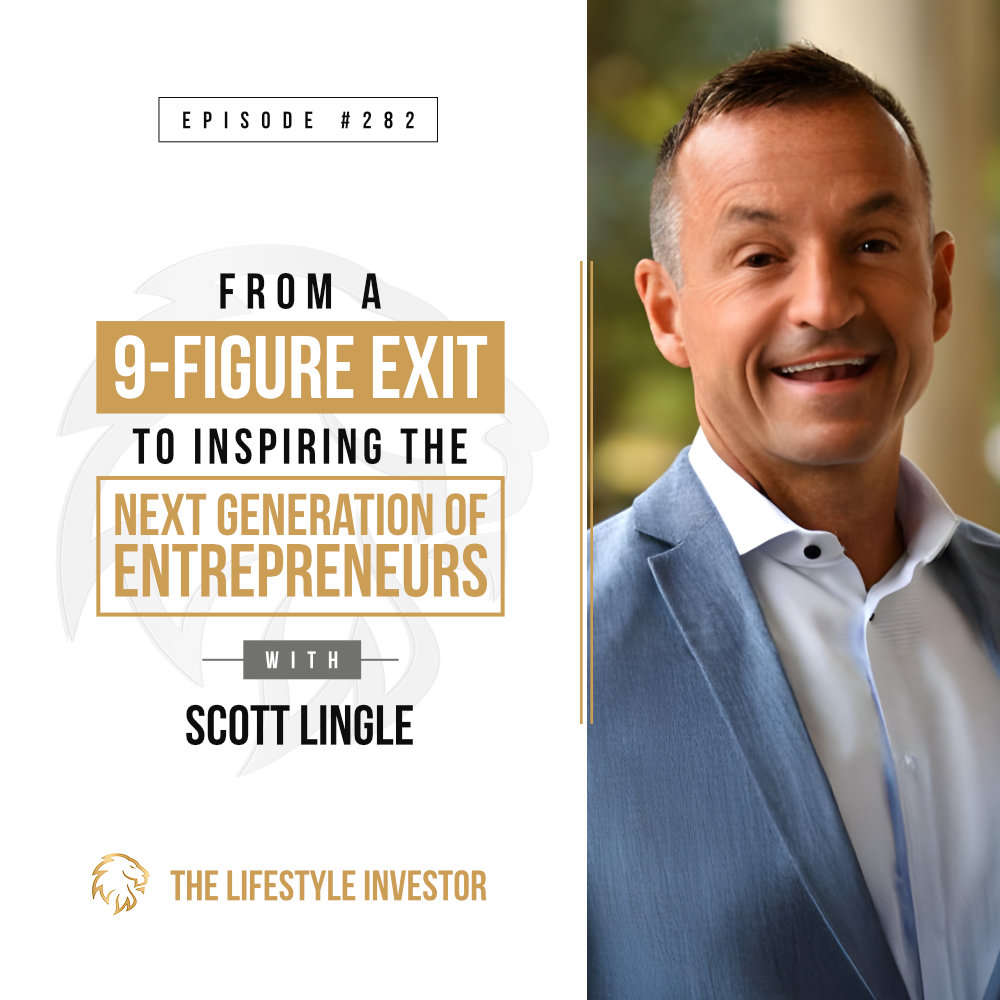
From a 9-Figure Exit to Inspiring the Next Generation of Entrepreneurs with Scott Lingle – EP 282