![[Justin Donald] - Optin Preview](https://lifestyleinvestor.com/wp-content/uploads/2020/12/Justin-Donald-Optin-Preview-e1607533704966.png "[Justin Donald] - Optin Preview")

![Logo 1 Gold horiz [Converted]](https://lifestyleinvestor.com/wp-content/uploads/2019/08/Logo-1-Gold-horiz-Converted.png "Logo 1 Gold horiz [Converted]")
Interview with Mark Yusko
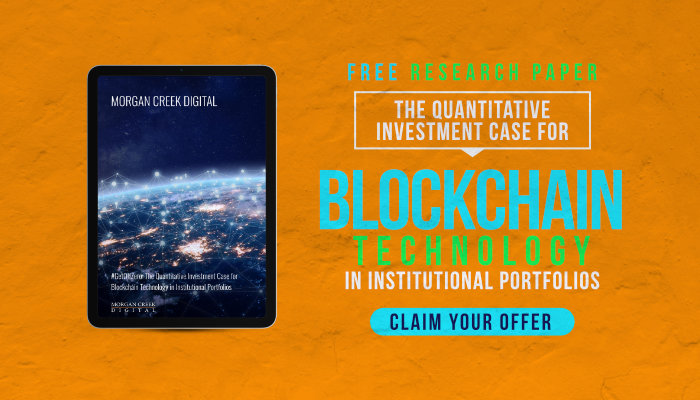
Investing in Digital Assets and a Blockchain-Centric Future with Mark Yusko
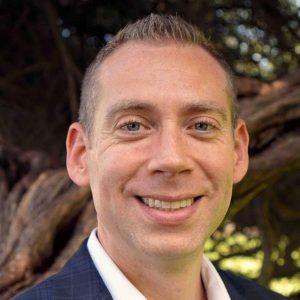
Today, I have the pleasure of speaking with Mark W. Yusko, the visionary Founder, CEO, and Chief Investment Officer of Morgan Creek Capital Management, renowned for his forward-thinking investment strategies and sharp eye for identifying emerging trends.
Mark is confident about the big shift toward a blockchain-centric future. You’ll hear his thoughts on the future of cryptocurrency and how it’s reshaping our views on banking, investments, and personal privacy.
Plus, he’s got some really insightful tips on navigating the often confusing and fast-paced world of digital asset investments like crypto.
In this episode, you’ll learn:
✅ Strategies for future-proofing your investment portfolio, especially against the weakening dollar and fluctuating market conditions.
✅ Mark’s take on why Web3 will generate an astonishing $15-20 trillion in value and what that means for investors.
✅ A deep dive into the incredible world of cryptocurrency – why it might just eclipse traditional assets like the dollar and gold, and how it’s set to shake up the financial world.
Featured on This Episode: Mark Yusko
✅ What he does: Mark W. Yusko is the Founder, CEO, and Chief Investment Officer of Morgan Creek Capital Management, LLC. Before forming Morgan Creek in 2004, Mr. Yusko was President, Chief Investment Officer, and Founder of UNC Management Company, the Endowment investment office for the University of North Carolina at Chapel Hill, from 1998 to 2004. Until 1998, Mr. Yusko was the Senior Investment Director for the University of Notre Dame Investment Office where he joined as the Assistant Investment Officer in October of 1993. Mark is the President and Chairman of the Investment Committee of The Hesburgh-Yusko Scholars Foundation at the University of Notre Dame and President and Head of the Investment Committee of the Morgan Creek Foundation.
💬 Words of wisdom: “In every business, the best person charges the most.” – Mark Yusko
🔎 Where to find Mark Yusko: LinkedIn | Instagram | X/Twitter | YouTube
Key Takeaways with Mark Yusko
- AI, Blockchain, Chips, and Data
- The investment opportunity of a lifetime
- Why major players resist change
- Why top players charge the highest rates
- Outlandish ideas often turn out to be the best
- How inexperience can fuel innovations
- Web3’s potential for creating massive value
- Why disruptions happen in 14-year cycles
- Companies need to innovate or risk extinction
- Winners invest early
- Blockchain’s role in disrupting financial institutions
- Price doesn’t always reflect true value
- Strategies for future-proofing your investment portfolio
Mark Yusko | How Blockchain Technology Replaces Trust with Truth
Free Strategy Session
The Lifestyle Investor Insider
Mark Yusko Tweetables
“If you're feeling really cocky, usually you lose a lot of money because you don't even know what you don't know. You just get totally blindsided. When you feel a little uneasy, that's when you do well.” – @MarkYusko Share on X “We should always be analyzing and thinking about what we did because what matters is process, not outcomes.” – @MarkYusko Share on XResources
- Morgan Creek Capital Management
- Morgan Creek Capital Management on LinkedIn
- Mark Yusko on LinkedIn | Instagram | X/Twitter | YouTube
- Nick Saban
- Kirby Smart
- Eric Schmidt
- Chip War: The Fight for the World’s Most Critical Technology by Chris Miller
- Steve Balmer
- Paul Krugman
- Sequoia Capital
- Marc Andreessen
- Michael Moritz
- Jim Breyer
- Accel
- Vinod Khosla
- Scott Stornetta
- Stuart Haber
- Andreas Antonopoulos
- Bill Duhamel
Rate & Review The Lifestyle Investor Podcast
If you enjoyed today’s episode of The Lifestyle Investor, hit the subscribe button on Apple Podcasts, Spotify, Stitcher, Castbox, Google Podcasts, iHeart Radio, or wherever you listen, so future episodes are automatically downloaded directly to your device.
You can also help by providing an honest rating & review over on Apple Podcasts. Reviews go a long way in helping us build awareness so that we can impact even more people. THANK YOU!
Connect with Justin Donald
Get the Lifestyle Investor Book!
To get access to The Lifestyle Investor: The 10 Commandments of Cashflow Investing for Passive Income and Financial Freedom visit JustinDonald.com/book
Read the Full Transcript with Mark Yusko
Justin Donald: Hey, Mark. Welcome to the show.
Mark Yusko: Hey, Justin. Thanks for having me and excited about the conversation.
Justin Donald: Yeah, me as well. I love talking to investing experts, people that have had years of experience in the space, and especially those like you that have had institutional experience in the financial space.
Mark Yusko: Well, I appreciate that and I appreciate that’s the nice way of saying I like having older guys on the show or gals. And no, it is nice. I mean, I came from the institutional world. I actually didn’t go to school to become an investor. It’s just a series of happy accidents but, yeah, I worked for insurance and I worked for an asset management firm. Then I went back to my alma mater up there in Notre Dame, and I worked in the investment office there, came down here in North Carolina, ran the endowment here. And then now, 19 years ago, spun out into Morgan Creek Capital Management and spent the better part of 13, 14 years building an asset management firm, an RIA around integrating alternative investments into traditional portfolios.
Justin Donald: Yeah. I love that.
Mark Yusko: That was our schtick. Our thing was it’s my personal pet peeve. There are no alternative investments. There are stocks, there are bonds, there are currencies, there are commodities. That’s it. Everything else is just a subset or a package of those four things. It’s like ATC&G in DNA and yet people think of hedge funds and private equity and venture capital and real estate as alternative. Like, alternative to what? In real estate, you own equity, debt, or the land, the commodity. In a hedge fund, you own stocks, bonds, currencies, commodities, but we did that. And then ten years ago, I got introduced to the digital asset ecosystem and it took me a while. I was skeptical but I was here in ‘10, ‘13. I was not running drugs on Silk Road. I was not a cryptography student. I just didn’t understand right away. But I dug in when a friend of mine said, “It’s just infrastructure.” Like, that I understand. That, I’ve made a lot of money in over the years, all the technology waves, really all the way back from the early 80s where I grew up in Seattle and Microsoft and then the Internet in ‘96 and the mobile net and Facebook in 2010.
And now what I believe is this new digital revolution. And just to wrap it all in a bundle, our new four-letter simplicity for talking to institutions about this area is it’s not complex guys. It’s A, B, C, D: AI, blockchain, chips, and data. And everybody’s comfortable with those concepts, maybe except blockchain, maybe don’t really understand AI, but chips are just things that power our computing platforms. Data is what everything’s about. I mean, the stat just in that I still think is amazing. Eric Schmidt was quoted in 2010. Now, that’s a while ago but still. In 2010, he said, “From the beginning of time,” which is hyperbole, “to today, there were five exabytes of data created.” And he said, “Today, we’ll create that much data every two days.”
Justin Donald: Wow.
Mark Yusko: Now, here we are 13 years later. Today, as you and I are speaking and we’re contributing to it, we’ll create 329 exabytes of data. So, the capacity to gather it, store it, organize it, analyze it, act on it, make decisions from it, is what the AI, the blockchain, and the chips do to the data. And so, that simple framework is why the digital age, I think, is the biggest investment opportunity I’ll probably see in my lifetime.
Justin Donald: Yeah. That’s an incredible synopsis and I love your ABCD, just to simplify. I think that’s fantastic. And I want to get into some of these things because you’ve gone from what I would imagine is a little bit more on the institutional side. It’s probably a lot more traditional styles of investments as compared to I would say most people would consider blockchain technology a lot newer or outside their scope. So, I definitely want to dig into that.
Mark Yusko: That again, you’re being so kind and politically correct. And I love it. No, I mean, I was told in 2014 that, “Mark, you’re an idiot. You’re throwing away your career. Why would you do this? Why would you go fraternize with the drug dealers and the terrorists?” I’m like, “Really?” I mean, let’s just think about this for a second. In the bad old days of doing bad stuff, I would meet you at the park. I’d have my backpack and we sit down, we’d have lunch, and I’d walk away and you say, “Hey, Mark, you forgot your backpack.” And I would just keep walking and you look in the backpack and it’d be full of cash. Now, Justin owes Mark a favor and that’s how bad stuff was done, right? Because you can’t trace the cash. So, you think about it. Now, they’re like, “Oh, all the terrorists and the money launderers they’re using Bitcoin and using it.” Like, wait a second. Choice between sack o’ money and fingers on a keyboard with a trail that’s permanent and immutable, which you’re going to choose if you’re a bad guy?
Justin Donald: Right.
Mark Yusko: I’m probably going to choose sack o’ money.
Justin Donald: Still cash. Yep.
Mark Yusko: And so, I just think it’s a smokescreen from the incumbents to instill fear in the institutions and the masses about new technology. And this is not new, right? My grandfather-in-law, my wife’s grandfather left the stable job at the train company to go work for this upstart company, American Airlines. And they’re horrified. His parents were horrified. And the train companies actually passed out pamphlets to people saying, “If you get on an airplane, you’ll die because your body will cave in on itself from going too fast.” Incumbents always do that because they don’t want to be disrupted. I get that. But anyway, to answer your question, I spent my whole life so traditional. I’m like the most boring. Look, I worked for not-for-profits for nearly free for most of my career in the early days because I loved it and I got the psychic income of giving back to the alma mater and then to Carolina. But I was very boring. Now people say, “Oh, but you are doing these crazy things like hedge funds.” And like, why is that crazy? I mean, all it is, is a compensation structure to attract the best and the brightest from the traditional equity or fixed income world or commodity world to manage capital. And you think about it. In what business does the best person not charge the most?
Justin Donald: Right.
Mark Yusko: Doctor, lawyer, football coach, basketball player. Is Nick Saban, the highest-paid coach or the lowest-paid coach?
Justin Donald: Highest.
Mark Yusko: He’s the highest. He actually has a clause in his contract that says if anyone else gets a raise above me, I get a raise. So, when A&M trying to get Kirby Smart to come for $20 million, Nick’s going to get a raise because now Kirby’s catching up. But Nick is pretty much in a league of his own. But Kirby is catching up, and I don’t think he’ll actually leave Georgia. But anyway, so in every business, the best person charges the most, and yet for some reason in investing, we get all bent out of shape with fees. We have this whole industry indexing built around minimizing fees. Like, well, wait a second, if I have the lowest fee product, then my money’s managed by the least competent people, right? Because if they were more competent, theoretically, they would charge more. Like, when I go to the hospital, do I raise my hands? “Hey, can have the cheapest surgeon today?” Would you go have Lasik from the guy that was having a 50% off sale?
Justin Donald: No way.
Mark Yusko: Probably not. And so, I don’t know. It’s a funny biz. And I understand why the indexers want to compete on price because they want people not to think about it. They just want to give them their money and let them charge. Even though they’re low fees, their low fees are a lot of money and the people that run those firms have made lots of money, the average investor, unfortunately, hasn’t done very well. The average investor’s 401(k) balance is pretty low. They don’t have enough to retire on average, the average person, not the high-end. The high-end people have done fine. But that’s a long-winded way of saying the institutional world is resistant to change. For better or for worse, I’ve been drawn to change. I like the next new thing. In fact, my pin tweet on Twitter is, “The greatest wealth comes from investing in innovation.” To do that, you have to believe in something before others really even understand it, and you’ll be mocked and ridiculed for your non-consensus actions. It was totally worth it.
And every time I go back to my career and I think about when everyone’s telling me how smart I was, “Oh, that’s a great idea,” I mean, it’s fine. I mean, sometimes it’s fine, sometimes it be less fine but average. When people were saying, “You’re an idiot. That is the dumbest idea I’ve ever heard,” I actually tell you one true story. So, when I first came to Carolina in ’98, if you remember back then, there was a cover story in The Economist, The World Awash In Oil, the picture of the roughnecks all covered in oil. And it said in the article, “Oil’s $11,” that oil was on its way to 5 and someday might be free.
Justin Donald: Wow. Someone’s missing the mark.
Mark Yusko: And I’m like, “No, that doesn’t sound right to me.” I mean, it costs money to take it out of the ground, so it just doesn’t sound right to me. It didn’t just bubble up. And I have this rule. If I hear something once, I remember. If I hear it twice, I write it down. If I hear it three times, I do something about it. And so, I saw that. I remembered it. A week later, Richard Rainwater, God rest his soul, one of the greatest investors of our age was on the cover of Businessweek, naked long $900 million, which back then was a lot of money. Oil, tear that baby out, put it on my desk, write that one down. Two weeks later, three guys trained by Richard came to our office in Chapel Hill and said, “Hey, we’re raising a new fund, Natural Gas Partners, which did oil and gas.” And I’m like ding, ding, ding, ding, ding. So, I go to the first board meeting. I’ve only been here a couple of months and I said, “All right, I want to put 5% in energy and commodities. We had zero and 1% with NGP.” And my chairman says, “Mark, that’s the dumbest idea I’ve ever heard but if you really want to do it, okay.” So, I’m like, “Great. All right. Let’s do it.”
So, he calls me into the president’s office after the meeting. He says, “Mark, when I say that’s the dumbest idea I’ve ever heard, that’s what I meant.” That other stuff was just to be nice in front of the board. And the chancellor says, “Well, Max, if we’re not going to take his ideas, we should probably just fire him right now. But maybe we should try some of his ideas and if they don’t work out, then we’ll fire him.” I’m like, “I’m sitting right here. I just got here. My family’s coming.” Now, I wouldn’t tell the story if it didn’t have a good ending, but I might. But that 5% that we did put in actually generated 25% of the returns of the endowment for the next decade.
Justin Donald: Wow.
Mark Yusko: And that’s not me being a genius. That has nothing to do with me. It was Natural Gas Partners and Merit Energy and all the people we backed. Now, I had to have a little bit of foresight to say, “Richard’s really smart and these guys are really smart and there’s something here, and it doesn’t sound right that this commodity will be free.” So, I’ll take a tiny shred of credit but the credit goes to the people who put the money to work and made the right investments but actually then tracked, Justin. All the recommendations we made, they were to prove about 95%. 5% of time they just beep, “No, we just can’t do it.” That 5% by far outperformed everything else. And again, that was not because we were smart and they were dumb. The reason a group will say no is something just sounds so out of favor, so crazy, they are just like, “No, I just can’t do it.” But that’s the only time you really make big money, right? If you think about it, if you make an investment and we’ve all done this and you feel good about it, you’d probably do fine but you’ll probably lose a little money, right?
If you feel really good, like you’re feeling really cocky, usually, you lose a lot of money because you don’t even know what you don’t know. You just get totally blindsided. When you feel a little uneasy, that’s when you do well. I’d say it happened to me all the time when I was in college. If I thought I aced a test, I flagged because I didn’t even know what I didn’t know. When I came out of the testing, “Oh, my God, I did that wrong,” I get a really good grade because I actually knew what they were asking. And I actually went through the process and I did well. And so, if you feel really, really uncomfortable, yet you can still move forward, usually, you do really well.
Justin Donald: Yeah, that’s an interesting insight in a different perspective with which to kind of like assess investments to assess these deals that people want to do. I love it. And really, what you’re talking about here is something that I’m a huge proponent of. I wrote a book called The Lifestyle Investor, and I have my Ten Commandments to investing into cash-flowing assets. And one of those commandments, the third commandment is to find invisible deals. And those invisible deals are future trends, innovations like all the things you’re talking about, the things that aren’t mainstream yet, the things that they just don’t have mass adoption yet but you know the fundamentals are sound. You know that things have the potential or likelihood of progressing into a place that maybe AI is today. I joke with people all the time that I’ve been investing in AI for years, but we’re just now hearing about it as of like last year.
Mark Yusko: Justin, it’s a 68-year overnight success story.
Justin Donald: Right. Right.
Mark Yusko: I am 60 years old and it started eight years before I was born. 1955, the term was coined. 1980, right, when I’m getting out of high school, it was the year of AI. AI was going to change the world. I’m like, “Wow.” And then the 2000, 23 years ago, Intel stock went up 20X, 20 times, not 20%, 20X because their chips were going to power this AI revolution. Today, 23 years later, their stock is down 75%.
Justin Donald: Wow.
Mark Yusko: Because Nvidia’s chips are changing and they got out-competed and somebody will out-compete Nvidia. AI is an evolution of technology the same way all technology evolved, right? There was TCP/IP and all these protocols. You and I are using TCP/IP voice-over-Internet protocol right now. But in the 60s, TCP/IP was invented along with 80 other protocols. Today, we use five. We use TCP/IP, the base layer of the internet. We use FTP to transfer files, SMTP for email, HTTPS for websites, and www-dot that ties it all together. And there are a couple of other peripheral ones but those are the big five. And we’re at the same place today with digital assets and blockchain technology, right? There’s Bitcoin. I think it’s the base layer. You got Filecoins which is kind of like FTP/IPFS maybe. And then you got Ethereum, which is kind of like www-dot and then you got a few others in the middle that are competing. But there are hundreds of protocols. There are thousands of tokens. Most of them aren’t really protocols. Those are true Ponzi schemes like the Dogecoin, etcetera.
But they have the potential with development or finding a use case to become a protocol but protocols evolve and infrastructure evolves. And I’ve been talking about this cycle for a long time in tech that it’s basically my life story and I didn’t intend it to be my life story but it was. And so, it predates me being born in 1954 and my dad was selling and installing mainframe computers, right? 1954, the mainframe was invented and he got a job selling it, installing these gigantic machines at hospitals and in other places. And then in 1968, 14 years later, there’s this innovation out in Silicon Valley around the microchip. And this old company, Intel, got started and AMD, and the nexus of the world moved from Boston where Burroughs and Unisys and Wang and IBM and all these companies were to Silicon Valley. And that’s now the center of the universe, right?
Justin Donald: Yeah. Great book called Chip War, kind of telling the whole Silicon Valley story.
Mark Yusko: Exactly. And 14 years later, we actually did grow up in Seattle. This little company comes along called Microsoft and they invented the personal computer. So, we went from mainframe computers, big as a building, to microcomputers that were as big as your desk to personal computers. And the funny thing is Steve Ballmer’s mom quoted the CEO of DEC, Digital Equipment Corp in 1977 saying, “Honey, why would you work for that company? No one would ever want a computer in their house.” He has 18 billion reasons. He was right. Mom was wrong. Turns out people do want a computer in their house. And now if I could just get my computer to work because Microsoft Office 365 has got me locked out because they don’t like working with Apple, which I just disagree with. But anyway, 14 years later and it’s always 14 years. And that’s what’s really interesting, Justin. Why is it always 14 years?
Justin Donald: That’s interesting.
Mark Yusko: ‘54, ‘68, ‘82, ‘96, 2010, 2024. Why is it always 14 years? Well, that’s half a generation. And young people invent everything new. Old people don’t invent stuff. I mean, occasionally they do, but all the big stuff. Marc Andreessen was 19 years old. Larry and Sergey in their 20s. The big inventions are young because they don’t know what they don’t know. They can imagine the unimaginable. They can take advantage of your commandment number three, and they can say, “Huh, this looks interesting. I need more information. I’ll work on it and I’ll dedicate resources to it.” And they build things. And so, the Internet happens in 1996, and I mean, I remember it like it was yesterday at Bryant Gumbel and Katie Couric on the Today Show saying, “What is this? What is that @ symbol?” And Paul Krugman saying, “It will never be more important than a fax machine.” Modestly more important than a fax machine. And we got lucky.
We got super lucky because I’m at Notre Dame at the time and we invested in this little company, which no one had really heard of at the time called Sequoia Venture Capital Fund. And Don Valentine and Michael Moritz put some money in this little company called Google. And at the time, this is crazy, it was the 21st search engine. It was ranked number 21. You had AltaVista and Web crawler and Ask Jeeves was ranked higher. And I remember my board saying, “Why would you invest in the number 21 of anything? And hey, by the way, it’s a stupid name.” Well, now it’s a verb. Like, literally, it’s a verb. In fact, that’s a goal in life. If you want to start a company, become a verb, then that is good. And long story short, we put half a million dollars into Google and we took out 200 million. There should be a quad at Notre Dame called the Google Quad, and it wasn’t us being geniuses. We were smart enough to give the money to Sequoia, but they’re the ones that trusted that what Larry and Sergey were doing fundamentally changed the world. And that’s not an overstatement in the sense that they don’t actually search the Internet when you ask it a question.
There are 1.7 billion websites-ish in the world today from one in 1991 so 1.7 billion today. Google owns half of them because every time you type a question, it sends you immediately to a website that has all the answers because someone else has asked that question before. And if you actually ask a new question, they make a new website. That’s the indexation of the World Wide Web. And that’s just more efficient. But now, it’s gotten a little bit polluted because now you can pay to be on those sites and you get all the sponsors and stuff. It’s not as useful as it once was, but someone will reinvent it in a decentralized world and it’ll be better. But ultimately, that innovation was big and we made lots of money for the university. Then 2010, we invested in things like Facebook and Alibaba and e-commerce. And Amazon was coming back after being down 94% in 2001. People forget.
Justin Donald: Good timing. Nice job.
Mark Yusko: It was almost dead. And now today, we are a month away or five weeks away from 2024. I think 2024 is going to be bigger than all of them, right? As big as ‘54 to ‘58 was with the mainframe, as big as ‘68 to ‘72 was with the microchip, as big as ‘82 to ‘86 was with the personal computer, ‘96 to 2000 with the Internet, 2010 to 2014 with the mobile net. 2024 to 2028 is going to be bigger. Why? Math. Exponential curves get steeper as they get older. So, if you think about that exponential curve, Web 1, right? Intel, Microsoft. You know, Cisco created 2 trillion with a T, 2 trillion. Remember, 1 trillion is a dollar a second for 31,710 years. I don’t know why I have balloon in here but kind of bizarre. I must be saying keywords that Apple likes but 2 trillion. And that was the flat part of the curve. Then we went to the knee of the curve, Web 2, 5 trillion. Web 1 read-only, Web 2 read-write 5 trillion. Now, we’re getting to the asymptotic part of the curve. Web3, read-write-own. I think it’s going to be 15, maybe 20 billion. I’m sorry, trillion. Sorry.
Justin Donald: All good.
Mark Yusko: All right. So, I think Web3 creates $15 trillion to $20 trillion of value. And I think, look, the reason I’m spending all of my time in the digital asset space, the reason I’m not spending time in hedge funds and buyouts and energy like I used to and I become a late in life venture capitalist is I think is the greatest wealth creation opportunity I’ll see in my lifetime. And I don’t think it’s close. I just think this innovation cycle where we take all the benefits of Web 1 and Web 2 and then we put on top of it, this ownership opportunity is massive.
Justin Donald: Yeah. I couldn’t agree with you more and I’m excited about Web3. I’m invested in a lot of different ways into this space. And I think that as you think about it, or at least how I think about it is it probably makes sense to invest in a few different competitors because one is ultimately going to become the Google of the Web3 world. We don’t know which one is going to be the leader there. But if you can get a piece of the front runners, then maybe you have better odds of capturing whoever that next Google is on this new innovative site.
Mark Yusko: It’s really, really important advice. And again, I think part and parcel to your idea of having these Ten Commandments is I don’t think very many of us, maybe Don Valentine, maybe Michael Moritz, maybe Jim Breyer at Accel, maybe Vinod Khosla. There’s a handful that actually can see the future and they can pick the winner. But even their track record suggests, no, they missed good ideas. And there’s always the legendary story of this guy passed on this deal or this gal passed on that deal. But the key, to your point, is to spread your bets early but bet early. And don’t be afraid of the zeros. The thing about venture capital that’s different than all the other types of investing is like if you’re doing real estate, you don’t want zero. So, if you’re doing buyouts, you don’t want zero. If you’re doing growth capital, you don’t want zeros. If you’re doing venture capital, you actually want some zeros because you want the asymmetry that says you might be able to make 10, 20, 50, 100 times your money and you can’t do that in a 7% compounding real estate investment. Nothing wrong with that.
And with little leverage, you can turn to 11% or 12%. Glory, hallelujah. That’s a great core asset to hold. And then with a little inflation behind, you get even better. But you’re not going to get the big upside here unless you use a lot of leverage. And then you got the risk of ruin problem. So, in company formation and in innovation, we don’t know who’s going to win. And it was not clear Google was going to win and we had investments in Yahoo! We had investments in Ask Jeeves. We had investments in AltaVista and some of them went away because Google wiped them out. And that was okay because we made a lot of money in Google. And the same thing is true today is that four-year cycle, right, so now from 2024 to 2028, then you get a bust. Like, think about it. 1958, there was a crash. 1972, ‘73 there was a crash. 1987, there was a crash. In 2000, there was a crash. So, at the end of this first four-year cycle, there’s a crash. Let’s go back to the tech bubble in 2000. So, ‘96 to 2000, internet’s being created. All these companies come out, valuations go up. Everybody puts too much money in tech. Markets crash in ’01 and ‘02. Wiped out.
You know, like I said, Amazon was down 94%. Cisco is down 87%. Microsoft was down 81%. So, all these companies wiped out. Some of them survived. Now, it took them 20 years to get back to even, and Intel never did. Microsoft did and is up 3X from its previous high because they shifted to a cloud company and now an AI company. And now…
Justin Donald: They innovated.
Mark Yusko: They innovated. You got it. Within their own business, they innovated. And I think about how that crash focuses the energy on the survivors. And so, Marc Andreessen had this great quote in ’01. So, ’01, tech wreck had already happened. Maybe it was even ’02, earlier ‘02. And he said, “All those ideas that you’re laughing about, Pets.com and Webvan and all the failures, they were all right. They were just early.” And Pets.com is the perfect example. Pets.com, the poster child for the failure of the Internet is Chewy.com, a $7 billion company. It’s the same company. Exactly the same. But we needed broadband adoption. We needed GPS tracking. We needed e-commerce to be more accepted. And those inflection points multiply. And Sir Isaac Newton had this great line. He says, “Look, I’m not even that smart but,” he says, “I stand on the shoulders of giants.” And you think about it. When the Internet was being born, it took a long time because it was standing on not such big giants. Client-server technology, in a word, stunk. It just wasn’t very good. It was clunky. It was slow. You remember the dial-up?
Justin Donald: Made the noises. Yup.
Mark Yusko: Yeah. It was just terrible. But when the mobile net was building on top of the Internet, I mean, I remember the first time this happened where I literally bought an airline ticket sitting at a red light. So, think about that, red light doesn’t last that long. What? 90 seconds maybe. And I hit four buttons with my thumb, and I bought an airline ticket. I’m like, “Wow.”
Justin Donald: You knew there that was going to be it. Yeah. The convenience.
Mark Yusko: It was unbelievable. And I wasn’t texting and driving and I put the phone down before I drove but before, that you couldn’t do. You used to have to go to a travel agent and sit there and wait and they would bring you paper and that just disrupted that whole industry and they had to reinvent. And so, we’re at that same place today in that the next four years are going to be filled with an explosion of innovation. This also happens post-economic crashes. So, we had the ‘22 recession. People don’t want to call it a recession. I’ll call it a recession. It was shallow, but I’ll call it. And 650,000 people in the tech world have been laid off in the last two years. That’s a lot of people.
Justin Donald: Yeah.
Mark Yusko: Right? Now, those people don’t stop their life. Some of them will form new companies. Some will go get jobs in other companies. And the innovation that comes out of these retrenchments is unbelievable. I talk about the one in 2001, trough of the recession, 9/11 just happened. This guy came and said, “Hey, I’m going to start a start-up airline,” and everybody is like, “That’s the dumbest idea I’ve ever heard. Well, what do you mean a startup airline?” He says, “Well, a better airline. We’re going to call it JetBlue and we’re going to have a better system. We’re going to be outside Sabre. We’re going to be more dynamic and tech-friendly.” They’re like, “Okay. We’re in.” He made ten times our money on a dumb idea because, at the time, people are like, “No one’s ever going to fly again.” But people are going to fly again. And I think that’s the type of bold innovation that you get at these troughs because the playing field is opened up because everybody’s retrenched and everybody’s afraid. And right now we just had a wicked bear market in crypto and a lot of assets went down, no different than tech wreck or the ‘73, ‘74 recession crash or you can go back into the 1950s before the big boom.
So, it’s not new and history doesn’t repeat but it rhymes. But there are so few people now focus on this digital space, but the builders are still building. And some of the speculators are gone. Some of the gamblers are gone. That’s good, right? But we want are the builders and then we can go back those builders. And then what’s going to happen in ‘28 is we’ll have a bust, right? Things will get frothy and they’ll get overvalued, and then the pretenders will have to get wiped out but the survivors will get the next Amazon because Amazon went public. They went up like tenfold. They went down 94%. People are like, “It’s done.” And I remember Bill Miller, who is one of only five people in the world. I tell a story all the time that Amazon actually has the same volatility as Bitcoin. 80%. It’s been a public company 27 years. Every single year, including this year, actually twice this year, it’s had a double-digit drawdown. Down more than 20 twice this year. On average, it goes down 31% every year. So, on average, you lose a third of your money every year. When was the right time to sell? That would be never.
But who had the iron stomach to buy it at the IPO and hold it to today? It was only five people. Jeff, mom, dad, ex-wife, and Bill Miller. Bill’s cost is $0.07. And I remember vividly in that 2001-2002 drawdown, he went on television and said, “I’m buying more. I’m buying as much as I possibly can.” And people like, “Are you crazy? It’s going out of business. Didn’t you see in the article, “Jeff, go mind the store,” and he wants to do this AWS stuff.” Yeah.
Justin Donald: That AWS stuff reinvented. That was their next big leap.
Mark Yusko: The cloud totally reinvented, again, how we manage organized data and then that’s going to get innovated on again because one of the problems with cloud is just a simple example. If you have stuff on your phone or I have stuff on my phone, it’s encrypted, it’s safe. If I send you a WhatsApp, it’s encrypted safe. I send you an iMessage, not so much. People can steal it, but why do they want to steal my messages? I don’t know. Not very interesting. So, if we take our assets, I mean, our data we put up in the cloud, okay, it’s secure until we actually want to act on it or compute on it. They have to decrypt it. And while we’re working on it, well, that’s where all the hacks happen.
Justin Donald: Right.
Mark Yusko: And all the data breaches happen while you’re working on your data. So, we’ve invested in this company in our C bucket, in the chips bucket. And they believe they have a design for a chip that will allow you to keep the data encrypted and still work on it. Now, that actually makes my head hurt.
Justin Donald: That’s game-changing.
Mark Yusko: The number of transactions per second that you have to do to make that work makes my head hurt, but it also makes my head hurt that I’m talking into a little metal and glass box. And you can see me in real time and I’m on my iPhone today so it’s like 1080 and it’s like making me crazy. I like the 720 kind of fuzziness but I don’t understand how that works. I don’t need to understand how it works. I just know it works. There are really smart people building out the tech that make it work. And so, I’m very comfortable that we are going to migrate to a blockchain world, a decent-sized world, as opposed to a centralized database world. We won’t have unencrypted cloud data. We will have encrypted all-the-time data. We’ll have decentralized storage for that 329 exabytes of data that’s created every single day. We get stored on hard drives or solid state. It’s going to have to be distributed around the world. It’s got to be sharded and more secure. And so, all of these things are inevitable but the incumbents, they don’t like it.
Justin Donald: Right.
Mark Yusko: And the thing about blockchain that’s really scary is the Internet disrupted media and commerce. Now, nobody really likes media very much, right? Now, I don’t really like them. I tolerate it but they get disrupted. No problem. Netflix killed off ABC, NBC, CBS. Good riddance. I like my Netflix. I watch when I want, what I want. I can binge or whatever. Okay. That’s fine. Commerce, I love that. Ma and pa lose their store, I don’t really care because I get free stuff from Amazon or fast stuff from Amazon. It’s cheap. Love it. Well, it’s manufactured in China. I don’t care. Just give me cheap stuff. Okay. That’s a little different than financial services. Financial services is what’s getting disrupted by blockchains. Why? What a blockchain does, it replaces trust with truth. What do you mean by that? Well, trust exists because of ledgers. In the old days, I would lend you money and a year later, and I’m old, I write down my papyrus tablets that you owe me $100. Come back to pay me 110. Turns out I’m an unscrupulous guy. I’m not trustworthy, and I change the number to 200.
So, you come back to pay me 110. I’m like, “Justin, you owe 220.” You’re like, “No, I only borrowed 100.” “Look, it says right here, 220.” What’s your recourse? There is no other ledger. So, the Médicis 800 years ago came up and said, “You know what, Justin, you keep a ledger. Mark, you keep a ledger. And we, the benevolent Médicis, for a small fee, will make sure the numbers match.” But here’s the problem. I go to the Médicis during the years and say, “You know what? I’m going to change my number to 200 and I’ll give you a half. So, you get 50. I get 50. Justin loses.” Okay. So, you come back and I say 200. You say, “Wait a second. Médicis, what?” “Justin, you must have written the number down wrong. We’re sorry.” So, it was a corruptible system because we had to have trust. Now, banks were not corruptible all the time, sometimes, but most of the time they’re pretty fair. And so, we don’t have to worry about it. But blockchain came along and said, “You know what? We don’t need to trust. We have truth.”
Justin Donald: Yep.
Mark Yusko: A blockchain establishes a permanent, immutable ledger of truth, the third entry to corroborate Mark’s and Justin’s and the public. The world instead of – we have this guy who’s a venture partner of ours, Scott Stornetta. Scott actually coined the term blockchain, he and his partner, Stuart Haber. And the way it worked is he was sitting there one day and he said stringing all these blocks of information together and they kind of look like a chain of a blockchain. But he said, “Then I had this epiphany of why it matters.” He said, “If Mark and Justin have a transaction, they need a third person to be the referee to make sure that it’s a sound transaction. But that person is corruptible. So, we need a fourth person to look over the third person’s shoulder then we need a fifth person to look over the fourth, or we need the whole world to verify every transaction. Wait a minute. That’s what a blockchain can do.” And it does it all the time, 24/7 without having to worry about corruption.
And that is why, as we move from a world of trust, where $7 trillion, it’s a big number, $7 trillion is extracted from you and me and everybody else for the privilege of giving our money to the bank and giving our stocks to brokers where it becomes their property and we get an IOU and they charge us fees to make sure they’re safe and secure and that I can transfer to you. And then we got accountants to count it up. We’ve got to pay them. Then we got auditors to check the accountants’ work. We’ve got to pay them. All of that goes away if we have truth.
Justin Donald: Yeah. And they’re scared of that.
Mark Yusko: And that’s a very scary thing because that’s 7 trillion of cost to you and me and everyone else listening is revenue to the incumbents.
Justin Donald: That’s assets under management.
Mark Yusko: And they’re going to fight like crazy to delay as long as possible.
Justin Donald: Discredit. Disparage. Delay. Yes.
Mark Yusko: Yeah. The killer Ds. And it’ll be as effective as that train company brochure telling you not to get on an airplane or my other favorite one. When the automobile was invented, the horseless carriage, the horse and buggy companies lobbied, which means bribed. You know, lobbying is just a fancy word for corruption. It’s so funny.
Justin Donald: Yep. Legalized corruption.
Mark Yusko: And we cheer for the companies that do the most lobbying, and it’s just corruption. We call in other countries corruption but it’s corruption. It just is. But it’s a fancy term. And so, they went to New York and they said, “You know what? We want you to pass the red flag law.” Everyone’s heard the term red flag and what actually came from is you had to hire a human to walk in front of your car with a red flag to warn everybody else you were coming. Now, has anyone ever seen a person walking in front of a car with a red flag? No, because it was a dumb idea, but it was real for a short period of time thinking that that would delay the inevitable adoption of better technology. And Henry Ford had a lawyer and the lawyer said, “Henry, the world just wants a faster horse. They don’t want a horseless carriage.” He missed the opportunity to invest in Ford Motor Company and that worked out okay for Henry.
Justin Donald: No kidding. Yeah. This is fantastic. And I love your framework, the way that you can create great analogies. I mean, Andreas Antonopoulos does a lot of this, too, in his teaching of blockchain and cryptocurrency, Bitcoin specifically. And I think that you have a gift of being able to take the complex and make it much more simplified.
Mark Yusko: Well, I appreciate that very much. That is a very generous and very kind compliment. But I do appreciate it more than you know because it is something, and I didn’t set out to do that. That wasn’t my thing but it is. I say it’s a gift and it’s grace from I say I got it from my mom and we called her yak-yak face. She could talk to anyone, anywhere, any time about anything. And I got a little bit of that. But mostly, if you can’t explain something simply, then you probably don’t really understand it. And actually, other than the compliment you just gave me, the highest compliment I ever got was I was at a speech. I do a decent number of speeches and I was at a big hotel venue. And the waitstaff was there and the waitstaff have seen thousands of that every day. They got different people coming in and giving talks. And as I’m walking out, these two young guys said, “That’s the first talk I have ever understood. Thank you for putting it,” and I’m like, “Wow, that’s really cool.” And because if the average person can’t understand what you’re talking about, why bother? So, yeah, I appreciate the compliment.
Justin Donald: Well, I love it. And it’s really cool that we’ve got someone in you, Mark, that you are highly educated, went to University of Notre Dame for undergrad, went to University of Chicago for your MBA. You are head of investments with Notre Dame’s investment office. You were a senior investment director, right? And then you went on to run the endowment for UNC Chapel Hill. So, you have this like unbelievable background from an education standpoint, from an experience standpoint, the names, but you also have taken the time to gain the expertise of the future and recognizing the power of blockchain, the power of Bitcoin. Our mutual friend, Mike Newton, who’s a dear friend of mine. We’ve been friends for over 20 years now. He introduced us. You spoke at his event. And he’s big in the crypto space and he turned me on to Bitcoin, I think, back in 2015 and it just clicked. It just made sense. And so, I’ve been a proponent ever since. And my whole thing with that is don’t try and time the market. If you’re a buyer, you just buy. If you think it’s going to go up, then just any time you get a chance to buy, you just buy.
Mark Yusko: You just buy it. And that’s true. Again, I’m sure it’s in your book. It’s true of every asset, right? You don’t buy once and forget about it. You accumulate a position over time. And yes, it’s better to buy the dips and sell the rips and rebalance. And that’s all important too. But it’s funny, I was on CNBC back in, I don’t know, ‘17 or ‘18 and literally while I was on the show. And it’s only six minutes you’re on the show but in that six minutes, the price of Bitcoin went from 10,000 to 8000. Right? It just plummeted. And Melissa Lee, I love Melissa, she says, “So, you’ve seen what’s happened to the price. What should we do as a buyer?” “What do you mean?” And her eyes just got bigger. “What do you mean?” “Well, you would always say that.” I’m like, “Yeah. Buy it today. Buy it tomorrow. Buy it next week. Buy it next month.” Price is a liar. Price is not value. Price is what two people agree to sell a small amount of a good or service. It’s not the value of any asset, right? The price of Microsoft stock right now is not the value of the company.
Now, we do take the number of shares outstanding and multiply by that price and get a market cap, which is a silly number because if you own 100 shares, that’s the price you get. If you’re a thousand shares, you get a lower price. You own a million shares, you get a much lower price. So, that number is never realizable. But that’s not the point. The point is that that price is ephemeral. It’s temporal. Sometimes it’s overvalued because people are greedy. Sometimes it’s below fair value because people are fearful. Value is derived from cash flows and use cases. And people say, “Well, Warren Buffett’s mad genius, great investor,” and he says, “Gold has no value, has no cash flow.” But no, it doesn’t. It’s not supposed to. What is gold? Gold is money. What is money? Money is an asset that exists in the absence of a liability. There’s only one in the whole world. Gold. Everything else that we think of as money is not money. It’s currency. It’s backed by debt. It sits on top of gold. Gold is in every central bank vault. Then the central bank issues new currency. They back it with debt. Doesn’t make it bad. It’s just not money. It’s currency. It allows you to exchange goods and services with a piece of paper or ones and zeros on a machine.
But money is an asset that holds its value over time. And for 5,000 years, it’s a long time, 5,000 years, a single ounce of gold has bought a fine person suit from Cleopatra’s time to a suit of armor to a zoot suit in the 20s to Savile Row today. You walk into Savile Row, you hand them $2,000, they will give you a fine person suit. That’s what an ounce of gold is worth today. Now, the problem with gold, it’s heavy and it’s not very divisible. Like, if I had a bar here, I think I’m a reasonably in-shape guy, but I could not break that bar of gold, right?
Justin Donald: Yep.
Mark Yusko: Even if I could, I couldn’t stuff half of it into my computer and send it to you.
Justin Donald: Right. Okay.
Mark Yusko: It’s not divisible. It’s not portable. Bitcoin has the same scarcity as gold, meaning the stock, the amount of gold above ground doesn’t change much because what’s mined every year equals what’s lost or stolen or used up in industrial uses. So, the stock-to-flow ratio is very high and very stable. So, it’s scarce. The best and scarce assets are worth more. So, I’ll give you an example. So, I don’t know if you play Magic: The Gathering, but I like Magic: The Gathering.
Justin Donald: Back in the day. Yeah.
Mark Yusko: Okay. Magic: The Gathering issued a one-of-one card recently, a Lord of the Rings ring card. Only one. Okay. So, its stock is one and its flow is zero. So, it’s got an infinite stock to flow because there is no more. There will be no more. And the guy opened it and he was on video and he’s like shaking because it’s $2.5 million today is the price. Someone said they would pay for it because it’s a one-of-one. And so, scarce assets are the most valuable. Scarce real estate, it’s like island real estate. You can’t make more scarce paintings, scarce collectible cars, whatever. The more scarce, the more valuable. The thing about Bitcoin, it’s got the same stock-to-flow ratio as gold. So, it’s basically digital gold, but it’s more portable and it’s more divisible. So, there’s like this X factor. Gold as a store of value will probably decline over time and Bitcoin as a store of value will increase over time because it’s digital gold. And it will become the base layer of the monetary system the same way gold is the base layer of the monetary system. All the other monetary things can exist. I don’t like them very much.
The system that we live in or the government every year takes 2% of our purchasing power away. This thing they call inflation is supposed to be good for us. Like, how is something that takes half my purchasing power over 30 years is good for me? I don’t understand that. But it’s really good for the people at the tippy top who own leveraged real assets like real estate or stocks. But the average person doesn’t own that. The bottom 49% of people in this country don’t own stock. They don’t have 401(k). They don’t have a pension fund. They don’t own a house. They rent an apartment and they live on a relatively fixed income, which means as the inflation goes up, they lose. That’s a bad system. So, how do you protect yourself? Take a small amount of your assets and put it in a deflationary asset like Bitcoin because the great thing about Bitcoin, one Bitcoin equals one Bitcoin. Always and forever. But we don’t price Bitcoin in Bitcoin, do we? We price Bitcoin in dollars or yen or euros or bolivars. So, let’s think about Venezuela. If you were in Venezuela in the last three years, value of your wealth went to zero. The bolivar went down 99.99999%.
Had you taken $100 and put it into 100 bolivars and put it into Bitcoin, that Bitcoin would have increased in value because it’s priced in bolivars. And the same thing is true in America, right? If you think about for the first 245 years of our republic, we printed $10 trillion. It’s a big number. And then in two years following the lockdowns, we printed 10 trillion more. So, we doubled the money supply. So, what should have happened to the value? Should have been cut in half. So, in Chapel Hill, where I live, they say my house went up 50%. Like, no, it didn’t. My house didn’t grow. It didn’t get more efficient. It actually wore out. I’d put money into it. But we don’t price it in gold. We price it in dollars. The dollar got worse, so Bitcoin went up. Not because Bitcoin got better, because the money got worse. And so, by having a portion of your wealth in this asset that can preserve your purchasing power, I’m not saying put all of your money there but just enough to have a diversifying asset.
Again, back to your book. One of the laws, the irrefutable laws of investing and I was super lucky. I got to study under Dr. Markowitz at University of Chicago. He wrote the CAPM, you know, it’s what we all think about with investing. And he proved beyond a shadow of a doubt mathematically and he got the Nobel Prize for it, if I take cash, the riskiest asset you could ever own because every day you’re losing value to inflation and you add bonds which are riskier because they can default, the risk your portfolio goes down. If you add equities, the risk of a portfolio goes down. Add real estate, risk goes down. Add hedge funds, risk goes down. Add Bitcoin, risk goes down. No, no, no. Risk goes up. No. No. The risk of any individual asset could rise, but the portfolio risk goes down because those assets are uncorrelated. And Bitcoin’s beautiful. It’s the most uncorrelated asset I’ve ever seen in my career.
Justin Donald: That’s right.
Mark Yusko: It’s 0.0 correlated to bonds, 0.15 correlated to stocks. Stocks and bonds are 0.3 correlated. International stocks are 0.6 correlated. Small caps 0.7 correlated. Not really much benefit, but some. And so, ultimately, if we think about investing and investing for the long term, you want to build a portfolio of these asymmetric bets. So, have a portion of assets in things that can be part of the future. You want to have a portion of your portfolio in diversifying assets that are uncorrelated with the rest of your portfolio. When you’re young, you want to have very little in bonds. In fact, I argue if you’re below 65, it should be against the law to own bonds, right? It literally should be against the law because you want to own equity, ownership. When you’re older, I’m still not even 65 yet but when I’m older, I want to have some income to support my lifestyle. But while I’m growing, I want growth. And growth is good. In fact, look, I’m a biology guy. I studied biology and chemistry undergrad and there’s only two states in biology, growth and death. I like the former. Don’t like the latter very much.
Justin Donald: Yeah. There’s no maintenance. There’s no maintaining or plateauing. It’s one or the other. And by the way, what you’re talking about makes sense because the whole premise of the monetary supply expanding means that assets by default are going to expand. Right?
Mark Yusko: Of course. And, look, the thing that you can count on more than anything else is human ingenuity. The most powerful force in the world, bar none, is human creativity and ingenuity, and it’s why where we are today. Why we’re not living in caves. And it’s also the optimism. I would say, who was the third person who went out after the mastodon with a spear? Because the first two didn’t come back.
Justin Donald: Right.
Mark Yusko: Who was the third one who said, “I’m going to go do this?” And they tripped on a rock and they fell and their spear hit the guy right there and it killed him. “Oh, I slayed the giant.” Okay. Action doesn’t matter but they figured it out. And then the fourth and the fifth and the sixth. They still lost a few along the way but they figured it out. And I think the same thing is true of technological innovation. Things fail. Things don’t work. But we learn. And I’ll leave you with my favorite quote on investing. It’s my good buddy Bill Duhamel, runs a firm called Route One. And his little paper sign as you walk into his office. Very understated for a multibillion-dollar hedge fund. And it says, “With every investment, we get richer or wiser. Never both.” And it’s because when you make a decision and it goes your way, you don’t analyze it. You don’t think about it. You don’t think about the process. You think, “Oh, it’s a good outcome.” When it goes against you, “Oh, what did I do wrong? And you analyze it and you think about it and you get better.” We should always be analyzing and thinking about what we did because what matters is process, not outcomes.
Justin Donald: Yes. So true.
Mark Yusko: Outcomes, some are good, some are bad but process is what drives. That’s why, again, having commandments, having a focus on the long term, those are the types of things that drive great results.
Justin Donald: Oh, I love it. This has been so fun. I feel like I could talk to you for hours, Mark. This is fantastic.
Mark Yusko: You are kind. Yeah. We’ll do it again sometime.
Justin Donald: Let’s do.
Mark Yusko: I really appreciate you reaching out. Appreciate all you do for the community and for the average investor. The one thing I struggle with is you go back to 1986, pre-1986, the average person worked for a company. They had a pension. It had a defined benefit. When you reached retirement age, they gave you a certain amount of money. And then they came up with this idea. They said, “Oh, no, no. The average person is going to move around in their career so we’ll give them a portable system and we’ll call it defined contribution.” The dirty little secret is all that really did is it cut the amount that the companies funded by about 30%. So, their profits went up and management teams got super rich and it actually stuffed the responsibility of managing the assets on the people and I don’t mean this in a mean way, who are least competent to do it because they’re nurses and they’re construction workers and they’re firefighters and they’re investment bankers. They’re not investment professionals. And we had investment professionals working at these big companies taking care of the money and having a long-term view.
And so, what happens, if you’re not in the business, what happens is on that first day of work, you go to the HR person who’s not an investment person either. And she says, “All right, we have seven options.” And the average person picks one over N. They put one-seventh in each. So, if you have four bonds, you get four-seventh bonds and three-seventh equities. That’s a horrible way to make a decision. And then no one ever rebalances. So, if it were up to me, I’d go back to defined benefit. I would let people earn as much money as they want and contribute to the pension. And if you want to have a personal savings system, okay, I guess you could have an opt-out function, but that would, I think then be utilized by people who had an interest or desire or a skill or a knack as opposed to the person who’s working the night shift and has to come home and go to sleep. They don’t have time to manage their money.
Justin Donald: That’s right. Yeah. I think that’s brilliant. And today we talked a bit about venture capital and if you pay attention to the family offices and the wealthiest people, they generally have somewhere between 3% and 10% investing in this asset class. And if you’re paying attention to the family offices that are a little bit more in present day and age and up to speed with digital assets, you’ll see that they generally are investing about 1% to 5% of the portfolio in those types of things, in Bitcoin, in crypto or cryptography, cryptography-related investments, blockchain-related investments.
Mark Yusko: Yep. You just got to get off zero. Zero is the wrong number. One, three, five, those are all great ranges and it will come. If you go back to the 1950s, the average pension didn’t have any equities. The bonds was the only thing. And then people said, “Oh, we should put equities,” and they created ERISA in the 70s. So, you have to have equities. And then people were like, “Oh, well, maybe we should add real estate or hedge funds or venture capital.” And now everybody has that. And you’re right, today the average institution is up to about 2% allocation to digital assets of some form, either venture capital or the actual protocols. And that will rise over time. It’s never going to be 50% or 60% or 70%. That’s not the point. It’s a diversifying asset that has asymmetric upside because it’s a technological innovation. And we are in that exponential age where, again, we’re standing on the shoulders of giants. We’re building on top of the Internet in the mobile net and the spatial net or Web3 and the ability to own our data instead of the centralized organizations monopolies owning it. It’s a bright future.
Justin Donald: That’s right. Yeah. And you have exponential upside but the premise can even be like Bitcoin, for example. Like, why do you invest in gold? It’s not necessarily on gold. It’s like a hedge against the devaluing dollar. Well, Bitcoin is the same thing. So, you’re hedging against a devaluing dollar with massive exponential upside, which gold doesn’t have.
Mark Yusko: Amen.
Justin Donald: And by the way, you probably should have both.
Mark Yusko: Absolutely. Because the one thing about gold, it’s tangible. So, in the Mad Max scenario where the electricity doesn’t work and you can’t get your computer, there are lots of stories of people escaping Nazi Germany because they pulled their earing off and said, “Hey, can I get out of the zone?” And so, it does play a role. It’s a physical, tangible store of value as opposed to this. Again, I think digital is the future and everything will be digital. Every stock, every bond, every currency, every commodity, everything. But a little bit of both and having a diversified portfolio, paying attention to the commandments, and listening to the podcast. That’s the other thing to do.
Justin Donald: I love it. Well, thanks so much, Mark. Where can we learn more about you and about Morgan Creek Capital?
Mark Yusko: So, I’m easy to find. I’m @MarkYusko on Twitter. I’ll never call it X by the way. It always be Twitter to me and then MorganCreekCap.com. All stuff about the company. And then those are probably the two best places and I’m all over the internet. I mean, if you search and you want to watch some other examples of presentation and I just did one on the ABCDs of the digital age recently at Filecoin’s event out in Vegas. They recorded it and that’s out there and it’s a pretty good presentation.
Justin Donald: Oh, I want to check that out. Well, I love ending every episode or the question to our audience and the question is this and I hope you ask yourself this and I hope you take action, but what is one step you can take today to move towards financial freedom and living life truly on your terms, a life that you desire not by default, but rather by design? Thanks so much and we’ll catch you next week.
Keep Learning
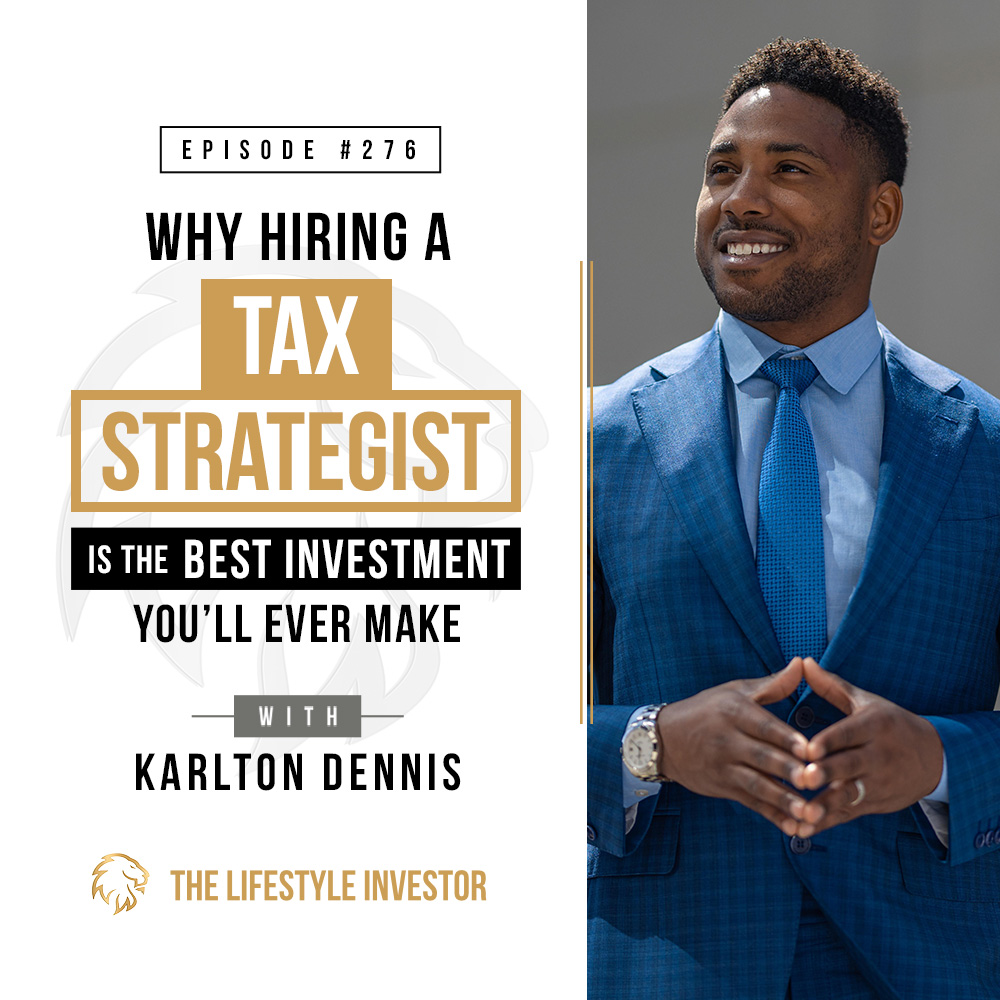
Why Hiring a Tax Strategist Is The Best Investment You’ll Ever Make with Karlton Dennis – EP 276

Building Passive Income Through Real Estate and Strategic Partnerships with Cory Jacobson and Ryan Bevilacqua – EP 275