![[Justin Donald] - Optin Preview](https://lifestyleinvestor.com/wp-content/uploads/2020/12/Justin-Donald-Optin-Preview-e1607533704966.png "[Justin Donald] - Optin Preview")

![Logo 1 Gold horiz [Converted]](https://lifestyleinvestor.com/wp-content/uploads/2019/08/Logo-1-Gold-horiz-Converted.png "Logo 1 Gold horiz [Converted]")
Interview with Kip Sowden

Over $5 Billion in Commercial Real Estate with Kip Sowden
Kip Sowden is the CEO and Chairman of RREAF Holdings who has over 37 years of experience in commercial real estate. Kip has been involved in the financing of over $8 billion in commercial real estate loans and has brokered the sale of over $10 billion in commercial real estate transactions.
He has also acquired, developed, and renovated over 5 billion in commercial real estate including retail, office, multi-family, and hospitality throughout the Southwestern and the Southeastern United States. During our conversation, Kip shares the strategic thinking behind RREAF Holdings’ approach, which focuses on delivering substantial value to investors while minimizing their risk exposure.
We discuss why RREAF specifically targets middle America, a strategy that has proven beneficial in tapping into markets with high growth potential yet often overlooked by major players. Kip also highlights their favorite US markets for building and how RREAF’s commitment to vertical integration has significantly boosted the efficiency of their operations.
In this episode, you’ll learn:
✅ How RREAF’s focus on challenging development projects and commercial acquisitions has revolutionized the real estate landscape and boosted their assets from $100 million to $4.5 billion.
✅ RREAF’s unique approach that allows retail equity investors to participate in temporary sponsor loans to different LLCs, yielding returns over 12% and providing unparalleled value for both investors and institutional partners.
✅ Kip’s favorite markets for investment and why RREAF targets middle America for residential, leisure, and vacation properties.
Featured on This Episode: Kip Sowden
✅ What he does: Kip Sowden is the CEO and Chairman of RREAF Holdings. He has over 37 years of experience in commercial real estate with a strong background in real estate brokerage and mortgage banking, acquisition, development, and asset management. He has been active in sales of more than 20 million square feet of commercial real estate and over 50,000 apartment units throughout the United States. Kip has also been involved in the financing of over $8 Billion in commercial real estate loans. He has brokered the sale of over $10 billion in commercial real estate transactions on behalf of some of the largest institutional owners in the United States. He has also acquired, developed, and renovated over 5 billion in commercial real estate including retail, office, multi-family, and hospitality throughout the Southwestern and the Southeastern United States.
💬 Words of wisdom: “I tell all of the RREAF investors, ‘Most important thing you can ever do is know the sponsor, get to know the sponsor.’” – Kip Sowden
🔎 Where to find Kip Sowden: LinkedIn | Instagram
Key Takeaways with Kip Sowden
- Real Relationships = Real Currency
- Mark-to-Market Valuations & Bank Loan Struggles
- Scaling from $100M to $4.5B & 500+ Employees
- RREAF’s High-Yield Temporary Loans
- 10/10 Program: Investors’ Early Head-Start
- The Cost of Buying Future Rate Caps
- Impact on LP Equity
- RREAF’s Leading Automation Software
Building a $4.5B Real Estate Empire
Inspiring Quotes
“To us, there’s nothing more important than relationships. I take it a step further, and it’s not only taking calls from investors or clients or anybody else. We have an open-door policy here. It’s always been accessible. There’s really not a hierarchy. I’ve got to wash my dishes after lunch, just like everybody else.” – Kip Sowden
Resources
- RREAF Holdings
- RREAF Holdings on Facebook | Instagram | LinkedIn | YouTube
- Kip Sowden on LinkedIn | Instagram
- iCap Realty Advisors
- Capstone Court
- RR LIVING
- Cigna
- Aetna
- Prudential
- Darcy Harbott
- CBRE
- Marcus & Millichap
- PruXpress
- R. Horton
- National Association of REALTORS (NAR)
- Pulte
- Meritage
- Highland Homes
- Blackstone
- Starwood
- Apollo
Tax Strategy Masterclass
If you’re interested in learning more about Tax Strategy and how YOU can apply 28 of the best, most effective strategies right away, check out our BRAND NEW Tax Strategy Masterclass: www.lifestyleinvestor.com/tax
Strategy Session
The Lifestyle Investor Insider
Rate & Review The Lifestyle Investor Podcast
If you enjoyed today’s episode of The Lifestyle Investor, hit the subscribe button on Apple Podcasts, Spotify, Stitcher, Castbox, Google Podcasts, iHeart Radio, or wherever you listen, so future episodes are automatically downloaded directly to your device.
You can also help by providing an honest rating & review over on Apple Podcasts. Reviews go a long way in helping us build awareness so that we can impact even more people. THANK YOU!
Connect with Justin Donald
Get the Lifestyle Investor Book!
To get access to The Lifestyle Investor: The 10 Commandments of Cashflow Investing for Passive Income and Financial Freedom visit JustinDonald.com/book
Read the Full Transcript with Kip Sowden
Justin Donald: Hey, Kip. It's good to have you on the show.
Kip Sowden: Hey, Justin. I'm glad to be here. Thank you for having me.
Justin Donald: Well, this is going to be a lot of fun because we've struck a new friendship here over the last year or two of getting to know one another, getting to know your company, and meeting you and your executive team. And I'm excited for people to learn more about you and your story and RREAF Holdings and all the cool things that you're up to. So, welcome. Today is going to be a lot of fun.
Kip Sowden: Well, thank you. I'm excited to be here.
Justin Donald: Yeah. So, you have a fantastic story, an incredible track record, just a background of all kinds of expertise in the real estate space. But what impressed me more than just all your accolades is actually how you showed up the first time we met. And you and I got connected through one of our Lifestyle Investor Mastermind members, Darcy Harbott, real good friend, a wonderful guy. And he's like, "You got to check these guys out.” And then you and your team took a flight and headed here. I think you guys flew on your own plane. You headed here to meet in person. We got a chance to meet at Soho House and you brought the whole team. You brought wonderful people.
Kip Sowden: I remember that. I think that anytime you're contemplating doing business with anybody, it's always important to meet face-to-face, get to know them. I tell all of the RREAF investors, "Most important thing you can ever do is know the sponsor, get to know the sponsor.”
Justin Donald: Yeah, 100%. Well, that spoke volumes to me that you guys are willing to make a trip down here. And obviously the goal, you guys have an incredible facility. One of the guys on our team, Hans, dear friend, and does a lot of investments with me, with us, with Lifestyle Investor, got a chance to tour your facility. And I know we are trying to find a time for me to get out there, which is happening this fall. But it was cool that you guys were like, "Hey, if you can't make it up here, I'll come down there. I'll make it easy on you.” And just the importance you put on the relationship and meeting eyeball-to-eyeball shaking hands says a lot about you, your character, the team, and really the priority that you give clients and partners. And I was really impressed by that.
Kip Sowden: Well, I appreciate that. To us, there's nothing more important.
Justin Donald: Yeah. You had mentioned something that has just stuck with me because in your business and we'll get to your story here in a second but one of the things I thought was really cool, as people move up and they become the founder, the chairman, maybe president before that chairman, often they're unreachable. And you had said something when we had first met about how you still take phone calls from clients, even though you're the highest-ranking person in your company, and that you leave time and space every day to be able to connect with people as they reach out. That spoke volumes to me as well.
Kip Sowden: Well, I appreciate that. I think that too is very, very important. I take it a step further, and it's not only taking calls from investors or clients or anybody else. It's always been accessible. We have an open-door policy here. There's really not a hierarchy. I've got to wash my dishes after lunch, just like everybody else. If I don't put them in the dishwasher, I’d get in trouble, and we're not allowed to leave dishes or cups or anything in the sink. Our office pantry even has a camera up there and somebody will get called out if they happen to do that.
Justin Donald: I love it. You play by the same rules.
Kip Sowden: That's right. We've completely played by the same rules. I make the coffee half the time in the mornings if I'm first in.
Justin Donald: That's great. Well, here's what I know about you. You've built an empire. You have an incredible business. You have 37 years, more than 37 years of experience in real estate. So, you've got a strong background in real estate brokerage, in mortgage banking, in acquisition development, asset management, all of it. This is what you've done. But what I'd love to do is go back before you were so accomplished. What did you do? How did you get to where you are? How did you know that you were cut from a different cloth that corporate America was not the right place for you?
Kip Sowden: I mean, at a very, very early age I always had this entrepreneurial bent and I can remember, I guess, the first thing that struck me was my mom would drop me off at my elementary school, Bradfield Elementary, third grade. And as soon as that old station wagon would turn the corner, there was a 7-Eleven half a block away or right at the next block. I’d run down that 7-Eleven, and with my 30-cent lunch money would buy 30 pieces of bubble gum and would sell those for nickel a piece during lunch period. And that kind of started it all. I enjoyed making money and interacting with people at an early age. Will say I spent a few Saturdays at the school cleaning gum off the bottom of my desk once I got kind of in trouble for that.
I mean, as far as real estate goes, I graduated from the University of Texas in Austin in 1985 and I was offered an opportunity to work for Lomas & Nettleton, the real estate investment banking division in San Antonio. I'm originally from Dallas, born and raised in Dallas, grew up in Dallas, and really had only been outside of Dallas for the four years I was in Austin and then San Antonio. And then in ‘87…
Justin Donald: You're an econ major, right?
Kip Sowden: Yeah. Finance and economics, yes. That's right. After two years or so with Lomas & Nettleton, I had been promoted a couple of times and was offered an opportunity to go set up an office for Lomas & Nettleton in their commercial real estate investment banking group. Either my choices were Phoenix, Arizona or Tampa, Florida. And I thought to myself, "If they thought that highly of me at 25 maybe I to go back to Dallas and start my own company, which is what I did do. And in ‘87, I started a commercial mortgage banking company called Wyndham Group. We basically did everything that I was doing at Lomas & Nettleton and had some big clients that actually followed me. I think my biggest client was Equitable Real Estate at the time, and I was selling most of their real estate-owned assets but did a lot for Cigna and various pension fund advisory groups, Aetna, Prudential, and just a great, great business.
I'd say, Justin, 50% of it at that time was mortgage originations, doing construction loans, permanent debt, mezz debt, lots of CMBS, subordinated equity, pref equity, all tranches of the capital stack. And then the other half was investment and sales. And what I really like most about it was the interaction with the asset managers from the various companies and really drilling down and understanding real estate and what makes it tick and putting together deals. But the downside to it was it was all iffy business and it was great fees but I wasn't building anything. I wasn't owning the real estate. And so, after I grew Wyndham, where we actually opened offices in Austin, San Antonio, Atlanta, Washington DC, and saw the CBREs of the worlds and the Marcus & Millichaps, and some of these bigger these pension funds that I had been doing so much business with were migrating from this boutique type shop to the bigger companies that actually had offices in 30 states or much bigger than we were with our five or six offices.
So, I got together with a couple of like-minded companies. They were all PruXpress advisors, all very well respected in their individual markets, all kind of boutique operations. And we created a company called iCap Realty Advisors. And when everybody came to Dallas to sign the LLC agreements for iCap Realty Advisors, I think I ended up with 26 offices, 300 employees. It was great for a while but it was making me get out of the transactional side of commercial real estate, which is what I enjoyed so much. I found myself talking about insurance and managing people but not really getting into what I really enjoyed doing, the structuring of deals. So, I rolled out and really wanted to focus more on principal transactions and led to where we are today at RREAF.
Justin Donald: And real quick, so when you say you rolled out, is this a company that you still hold equity in? Did you get bought out? What did that look like?
Kip Sowden: I got bought out and did very well on that buyout and it was a very amicable deal. And a lot of the iCap still exists today. It's not the same size it was back in ‘99 to, gosh, actually, yeah, ‘99 to 2000 is when that rolled out.
Justin Donald: Okay.
Kip Sowden: I had an interim company called Realty America Group with a high school buddy, and that was kind of transitional from pure brokerage to pure principle. And Realty America grew. About 50% of the business was third-party brokerage still, again, investment, sales, mortgage originations. But we started buying multifamily assets and we did some self-storage facilities. We did some smaller retail, just really friends, family, country club money, really enjoyed it quite a bit. And just everything started building from that experience.
Justin Donald: Well, you've got a great track record here of starting a company, scaling it to multiple locations, a lot of employees. What happened with that first brokerage company that you grew pretty big? Is that one that you just shut down? Did you sell it? What did that look like?
Kip Sowden: Well, for me, it was all about evolution. So, Wyndham Group was the first company that was all brokerage and it held up to iCap Realty Advisors.
Justin Donald: Got you.
Kip Sowden: And iCap Realty Advisors continued and Realty America Group was a successor to Wyndham Group focused on still doing some third-party brokerage but mostly principal transactions. RREAF Holdings I launched with my current partners in 2009 to 2010 to take advantage of what we believed at the time would be RTC2. There could be a lot of distress in the market and a lot of opportunities to buy deals at deep discounts. And I quite frankly think that I don't want to get political but, at that time, the administration was allowing the banks to maybe extend to pretend a little bit. They were not foreclosing and banks weren't being shut down like they were in the S&L days or earlier in the original RTC days. But we really set up RREAF Holdings, there was a tagline under RREAF Holdings, back when it was first set up and it said, "Real estate note acquisitions.”
And we went to and met with some 80 to 100 community and regional banks all throughout the south and southeast. And we had an opportunity to go and look at their performing loans or non-performing loans or sub-performing loans, their REO, and we would do mark-to-market valuations. We'd spend maybe a week at the bank and we'd look at their assets, we'd look at their portfolios. And I'd be sitting across from the president of the bank, and I had my mark-to-market valuations, and they had where the FDIC was requiring them to write down the loans, which wasn't much. There was still a big gap. And they'd say, "Yeah. Hey, Kip, I agree with your valuations. FDIC is not forcing us to take these mark-to-market write-downs. And if we did, our tier-one capital ratio at 2% today would be lower and they'd have to come in and shut us down.”
So, it was a good call and the real estate value started lifting back up and the phone started ringing. And a lot of the relationships that we made from those days transcended to give RREAF a good start on acquiring real estate.
Justin Donald: Yeah. That's great. And it's also a fascinating thing where these numbers can be massaged, the accounting, like it's what should happen or what could happen. It's almost like we can - there's ways to manufacture delay, there's ways to manufacture the reporting and how things show up and what things look like and how much time do we need to buy. So, it's a fascinating world when you really get into the weeds, right?
Kip Sowden: I agree 100%. It is. It is.
Justin Donald: And for sometimes it's the batter but, I mean, in some instances it's for the worst, right? I mean it sometimes can prop up banks or companies that really were irresponsible in the way that they managed, in the way that they lent money, and the way that they structured their business dealings.
Kip Sowden: I agree with that. But I will say, I think that you saw less turnover and less distress in the market from 2010 those days than you did obviously in the RTC days. The banks didn't lose as much by extending and going through these workouts and eventually, we’re able to dispose of their real estate-owned assets and live another day. It was great for us because we bought quite a bit.
Justin Donald: Well, we have really enjoyed learning about kind of how RREAF Holdings has emerged and I want to dive into that a little more. Before we get there, one of the things that I thought was really good, and by the way, we had you guys at our recent Lifestyle Investor event. We had a live event. We had a vetting deals course that we recorded that's going to be live soon once production is complete. So, that was day one, and then day two was a live event, and you guys were guests and really got a chance to teach and share a lot on multifamily with our community, with our members. And we opened it up to a handful of nonmembers that we had interviewed and felt like we're a good fit. And your team, you guys just did a great job.
One of the things that we talked about that I would love for you to elaborate on because you hinted at it already are the different tranches of capital. When you look at the capital stack or the cap table, it's like there are these different tranches or different tiers of priority or seniority. And I think it'd be fun to kind of run through these. I think some of our listeners probably are very aware of this but plenty of them are not. And I think it's important when you're investing to kind of know where you are in that capital stack. Are you senior secured? Are you at the top of this capital stack? Are you junior? Are you mezz debt? Are you pref equity? Are you common equity? So, if you wanted to give a run-through of that, I think that would be pretty helpful to our audience.
Kip Sowden: Yeah. I think to answer that it's going to be a little longer answer because you've really got to understand RREAF and where we've come from and where we play in commercial real estate. Our focus today, we've got, as you know, I think five main verticals or five platforms and it's important to understand those five as I get into the way we structure our capital stack because each is a little bit different. Multifamily remains our largest vertical or our largest division. Within that group, we're buying existing multifamily assets throughout the south, southeastern part of the United States, very, very nice assets, garden style, two, three-story primarily stick built, some wrap, but primarily stick built.
And we're really catering to middle America. I mean, it's the largest population base in the country, and all five of our verticals or the other four have a similar type, concept, really catering to middle America for all things residential and leisure and vacation. Drive to leisure is a big theme with us. And that comes from being in the business, as you pointed out, 37, now 38 years. I guess, it ages me a little bit. But I've been in every asset class you can imagine in commercial real estate. And really, at this stage in life and where I really see the most value and the most recession resiliency is in the verticals that we participate. And it is that residential and the drive to leisure in the south, southeastern part of the United States, high growth areas, business-friendly climate. We're seeing more and more migration from the West Coast in the northeast down to our markets. Our biggest markets are Texas, Florida, Georgia, the Carolinas, but very active in Arkansas, and Oklahoma, and some in Virginia. Anyway, that's RREAF and we do not have yet and have avoided putting together funds.
All of our capital really comes from our retail investor base. We've been blessed in that we've been able to grow and scale to the size that we have today with our retail investor base and without having to bring in big institutional capital partners as common equity or control over our overall direction. So, today, it's multifamily. We have a beachfront hospitality and resort platform which is buying existing hotels in iconic locations on beaches. That program actually has a very heavy capital improvement component to it. In some cases, we go in and take the facility back to its concrete frame and completely rebuild it. And then heavy emphasis on the amenities. We'll build lazy rivers, resort pools, family entertainment centers, restaurants, lots of palm trees, and just really elevating the overall experience of the guests.
Then we have RREAF communities. RREAF communities is building cities. I mean, literally building cities. We'll take down large tracts of land in close proximity to major MSAs. We bought 3,300 acres just south of where I'm sitting right now with 50% and what's actually 50% in Midlothian. There we've designed 8,500 single-family for sale lots that we’ll sell to homebuilders like the D.R. Hortons or NARs or Pultes, Meritage, the Highland Homes, the national and regional builders. We ourselves, Justin, as a company will do roughly between 2,500 and 3,000 rentals, single-family rental built BTR communities, multifamily communities, town home projects, detached and attached. We're putting in a town center. We're putting in a beach, hiking, biking trails, soccer fields, two schools. No, actually Midlothian has three schools going in.
We build out and put in our own wastewater treatment facility. We are our own taxing authority, police, and fire so we're building cities. Not too far from where you live, we're doing another one coincidentally, about the same size. It's 3,276 acres. Same deal, single-family, multifamily rental, single-family for sale, town center, commercial, schools, all the roads, the infrastructure, the wastewater treatment facility, all the utilities. Only difference there is that we've got about 600 acres that's planned for life sciences, tech, industrial. It’s Caldwell County and that Californians moving there, right?
Justin Donald: That's right. That's right. So, it's a great location. Yeah.
Kip Sowden: Great location. And so, what we really look for at RREAF community is also doing some smaller projects. Those are multi-billion dollar projects. And smaller ones would be where we'll build anywhere from 149 BTR project, build to rent project. We're doing one in Royse City. I think you guys have some of your investors have invested in. It's called Capstone. We’ll have another one of those back in Waxahachie, which is near that other community that we're doing there, but things like that. It's just really catering to middle America, very nice communities, highly amenitized communities, that average people can afford. Then we've got a fourth vertical that is our extended stay hospitality. That particular vertical is not geographically constrained. We'll build anywhere in the country where it makes sense to and love that program in so much as it's one of the most resilient categories within the hospitality space. And we learn that throughout COVID and it continues to be the darling of institutional capital.
And we can build these extended-stay hospitality projects in 12 lots. They wrap very, very quickly. We're doing a few under the choice brand, WoodSprings Suites, Everhome Suites but we're really focusing going forward on the extended stay premier and we're going to start blowing up and blowing out and doing quite a few of these new Hyatt studios. And then we'll do some of the Marriott and the Hilton project. But as a company, Justin, and I think you know this, scale matters, and everything that we do is all about scale.
Justin Donald: That's right.
Kip Sowden: In fact, we won't look to exit our extended stay portfolio until we have well over a billion with 30 or 40 of these different branded assets located in different strong markets that we'll sell to whatever REITs can overpay us at the time, be it Blackstone, Starwood, Apollo, or the countless others that can't get enough out. We like scale because institutional capital that can stroke and pay more by lower cap rates as a cost of funds need to write $100, $200, $300, and $400 billion checks. And they can't just write $10, $20, $30 million checks. And so, for us, everything is about scale, multifamily, beachfront hospitality resorts, the RREAF communities, the extended stay vertical. And lastly, and our newest vertical we launched in 2023 with the acquisition of five RV parks. And typical of RREAF, we're not just doing what everybody else is doing in that space.
We've created, I think, a new category within that overall RV space of real estate that involves taking our hospitality expertise and kind of combining that with an RV-type community. But for us, they’re horizontal resorts, and we're putting in a lazy river. We're putting in the resort pools. We're putting in the family entertainment centers. We're putting in the restaurants. And most importantly, we’re anywhere from 10 to up to even 50% of the pads, we're going to put these tiny homes, these drop houses in there. So, people that don't own RVs can enjoy the horizontal type resort. So, as a company today, we've grown from 100 million in assets just seven years ago to a little over 4.5 billion. So, it's just unbelievable growth. We've got a little over I think we're over 500 employees now. And we're continuing to scale. This, we explained a little bit about RREAF but didn't specifically answer your question about capital stack and where we play.
So, everything that we do in RREAF where our investors are coming in the common equity piece, they're the owners of the real estate. And we don't do debt. We're not debt funds. We do have a debt fund but it's different from a traditional debt fund. We use it and allow our retail investors to participate with RREAF when we're making temporary sponsor loans to the different LLCs. It's a great program. And I think quite a few of your investors have recently jumped in, that speaks for us.
Justin Donald: Yeah. You've offered a bunch of programs and optionality exclusive to Lifestyle Investor members, which we appreciate.
Kip Sowden: Yeah, we did. And that we've just enjoyed getting to know you guys. Such a great group. And it's been a great experience for us but the deal with the debt fund is you're making 12%. That's it. You're making 12%. Now, that's great. That's great. But our expectations with coming into our different equity investments through our different verticals, your expectation should be closer to 20, 22 kind of percent internal rate of returns and a multiple, anywhere from 1.75 to a 2.0 multiple on your equity given a 3, 3.5-year home. And that's pretty much the way we underwrite all of our deals for our equity investors.
Justin Donald: Yeah. And you guys have a really neat program where if someone is using one of your debt products, which I know you don't do that very often but you guys when you do it, it's very secure in the capital stack. It's a lot of collateral behind it. And so, plenty of room that if anything were to go wrong, these investors would be made whole. But one of the cool things that you do, even though you have like a term on this, so it's not like you can just redeem next day or a week or a month, you've got a term. But for anyone that finds a deal on the equity side that they're interested, they can roll that in immediately. They don't have to honor that term on the debt fund.
Kip Sowden: That's right. In fact, we have quite a few investors that while they're waiting for their next RREAF deal, they just put money in the debt fund because they're earning 12% on it as they figure out what their next RREAF deal is going to be. And I also will point out that even without investing in any of the RREAF deals, we have four times a year redemption. So, it is fairly liquid, particularly if you're yielding 12%. So, it's been a very attractive deal. And like you said before, we haven't really opened it. It's not on our portal. We haven't opened it up to many of the RREAF investors. Well, we may start to do that but we're going to be careful in last thing we want to do is have a bunch of capital sitting in the bank and we're paying 12% on and not being able to let it out to our different assets.
Justin Donald: Yeah. And you guys do, this is a unique program, again, not on your portal. So, you've got to be kind of on the inside, be, you know…
Kip Sowden: Be a lifestyle investor. You get access.
Justin Donald: That's right. You did this really fun 10/10 deal. I've never seen it structured like that. I'd love for you to explain that because I thought this is a very unique product.
Kip Sowden: Yeah. So, in our RREAF communities, there are a lot of different times at which investors can get in. And RREAF communities we’ll just take down land and it's agricultural and not yet been developed. And we've got to go in and completely entitle a property. And it takes time. I mean, it's getting a MUD, a municipal utility district put in place so we can bring utilities to it and entitling that master plan community and designing it. And that could be anywhere from two, three, five-year period to get it to that point. And we do create a tremendous amount of value along the way in different times at which we can exit if we chose not to fully develop it ourselves, put the entitlements in place, get the municipal utility district in place, maybe do a PID or TIRZ, and we do offer equity investors an opportunity to come in at the early stage of this process and really act more as a lender than having an equity position in the overall waterfall.
And that is a program we came up with that we call 10/10. And what it does is it pays a 10% current with a 10% accrue. And that's it. It's just like the debt fund gets 12% this day where, I mean, this gets 20%. And it too is a very, very, secure spot in the capital stack, never typically getting above a 50% of the current market value for that asset. And it really just depends on what the overall business plan is for a particular project and what the timeline is for that project.
Justin Donald: Yeah. And what's interesting about that strategy, I really like this because your goal here, you buy this land and you actually want to develop it. You want to see it all the way through to the end. But you test the waters and you say, "Hey, what will someone give me mid-project? We’ll entitle this. Let's just see if we can get an offer that is too good to pass up because if you can get that, you might as well sell it, make some great money, make some investors happy, and then take that return and move on to the next project. And so, it's pretty fun to have that. I always tell people, I love having the optionality of more than one exit strategy because it de-risks a deal. It can create some extra upside. Often, it can be done in a much shorter window than a full development project. And in many instances, you might be getting, in certain markets, you might get the return or close to the return you would have gotten waiting twice as long to actually develop it out.
Kip Sowden: Yeah. I think that's right. It depends on where you are in the cycle, 100%. I think that in our RREAF communities, we're going to always focus on the high-growth areas and the close proximity to the major MSAs, i.e., Dallas-Fort Worth, Austin, San Antonio, and where there's tremendous demand for a particular asset class or project. So, we do have a high degree of comfort that if we entitle this saying we're going to have multiple groups wanting to buy it from us. And you're right. We could sell it all. We could sell little pads or pods to different builders, de-risk, end up not having negative basis in the balance of the dirt, getting our cake and eat it too, and developing it out. Now, it's funny you brought this up, one of those two projects at the 10/10.
We've gotten recently some very, very big numbers on it and we're scratching our heads. We may go ahead and exit the whole thing, and we will walk away, I'll tell you, with a big profit but then you've got to think, "Okay. Well, I've got this pile of cash now. Am I going to be able to deploy?” You've got to feel comfortable and confident that you can. Right now, I feel like we can. We're seeing quite a few opportunities. I don't want to say that there are distressed opportunities. We think that there are certain sponsors that are feeling some pain with the way they structured the capital stack quite different than the way we structure our capital stack. As you know, our multifamily program, everything that we do in it, we put long-term fixed rate agency debt, either Fannie Mae or Freddie Mac.
We're select sponsors, opt-to-go sponsors, which is a big, you know, we take great pride in that. I mean, it's a big honor with Freddie Mac to have that relationship with them and certainly helps us in our underwriting and our comfort level, if you will.
Justin Donald: Yeah. And just for some background for those of you that may not understand what's happening in the real estate space, especially in multifamily, but other real estate asset classes as well. You've got a lot of these sponsors that use bridge lending and floating rates, which means that when these rates kept adjusting, that people had deals that they basically ran the numbers on it at one pro forma that should work but maybe didn't stress test it well enough or didn't recognize that the rates could go up. They didn't buy a cap. They didn't secure long-term financing even when they could have and it was a frothy environment. They got a little too greedy and now they're in trouble. The deal doesn't pencil. They're losing money. They're doing extra capital calls from their investors. And even in some cases, that's not enough. It's just a Band-Aid.
And so, I always say, and I like that you guys agree with this. Whenever you can secure low-rate, long-term fixed debt to do your deals, that's the best move that you can do. And with agency, you generally get the best terms, Fannie Mae, usually smaller amounts, Freddie Mac, larger amounts, but both are great vehicles to use. And just so many sponsors in this last decade got comfortable with being able to have these quick flips, be able to do it inside of two, three, four, or five years.
Kip Sowden: Until they got caught.
Justin Donald: That's right. That's right. And I tell people all the time like I missed out on a lot of those deals because even though they worked out and people made money on them, they were still too risky for me. Whereas the deals that I did, maybe I missed deals, but I'm in all the deals that have the long-term debt now. So, in this market, I don't have that risk profile that a lot of my friends have that worked. I mean, it did work until it didn't.
Kip Sowden: Right. You're 100% spot on. Everything that you said is exactly correct and exactly what happened. So, as a company, we don't want to take the risk. We're not going to bet on the calm. We're underwriting based on today's economics. And if we're comfortable with that, wherever interest rates are, we're going to fix it because we're going to sleep better at night and we also know that we're going to still create that value. And we also don't do a lot of one-offs anymore. I mean, most of what we do are going to be big portfolio trades. And in fact, the last three multifamily deals we've done have all been over 500 million with multiple sellers, multiple assets, and TC 21 by way of example, 21 assets we bought. I think it was three or four different sellers. We locked in. This was December of 2021. We locked in ten years fixed-rate money at 2.71% with six years of IO. So, let's think about that for a minute.
Justin Donald: That's beautiful.
Kip Sowden: Right? Today, it should be in that 5.5%, maybe even 6%, given where interest rates are. That's where they should be. That's where market should be today to transact. When we are locked in at 2.71% with assumable debt, my cap rate is going to be 300 basis points less than where market is, which brings me back to where cap rates were before interest rates went up, meaning that my existing portfolio is worth more than any other portfolio that's out there if I were to go sell it today. A year later, we did another, we called it, well, it was HPX. We bought ten assets. The X meaning ten. It's since been named Southeast Portfolio 3, but ten assets we locked in 400 million or so, again, Freddie, ten-year, fixed-rate at 4.37%. Higher interest rate, but still great interest rate still in the money. Portfolio, we did just last year.
Now, a little different in that we thought rates are kind of high but we're not going to take the floating rate gamble in our analysis. We think rates will start coming back down. So, what do we do? Because we're select up-to-go sponsors with Freddie, they listen to us, and we said, "Look, guys, we need better. We need a five-year product. We want to lock in for five years, not ten years, but five years. That'll give us the comfort we want and rates if they come back down, we're not going to have this huge defeasance once we've executed on our business plan. And if it takes three years and I want to sell, I've just got two years left of a little bit higher rates, perhaps.” And we locked in at 5.2%. Still a great rate and I sleep well at night knowing where the majority of your expenses are and debt service are a lot.
But what happened and you're right is a lot of people that haven't been through multiple real estate cycles and sponsors that see all the money that's being made multifamily. I've got friends that can invest with me, and I can get out there and I can do what RREAF is doing. But they got high leverage from, like you said, the bridge lenders that are floating rate and they can't, every single dime that comes off of that asset is going to try to service that debt. A lot of times they can't afford to buy the rate caps going forward. Lenders are requiring rate caps. But what really happens is that the assets eventually will become distressed because no money is being put back into the asset to maintain it. And even worse, some of the sponsors are not qualifying tenants. They're putting tenants in property just to hope that they pay for 30 days or 60 days.
So, now when we're looking at these type of portfolios, we're spending three, four, or five times longer doing lease audits because we realize that we can't rely on the rent rolls that are presented. And I think there's a certain percentage of the tenants that we're going to have to sadly evict and then we're going to have to redo that unit and then release it. So, there's a lot of that going on today.
Justin Donald: Yeah. I mean, I'm glad that you speak on it and I'm glad that you guys have a plan. I mean, it's going to create great opportunities for those of us on the sidelines that are willing to take, willing to be patient, wait for some of this debt distressed assets to come online. And we're already starting to see them. I mean, I just recently did a deal in Austin that's like, I mean, it's amazing what we ended up getting. I mean, this is a trophy asset. And they were in financial ruin and we were able to come in and not only did we move into the top of the capital stack, but the collateral that we got is another trophy asset so prime location. I mean, it's really incredible what's happening and I don't think most people are seeing it yet.
Kip Sowden: Yeah. We're starting to see it. We've got about 380 million in the pipeline of that exact product. Now, I will say and it's very sad and that is that of that 380 million, most of what we're underwriting is coming in right at debt and in some cases below debt. So, what does that mean? That means that LP equity is getting wiped out.
Justin Donald: It’s getting wiped out. Completely gone.
Kip Sowden: Yeah. I hate that but, you know.
Justin Donald: Yeah. We're seeing it a lot, seeing a lot of these sponsors that literally, I mean, they're losing it all. They're foreclosing and all equity holders are gone.
Kip Sowden: We try to figure out ways in those circumstances to, at least, salvage something for those LP to the extent we can but, I mean, we're still going to underwrite. It's mark-to-market and this is what it is and we're also actually getting some calls from lenders early on just asking our opinions and what we consider taking over management or perhaps even stepping in. I think you probably know this but we're a completely vertically integrated company. We have in-house property management, was RREAF Residential, rebranded now to RR Living because not only do they manage our 15,000 units but they're managing another 5,000 units for our competitors or third parties. So, RR Living is what we rebranded to and they're very, very good. They know how to not only manage the revenue side of the P&L but also the expense side, which is what we look for because that translates into yield to our equity investors.
Justin Donald: Yeah, that's fantastic. And I know we're running low on time but I have to mention that one of the things I'm most impressed with, I think you guys are world-class in just virtually every category, but the one that is such an outlier, that is so unique that you don't see in your space to the level that you have that is your software. You guys have built proprietary software that allows you, at a glance, at a moment, to look at any single unit anywhere across the U.S in real-time and know what's going on to the point that you've been asked by several institutions if they will white label your software to them to use.
Kip Sowden: That's very true.
Justin Donald: Of course, you're not going to do it but, I mean, talk a little bit about that. And when we had Doug and Jeff come and present some of the software and some of the cool things you're doing, that was one of the things I raved about to the Lifestyle Investor community because you guys are outliers in this. You guys are head and shoulders ahead of every other sponsor I've looked at in the world of building out your own proprietary software with the functionality that you have.
Kip Sowden: Yeah. I appreciate that. It means a lot. You know, we're a very data-driven company. I think a lot of companies say they're data-driven but they're really not. We are. And we rely heavily, data does not lie. Now, you got to know how to interpret that data. You've got to know how to understand that data. But with where technology is today, there's probably not one asset management or property management software off the shelf that we haven't had people pitched to us or come in and there's lots of good ones and we like certain aspects of some, and certain aspects of the other. And finally, we said, "Look, if we could take this, this, this, this, and put it into a package that really fits what RREAF is all about, that would be great. And we figured out you can. So, we hired full-time software engineers, brilliant people to come in. And over the course of two, three, four years and it's continually evolved, we've created some incredible dashboards that do allow us to know what's going on at any given time at any of our properties.
Computer is pulling data from hundreds of different sources while we sleep at night. And when I get up in the morning, I can log in and know exactly what our portfolio did the night before, particularly on the hospitality side. I mean, it'll show us what every room that was rented what the ADR was the occupancy, the rep, or the food and beverage. On the multifamily side, it's got lots of different KPIs built into it. And if one of these KPIs gets trapped or the computer doesn't like one of these KPIs, it'll send a text message to the asset manager and to the head of the department, so that that asset manager when he shows up the next morning knows to log in to figure out what tripped that KPI. So, it really does help us stay ahead of it. And it's got algorithms built into it that is constantly looking at where interest rates are or in certain markets where new products coming into and where occupancies are, and it's given us heads up to focus on things before they become a problem.
Justin Donald: Yeah. That's brilliant. I mean, I'm a huge data-driven guy and I make a lot of my investment decisions based on this data that I need to have access to. And when companies can't provide it, then it's just a no. But what I love is you can set up these triggers, these automations. And this could even be on the asset management side of things. It's like, "Hey, this loan is coming due in two years. Start working on the next layer, the next funding round, whatever that needs to look like.” And so, it's not just occupancy. I mean, of course, you can get the occupancy where it's like, "Hey, we're 7% below where we should be. This weekend, this exact weekend last year, this holiday weekend,” or, “Hey, we need to celebrate. This one's way up, food, beverage, whatever.” And you can see it all in real-time. I just love it.
Kip Sowden: You're right on the interest rates. I mean, the computer tells us what deals to specifically look at to refinance. It's calculating what the defeasance is given a certain interest rate. It's looking at our debt coverage ratio. So, if our debt coverage ratios are at 2.5 or 3.0, it's saying, "You know what, guys, you can pull a lot of capital out. And I bet you that that's going to be cheaper. You can return capital to your equity investors.” And the computer is telling us all this.
Justin Donald: Kip, it's incredible what you've built. I've had so much fun catching up here. Why don't you tell us where we can find out more about you and RREAF Holdings?
Kip Sowden: Yeah. Go to www.rreaf.com. You can log in, sign up as an ambassador. You don't have to put any money in or anything else, but once you're an accredited investor, you'll see all of our deals. You can also go to YouTube and type in RREAF Academy. We probably have 30, 40 hours of lectures that we do just in our conference room with different department heads talking about real estate. I didn't even have a chance to get into our operations manual, which I think really drives a lot of how RREAF has grown as big as it's grown. And we still pay a lot of attention to detail.
Justin Donald: Yeah. You guys have really built out some world-class education operation manual. I mean, really just you have a playbook for every single thing you do. And in the event that you need to transition people in the company, it's a lot smoother of a transition because it is very systematized throughout. And we didn't have time to dig into the fact that you're a family man, a man of faith, just that you have so many things that you prioritize in the right way. You've been very successful on a business front but you have rich relationships. You prioritize people and family and faith over business. And so, a lot to love about you and what you're up to. So, thanks for spending the time with us here today, Kip. This has been an awesome session.
Kip Sowden: Justin, I enjoyed it. Thank you very much. I hope I get or have an opportunity to come back and talk more. It's been a lot of fun.
Justin Donald: It sure has. Well, I love ending every episode asking our audience one question, a simple question, an easy question, and it's this: What's one step you can take today towards financial freedom to move in that direction, even if it's just a little bit, but to move towards a life that you truly desire, a life that's on your terms? Most people live life on default, so how can you take one step closer to living life by design and achieving financial freedom? Thanks so much and we'll catch you next week.
Kip Sowden: Thank you.
Sign up to receive email updates
Enter your name and email address below and I'll send you periodic updates about the podcast.
Keep Learning
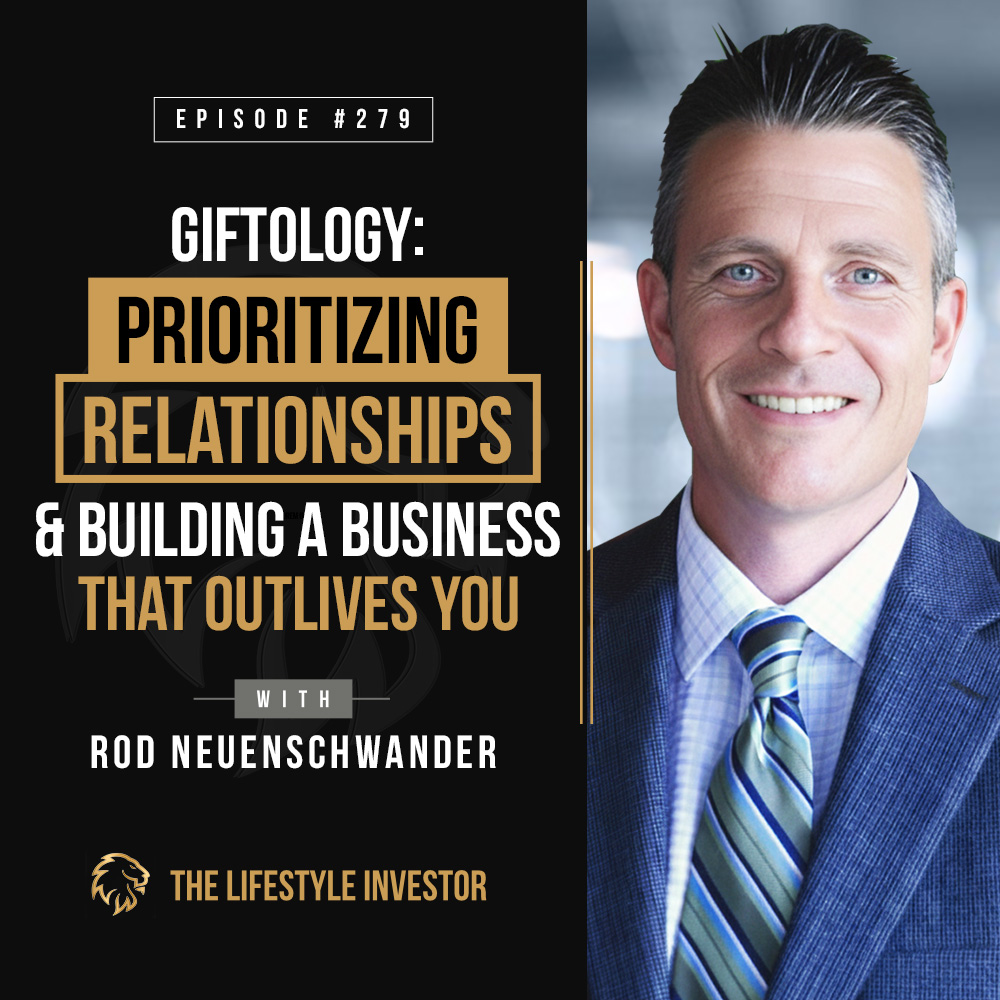
Giftology: Prioritizing Relationships and Building a Business That Outlives You with Rod Neuenschwander – EP 279
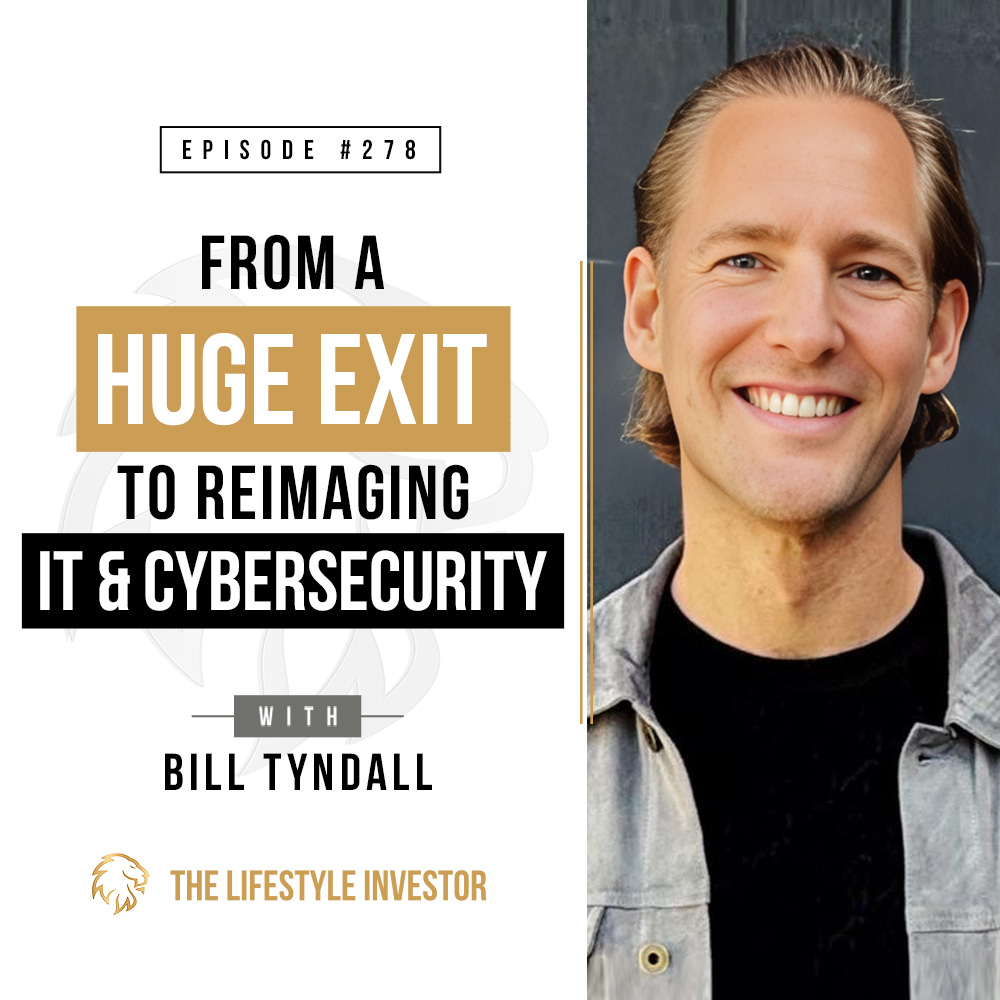
From a Huge Exit To Reimaging IT & Cybersecurity with Bill Tyndall – EP 278