![[Justin Donald] - Optin Preview](https://lifestyleinvestor.com/wp-content/uploads/2020/12/Justin-Donald-Optin-Preview-e1607533704966.png "[Justin Donald] - Optin Preview")

![Logo 1 Gold horiz [Converted]](https://lifestyleinvestor.com/wp-content/uploads/2019/08/Logo-1-Gold-horiz-Converted.png "Logo 1 Gold horiz [Converted]")
Interview with Joey Klein
The Hidden Emotional Programming Controlling Your Life with Joey Klein
What if every decision you made was actually predetermined, shaped by a story your nervous system wrote years ago?
Well, the science suggests that our emotional programming starts in the womb.
Today’s guest calls it the “ghost in the machine” and has spent 20+ years helping people rewrite it.
In this episode, I’m talking with Joey Klein—Founder of Inner Matrix Systems and a globally recognized transformation expert. Joey has trained over 84,000 people, from Fortune 500 execs to pro athletes, to rewire the emotional and mental patterns quietly shaping their behavior. His work blends neuroscience, psychology, and mindfulness to create real, lasting change from the inside out.
Together, we explore how these subconscious imprints silently drive your decisions—often sabotaging success in business, relationships, and everyday life.
If you want to rewire your inner programming, get unstuck, and create meaningful success in every area of life, you’re going to love this episode.
In this episode, you’ll learn:
✅ How a near-death experience at 19 launched Joey’s journey into inner work—and why emotional mastery, not hustle, is the key to lasting success.
✅ What the “ghost in the machine” really is—and how subconscious emotional imprinting silently drives your decisions.
✅ How Joey helped a top Hollywood executive break through years of creative roadblocks by rewiring his internal belief system.
✅ Why your nervous system is just as trainable as your muscles—and how to strengthen it to access clarity, calm, and peak performance.
Featured on This Episode: Joey Klein
✅ What he does: Joey Klein is the founder of Inner Matrix Systems and a globally recognized transformation expert. He’s trained over 84,000 people—including Fortune 500 executives, elite athletes, and entrepreneurs—to rewire the emotional and mental patterns that limit performance. Through a blend of neuroscience, psychology, and mindfulness, Joey helps high achievers master their inner game so they can create results that last.
💬 Words of wisdom: “ Every single choice a person makes is literally predetermined before they ever make it.” – Joey Klein
🔎 Where to find Joey Klein: Website | LinkedIn | Facebook | Instagram | YouTube
Key Takeaways with Joey Klein
- How the Right Community Changed His Portfolio
- How Inner Work Unlocks Outer Success
- How a Near-Death Experience Sparked His Inner Work
- The “Ghost in the Machine” That Shapes Your Life
- How Joey Helped a Hollywood Exec Break Through
- This Client Was Suicidal—Now Her Family Is Thriving
- Relationship Alchemy—The Book That Helps Relationships Thrive
- Joey’s 20-Year Vision for Transforming Lives
- This Daily Practice Rewires Your Mind to Believe Again
- The Morning Question That Can Change Everything
- Your Nervous System Needs a Workout Too
- Free Gift: Discover Your Blind Spot Training
- How to Create the Life You Actually Want
Ghost in the Machine
Inspiring Quotes
- “ A lot of people think of belief as it’s either there or it’s not. What I’ve learned is that belief is actually something we train and condition.” – Joey Klein
- “ Every single choice a person makes is literally predetermined before they ever make it.” – Joey Klein
Resources
- Inner Matrix Systems
- Inner Matrix Systems on LinkedIn | Facebook
- Joey Klein
- Joey Klein on LinkedIn | Facebook | Instagram | YouTube
- The Inner Matrix: Leveraging the Art & Science of Personal Mastery to Create Real Life Results by Joey Klein
- Relationship Alchemy: A Practical Guide to Getting Along Well With Others by Joey Klein
- Don Wenner
- Tony Robbins
Tax Strategy Masterclass
If you’re interested in learning more about Tax Strategy and how YOU can apply 28 of the best, most effective strategies right away, check out our BRAND NEW Tax Strategy Masterclass: www.lifestyleinvestor.com/tax
Strategy Session
The Lifestyle Investor Insider
Rate & Review The Lifestyle Investor Podcast
If you enjoyed today’s episode of The Lifestyle Investor, hit the subscribe button on Apple Podcasts, Spotify, Stitcher, Castbox, Google Podcasts, iHeart Radio, or wherever you listen, so future episodes are automatically downloaded directly to your device.
You can also help by providing an honest rating & review over on Apple Podcasts. Reviews go a long way in helping us build awareness so that we can impact even more people. THANK YOU!
Connect with Justin Donald
Get the Lifestyle Investor Book!
To get access to The Lifestyle Investor: The 10 Commandments of Cashflow Investing for Passive Income and Financial Freedom visit JustinDonald.com/book
Read the Full Transcript with Joey Klein
Justin Donald: What’s up, Joey? So good to have you on the show.
Joey Klein: It’s so good to be here, man. I’m excited for this.
Justin Donald: I am too. I’ve been looking forward, I mean, we’ve had this in the works for a while and I’ve just been so looking forward to having you on the show. You’re up to so many cool things in the world, and I want my audience to hear all the cool stuff you’re doing.
Joey Klein: Well, I’m looking forward to diving in and hopefully, we create some value for all the peeps.
Justin Donald: I love it. Well, here’s the fun thing. I would have you on the podcast no matter what, because you are an inner game expert and we’re going to talk about your Inner Matrix System. But what I love is when I get the chance to interview Mastermind members. So, you’re part of the Lifestyle Investor Mastermind. It means the world to me that you’re one of our active members. You’ve renewed many times. And I don’t know if you even remember this, but I remember when you came to your very first Lifestyle Investor Mastermind year-end event, we do these big retreats at the end of the year. It’s for members only for those of you listening in, and Joey was– this is his first time. You were there with Caitlyn. And I remember thinking, I better do a good job because this guy speaks on stage for a living, and I got to make sure that anyone in attendance gets their money’s worth. But for a guy that’s in the business, I’m like, oh man, I hope we deliver.
And I remember like midway through the day or towards the end of day one, maybe it was like right before lunch, you came up to me and you said, “Hey Justin, I just have to tell you, I’ve been absolutely blown away by this event, by the content, by the people, just everything that Lifestyle Investor is,” and you’re like, I’m a lifer. Like, I’m in this for at least 7 to 10 years and I’m brand new and this is my first experience and exposure. And that literally meant the world to me because I was like, wow, the guy who literally for a living, who has impacted 84,000 people worldwide, has gotten that type of value from our event. So, that meant a lot to me. Thank you.
Joey Klein: Yeah, man, it was such a good event. I travel and teach all over the world for a living for the last couple decades, Japan and Europe and United States, et cetera. And it’s just so rare to find an organization with a kind of generosity that was just obvious at that first event I attended. You’re clearly doing what you’re doing just because you want to give back and contribute, make a difference in the lives of people. And it’s just obvious in the way that you present and who you are as a person, but also in the community you brought together. Like, everybody there is just so humble, so kind, and just 100% wants to see everybody succeed and it’s not often that you come across that these days.
Justin Donald: Well, thank you. I appreciate that. And just for those listening that have been maybe on the peripheral thinking, hey, at some point, I want to join Lifestyle Investor, what is it that you think is the greatest value add? Or what are the things that add the most value to you where you keep renewing to stay in the ecosystem?
Joey Klein: Yeah. So, there’s a couple things that are just so obvious to me. One is the people, right? Like, if I have a question or a need or curiosity, I could probably ask somebody in the group and they’re going to connect me with somebody in the group who could probably support with whatever that need is or connect me to somebody whom they know who can. And so, the network and the connections are just beyond awesome and the quality of people there is definitely number one.
Number two, it’s just like I don’t have to try to go out and like keep up to date on things that are happening anymore. It’s like you just bring us the best tax strategies and we get educated right away on changes that are happening and hey, you might do this or that, and the others, that’s been awesome. And then for me, I just did traditional investing for a really long time because that was the only thing I knew and that’s what I was brought up inside of. And I did it well and I did it right. And I feel grateful that I made quite a bit of money doing that, but I always just felt like there was another way.
And when I really broke down into fees and the things I was being charged, it was like, well, I could keep doing that or I could actually pay less money and just pay the tuition of Lifestyle Investor, do it myself. And I’m getting better returns and like, with the market’s going crazy right now, all this stuff has been going on, and I still have a little money in the markets, but like all the investments I’ve learned through you, they just put money in my account every month, every quarter, happens like clockwork. And it’s just such a better way to go about the process in my opinion.
Justin Donald: Oh, I love hearing that. And it’s really fun because we just got off of a Lifestyle Investor call on the state of the economy. What’s going on? What are tariffs doing? How are they interfering? What does this look like for our investments? And so, I went into the weeds on a lot of stuff. And then we had our friend Don Wenner share with us. And we talked about private credit, we talked about multifamily, just housing in general, but like, also how does that apply? How does the economic environment apply to what’s happening today and the investments? And I’m just so proud to say, we are so strongly insulated, while public equities, the stock market is just taking a hit. And it’s like a yo-yo. We are like just– I mean, alternative investments, they outperform. Over the last 100 years, they’ve outperformed the S&P 500 index or any of the indexes by over 50%.
And we talked about top quartile and bottom quartile today, and I gave some stats because the bottom quartile in private equity investing is only at about a 4.5% IRR, whereas top quartile’s at a 25% IRR. So, it’s a 20% swing between trying to do it on your own or leaning on professionals and experts, like we have in the Lifestyle Investor Mastermind. So, it’s cool seeing you reap the rewards. And one of our members, Ben, actually posted in the chat today, he said, “Hey, when I joined, I was completely in the markets. And since then, I’ve been able to lower my market exposure to 22% with all these alternative investments, cash-flowing deals, et cetera.” And he is like, “I wouldn’t have been able to do that without the community.” So, really cool to see people like you and Ben kind of in that boat of learning, learning this asset class or this collection of asset classes under alternative investments and watching you actually reap the rewards and gain the cash flow and live the lifestyle so you can make better decisions in your family life, better decisions in your business. So, I’m so excited.
Joey Klein: Yeah. The level of just like security that it gives me and just sense of confidence has been worth everything because like I’m the same, I have 20% of my portfolio inequities now, and the other 80% is in alternatives. And a lot of them, most of them are all cash flowing. And that was such a mind-blowing concept when I first learned that from you. Like, oh, instead of wait, like investing until you’re 60 or 80, and then hopefully, you’re wealthy, which you probably won’t be, you really should invest in a way you have utility today. And I just had to reread your book and listen to that over and over and over again because it was so foreign to me. And I was like, “Is this really possible?” But it’s just so awesome to get inside of it and have it actually happening.
Justin Donald: Oh, I love it. Well, it’s so fun. It’s music to my ears and you’re just such a great member because you always give value, you always want to share, you always want to teach. You come to events and you pour into people and you’re just truly the perfect type of member that we would want. So, thanks for being a member, but thanks just for pouring back, giving back, and just being awesome, Joey.
Joey Klein: Yeah. Well, I appreciate everything that it’s done for me and any way I can give back, man, is a pleasure.
Justin Donald: Well, I feel like you are on a rocket ship right now. You live in this space that is, you’re a transformation expert or a lot of people call you a mastery expert. You’re an author, you’re a speaker. Your first book was groundbreaking. And that was on The Inner Matrix. And now, you’ve written another book and I definitely want to get into it today, but your clientele is a very high-profile clientele oftentimes. Not always, but I mean with 84,000 people worldwide, I’m sure you’ve kind of touched everyone, but you work with executives from Fortune 500 companies, you work with entrepreneurs, you work with pro athletes.
And the way I kind of sum it up in my mind, and I’ll let you do a better job of describing it is that you help people with that inner game. You help them with that positive mind chatter, the positive self-talk, but you actually utilize that with a system or a protocol that yields results. So, if you don’t mind sharing a little more detail on what you do, I just want everyone to know all the cool stuff you’re up to.
Joey Klein: Yeah, sure thing. So, I actually got into all this a little bit accidentally. Like, I really was just trying to figure out myself in some tough circumstances that I was brought up in. I did not have the best upbringing and like, environment when I was a kid. And in my teenage years, I got like deep into partying and all that kind of stuff and grew up in a little town called Andover, Kansas in the middle of nowhere. And it was just not a good situation on many fronts.
And so, one day, I was like, I need to figure myself out. So, I threw myself into everything I could find to better myself essentially. And I ended up meditating in temples in India for eight hours a day for months at a time because I met a guru who brought me in there and kind of took me under their wing and studied with them for 14 years, and met a world-renowned psychologist in Los Angeles, Dr. Lu, who kind of taught me psychology and introduced me to world-class neurologists that were like Harvard trained so that I could understand kind of the brain science and how that worked with what we think of as meditation or inner training and mindfulness and like, what were the neurological components and effects of this stuff and breathing and whatnot?
And then deep dive into epigenetics and like all this sort of what were thought of as more alternative fields, if you will, non-traditional fields of personal development, where I found my answers and ultimately, how I got my start was Lu was like, “Hey, come out to Los Angeles. I want to set you up.” And I think I was 21, 22 years old, I was really young, and I was like, “I don’t really know what this means.” And I’m like from the little tiny town, right, Andover, Kansas. I think there was 10,000 people in the town, and Wichita was like the big city, 300,000 people or something.
And she’s like, “Well, come on out for just the weekend and I’ll introduce you to some clients.” Well, that weekend turned into 12 years and her clients just happened to be like the Hollywood elite famous actors and actresses and CEOs and executives at Sony and things like this. And I was going up to like estates, $80 million estates, this is 20 years ago in Bel Air. And they have a butler. And this was just blowing my mind because I’m like this kid from Wichita. And I’m like, what can I possibly do for any of these people, right? They’re living, like I’d only see on TV. And then I remember I sat down with this lady and this was in her Bel Air mansion in the state, and she walked me to her library. It was actually really embarrassing because she gave me like a little tour of her house and I got lost in her house. They come find me on the cameras. And I’m like, 22, right? I’m a young kid.
Justin Donald: Wow.
Joey Klein: And they would just look at me when I would answer the door because I was always introduced to everybody. It was like, just call Joey. Just trust me. Just trust me. Just call him. And Lu wouldn’t give any details. And they wouldn’t introduce me to their friends. They wouldn’t give any details either, because they’re like, I’m sending this child to their house, right? But I was taught how to manage the inner game differently than most, so I could get results very, very fast. And so, I remember I sat down with this lady in her home library. She closes the doors and she sits down and she starts crying and I’m like, oh, this person has everything. They got two private jets and a house in France and like all the things you could imagine. And yet, every day, she’s waking up suffering, right, dealing with like depression and deep sadness, and she’s been to all the psychologists, psychiatrists, all the best that traditional care has to offer. Nobody can help her.
And in 30 minutes, I have her feeling different. And by the end of the hour, hour and a half I spend with her, she’s literally redefined the experience of herself. And so, that was why Lu started sending me all these peeps because it was like, she would get stuck and then she’d just be like, well, let’s see what happens if we throw them at Joey. And I happen to deliver every time. And so, that’s how my practice, everything got started. So, today, what I say is like, I train people inside of training, aligning, and rewiring emotion, thought strategies in the nervous system to either overcome the challenge that they’re facing, regardless of what that is, business, personal, et cetera, or to produce the outcome result that they’re looking for that keeps evading them for some reason. It probably has to do with their inner dynamics.
Justin Donald: Oh, that’s powerful. And it is interesting to think when you walk into some of these homes with some of these celebrities, they’ve got it all, what do they need me for? But you realize the importance of your mindset, the importance of the inner monologue, the importance of even just reframing situations to be for you, not against you. Now, before you got into all this, I understand that you had a near-death experience when you were 19 that kind of helped you pave the way because you actually had to do this inner work for yourself. Isn’t that right? What ended up happening there?
Joey Klein: Yeah, so that was like turning point, like something I’ve learned over the years, training people. And for me, everything that I teach today, I’ve walked at least several hundred people through the framework and made sure it gets a result. And so, I’m in the trenches with people and I probably shouldn’t be working one-on-one with people today anymore, but I still do just because I love it. I don’t want to keep my seals sharp and there’s just nothing kind of more awe inspiring in my mind than to watch somebody’s life truly unfold differently or transform. And so, for me, this was like a lifeline for me. It was like, I need to figure this out or I’m probably not going to be alive.
And so, as I mentioned earlier, I got into a lot of partying in with the wrong crowd, was doing drugs every day and drinking pretty heavily. I totaled nine cars in two years, put my head through the windshield of a ‘68 Mustang. And the paramedics had no idea how I walked away. They’re like, we don’t even know how you’re walking, much less not in the hospital right now. Like, I walked away from stuff I just shouldn’t have. And one time, I just pushed it too far, and I remember I was laying in bed and felt like, I don’t know if you’ve ever kind of worked out really hard where you feel the pulse kind of behind your ear.
Justin Donald: Oh, yeah.
Joey Klein: I remember laying down, I was feeling that pulse. And then I could feel it slowing and I was like, I need to get up. And I couldn’t get up. I couldn’t move my body. And then the pulse stopped, and then the next thing I remember was I heard a loud pop. And then, I like saw myself laying in the bed and I was like, am I hallucinating? Did I just die? I was like, I don’t know what’s happening to me. And I’m like, I don’t think this is good. And then I heard another pop, and then I opened my eyes and I was like, I think I might have just died or came close to it. And I remember I sat up in my bed, it was probably three in the morning and I sat on the edge of my bed and I just started like having this idea in my mind and it kept going. I’m here to live for something more and if I keep living the way I’m living, I’m going to be dead. I need to make a change. And like, I just kind of had that thought over and over and over again in my mind and in that moment, that idea that I had something more to live for and that I was literally going to be dead soon if I kept up living the way I was living, I waited until 8a.m. I called a friend. I moved out of the apartment that I was living in. I was 17 years old. I’ve been on my own ever since I was 17 because I didn’t really have role models or support systems like a lot of people do. So, I kind of figured it all out along the way.
Moved back home and then I ended up meeting a mentor at a convention that I attended a few months later and he is like, “Hey, you want to come live with me in Boulder and I’ll teach you,” what he called the healing path. And I’m like, “I don’t know if this is a good idea. It keeps me out of what I’m doing.” And that first experience was not great either, like that guy got me out of where I was. But it was through him that I met my first real mentor who took me under their wing and really showed me how to manage my inner dynamics to find a sense of peace and fulfillment and how the nervous system, how the mind, how the emotions really work.
Justin Donald: Well, that’s a powerful story and I’d love to hear how you connect more of these dots because you have a relationship. And I mean, just with kind of like the inner workings that most people don’t have and you have a reputation of being able to fix unfixable problems and help people remove obstacles or get past obstacles and really focus on dreams that they have in their life. I’d love to just learn more of the actual chemistry or biochemistry behind this.
Joey Klein: Yeah, yeah, absolutely. So, it’s interesting because a lot of people come to me as last resort, because like I said, I started doing this when I was 20, 21 years old, 22 years old. And some of the most high-profile successful people were the ones coming to me. And you don’t come to a 22-year-old kid if they’re not your last resort, right? The Hail Mary that you just hope works is nothing else has, but time and time again, delivered. And so, ultimately, what I learned was a couple key concepts that have really, everything I do today we kind of built on, which is like number one, everybody has a ghost in the machine, right? It’s not like you and I don’t, like even myself, I got a ghost in the machine, meaning when we were in the womb of our mother and we were sort of developing as a fetus, emotional imprinting actually started in the later first trimester, second trimester of pregnancy. And so, like, as mom felt angry or mom felt sad or mom felt depressed or inspired or whatever was going on for her was being imprinted in our developing nervous system. And so, that was kind of the core foundation of our emotional imprints, right?
And then later, years later, our entire communication system was emotional. And then years later, we learned language, which then gave us the ability to form thought. And so, emotion was really the primary language of all of us, whether you’re a woman or a man. Emotional communication was our initial language, even though we didn’t know to call it anger or call it sadness because we didn’t have language. We were still feeling and experiencing those feelings, those experiences and epigenetics preparing us for life and the environment we’re going to come into, we took on the imprinting best we could from our parents to provide us, to equip us for whatever our environment’s going to be.
So, like, I had a very hostile environment I was kind of grown into, so I had one imprinting and everybody else has a different imprinting depending on their environment, right? So, everybody’s in matrix as I call it, or that initial imprinting is unique to them, and their environment, their circumstances, et cetera. Then later, we learn to intellectualize stuff, and so, the thoughts get superimposed on top of emotion, and then ultimately, we rationalize what we think as choices, decisions, and actions, and so that’s where we come up with training, aligning, rewiring emotion, thought strategy, nervous system. Whether we think we’re rational or not, every single choice a person makes is literally predetermined before they ever make it. And it has to do with that emotional imprinting and how meaning gets tied to the emotions that predetermines, are they going to eat a salad or a cheeseburger or are they going to take a new job or stay at their current job?
And for a lot of people, those unconscious dynamics have predetermined choices, decisions, and actions, and they don’t even realize it’s happening, as I say, the ghost in the machine. And so, what we do is like, I teach people how to see that ghost, how to recognize what’s influencing choices, decisions, and actions so that there are no longer any unconscious behaviors going on. It all becomes conscious action.
Justin Donald: That’s fascinating. I’d love to hear some real life stories of intervention and kind of breakthrough, obviously, not sharing the names, but I would love to hear some of these people’s journeys, like what they were struggling with and how you were able to utilize that understanding of the ghost in the machine, and understand that imprint and the psychology behind the decisions we make and really kind of help enable them to create success or create a life with meaning.
Joey Klein: Yeah, absolutely. So, two pop in my mind. I’ll show you the first two that just popped in my mind. One of them was a top producer in the movie industry. Very, very successful, right? Making millions of dollars a year overseeing production company. And he got referred to me by a friend and he’s like, “Joey, I want you to help me succeed as a writer,” because his childhood dream was to be a writer and he would go to his father and he said he remembers going to his dad and be like, “Dad, I want to write.” And his dad would tell him that, like, it’s fine to have that as a hobby, but you can’t make any money as a writer. That wasn’t a viable career. And it was his father that encouraged him to go into business school and MBA and essentially become an executive of a company. So, he kind of was living his father’s ideology and path. And this guy wrote scripts and sold them because of his connections for seven figures. And so, like most of us would be like, man, I’m a really successful writer if I sold a movie script for seven figures.
Justin Donald: Totally.
Joey Klein: But I don’t understand. Everything seems good to me. And he’s like, “Yeah, but none of them have been produced into a movie.” He’s like, “They shelve them.” And so, I didn’t know this about movie companies. A lot of times, I’ll buy a script because they’ll be thinking about writing it and they just want to own the rights to it. And they may shelve it, never become a movie. And I was like, “Huh.”
Justin Donald: Fascinating.
Joey Klein: That’s fascinating to me. I had no idea. So, his idea of success was like this script had to become a movie. And I was like, “Okay, well, where are we at here?” And ultimately, that goes to the machine for him because every time he went into an interview, like he would get to the final interview stage and be pitching why this thing should be a movie to those key decision makers. And he’s, what would be there was like, oh, I feel insecure, and a sense of shame and guilt because that’s what kind of got imprinted in him from a young age. And that emotion he was feeling, even though he was presenting well and understood influence and all the tactics, he just never quite hit the mark. And I remember we had an hour session with him and we redialed that for him, where he felt just a sense of like fulfillment as being able to write and a sense of like confidence and inspiration. And literally, the next meeting, he went to, that script was made into a movie.
Justin Donald: That’s so cool.
Joey Klein: And then many scripts after that were made into movies as well. And it wasn’t like he wasn’t out there trying. I mean, we’re talking dozens and dozens of scripts he wrote and sold, and then nothing would happen. And so, it’s like, a lot of times, it’s our inner dynamics that are keeping us from what we’re looking to create in business or career. But then a second one that comes to mind as I started working with this gentleman out in Santa Monica, and his wife would lock herself in the closet. And the reason she would lock herself in the closet is because she said she was so afraid of killing herself and what that would mean if her children found her, that she didn’t know how else to keep herself from doing that because she was inside of this great, great depression. She was on all kinds of pharmaceuticals that psychiatrists had given her, et cetera. And she was really suffering and really felt like she had nothing to live for anymore and was truly like suicidal.
And this is kind of her kids would come home and she’d be in the closet, right, because she’d be terrified of what she might do to herself. And in a few short months, like I kind of worked with her and we showed her how to manage the emotions that were driving, right? And for her, it was a deep, deep sense of just disgust that she had felt within herself that had to do with past situations of just horrific, being treated horrifically when she was younger and horrible family dynamics and things like this. And these things get wired in the nervous system. We don’t even know they’re there. And then they’re affecting us 20 years later because they become habits in our nervous system, in our mind.
And same thing, we got her in touch with what was going on at her nervous system level, just fight or flight within the body. Taught her the right breathing techniques so that she could calm herself down, find center. Then from there, we got her in touch with the emotions that were driving, right, this deep sense of like shame and guilt and things like this. Showed her how to calm those down. And then we showed her how to train accessing new emotions such as joy or just compassion or simple like gratitude.
And literally, in two, three months, she wasn’t in the closet anymore. She was doing really well. And we continued training after that, but like years later, I think this came to my mind because Caitlyn and I were actually walking through Aspen and I hadn’t seen this couple in probably a decade. And they were like, I heard my name, like Joey, and I was like, I turned around and they’re sitting in a little cafe there. And her husband jumps up and hugs me and goes, “My kids are thriving today and I have such an extraordinary life. And it’s all because of the work you did with us 10 years ago. We would not have a life we had today if it wasn’t for you.”
And I still give my son your wisdom. Just the other day, I was giving him Joey-isms. And I was like, whoa. Like, these people’s lives, they’re still thinking of me 10 years later and they’re still applying to work because of an impact that we set in motion over a decade ago. And like, I could just go on and on and on with story after story after story of people who have done all the things but haven’t gotten the results. And we can create those transformations for people.
Justin Donald: That’s so incredible. And by the way, I see why you want to continue doing the one-on-one work and might not be in the same volume that it was in the past. But I mean, that’s rewarding right there. And it’s interesting because a lot of people will kind of graduate from coaching when they get to bigger stages. You’re at a point in your career where you actually don’t need to do one-on-one because you have massive rooms of thousands of people that come to see you and you can teach in a group setting. So, I love that you still do the one-on-ones because it’s so meaningful to you and you can see the impact of it. That’s powerful.
Joey Klein: Yeah, 100%. For, like, honestly, that’s like what gets me up every day in the morning, it’s just like, what difference can I make today? Because it’s like creating that kind of impact for people is everything for me.
Justin Donald: Well, there are a lot of people that need this, like now, more than ever, I would say. So, I feel like what you offer is the world is craving it and everything we’ve talked about so far is kind of from your foundational book and the foundational work that you’ve done, but you’re in the process now of releasing your newest book called Relationship Alchemy, which is A Practical Guide to Getting Along Well with Others. And I’d love to hear kind of that next step or the next derivative of The Inner Matrix.
Joey Klein: Yeah, absolutely. So, for the last, like everything that I’ve ever created has come by way of my clients or customers asking me to produce something. Like, that’s the only reason I even wrote the first book, The Inner Matrix, was because so many people asked me to write it and I realized like, oh, a book could be somewhere, whereas not everybody can come to a program. And well, maybe a book could transform a life and so, okay, I’ll do it, right? And that took five years to kind of create and get that book published.
And so, Relationship Alchemy was the same. I’ve just had a number of people just keep asking me like, hey, will you put your relationship curriculum into some form? We can train it and leverage it. It’s not just an in-person program because it’s helped us out so much. And when I really looked at it, I would say probably 60% or 70% of people would probably engage our work, usually because of some relationship, right? They’re having a trouble with a business partner. They’re suing each other. They are trying to figure out how to not go down that path or so many people come to me like, okay, Joey, you’re our last resort. Like, if this works, we’re not getting divorced and if this doesn’t work, our kids are going to be living in two separate households and basically, we’re going to have a broken family. So, no pressure, but like…
Justin Donald: Wow. Tons of pressure. Geez.
Joey Klein: Let’s see how it goes, right? So, it was like stuff like that or like, hey, I got a teenage kid, and they’re acting out and they’re on drugs or strange, like one woman, her kids hadn’t talked to her for two years and she’s like, “Joey, I want to have a relationship with my kids again. What do I do?” And within six months, we had them talking again. And they just went on a trip and like, vacationing together now and they’re doing awesome, right?
Justin Donald: Oh, so good.
Joey Klein: And when I looked at it, it was like, whether it’s somebody divorcing or business partners are about to go at each other’s throats and all the money’s going to go with the lawyers instead of where it should go, which is them kind of thing, right? Or childhood problem or friends, whatever it is, it’s like, oh, I’m walking everybody through the same key tools, techniques, and strategies in terms of what makes a relationship thrive. And so, essentially that’s what the book is, is what I’ve learned over the last two decades, working with, again, thousands of people one-on-one, but then tens of thousands of people in seminars and guiding them through processes and it’s like, hey, there are these key things we do that diminish relationship, that have them break down, that have them not work. So, let’s name what those are, so we do less of that.
And then there are key things that we do to make sure relationships thrive and let’s name what those things are so we get better at those skills and we do those really well and make sure that we get better at this stuff because fulfillment and relationships are just– they’re linked together. They’re hand in hand. If somebody’s living a fulfilled life, their relationships are thriving, and all it takes is one relationship in one’s life to not be going, well, if it’s important to them and it can literally take away the happiness from the rest of life. Like, if you love your spouse, your husband, your wife, and you’re struggling in that relationship, you can have all the money in the world, you can have all friends in the world and like you’re suffering. Or if your kids are struggling, like all it takes is one kid to really be suffering and you’re not managing that relationship well and all of a sudden, your fulfillment and happiness in life goes out the window.
And so, it’s like, great, let’s make sure we got the right mechanics here to ensure that any relationship can thrive.
Justin Donald: Oh, I love that. That’s powerful and it is so needed today. So, I just love that. We were talking off air prior to setting this up that I was just kind of asking you how things are going and one of the things you said is, I asked, how is business? And you said it’s booming. We’ve been growing at least 20% every year, year over year. And obviously, what you are doing is needed in the marketplace. There’s no doubt about that. Your business is taking off. It’s growing. Where do you see the future? What is the next iteration for The Inner Matrix and for this new Relationship Alchemy? I mean, there’s so many different dynamics you can add into the programs that you’re teaching. I’m just excited to see where it goes, and I want to know your vision for the future.
Joey Klein: Yeah. So, for me, like, I think back to my past and I go, there were two things that really came together that made such a difference for me. One was I had a moment of willingness, a moment of awareness where I was like, things need to change, right? And I think a lot of people have that moment come to them. A lot of people don’t, like this idea that if you hit rock bottom, you’re going to change your life. I don’t think that actually occurs for a lot of people. Like, we want to think that happens for everybody. They hit a rock bottom and transform. But a lot of people, they never find that bottom, unfortunately, right?
So, number one, I had a moment where I was like, something needs to change. I’m willing to do whatever’s required to make it happen, but if I didn’t have the second element come into play, then I wouldn’t have been able to do much, which is I had people come into my life who were willing to take me under their wing, give me access to really great training and support that I was then able to leverage and create everything that I know today. Like, there’s nothing I’ve created on my own by myself today. I can look at like you around my finances, like I wouldn’t be where I am if it wasn’t for your tutelage and education and support, right? Not at the level that I’m functioning now or like, my mentors who taught me inside of the personal development field. Like, if it wasn’t for them, I couldn’t do what I’m doing today. It was their training and their tutelage that made everything that I do and who I am possible today.
And so, what I see a lot happen for people is they have that moment of willingness. And they access something that just can’t deliver. And they put themselves into it, right? They really do work it. And whether it’s a traditional therapy or somebody that’s hanging their shingle as a coach today that are well-meaning, but they just don’t have what’s required to actually create transformation or give people access to the result they want to create. And so, for me, at this point, sincerely, like, it’s, I don’t need more money. I don’t need to be more well known. I just want to give as many people access to quality training as I possibly can. And so, for me, I’d love, I see myself doing this for another 20 years. Like, I’ll never not do this as long as I’m capable of doing it. It’s like what I literally wake up to do.
And so, in 20 years, if we could be interacting with and literally supporting millions of people redefine what people think of as transformational work or therapy or coaching, that’s really my goal. And then legacy business, like I want to hand it off to a team of people that will hopefully carry it forward after I’m no longer around and hopefully, Relationship Alchemy and supporting people inside relationships is a component that helps us get there.
Justin Donald: Well, that’s a very compelling vision of the future and really exciting. One of the things I do at the end of every podcast episode is I ask people a question, which I’ll do at the end of this episode. But I want to ask you a question that’s very similar to what I love to ask my audience and that is this. I bet a bunch of people reach out to you. And by the way, for anyone listening, anyone watching, reach out to Joey. If you feel like he can help you, his programs, his systems, reach out to him because he’s the real deal. I know him. I interact with him. He’s part of our community. He’s someone that I’m just so impressed with and blown away with, so I highly recommend him.
But for those that maybe don’t or are nervous to or maybe need to take some steps on their own first, like, what is a step someone could take to move in the right direction that is having a hard time, that is depressed, that is struggling? Like, what’s an actionable item for them today that can get them in a better frame of mind?
Joey Klein: Yeah, I think there’s like three key things that if we start doing them, they’re very simple, but they really can make such a profound difference. And it’s literally where I start everybody. Like, if I were to have a one-on-one session, I would ask two questions. So, this is the first thing is, ask yourself, number one, give yourself permission to believe in a different future being possible. And a lot of people think of belief as it’s either there or it’s not there. And what I’ve learned is that belief is actually something we train and we condition. And so, it’s like…
Justin Donald: That’s powerful.
Joey Klein: Yeah, because if we think, like every entrepreneur knows this, like when business is going challenging, which it’s going to do, like a lot of times what sees people through it is you have this unreasonable belief and an outcome that’s going to happen even though the evidence isn’t quite there and you got to kind of train that, right? You develop it. And part of how we train it is really through beginning is permission. So, number one is, I give permission that my life can change and it can actually look like anything I want. And when we’re really in it, right, we may not be able to imagine extravagance, like a lot of people think they should do around vision. But I would say start small because my initial vision, the very first vision I had for myself was I want to wake up and I want to be happy and I want to be fulfilled and I want to know peace, like that’s it. I want to know happiness, fulfillment, and peace. What do I need to do to get there?
So, for me, it wasn’t making a lot of money or fame or success or a girlfriend or kids or any of that stuff. It was like, oh, I just want to be happy. And so, it can be what people think of as intimate or smaller in scale. It doesn’t have to be huge at first, but most important is like, hey, I’m going to give myself permission to believe that change can happen. And then name what you want to have occur. And so, commit to believing that it can happen and then name the thing you want to have occur and repeat that each day. Each day, do that two times a day, five times a day, 10 times a day. And it’ll be amazing how quickly you start to realize, oh, I think this can happen, and all of a sudden, the thing seems closer, whatever the thing is that you name. So, that’s number one.
Number two, don’t start with action. Start with where you are. Ask yourself a simple question. As I say, like everybody woke up to something this morning. Honestly, out of 10 people, 9 people woke up to some sort of discomfort or suffering called anxiety, overwhelm, sadness, or guilt or shame or fear. They didn’t wake up to inspiration for the day and passion for the day, like that really has become the exception today, unfortunately. And so, the first step to changing anything is knowing that it’s there, having the courage to just name it, right? And so, start asking the question upon waking, like, in this moment, just how do I feel? What’s present for me in an authentic, transparent way?
And if it’s anxiety or fear or joy or like, whatever it is, just name it, hey, this is where I am. And then after you name where you are, third, make a commitment to focusing on where you want to go as opposed to where you are in the past, because where I see traditional therapies or most people get stuck is they focus too much on the current circumstances of what’s happening and they try to analyze the past to understand what’s occurring. And neurologically, it reinforces the very thing they’re trying to eliminate or go beyond. And so, instead of that, go back to vision and instead of just focusing on outcome you want, focus on the inner experience you want to have, right? Hey, I want to know joy. I’d like to know peace. I’d like to be confident.
Start with one emotion, one inner experience you want to cultivate. And then after you name the experience you want to cultivate, start training it by a simple question. Hey, if I want to know peace or I want to know gratitude, ask the question, what reason do I have to know peace right now? What are the reasons that I have to know peace right now, or gratitude or joy or passion? And at first, the brain, your mind’s going to go, nothing. I got no reason why it sucks, right? But if you keep asking the question, it’s like a muscle, like anything else, and you ask the mind to come up with reasons, they might start little, like when I went to third world countries and studied inner training, when I first came back, because it was like filthy and it was smelly. And I remember I saw dead bodies floating by in the river, in the temples in which I was meditating in, right by the Ganges there in Varanasi. I’d never been in environments like this, and I saw people starving and poverty and all this stuff. And I was like, what did I get myself into?
And then when I came home, it was amazing because like, I took a shower and I’m like, clean water. I can’t tell you how excited I was for just like clean water. Still, today, when I get in the shower in the morning, I’m like, oh, my gosh. How awesome is it that I can turn on the shower and there’s like clean water to wash with and I don’t even have to think about do I have food to eat? Like, I got this fridge full of food. And so, it’s like, or what reason do I have to be peace? Oh, well, I can choose peace. I can accept it for myself. Maybe if I welcome it, it will come eventually. Like, that’s kind of how it’ll start when you start just asking the question, what reason do I have to feel this right now? And that forces our attention to go to what we want to create in the future as opposed to whatever current circumstances are there in the past.
Justin Donald: I love it. I mean, this is powerful. And I remember years ago, I went through Tony Robbins training and I’m so thankful for his training because he talks a lot about asking better quality questions and he talks about creating a compelling vision for the future and he talks about the way that you can shift your beliefs. And I do think that that had a profound impact on me, where instead of looking at the negative side of things, I’m much more inclined to look at the positive side of things. And some of that’s my own wiring. Some of that’s how I show up. I’m an Enneagram 7. So, generally, I’m happy and adventurous and like variety and new things, but I remember applying some of his principles and really feeling like there was this like exponential compounding effect that happened when I put it into play. And then the consistency with which I did it then formed more of a foundation with it, right? It actually became a part of who I was.
Joey Klein: That’s awesome. Yeah, I think so often, we don’t think about the nervous system, emotions, and the mind, like mechanisms we train. Like, when we think about the body, oh, I want to get in shape, I’m going to go to the gym, I’m going to exercise, I’m going to get in shape, or I’m going to eat a certain way and I’m going to be healthy and vibrant. If I don’t eat that way, I’m going to gain weight and be lethargic and I’m going to lose my muscle. For some reason, people don’t connect those same dots when it’s like, oh, I want a vibrant nervous system, which is required to access the experiences we want to have, love-based states. We have to train our parasympathetic nervous system over our fight or flight, right? Sympathetic nervous system. And we got to do the correct breathing and focus techniques to make that happen.
But it really is like exercise. If you do the exercise in a certain way, your nervous system and your brain is going to get formed to experience tranquility and more love-based states. And same thing, if you do the right training, you’re going to train your emotions to work for you, not against you, and same thing with the mind. And when I studied like deep into Daoist meditation or Hindu meditation or whatever the modality was, like I’ve literally scoured the planet and went into deep, deep dive into all the traditions, Catholicism, Christianity, anything that I thought had to do with personal development.
And it was interesting because when I went more into the Eastern philosophies, they didn’t focus on the past. Matter of fact, when I’d asked questions about it, they’d be like, why are you focused there? Focus on the idea, the concept, to your point, the belief that’s going to create the experience of life you want to have, who you want to become, and the future you want to create. And they were all future focused and about building the character, the moral constitution of who we want to become as opposed to where we’ve been and like, why we are where we are now relative to our past. And so, it was just a completely different approach that I fortunately was introduced to, at a very young age.
Justin Donald: Well, this is incredible. I have just loved our time. I’ve loved learning from you. Where can people go to learn more about you and find your work and sign up to work with you?
Joey Klein: Yeah, best thing is just go straight to my website from here JoeyKlein.com. J-O-E-Y, K-L-E-I-N dot-com. Right there, we’ve got a special for all your people, the Lifestyle Investor people. I always love to give back to the communities I’m a part of where they can buy the book and then in concert with the book, first 20 people that sign up there, if they mention Justin Donald, Lifestyle Investor, I’ll personally take them through what we call Discover Your Blind Spot Training. I’ll do it with them. Everybody after that, one of my top trainers will guide them through that process, all complimentary as just an add-on for the book. And the biggest reason why we do this and make it complimentary is because I just want to show people what’s possible for them. And I think the only way you can really do that is show them the result, because those never lie.
But then, regardless of what people do after that, that three-hour training, it’s a three-part training that also comes with audio and video training and support materials. If they don’t continue with the company, no issue. But hopefully, they’ll be able to take those tools and those tactics and apply them in their everyday life and just looking to equip as many people as possible with the tools to better themselves as possible. You can also DM me at @therealjoeyklein on Instagram, and I can interact directly with you there.
Justin Donald: Oh, I love it. Well, thank you so much for that generous gift and we appreciate, our community appreciates it. And I just really, I beg those of you that are in a position where you want to level up, it doesn’t have to be desperate measures here. It can certainly be, but it doesn’t have to be. But reach out to Joey, reach out to his team. They’re doing incredible work for people. I love ending every episode with a question to the audience, and I’m actually going to tweak it for the first time ever, just in honor of Joey and in honor of like what he’s up to. So, here’s the question. What’s one step you can take today to move towards a life on your terms, a life that you desire? So, I always talk about getting away from living a life by default and focusing on living a life by design. I normally say, what’s one step you can take to move towards financial freedom? But I actually just think today, what’s one step you can take towards moving to the life you truly want and take it, right? Just take it.
Joey Klein: Make it happen. The thing that is most powerful that I see almost nobody do is design the life you want to realize in the future, like sit down and really imagine how do I want to live my day? If you could design any day, how would you live your day? And then how would you live your week? How would you live a month? How would you live a quarter? How would you live your year? And like, really sit down and give the time to design it, right, the specifics of it, like the key elements of it. How would you feel in that? What activities are you doing? Like, as much detail as you could, and then from there, acknowledge it once a day. Like, literally, just write it down on a piece of paper, the key elements of it and just read it, acknowledge it once a day. And if you just name it, focus on it with regularity, it’s amazing how far that will take somebody to the realization of it.
Justin Donald: That’s awesome. Thanks so much, Joey. It’s a blast spending time with you. I can’t wait to see you again here soon. I know we’ve got some live events coming up and I always love hanging out with you. So, thank you for your time, and we’ll talk soon.
Joey Klein: Yeah, thanks for having me. This is great.
Sign up to receive email updates
Enter your name and email address below and I'll send you periodic updates about the podcast.
Keep Learning
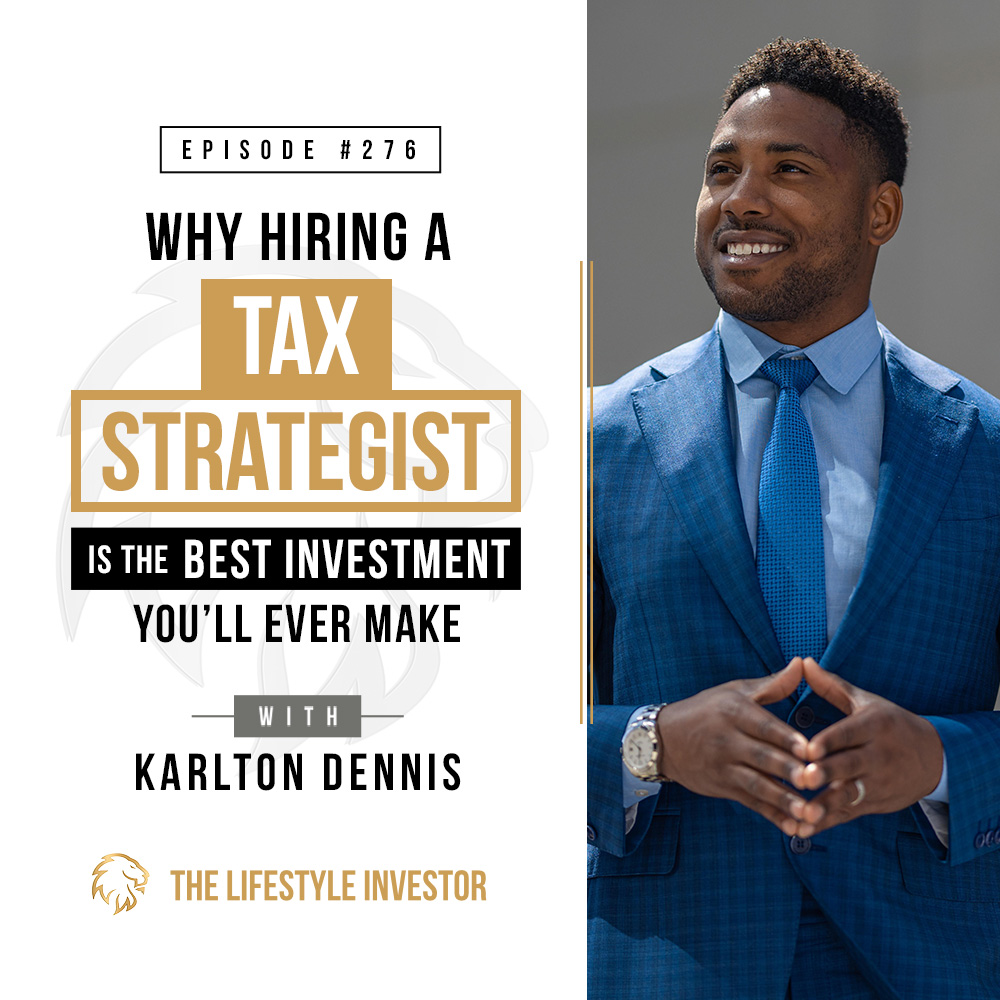
Why Hiring a Tax Strategist Is The Best Investment You’ll Ever Make with Karlton Dennis – EP 276

Building Passive Income Through Real Estate and Strategic Partnerships with Cory Jacobson and Ryan Bevilacqua – EP 275