![[Justin Donald] - Optin Preview](https://lifestyleinvestor.com/wp-content/uploads/2020/12/Justin-Donald-Optin-Preview-e1607533704966.png "[Justin Donald] - Optin Preview")

![Logo 1 Gold horiz [Converted]](https://lifestyleinvestor.com/wp-content/uploads/2019/08/Logo-1-Gold-horiz-Converted.png "Logo 1 Gold horiz [Converted]")

Interview with Devon Kennard
From NFL to Financial Freedom: How Devon Kennard Built an 8-Figure Real Estate Portfolio
Most pro athletes go broke after retiring. Devon Kennard isn’t one of them.
As an NFL linebacker turned real estate investor, Devon made the rare transition from W-2 income to building an 8-figure real estate portfolio—all while still playing in the league. Seeing how easily athletes could be replaced, he knew he needed a plan for financial independence before his playing days were over. While many players burn through their earnings, Devon took a different approach, learning to invest, creating passive income, and setting himself up for long-term wealth.
In this conversation, Devon breaks down how he navigated the world of investing while maintaining a demanding career in professional sports. He shares the biggest financial mistakes athletes (and high-income earners) make, why most people are underestimating their risk of being replaced, and how he built a diversified investment strategy that generates cash flow without requiring his constant attention.
Devon also explains the mindset shifts that helped him overcome financial setbacks and why learning from other people’s mistakes is the fastest way to accelerate wealth.
In this episode, you’ll learn:
✅ The biggest money traps that cause pro athletes and high-income earners to go broke, and the simple shifts that can keep you financially free for life.
✅ The 4 real estate strategies that helped Devon build an 8-figure portfolio while playing in the NFL—including the red flags to look for when vetting deals.
✅ How Devon escaped the W-2 paycheck cycle and built passive income while still working—and why waiting too long to start could be your biggest financial mistake.
Featured on This Episode: Devon Kennard
✅ What he does: Devon Kennard is a former NFL linebacker turned real estate investor and entrepreneur. After a nine-year NFL career, he built an 8-figure portfolio through single-family rentals, syndications, and private lending. He’s also the author of Real Estate Side Hustle and It All Adds Up.
💬 Words of wisdom: “When you’re playing pro sports, it’s in your face more than any other industry that you’re going to be replaced. Don’t buy all the things that you want today and put yourself in a position where you can’t buy them down the line.” – Devon Kennard
🔎 Where to find Devon Kennard: Website | LinkedIn | Facebook | Instagram | X/Twitter
Free Gifts From Devon Kennard
Key Takeaways with Devon Kennard
- How Devon Kennard Became a Lifestyle Investor
- The Hard Truth: You Are Replaceable
- Why Big Salaries Don’t Guarantee Financial Security
- Why Cash Flow is King
- Avoid Paying the “Stupid Tax” – Don’t Make THIS Mistake!
- Lifestyle Creep and Keeping Up with the Joneses
- Eli Manning’s Toyota Sequoia – a Story of Building Quiet Wealth
- Smart Spending Habits & The Power of Delayed Gratification
- The Setbacks that Led DK to Financial Freedom
- “Flipping Your Bag” and Building Wealth
- The 4 Real Estate Strategies That Build DK’s 8-Figure Portfolio
Inspiring Quotes
- “There are things that you want, but make sure you’re putting yourself in a position to live good forever, not for the moment.” – Devon Kennard
- “Don’t buy all the things that you want today and put yourself in a position where you can’t buy them down the line.” – Devon Kennard
- “When you’re playing pro sports, it’s in your face more than any other industry that you’re going to be replaced. I remember there’s games where maybe I didn’t play so good or I had an injury, so I had to leave the game early. And that next Monday they’re bringing in five guys at my position to replace me. You realize quickly that I’m not going to be playing in this game forever.” – Devon Kennard
- “One layoff, one economic shift, one bad decision from your employer, and you’re right back to zero.” – Devon Kennard
- “A lot of guys get caught up in investments that are going to pay off five, seven, ten years down the line… and then they find themselves in a position where they don’t have any income coming in.” – Devon Kennard
Resources
- DevonKennard.com
- Devon Kennard on LinkedIn | Facebook | Instagram | X/Twitter
- It All Adds Up: Designing Your Game Plan for Financial Success by Devon Kennard
- Real Estate Side Hustle: Four Passive Investing Strategies to Build Wealth Beyond Your Day Job by Devon Kennard
- Ryan Casey
- Eli Manning
- Chris Board
- Chris Pronger
- Pete Carroll
- Tom Coughlin
- Walter Payton
- Aaron Rodgers
Tax Strategy Masterclass
If you’re interested in learning more about Tax Strategy and how YOU can apply 28 of the best, most effective strategies right away, check out our BRAND NEW Tax Strategy Masterclass: www.lifestyleinvestor.com/tax
Strategy Session
The Lifestyle Investor Insider
Rate & Review The Lifestyle Investor Podcast
If you enjoyed today’s episode of The Lifestyle Investor, hit the subscribe button on Apple Podcasts, Spotify, Stitcher, Castbox, Google Podcasts, iHeart Radio, or wherever you listen, so future episodes are automatically downloaded directly to your device.
You can also help by providing an honest rating & review over on Apple Podcasts. Reviews go a long way in helping us build awareness so that we can impact even more people. THANK YOU!
Connect with Justin Donald
Get the Lifestyle Investor Book!
To get access to The Lifestyle Investor: The 10 Commandments of Cashflow Investing for Passive Income and Financial Freedom visit JustinDonald.com/book
Read the Full Transcript with Devon Kennard
Justin Donald: What's up, DK? So good to have you on the show.
Devon Kennard: Man, thank you for having me. I'm excited to be here. It's a long time coming for me. I've read your book and read a lot of your content, listen to the podcast so I'm glad to be here.
Justin Donald: I love it. Well, it's fun whenever I get a chance to hang with people that I admire and respect. And what you've done in pro sports as an NFL player is nothing short of incredible. In fact, we'll get into your story because your story is just outstanding. And I definitely want to talk about your book because I read that and your book was awesome. I learned so much about the pro-athlete world, just listening to the wisdom that you shared in that. So, I definitely want to get there, but I'd be remiss if I didn't spend some time saying you and I just hung out. We were just in Scottsdale, Arizona.
You really kind of pulled some strings and I don't know if it's official strings that you pulled, but you vouched for us and said, "Hey, I'm part of this PAC community,” a pro-athlete community where we teach people how to be better stewards of our money, invest better, make better decisions. And it's an honor to have been able to join you and hang out with 250, 300 pro athletes just a couple of weeks ago, and watch all the cool stuff that you guys are doing. Just the things you're doing to educate and to help and support these pro athletes, I think is incredible. And it was cool being in that space and just feeling the vibe, feeling the energy. It was really cool.
Devon Kennard: Yeah. That was our biggest event yet at PAC. And to be able to have you guys be a part of it, come check it out. And I'm really hoping we can get you more involved moving forward because the value you guys can bring to the room is incredible. And I think the Lifestyle Investor mindset is really something that athletes should kind of embody. And the investment strategies and all the things that you talk about, it fits the bill for us. So, trying to get more guys to bridge that gap and realize that and invest that way I think is critical.
Justin Donald: Well, you're doing the world some good, at least the pro athlete community, because you were able to get a book out to every single person that was in attendance there. And it's cool just knowing that the Lifestyle Investor brand is something you support that PAC’s excited about that is there to help the pro athlete community. So, really cool.
Devon Kennard: Yeah, absolutely.
Justin Donald: So, how did you get turned on to the Lifestyle Investor? How did you hear about me? How did you hear about my book, my podcast? Because you went deep and I'd love to know the story.
Devon Kennard: Yeah. So, to be honest, I feel like I was living the Lifestyle Investor mentality long before I found you but I was reading a ton of books and none of it really pertained to me completely. So, I was out there to gather the information and translate it into a way that really fit my lifestyle, what I was doing, how I wanted to invest. A good example is I'm a real estate guy. I own assets, I invest in syndications, and I'll read a book and it's talking about house hacking. And I'm not going to be house hacking anytime soon, if ever. So, I have to kind of take the information I'm learning from a book like that and say, "Okay. What's the knowledge I can take and how do I translate it?”
So, when I found you and your community, I read your book. I started listening to the podcast. I felt like it met me where I was at and in the situation that I was in. And it was the first time where I felt like instead of having to piece it together, it's like you're talking my language and I'm really starting to embody and it kind of sharpened what I was already doing. I was already owning assets, I was already investing in syndications, and I started to have a criteria for myself, what I am and am not looking for. But I felt like I was kind of in a desert island by myself figuring it out. Believe it or not, athletes aren't exposed to this kind of mentality, these kinds of investment opportunities.
And I was starting to be. But learning how to evaluate them, learning what a good deal, what a bad deal is, fee structures, it became overwhelming at times. And then meeting you and your community has kind of really bridged that gap for me. Okay. I'm not crazy. This is a good business model, a good investment strategy, and how do I refine my systems?
Justin Donald: Love it. Well, a real special treat that I want everyone watching this and listening to this to know is that you are going to be one of our featured guests at the upcoming live event, April 30th and May 1st here in Austin, and I'm thrilled to have you on our stage. I'm thrilled to interview you, do a fireside chat, get people exposed to an incredible athlete that was a W-2 earner, but you pivoted and became a lifestyle investor. You pivoted and created passive income in your life, which, by the way, is very rare for pro athletes, very rare for NFL players to do. But you found a way to do it while being an active player in the off-season and then figure it out even in the on-season. When it's go-time, you're still able to run it successfully. And so, I'd love to hear just some of your thoughts around transitioning from W-2 to passive income and becoming a lifestyle investor.
Devon Kennard: Well, you know what, when you're playing pro sports, it's in your face more than any other industry that you're being replaced. I remember there were games where maybe I didn't play so good or I had an injury, so I had to leave the game early. And that next Monday they're bringing in five guys at my position to replace me. So, when that's in your face like that, you really realize quickly that I'm not going to be playing in this game forever. So, it makes you kind of really look ahead and like, "All right, what is going to be my financial position when I'm done? How do I prepare for that?” And I always wanted to put myself in a position to where I can make the choice for myself. It's time for me to retire, and I could walk away from the game on my terms, not being dictated by the other side.
And my challenge to every listener is your job is the same way. If you're a W-2 earner, it's just not in your face like it is in professional athletes, but they're trying to replace you, whether it's with AI, whether it's with younger, cheaper labor, technology in general. So, when you have that mindset of, "Okay, I have this job, and even if it's a high-paying job, but they are trying to replace me with better, younger, cheaper, or just technology, so how do I start to prepare for myself and build a portfolio and start to passively invest so I can walk away on my terms and not on their terms?”
Justin Donald: That's a powerful message, and I think that for a lot of people, and you segue brilliantly between pro athlete, many cases high paying W-2 earner, and then just someone that's outside of pro athletics that is a W-2 earner, there's tons of similarities here. So, maybe it's not as overtly in your face that you could be replaced, you could be let go. It's funny to me because banks always want to see pay stubs and it's like, "Oh, your job is safe because you have pay stubs.” No, it is not safe. I would argue it is way less safe than an entrepreneur that has consistent cash flow, consistent income.
But what you've done, I think most athletes haven't, they don't know how, they maybe are afraid to do or maybe haven't thought that they're going to do it because, I don't know, they think that they're going to play forever. When in NFL the average contract is just barely over three years, right? Like 3.2 years, actually, the average time someone plays in the league.
Devon Kennard: Yeah, absolutely. And even if you're on the other side of that and you have a good career, you make $5 million, $10 million, $15 million. But the problem is what people don't understand is half of that is tax then you pay your agent 3%. And so, when it's all said and done, if you see a guy who made three years, $15 million, he really in the bank has $7 million of that, after all fees, everything that comes along with playing in the NFL. And $7 million, that's a good chunk of change but if you don't have any investments and you're just spinning that down and you're spending $30,000, $40,000, $50,000, $100,000 a month and you haven't created any passive income, you haven't built any wealth with that, it's a math equation at that point.
Even with that much money, you will run out. It's not a matter of if, it's when. So, when you kind of understand that concept and it's like, you know what, I talk about and really recognizing your target monthly spending rate and how much do you want to spend a month, and can you generate passive income through investments to offset that ideally completely, but at least partially? Can you make sure your main expenses are covered? And you get to that point, that is a freeing position for a lot of people.
Justin Donald: Yeah, 100%. And I think about, I mean, let's say you gave the example of 15 million down to 7 but let's say someone gets injured, not all that money is guaranteed. Let's say that someone just gets cut. I mean, that money is not guaranteed. So, you might see this contract and think, "Oh, they made 15 million.” No, there's agent fees, taxes. But a lot of this like they may not renew your contract. They may not extend your contract. There might be a lot in bonus dollars that you don't get because you don't make it to the playoffs or to the Super Bowl, right? And so, I think sometimes these contracts, they look so grandiose and people are like, "Oh, that's amazing,” but they are definitely papered in a way that is advantageous to the league or to the team, and not to the player, right?
Devon Kennard: Yeah, I think you and your community would appreciate this. Would you sign a contract where you have to abide by it 100%, but they don't? That's essentially an NFL contract. That example I gave three years, $15 million, what that looks like in the NFL it would be $10 million guaranteed. So, the first two years, the third year is not guaranteed. And if you're underperforming, they're probably going to cut you. If you're overperforming and you're probably worth $8 million, $9 million, $10 million, then they're going to try to force your hand and make you play for $5 million another year. So, they have all the flexibility and you have none. So, it kind of puts you in a position where you're in a tough spot.
So, I always tell guys, "Make sure you understand what your guaranteed money is and don't count your eggs before they hatch. So, if you signed a three-year $15 million deal and $10 million of it is fully guaranteed, you need to pretend that that's a three-year $10 million deal. And if you end up hitting that extra $5 million, then that's a bonus.” So, having that mentality is really important because now that I'm in business and looking at more and more contracts, I'm like the NFL contract is some of the worst contracts I've ever seen when it comes to that. And it's kind of eye-opening, to be honest.
Justin Donald: Yeah, there's no doubt. I would love to know other tips you have for pro athletes. You've seen so much at this point in time. I know you've given a few tips already. Are there any other things that you would say, "Hey, I want my guys to know this, I want my team, I want friends, I want anyone listening to this to know here are some other things to be aware of, or here are some other things to know on the investment side to protect you from making mistakes,” like you and I have made?
Devon Kennard: So, some of the biggest tips that I give guys is really being realistic with where they're at in their career and start to put themselves in a position to solve for their income. So, what I see a lot of guys do is they get caught up in investments that are going to pay off five, seven, ten years down the line. And one of the things you talk about heavily in your book is, can you get the cash from cash a return sooner in the investment. And a lot of guys are getting into venture capital and things like this where they hopefully 100X, but there's a large chance they're not going to get any money back or won't be for a long time.
So, what I see that happens is guys getting those investments, their career ends, and now they're in a position where I don't have any income coming in, and I'm waiting for all of these investments to pay me back. So, you get in a spot where you're like chasing or you're like waiting for that next deal to close. But now, as you know, especially in the multifamily space right now, you have a lot of deals that are capital calls and they're getting pushed out further. So, I know guys who are in a position where they're like, "Man, what do I do? I was expecting for my capital back. I was expecting a 15% to 20% IRR. Now, not only is that not happening, they're telling me I have to invest another $20,000, $100,000 into the deal to hopefully get it back.” So, I try to get guys to avoid getting in those positions by balancing out their portfolio and things that are going to cash flow for them when they retire, as well as the long-term investments as well. So, I see that being the biggest gap that guys don't understand.
Justin Donald: Yeah, I think that's so huge. And I even remember talking with one of the players at the PAC event who is about to wire money for an investment, and I kind of was digging in and I was like, "Well, tell me about this person. How long have they been in business? How long have they been doing this? What's their track record?” And it sounds like it's a brand new person who's never done a syndication before, and they're kind of like pressing him to wire. And so, the guy was kind of like, "Well, I think I need to get this wire out right now or today.” And my COO, Ryan Casey, who's been on the podcast before a couple of times, he and I are both like, "Wait, pump the brakes. Let's walk through this thing a little bit.”
And one of the gifts that we gave all the PAC members was our Vetting Deals course. It's a $2,000 course. We gave it for free and our Passive Income Roadmap, because we want all of the athletes to know there's a different way to do it and that there are certain things you want to know before you start investing. And there's a handful of things that are actually pretty easy to learn that if you just knew these five things, you probably won't make most of the investments that you make. And I'm glad that you're teaching this, you're informing people of the dangers of people that, A, have not been in the business a long time, don't have the experience, B, I guess what a huge risk I always see is when people have variable rates for their debt. They don't lock in long-term low-interest debt.
And there's a handful of other ones that I think are super important, but there's just a few that if you've got those down, it could be a game changer. And it could save you from losing hundreds of thousands or millions of dollars. And so, I'm glad that we're able to get that resource out to your community. But in the process, I'd love to know some of the mistakes you've made. I've shared tons over the years and I'm an open book but I found, I mean, I wish that I learned the best from making good choices. Unfortunately, I tend to make the best decisions or have the best learning opportunities for making bad choices and learning the hard way.
Devon Kennard: Yeah. So, I mean, I love talking about this because I've had a lot of wins and a lot of the deals I've invested in have gone exceptionally well. But I love talking about the one and the small handful that haven't because I really look on that and I learn more from those mistakes than I did from all the wins, all the times I've doubled or tripled my money and all that. Those times where you get punched in the gut, those are the ones that stick with you. So, there's a few. I'll tell the story in a couple of lessons that I've learned. So, I spoke on a panel with a guy who I knew a lot of people invested with, and he made a ton of money for a lot of people I knew. So, I had a little bit of FOMO.
And I didn't vet the deal as thoroughly as I usually do. I kind of have a process that I go through. It has to meet all my criteria then I send it to a couple of mentors I have who invest in deals as well, and I kind of skipped some of that, to be honest. And I was just like, "Oh it sounds about right. This is good. I know a ton of people who've made money.” And I did the deal and a year in, I find out through a capital call that he needs capital. But the issue was for the last eight months, he's been self-funding because he had a, I don't know what it's called, but a limit on the cap rate, but it expired. And all of a sudden, they didn't have that limit anymore and they were expecting the interest rates to go down. It didn't go down. So, it stayed high way longer than he expected.
And now on that deal, there was a capital call at the end of last year and they're already predicting another capital call. And this is to hopefully get your money back. This isn't even a guarantee to get your money back. This isn't even a lot of upside anymore. So, I refuse to put good money after bad. And I said I'm out on that deal. But it taught me a couple of very valuable lessons. Well, number one, a lot of people started buying up more assets than they should have because it was a hot time. So, there was a few year period where if you see a guy that went from 5,000 units assets under management to 10 or 15 within a couple of year period, for me, that's a huge red flag now.
And I didn't see it then, but now I'm looking at that and that's something I see because you're scaling and growing way too fast and you're probably using too much leverage, probably not the best leverage. There's probably a ton of mistakes that's going on. Another one that I highly recommend is a team that they work with repeatedly. So, I kind of be aware when they're changing property managers, they're changing contracting crews because now, are they going to be able to execute at the same level over and over when they're changing the team members and the contractors that they use? Is it going to be the same pricing? Are they going to finish as fast? When trials come and there's issues, will they solve it as quickly? So, those are two things that kind of stood out for me that I watch out for now that I didn't before.
Justin Donald: Yeah. It's dangerous if you're not buying an interest rate cap and you have floating rates. You want to lock in long-term fixed debt whenever, wherever possible and you have to limit the downside risk everywhere you can. So, I think these are invaluable lessons that you learned, DK. I mean, I'm glad you learned them, I'm glad you can share this, so a lot of people can learn them vicariously through you. I've made similar mistakes that have made me a much more astute investor. But I always tell people and I had someone that I learned from years ago that would always say that these bad choices that you make, it's the stupid tax and you want to limit the stupid tax, but the stupid tax also has been a great educator for me.
I wish I could learn so much more when things go right, but human nature really when you're on top of the mountain and things are going right, typically, you don't learn as much. You think you know more than maybe you know and I've been caught there in the past. So, I love that you're doing that, and I love that you're bringing financial literacy to people that you know, people you have influence with, and they need it because hard-working people, people that let's talk about pro athletes. Let's just talk about anyone in a W-2 job that's grinding away and puts a lot of hours into what they do. Maybe you're a business owner as well. Like, it's a lot of hours.
And so, the natural inclination, the natural tendency is to say, "Oh, well, this isn't where I specialize. Let me outsource this to someone else and let them handle all the finances.” But I think that's a huge mistake. And I learned the hard way on that where I trusted people I probably shouldn't have trusted. The whole financial services industry is built in just true misalignment. It's built in a way that people make money even if you don't make money. And so, I didn't recognize that at first. I was taken for money. I was kind of in a few different spots. Even with a financial advisor, kind of sold a bill of goods that wasn't the actual bill of goods, they still made money while I lost money.
And I just learned that I cannot outsource my financial education to someone else. It is imperative that I at least have a foundation of financial literacy, financial knowledge so that I can sniff out the bad apples, and so that I can make some simple decisions that are going to allow me, A, to make money and, B, not to lose money. And I'm curious your thoughts on outsourcing to a “professional” versus learning it yourself.
Devon Kennard: Well, I think the best way to learn is to learn from other people's mistakes. Like, we were talking about that stupid tax. You don't got to be the one that always has to pay it. Somebody else has already paid it. Like the story I just told, I hope that prevents a listener from making that mistake. So, the stupid tax has already been paid in that case. Make sure you don't repay it. So, that's a huge lesson that I learned and I like to network with people who understand these models, who understand how to look at these deals. And I kind of cherry-pick their ideas, their concepts, their criteria, and build out my own so I know what I'm looking for. It has to fit.
Like, for instance, for me right now, I break up my fast money versus slow money buckets. And my fast money is consistent income that's coming in and my slow money is tax-advantaged stuff and things that are going to pay me up for the long term, but maybe not going to cash flow great today. I'm more in my fast-money bucket right now because I want to replace my NFL income. I want to make sure I'm making enough money to sustain my lifestyle and allow me to continue to reinvest. So, as I'm looking for opportunities, if it's not going to give me a preferred return within a year or less, I'm not doing it right now because it's not helping me with what I'm looking for at the moment.
So, I think for every listener and when I'm talking to athletes is be very clear on where you're at with your financial journey and what you need right now. So, in the professional athlete world, I'm like, "If you're towards the end of your career, you need to start looking at fast money. If you're early in your career and you just signed a mega-deal and you're going to be probably in the league for a long time and things like that, maybe you're investing more in slow money.” So, for everybody listening, have that same mentality. If you're early in your career, you're probably going to be working there for the next 10 to 15 years. You can kind of invest more in slow money and, “All right. I want to accumulate wealth. I want to 2X my money. I want tax advantages.”
But when you get to a place where, "You know what, I want to quit soon. I'm ready to retire,” that was where you need to start to accelerate, “Okay. What investments can I be investing in that's going to give me a return on my money in a year or less, or two years or less in a shorter time period so I can have that income coming in?”
Justin Donald: Yeah. I always tell people financial independence, financial freedom, that absolutely eats net worth for lunch every single day. And to me, I'd rather have cash flow. I'd rather have that fast money coming in. So, even as a new athlete, it doesn't mean that you put all your money in slow money. But, I mean, I would still put a portion of it in fast money but certainly it's like we got to build this up. And we also have to be careful too because most people get caught in lifestyle creep. They get caught in keeping up with the Joneses and lifestyle creep. You make more money, you want more nice things, you do more cool stuff. Oh, your friend bought this really cool house or this nice car. You want one too, new clothes, new jewelry, whatever.
And I know that this is something that runs rampant in a lot of industries, not just in pro sports, but in a lot of industries. And it's funny, in your book, you talked about a story of Eli Manning. So, I actually had lunch with Eli Manning a few weeks ago and had an incredible time. Great conversation. The guy is one of the most humble people I've been around. For sure the most, you know, you and him are like the two most humble athletes that I've spent time with.
Devon Kennard: I appreciate that.
Justin Donald: And it was really cool. So, when you called him out in your story, it was like, "Oh, that's cool.” And I can totally see him doing that. I'd love for you to share the story of the Toyota Sequoia.
Devon Kennard: Yeah. So, when I was a rookie in the NFL, I decided to bring my high school car to the NFL. It was a humbling experience because we're talking a 2005 Kia Sorento beat down a little bit and I'm pulling into the practice facility and you're having Rolls Royces, Mercedes, all of these really, really nice vehicles and I'm pulling up in a 2005 Kia Sorento. And ironically enough, all these nice cars and probably the wealthiest guy on the team is Eli. And he has a Toyota Sequoia and he's just cruising in and he would lay the back seats down so he would have, in the off-season, he would have bags of football so he can go throw. And I'm just like, "Man.”
There's something I took from that to where there's something about quiet wealth. And he knew he had it, but he wasn't necessarily spending money that way and wasn't forcing it, and I really respected that. And that was one thing that kind of stuck with me on I'm going to put myself in a position to where I can do good and live good forever, not for the moment. And I say that a lot to a lot of guys as like, "There are things that you want, but make sure you're putting yourself in a position to live good forever, not for the moment. Don't buy all the things that you want today and put yourself in a position where you can't buy them down the line.”
Justin Donald: Yeah. I love that story and I just think it's so smart. I mean, even talking at the PAC event, there was a guy that was next to you. And I'm intentionally not using names because I don't want to throw anyone under the bus but I think the lessons are good. And one of the guys that I was talking to said, "Hey, I just bought this really nice $100,000 truck. And I'm now realizing, being here, hearing these stories, recognizing that I just spent all this money and it's a large percentage of my contract for the year on a depreciating asset, and I could get by with the used truck, or I could get by with something else.” And so, I love that it's sinking in. People are hearing it, the message is resonating. And what you're doing is making a difference inside the pro-athlete community.
Devon Kennard: And to that point, I really like to talk to guys about like the delayed gratification. Like, I don't want to make guys and anyone out there like you work hard. There are certain things you like, and it's okay to have a couple of vices. If you like to travel and you go on lavish vacations, cool. What I discourage guys from is having too many vices. You can't be a travel guy, a house guy, a jewelry guy, a party guy so you're in the clubs, and you start to stack those things up, and all of a sudden you're spending an insurmountable amount of money in all these different categories. So, kind of really find as you're having success and starting to invest, find the things that really matter to you and spend a little there if you've earned and you've done right, but cut back on the other areas, cut back on the things.
Like, for me, I enjoy to travel. I got two young kids. We like to travel all over the country, all over the world. I'll spend a little extra there, but I'm also not in clubs or buying a ton of jewelry because I don't value that. So, that's another huge message that I think people need to keep in mind. You don't have to keep up with the Joneses but decide what really matters to you and spend there and cut back everywhere else.
Justin Donald: Yeah, I love that. I think that's awesome. Your story is very inspiring. It's a small percentage. You probably have the stats of what percentage of people actually make it to college sports then to pro sports and even beyond 3.2 years, the average in the league. And any of those stats, please share them. I've had a handful of other pro athletes here on the show. I had Chris Board on the show who I believe you know. I've had Chris Pronger on the show. So, I love kind of hearing the stories, but I'd love to, A, hear your story along with some of the stats of how rare/unlikely it is to make it, and then, B, you encountered a lot of injuries that you had to get through, and I don't even know how you got through some of the ones that you had. I mean, my mind was blown on one of your injuries, I think. Was it your pec injury?
Devon Kennard: Oh yeah. Yeah.
Justin Donald: So, tell us a little bit about your story here.
Devon Kennard: Yeah. So, kind of my background I'm a second-generation NFL player. My dad played 13 years in the NFL. So, I knew I always wanted to play in the NFL. And coming out of high school I was a top-five recruit in the entire nation, had offers to go anywhere, and my senior year I tore my ACL. I end up going to USC. I went with Coach Carroll, but he left after my freshman year and I went through a 4 or 5-year period where I faced a ton of adversity. I started with my ACL my senior year of high school then I had a grade 4 microfracture in my hip and they had to shave bone. And that was a big surgery. Then I tore the pec off the bone benching 435 for five reps. I don't know why my strength coach was making me do that, but on the fourth rep, I went down and it tore off the bone and I had to get surgery.
Then I tore a labrum in my shoulder. So, I've had a total of six surgeries, and most of those surgeries were while I was in college. So, I went through bouts of depression, frustration, anger because I had this path where I was going to make it to the NFL and I'm going to like be just like my dad. And a lot of those years, it didn't look like it was going to happen, but it made me ask myself a question, do I want to be successful because of football or do I want to be successful no matter what? And it's ironic that that time period of my life, it was what led me to real estate. I met a mentor and he showed me what he was doing. And I'm like, "If he's able to do that, I can do it too.”
So, I told myself, if I make it to the NFL, I'm going to get into real estate. And that's pretty much what I did. But a funny story on delayed gratification for the audience is that time period I went through in college where it looked like everything was falling apart, I was depressed, I was angry, it really prepared me for what my life looks like today. Because of learning about real estate and diving in and networking, that's some of my strongest suits. I had an advantage because I really learned that stuff and I really started to network and build relationships. But also on the football field, I started studying more and really working on my body and all of these things.
And when I got drafted, Tom Coughlin was the head coach for the New York Giants. And I sat in a meeting room with other linebackers at my position, and the defensive coordinator drew up a play and it was like, "This is the play.” He drew up everybody on the defense. He erased it and asked me to come on the board and like draw it back up, tell me my position, what I would do, just talk shop a little bit. But because in college I watched so much film, I changed positions, I really kind of gained enough knowledge to where I understood what everybody did. It was a cover-three football scheme. I started to draw like route formations from the offense, running formations, all of these different things and they left really impressed.
And when I got drafted, Tom Coughlin said that was one of the most impressive board talks he's had with a player coming out in a while and that's what made me get drafted. So, I'm like all those shortcomings that I went through, it prepared me for that moment and gave me an opportunity to not only have the career, nine-year NFL career, Walter Payton Man of the Year nomination, which is probably my most proud moment and it put me in that position, but also off the field with networking, because now I knew football is working out for me, but I’ve seen what it looks like without it. I'm going to start to invest and prepare for when football is over.
So, I would say that time period in my life, in the moment, it seemed like the worst thing in the world for me, and it turned out to be the biggest blessing. So, anyone out there going through tough times, whether it's financially, whether it's career-wise, whether it's personally, if you keep working in those moments and keep bettering yourself, you might be thanking yourself down the line for those tough times.
Justin Donald: That's a beautiful story. And you just love how the chips fall, like when you see the whole story. Once the story is complete, it's so amazing but inside the shortcomings and the failures, it can get really tough, really depressing. So, it's cool seeing how you're really good with your mindset because you're able to shift and say, "Well, how can this serve me?” instead of like the opposite of playing a victim. Now, you mentioned the most impressive thing to you that kind of tops it all was the Walter Payton Award. And I grew up in Chicago, so I'm very familiar with Sweetness. I actually got a chance to spend some time with him. So, I met him, got a chance to shake his hand.
Actually, at one point in time, early on in my career, I won an award and he was able to hand me the trophy at an event, which is really cool. So, he's always been one of my favorite pro athletes of all time, and he was a great man on and off the field, a wonderful human being. So, how cool is it that you were able to win that? I love that that was your greatest achievement.
Devon Kennard: Yeah. That's a high moment. Everything I accomplished on the field, the contracts I was able to sign, the sacks that I made, the games, that's probably the thing I'm most proud of. And it revolves around what we're talking about today. There's a lot of athletes going to youth, and they're talking about sports and stuff. And my passion is talking to people about real estate and business and helping kids. Not every kid's going to make it to the NFL, and helping kids realize, "Hey, there's other ways to reach success,” and it was kind of shocking to them.
I just had a sack in the game on Sunday and it's Monday, our off day, and I'm sitting with them talking about, "Hey, what are you interested in? You should look into business or financial literacy. Do you know what a checkbook is?” They weren't getting conversations like that from people like me. And that was a passion while I played. And that's what I spent my time in the off-season and in-season on my off days, doing in the community. So, to be recognized for that in the work that I was able to accomplish off the field, it's something I hope I was able to impact lives because that's what matters most.
Justin Donald: I love that, DK. That's a cool story. And by the way, as impressive as it is to impress the great Tom Coughlin, winning Walter Payton Man of the Year, like that's it, man, what are you doing off the field that is making a difference? And by the way, I know your faith is really important to you. It's super important to me. It dictates a lot of the decisions that I make and the things that I do. But I have to imagine there's a driving force from your faith that kind of lends to really helping people, maybe in a less fortunate situation than you. Would you agree?
Devon Kennard: Yeah, absolutely. I mean, I feel like especially call a spade a spade, being an African-American and an athlete. I've read all the books. There's not many people who look like me talking about the stuff we're talking about today, younger black men who play sports. But I have a passion for it and I don't try to act like I know every single thing, but I actively consume a lot of information. I practice what I preach, I really invest, I've really built a portfolio, and I want to share it with as many people. A lot of people wait until they're at the top of the mountain to talk about it, and I feel like I'm in the middle of my climb, and I want to share and help as many people along the way as I can.
Justin Donald: I love that, yeah. That's awesome. You've got two books and I got a chance to read one of them. I haven't had the chance to read your second one yet, but I am excited to read both of them. One, I want you to talk a little bit about them. One of the phrases that you said throughout the book that I love is ‘flipping your bag’ and I'd love for you to elaborate on what that is and just tell us about your books.
Devon Kennard: Yeah. So, my first book was It All Adds Up and it kind of tells the background of my story, a lot of stuff we kind of went through today but why I kind of have the frame of mind that I do when it comes to finances and investing. And flipping the bag is really a concept that I started to think of, and what I would tell myself of, like, you can't control the cards you've been dealt in life, but what you do with them, you can. It's all about what you do with what you got. So, flipping the bag is all about that like whether it's a parable in the Bible. One guy was given one bag and the other guy was given two, one guy was given five. And the guy with one buried in and did nothing and the other two, they went and made it into tenfold.
And it's like you don't want to be the person with one bag, not because he only got one bag, but because he did nothing with it. So, wherever you start in your life, wherever you're at today, it's the mindset of flipping the bag in your life and turning 1 to 2, 2 to 4, 4 to 8. And that's the kind of the mindset that I try to have is I want to flip the bag in my life every day in all aspects of my life and see where it puts me when I'm 70 or 80 years old but I'm confident I'll be in a much further place by having that mentality. So, really, I think that was kind of the premise of the book is getting people to really have that mentality and reaching a lot of the things that I've even learned from you in helping people, alright, translating that to people in the demographic that I can reach and allowing them to see, "Hey, I can achieve that as well.”
Justin Donald: That's awesome. Tell us about your second book.
Devon Kennard: Yeah. So, my second book is Real Estate Side Hustle. And honestly, you're probably going to like that one even more because that's post-reading Lifestyle Investor. And it really kind of developed into the concepts that I really believe in on the best ways to invest passively while you have a career. And the four different categories I talk heavily about is buying properties on your own, primarily single-family and smaller multifamily. You can hire property management. You can put the team in place, the processes in place to where you can focus on your job but still build a portfolio. And I did it while I was playing.
The second one is syndications and funds and how to invest, how to vet those, what to look for, what they are because a lot of people don't even know what they are. But it's a great opportunity to invest passively and get the upsides and still get tax advantages and growth and all these different things. And a lot of people either don't even know what they are. And if they do, they don't know how to underwrite them. They don't know what a good deal versus a bad deal is. So, I talk a lot about that.
And the third one is private lending, which I know you talk a lot about with private credit. And I know you believe in and have invested in but I think it's a great vehicle, especially for those who want fast money and to be able to replace that. And that's essentially lending out money. I lend to investors who are in real estate. So, it's asset-backed but you can lend almost on businesses, really anything, but I prefer asset-backed lending and you can charge really high interest, double-digit returns and get a really good cash return.
And the fourth one is commercial real estate. There's people who go out. I think you do mobile home parks so you can go and buy that on your own, bigger commercial properties, so evolving into that. But with all four, we really dive into what are the team and the processes you need to put in place and then the software as well, so that you can invest in these four different strategies and still keep the main thing, the main thing. And a lot of people think it's not possible, especially in my space where I'm trying to sack Aaron Rodgers this week. How am I going to be focused on what syndication to invest in? But I really break down how the processes I put in place in the team that I had in place that allowed me to only work five or so hours a week during season and ten hours a week in the off-season but I was still able to build an eight-figure portfolio in all these different avenues.
Justin Donald: Well, that's amazing. I love those four categories. I think it's awesome. Your comment about, “I'm trying to sack the quarterback.” When I met you in person, I was like, "Wow, I never want to be sacked by a guy of your size and strength and I can't even imagine. A whole bunch of the other guys I was hanging out with I'm like, “I am glad I'm not a football player because that would scare me half to death trying to run away from someone.” I mean, I feel like I'd be the worst quarterback. I'd just be spiking the ball.
Devon Kennard: Yeah. Some of the other quarterbacks are pretty brave because the guys that's hitting them, man.
Justin Donald: Oh, my goodness.
Devon Kennard: It’s no joke.
Justin Donald: Well, I'll tell you what, you are the full package. We've had a chance to hang in-person. I've gotten a chance to see your heart. I hope people have gotten a chance to learn more about you. If you want an awesome read, pick up both of DK's books and get to know him, get to know some of his methodology. And, DK, I'll tell you what. You know the language, you speak the language, and I think there's going to be a day and time and a place where you're going to be, you know, the timing is going to line up for you to join the Lifestyle Investor mastermind, like many of the other listeners and many that have come before you. And I look forward to that day because I think you'll be a great value add to our community. And I have no doubt our community will add a ton of value to you, too.
Devon Kennard: Yeah, absolutely. And thanks, Justin. I appreciate it. It's been awesome. I'll come back on any time and I'll be seeing you soon.
Justin Donald: Love it. Where can people find more about you?
Devon Kennard: I'm on all social media, @DevonKennard. My website’s DevonKennard.com so you can find me there as well. And my books are on Amazon and anywhere you buy books so it's Real Estate Side Hustle right there and then It All Adds Up.
Justin Donald: Awesome. Well, I highly recommend checking out both and getting into DK's ecosystem, learn what he's up to. If you're a pro athlete and you're listening to this, I really highly recommend that you connect with DK, get to know him, spend some time with him, and I really look forward to doing some more work with the NFL community and all pro athletes. So, thanks again for that partnership, DK, and looking forward to doing a lot more together.
Devon Kennard: Thanks. Thanks for having me again, man.
Justin Donald: Well, I love ending every episode with a question for our audience, and it's the same question each week. But what is one step you can take today to move towards financial freedom and really move towards living a life that you desire on your terms so not like most people living a life by default, but rather a life by design? I hope you can grab one nugget here from DK, one of many, but at least one that can move you towards financial freedom. Thanks! And we'll catch you next week.
Sign up to receive email updates
Enter your name and email address below and I'll send you periodic updates about the podcast.
Keep Learning
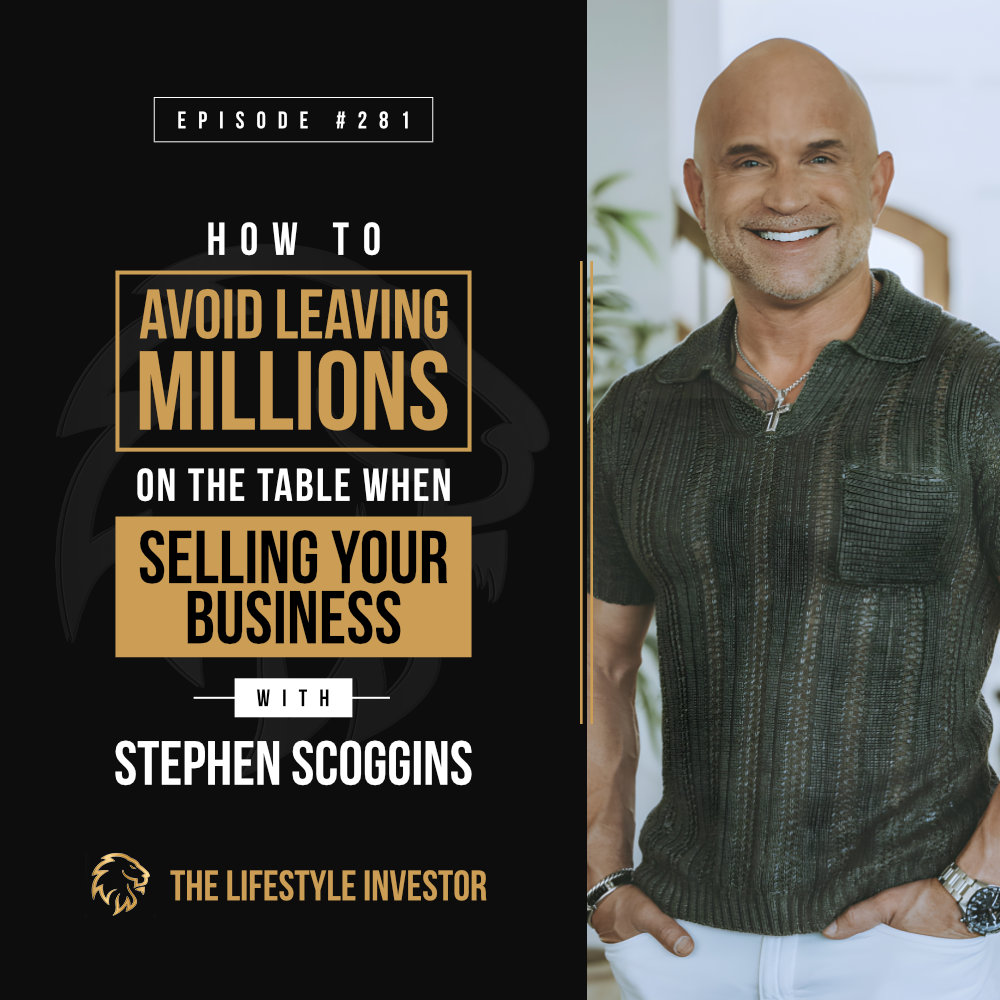
How to Avoid Leaving Millions on the Table When Selling Your Business with Stephen Scoggins – EP 281
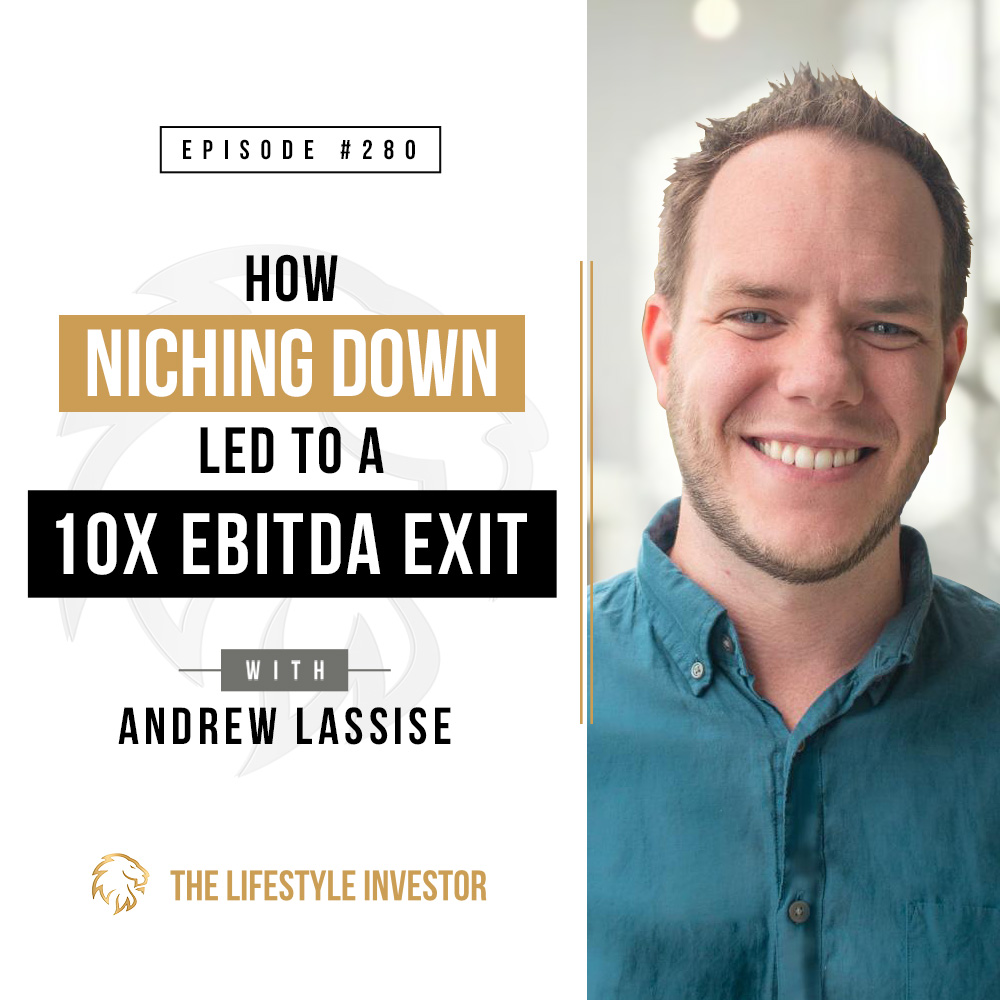
How Niching Down Led to a 10x EBITDA Exit with Andrew Lassise – EP 280