![[Justin Donald] - Optin Preview](https://lifestyleinvestor.com/wp-content/uploads/2020/12/Justin-Donald-Optin-Preview-e1607533704966.png "[Justin Donald] - Optin Preview")

![Logo 1 Gold horiz [Converted]](https://lifestyleinvestor.com/wp-content/uploads/2019/08/Logo-1-Gold-horiz-Converted.png "Logo 1 Gold horiz [Converted]")
Interview with Cory Jacobson and Ryan Bevilacqua
Building Passive Income Through Real Estate and Strategic Partnerships with Cory Jacobson and Ryan Bevilacqua
For many professionals, the traditional path of investing in 401(k)s and IRAs and waiting until their retirement date, while trading time for money, eventually raises a difficult question: Is there a better way?
Today’s guests discovered that by leveraging real estate and strategic relationships, they could build passive income while enjoying the perks of their 9-5 jobs and now teach others to do the same. Rather than chasing shortcuts, they focused on building a foundation that created options using hidden wealth hacks and money habits self-made millionaires use.
Cory Jacobson and Ryan Bevilacqua are real estate investors, entrepreneurs, and hosts of the Wealth Juice Podcast. Through strategic partnerships and documenting their journey publicly, they’ve built a growing real estate portfolio while helping others take their first steps toward passive income and financial independence.
Cory and Ryan unpacked the mindset shifts, relationship strategies, and long-term thinking that helped them move from early investments to scalable opportunities—while staying aligned with their purpose, lifestyle, and financial freedom goals.
In this episode, you’ll learn:
✅ Why financial freedom is less about early retirement and more about creating optionality.
✅ How strategic partnerships, masterminds, and relationships accelerate growth faster than trying to do it on your own.
✅ Why building in public creates leverage, credibility, and unexpected opportunities.
Featured on This Episode: Cory Jacobson and Ryan Bevilacqua
✅ What he does: Cory Jacobson and Ryan Bevilacqua are real estate investors, entrepreneurs, and co-hosts of the Wealth Juice Podcast. Through real estate investing, partnerships, and coaching, they help professionals and investors build their first—or next—rental property while creating long-term financial freedom, community, and lifestyle flexibility.
💬 Words of wisdom: “We started googling how do you become rich? How do you become passive income rich? How do you build streams of income? And for Cory and I, all roads led to real estate.” – Ryan Bevilacqua
🔎 Where to find Cory Jacobson and Ryan Bevilacqua: Wealth Juice Podcast | Instagram | YouTube
Key Takeaways with Cory Jacobson and Ryan Bevilacqua
- The FIRE Movement Inspires Them To Dream Bigger
- How Frugality and ‘FIRE’ Create Limiting Beliefs
- Scaling Faster Through Strategic Partnerships
- How Masterminds Compress Time Horizons
- Turning Curiosity Into a Networking Superpower
- The Best Feeling? Helping Others Succeed!
- Creating Coaching Opportunities From Your Experience
- Why the Goalposts of Success Are Always Moving
- One Step Toward Financial Freedom
The Anti-Ego Secret to Winning in Business
Inspiring Quotes
- “You’re not getting the magic key to unlock the ultimate kingdom when you get into a mastermind group. You’re not going to learn every single thing you need to know by going in, and someone’s not going to put it in front of your face. You have to work for it.” – Ryan Bevilacqua
- “Stop trying to be the person that’s the most interesting. Be the most interested person.” – Cory Jacobson
- “If you’re struggling or you don’t know what network to join or you’re going to make an impact, stop focusing on yourself and what you’re good at and start amplifying the voices of others. And before you know it, people will want to be in your presence.” – Cory Jacobson
- “There’s a quote, and I think it’s the scarcity mindset growing up. Curiosity killed the cat, right? But it’s really curiosity that crowned the king.” – Ryan Bevilacqua
- “Everybody wants to be around people that were so curious and made other people feel good. They don’t remember what you do or say. It’s about how you make them feel.” – Ryan Bevilacqua
- “Money’s amazing. And let’s be honest, we all want to make money. I’m not going to sugarcoat that. But making the impact and watching somebody that was a couple of steps behind you do what you did previously because of the efforts that you helped them, that’s a pretty cool thing.” – Cory Jacobson
- “At the end of the day, if you’re not enjoying the process and doing something that you really enjoy doing in order to get there, then you’ve sold something in your soul for a monetary value that you’re going to look back and regret one day.” – Cory Jacobson
Resources
- Wealth Juice Podcast
- Wealth Juice on Instagram | YouTube | X/Twitter
- Cory Jacobson on LinkedIn | Instagram
- SparkNotes
- The ESPYS
- Damar Hamlin
- Hard Knocks
- Tom Brady
Want My Team’s Help?
- Tax Strategy Masterclass
Learn the 28 most effective tax strategies the wealthy use to save thousands.
lifestyleinvestor.com/tax
- Free Strategy Session
Get a personalized roadmap to financial freedom.
lifestyleinvestor.com/consultation
- Lifestyle Investor Newsletter
Join The Lifestyle Investor Insider for curated investing insights.
lifestyleinvestor.com/insider
Rate & Review The Lifestyle Investor Podcast
If you enjoyed today’s episode of The Lifestyle Investor, hit the subscribe button on Apple Podcasts, Spotify, Stitcher, Castbox, Google Podcasts, iHeart Radio, or wherever you listen, so future episodes are automatically downloaded directly to your device.
You can also help by providing an honest rating & review over on Apple Podcasts. Reviews go a long way in helping us build awareness so that we can impact even more people. THANK YOU!
Connect with Justin Donald
Get the Lifestyle Investor Book!
To get access to The Lifestyle Investor: The 10 Commandments of Cashflow Investing for Passive Income and Financial Freedom visit JustinDonald.com/book
Read the Full Transcript with Cory Jacobson and Ryan Bevilacqua
Justin Donald: What's up, Cory? Ryan, good to have you on the show.
Cory Jacobson: Hey, thanks for having us, Justin. This is awesome.
Ryan Bevilacqua: Yeah, exciting to be here.
Justin Donald: Well, it's going to be fun. Yeah. Well, we just had a chance to spend some time on your show, on the Wealth Juice Podcast, and it was really fun. You guys do a great job interviewing, and obviously, you have a top 1% show as we have here with the Lifestyle Investor. So, I know you guys are up to good things, and we figured out off-air, let's see about an hour ago that we kind of started our podcast at the same time. So, it's cool to see what you guys have been able to build and the way that you've been able to level up your businesses.
Cory Jacobson: Thanks, man. We appreciate it. The podcast started pretty much out of nowhere, literally two weeks after the world shut down in COVID. I'm just glad we stuck with it as long as we have and we're just getting started, so thank you.
Justin Donald: Yeah. Well, it's fun because I feel like we're cut from the same cloth. Like, we have very similar beliefs about passive income, about financial independence, finding true financial freedom. There are different ways to get there, and I like being able to explore the way that you guys have done it and the way that you're helping other people do it. You guys are seasoned business owners, you're investors, you're entrepreneurs. But also, you've been able to embrace kind of the W2 as you've built it, at least in one of your cases, and maybe it's in both your cases. So, I would love to hear just some of your thoughts, just on passive income in general, how you got to where you are today, and really like the keys that have helped you create that financial freedom in your lives.
Cory Jacobson: Yeah. So, Ryan typically likes it when I tell our inception story, if you will, because it started seven years ago, 2018, and I was working for, actually, Ryan and I worked for the same company, and I was making a whopping $35,000 a year, and I was 26 years old. So, I was probably making what I was worth, honestly, not really complaining. It was just that's what it was. And I realized we actually lived together. Ryan and I had known each other since college, and we came home from work every day, and we were thinking, “Hmm. Is this it? Is this really like what we went to college for? Like, are we just going to do this for 40 years? There has to be more.” So, we discovered the FIRE movement, and that started with like, “Hey, live below your means, financial independence, retire early, figure out a way to create enough passive income that you could live the life that you wanted to live.”
And Ryan and I decided that we wanted our life to be a little bit bigger than FIRE, right? But what was the best way for us to get there? The story that I tell is that my boss, who was going to offer me maybe $40,000 or $42,000, and he said, “I want you to stay here with this company, but I can't pay you too much more. So, you know what you should do? You should buy a five-bed, four-bath, and rent out the bedrooms to individuals in our company who work here, all 23, 24-year-olds.” So, I didn't exactly take his advice, but I bought a three-bed, two-bath. I lived in one bedroom, rented out the other two bedrooms. I was able to live for free.
So, for the first time ever, that $35,000 became a little bit nominal, and I was able to save cash. I stacked up some cash over 18 months. I bought a rental property. Cashflow, $300 a month. I did everything wrong. All the mistakes. It was raining inside my house, day one. You name it.
Justin Donald: Oh, man.
Cory Jacobson: But I say this to say that $300 a month in cash flow didn't free me from anything. What it did was allowed me to hold onto the property long enough, where I could exit and take $100,000 profit in three years. So, I wasn't able to save up $33,000 a year for three years. That $100,000 exit allowed me to move into other assets. Ryan and I started partnering up. We started our podcast social media platform and our real estate company at the same time, and we started buying properties together and just documenting our journey as others would follow along this building public type vibe, if you will. And we just wanted to be those guys that you could trust that were, "Hey, we're doing it with you.”
We're not trying to teach down. We're doing it with you. That's at least the beginning story. I didn't touch too much on the passive income stuff. I don't know if Ry has anything to add there.
Justin Donald: Anything you want to add, Ryan?
Ryan Bevilacqua: No. I think Cory pretty much covered it there. If you want to dive deep, ask questions on it specifically, but I like when he tells the inception story. I guess, you know what, I will add one little anecdote here. I think the cool part was I think everybody, or at least listening on our podcast, is beginner stage investors, right? And then they're working nine to five, you're like, "How do I get into passive income streams?” We started googling, right? How do you become rich? How do you become passive income rich? How do you build streams of income? And for Cory and I, all roads led to real estate, and that's where he started investing in real estate, not only from his boss that mentioned it to him, but it was all the other indicators online.
90% of millionaires had made up of those who invest in real estate. So, we were always interested in it, but I saw him pull the trigger. He mentioned the house hack that he did. He bought another duplex. And I was like, "Cor, we've talked about this for years, and you bought one. I'm in. Let's partner together. I'm happy to pull my capital with yours. We can split the risk here. I'll help you run the business.” And we just kind of delegated to each other, like you run your… One's the visionary, one's the integrator, and like, let's separate these roles and how can we divide and conquer? And so, it started, really, that was our story.
And then we leveraged the capital from our W2s to scale up, and we went from probably one to eight units together, 50/50. And then in order to get from 8 to 80, that's when we started bringing in partners, leveraging the power of social media, documenting the journey, and then our skill sets and kind of marrying those together to find the perfect partner.
Justin Donald: Yeah, I love it. And you mentioned early, Cory, the FIRE community. And for those of you that are unfamiliar, it's the Financial Independence Retire Early community, and I think there's a lot that they do great, and I think they can help a lot of people get on their way. And I really enjoy the fact that they've kind of had this movement where they've helped and rescued a lot of people, but I have a big disagreement that I think inside of that community, there's almost this scarcity type of mindset or this minimalist mindset of like, “I can't really spend money on things. I can't spend money on the things that I necessarily want. I need to be so frugal with my dollars.” And so, that would be kind of like the U-turn that I would take, where my whole thing is, what does an ideal life look like to you? And then how much does that cost? And then how do we get there?
So, I do think that being frugal can serve you in many ways early on, and I really hope people can figure out how to take that first step. But I actually think being frugal is the enemy of where most people want to go eventually, because being frugal is going to limit your ability to live an epic lifestyle and live life on your terms, and be really creative in the things that you do with your family in your business. And so, being frugal served me very well in a season of my life. But I had to get past that scarcity mindset of getting everything for the cheapest price and not splurging on anything, because that was actually holding me back from where I wanted to go. And so, instead of trying to hit this minimum number of passive income, it was, let's figure out what it costs to live an epic life, and then let's buy assets that support living that epic life.
And so, I think it's a great way to get started, but it sounds like you guys have moved on, and I would love to hear more of your passive income journey, kind of what that looks like today, what it was along the way, and maybe even where you still aspire to go.
Cory Jacobson: Yeah, absolutely. I think just touching on the frugality aspect, I think that if people realize that there's seasons of life and that there's seasons of your journey, and you don't have to be ideologically stuck into this is how I live my life at all times, right? So, in the beginning, the thought process is, "Hey, I got to make $100,000 and I'm going to live off 50. I want to make $150,000, and I'm going to live off 50. I want to make 175,” you get the point, and live off 50 for a period of time in your life, and there's seasonality to your life. So, what real estate started to do for us is it allowed us to get into a space where, "Hey, the rental properties were starting to pay for themselves at least. We were getting cash flow in that was coming from these.”
And then Ryan and I would figure out strategic ways to partner with people who were a little bit better than us. We built a following because people like following along in our journey. And then the larger deals started to come. So, we partnered on a seven-unit project in the Pocono Mountains that is a short-term rentals like little cabins, 43-unit project that is like a boutique hotel, also in the Pocono Mountains that we run out of short-term rentals. And our most recent two projects are an 18-unit Section 8 in Manchester, New Hampshire, with a partner, and then a 10-unit in Quechee, Vermont, up in our northeast section, with a partner as well, that we're general partners on.
So, people started to know, like, and trust us, and they said, "Okay, guys, we've seen what you've done. You've risked your own capital at a certain point. Now, maybe there's an opportunity for us to get bigger and grow faster, rather than us saying, “Hey, let's just buy many single-family homes into duplexes as we can.” We figured the best way for us to grow was to leverage our skill sets, which was investor relations, marketing, underwriting, understanding how we can partner and put puzzle pieces together to make sure that the deals went strategically the way that we wanted them to when our partners needed the money, and we needed the operational boots on the ground.
So, the passive income aspect came from, “Hey, let's create equity on our own properties so we have enough money that we can then sell them or 1031 and exchange that into these larger projects because we all know that the appreciation at 3% to 5% on a $300,000 asset is great, but that's really great on a $2 million asset or that's really great on a $5 million asset.” So, we leveraged and played real-life Monopoly for a little while. And I will tell you, Justin, we have a lifestyle that is baseline from our passive income. Ryan and I are not exorbitantly wealthy from our passive income, but what it's done is it's allowed us to have optionality in the work that we do. Ry still maintains his W2 job because he loves it.
I left my W2 job a year ago to pursue our mentorship program and our real estate business full-time because of the foundation that we set when we were in our late twenties, and now we're in our early thirties. So, what it did for us is like, I still feel like we're in this massive growth phase. Like, we're just scratching the surface of what the passive income can do. But now I can look through a different lens, talk to people like yourself who are 20 stages ahead of us, and understand, "Okay, this is how these people think. And the only reason that we're in the same room as you, the only reason that's even possible is because we built in public and started to document our journey and then shared the stories of other people and organically network with people who are a few stages ahead.
And that's why we love to do what we do is really just to get in the rooms. You wouldn't talk to us, Justin, if we didn't have a podcast. And then I mean no disrespect by it, but your time is very valuable. And now, we have a mutual understanding of like this is how we network, especially in COVID, because no one was leaving their house, so that's why it all came to be.
Justin Donald: Well, I love that. And by the way, I think it's brilliant the way that you guys are leveling up through networking, through partnerships. I want more people to understand that that's really the path. I mean peer groups and mentorship in terms of actually like hiring coaches with expertise that have been there, done it for 20, 30, 40 years, that's who I mean when I say expert. And then masterminds, like that's changed the game for me. And so, I know you guys have been on this path and on this journey. I'd love to hear your thoughts on masterminds in general and kind of leveling up.
Ryan Bevilacqua: Yeah. I'll take this one, and then Cor can jump in. So, Justin, I'm so bullish and a big believer in masterminds and getting around a collective group of individuals all pursuing the same thing but also filled with people that have done what you're looking to do at a very high level, because then you're just shrinking your time horizon to get to that level of success. You don't have to read all the books, listen to all the podcasts. Try to synthesize all the information that's out there, build yourself a roadmap, and then take the step, right? The roadmap's typically already built. When you go into these mastermind groups and these programs, typically, they have the treasure map for you, right? And the X is at the end of the tunnel.
And you follow this. You mentioned something in the beginning of the podcast, I think that is very important to highlight, and you mentioned something about frugality. This is where people stop, and this is the stopgap. People will invest in assets that they can tangibly see the ROI on them, and they're like, "Okay. I understand the single-family, the cashflow that comes with it, the leverage, depreciation, all these things.” But you can't fully put a number and quantify what you get out of a mastermind group. And they are like, "That's it. I've heard these people. Some of these are a scam. I don’t know if this person's legit. It's so hard for me to see if this trust factor I can break through and really believe these people. Have they done what they say they're going to do?”
And that stops a lot of people from moving forward. And that's going to stop a lot of people from living the big life. And so, for us, Cory and I had to kind of talk to each other and talk each other through this. We were lucky that we had each other, and we said, “Hey, listen, man, like we have a very big real estate portfolio. We have a ton of money in the ground. We have some cash flow coming in. However, to get to the next level outside of organically networking with people for an hour a week, how do we put each other in their worlds? What are we lacking right now?” And we started at the very basic level. How do you build a funnel? How do you run ads? And this is for some things on social media platform. How do you grow social media following? How do you become relevant? How do you stay relevant? How do you organically network? How do you provide value without just throwing dollars at people?
And so, all these things, and you also can't forget, by the way, balancing your family life, your social life, all these things. So, we could find groups that do this all, or ones that are specific in a lane that you're really dire in. I think it's worth pursuing. And so, my point is Cory and I have spent well over six figures in coaching and mastermind groups and putting ourselves around people, and we talked about this when you were on our podcast, but there's this laddering effect where the first group you join for $5,000, it teaches you something and then you realize, "Okay, I've outgrown this group, I need something else.” Then you spend $10,000. And you spend 20, 30, 40, right? The biggest I think we spent together collectively was like 50, 25 each. And that was a lot for us.
Like, we're in our early thirties, if you will, just out of corporate life. And so, it's just a strange thing. “Wow, I'm going to spend a full car on investing in myself, and not sure what I'm going to fully get out of it.” It's blind faith trust, but the vetting process you've gone through, through the other groups and word of mouth. So, there's a lot there. But my point is I'm so bullish on this, and I truly believe that this is what has allowed Cory and I to get to the next level of our lives. We also had a cheat code built in where we started this thing as a podcast, as a way to organically network and get people that we were reading the books that they wrote onto our show to network with them. They give us the SparkNotes. We go take that information and immediately take action. Don't wait.
We found that people that are the most successful, they take the information. They don't know if this is going to work 100% percent. They go, they try, they implement, doesn't work. Pivot if it works, keep going. I know that was a lot. I'm passionate about it. I truly believe Cory and I have been able to 10X our portfolio through social media, building a personal brand, but also through collectively putting ourselves around people that have done what we've wanted to do at a very high level, and we were willing to pay for it.
Justin Donald: Yeah, I love that. And you're so eloquent in your description of it, and even just the whole idea, the concept of outgrowing the group that you're with and making sure that you're continuing to level up, right? So, you did a brilliant job of explaining that because there are groups that are great groups that may be the perfect starter. But at a certain point in time, when you become the top dog in that group, or one of the top dogs, it may be time to level up to that next group. I tell people all the time, I want to be the smallest fish in the biggest pond, right? Like, I want everyone around me that is playing the game of business and life and wealth creation at a higher level than me, because I want to be challenged.
I want to learn, I want to show up. And I love being a novice in things, in areas, in niches where I'm forced to learn. I don't know a lot. I don't even know enough to have a good conversation, and I want to dig in. And so, I'm an eternal student who constantly wants to learn, but I'm also stimulated, like intellectually stimulated by people that are just destroying the game of life, business, and wealth creation. And I want to be on that ride with them. I want to grow with them.
Ryan Bevilacqua: I couldn't agree more. One last thing I want to say on this is when you get into these rooms or you start paying for mentorship, you have to realize, just take it from us, who both of us have been through this or all three of us, you're not getting the magic key to unlock the ultimate kingdom when you get into this group. You're not going to learn every single thing you need to know by going in, and someone's not going to put it in front of your face. You have to work for it. You have to kind of sift through some of this information still and try things, and that's one of the hardest parts going through. It's like, "Are we getting the value out of this group?” or, "Yes, we are in this one.”
And another thing is when you get into the big room, and you really are the lowest or the smallest fish, it's very sometimes unmotivating at times and scary when you're like, "Oh, this person ran a webinar funnel. They had 500 people show up, and they closed 100K worth of sales.” And we're like, "We've only gotten two people to sign up. Like, what are we doing wrong? Are we spending too much money here?” And you go through this whole thing, and that's just one small sliver. It can be in real estate and in these different deals, and whatever it may be. But we've had to talk to ourselves, and we're just very fortunate we've had each other to go through this journey because entrepreneurship can be very lonely. And there's not many people you can talk to about this and that understand it.
And even if we have each other, it's still lonely. You still have to go home at night. And it's kind of like, okay, what information did I take today? Does this make sense for us? How do we both get on board to make the decision together? And so, I'm not sure if you've gone through that in your journey too, but it's been a struggle in certain rooms that we've been in to be like, "Okay. It's a little imposter syndrome here. These guys have so much money to be able to dump into certain things. If I make the wrong move with the X amount of money I have, is it going to completely derail us?” So, my point is that's normal. I just want people to know like you're not going to go in and get this magic key and instant success, but if you're willing to work, the roadmap is given to you.
Justin Donald: Yeah, that's awesome. And I believe the greatest place that you can invest your resources is on your network, your relationships, people that can help you level up. And it's not going to be a linear return. It's going to be an exponential return. And it may not be right out of the gates. It may not be a month one, it might be a month 11, it might be a month 21. But there's just no way if you're in the right rooms, you're not going to learn and grow and break through some limiting beliefs. And for me, the returns on the dollars into masterminds, peer groups, mentorships, have such a profound return. Like, I can actually, so it's still hard to quantify it, but I can qualify it enough that I could have a range of what it's actually created.
What this person, this one single person, what they were able to open up for me in terms of mindset, in terms of doors, because what you want is access, right? And for us, it's like access to deals, access to tax strategy, access to world-class education, access to world-class people, entrepreneurs, leaders. I love how you shared that. That's awesome.
Ryan Bevilacqua: Yeah. Thank you.
Justin Donald: Yeah. Cory, anything you want to add on that?
Cory Jacobson: Well, I think that the individuals that I've noticed that feel like they want to be the smartest person in the room, or they know it all, are the ones that end up being the most stuck. Now, you can create a phantom life inside your brain, thinking that you know it all, all the time, but I want to be the person that's like, "How does that work?” or, “What am I missing?” That constant growth mindset without putting yourself in a position where you grow just for the sake of growing. But I enjoy being the dumbest person in the room and being the one that's asking all the questions and we call it, and this is maybe what makes us good podcasters, but we call it reverse charisma, Justin.
So, this is something that people can use in their everyday life is stop trying to be the person that's the most interesting, be the most interested person. So, if you walk into a room, you're interested in hearing about the strategies of others or what they're doing in their life and how they're impacting their community or their world. And if you do that, before you know it, you're turned around, and people are like, "Oh, I love talking to Cory and Ryan. Like, what do they do? What's so cool about them?” “I'm not really sure. They just like they amplify the voices of others.” And that to me has separated, at least put me in a position where I feel like I can walk into a room and be inquisitive and ask questions and talk to anyone of any caliber.
And I'm not afraid. It doesn't matter if you're the world-class person in this realm, because I'm not trying to talk about myself. I'm just trying to ask to see how you've done it. And a lot of people do like talking about themselves, and that's what I've learned. I think that's good. So, if you're struggling or you don't know what network to join or you're going to make an impact, stop focusing on yourself and what you're good at and start amplifying the voices of others. And before you know it, people want to be in your presence. And that's to me, the biggest cheat code that I could give. And I don't even say it on all the podcasts I go on, but it struck a chord with me as you were talking.
Ryan Bevilacqua: Dude, I just want to say this. There's a quote, and I think it's the scarcity mindset growing up, but like curiosity killed the cat, right? But it's really curiosity crowned the king. And I think when you get to the next level of the game, you got to go back to your childhood. Everybody wants to be around people that were so curious and made other people feel good. They don't remember what you do or say. It's about how you make them feel. And if you can make them feel seen, heard, appreciated, and excited to be around you, that's just a natural way with doing nothing. You don't have to give a dollar that they want to be around you, and they want to bring you up to their level. So, just a little added anecdote there.
Justin Donald: Well, I love it. I was going to literally say the same thing, that curiosity is the greatest superpower or characteristic or trait that exists because it causes you to show true interest because you just wanted to learn and grow, and people love that. People love talking about themselves and what they do. And some people are naturally curious. I actually think I'm pretty naturally curious, but I think it's a learned skill. Like, you can become good at asking questions to learn. And I think the more you do that, the more you're going to have people that actually want to take you under their wing because you're interested. Like, you guys said early on, that you would have people on the podcast, you would make a move immediately, because most people don't do that.
So, I did the same thing, and what I found is when I circled back with those people that had given me this tip, and I had run with it, and I told them what I had done, that I had taken action, they were even more eager to engage with me again a second time, a third time, and a lot of my mentorship was built on that, where it was like, “Hey, you told me to do this. I did it. Here's what happened.” Really cool things are happening. What's the next part of the journey?
Ryan Bevilacqua: Justin, it's so interesting you say that. I realized the same for us, and I didn't really know how to put it into words, but it just gives you this added feeling of excitement, whether something that you said and what you're preaching and teaching. Someone takes it, implements it, and changes their lives. There's no better feeling. Even bettering your own life, there's no better feeling, like watching someone else go through it. We had a gentleman that we were DMing back and forth with. As soon as we started the podcast, he was like, “Hey guys, love your show. I'm interested in real estate, blah, blah, blah.” Every couple of months, he would update us out of the blue. Listen, like we're not a super in-depth relationship. We were DMing, didn't know this guy at all.
He messaged us. He said, “Hey, guys, just want to update you. I got my first property.” Another year goes by, “Hey, got my second property.” You know, another six months go by, “Hey, guys, I just wanted to let you know through the impact of your show and listening to some of the other guests I've networked with through the podcast, took action, I've been able to retire from my W2 and replace my six figure income with two to three properties running a co-living business.” Do you think that like there was any better feeling in the world Cory and I ever had?
Justin Donald: That's it.
Ryan Bevilacqua: We changed someone's life. And then what happened from there, we got on a call with him. A couple of Zooms later, he started his own mastermind group. And who do you think were the front runners helping him run his mastermind, the second iteration of the mastermind in the last October? It was us.
Justin Donald: You guys.
Ryan Bevilacqua: It was the coolest thing ever. We put the powers of the world together. Now, he's doing amazing thing, traveling the world, running his business remotely, digital nomad, meeting with all these professional athletes, and working with like the top 1% and just, it all started. He was a hustler, right? He did what we said, but then also took little pieces, went and studied other stuff, and built himself the roadmap. And for me, I know how fun and exciting it is to change our lives, but when you see other people doing it, and you had an impact, it makes every single thing and every long day worthwhile.
Justin Donald: Yeah, I love saying that if you do it right, you only achieve financial freedom once. Hopefully, you don't screw it up and have to go back and do it again. That happens to some people, and once you have the skillset and the toolbox to do it, you can do it over and over and over. Hopefully, you're in a situation where it only happens one time, you're financially free, you're set for life. That is a really cool feeling. It's a liberating feeling, and it is definitely worth celebrating. But there comes a time where it's kind of like, "Okay, what's next?” And for me, I get way more excited when people in our mastermind, the Lifestyle Investor mastermind, are people that reach out, that are in our extended community, have successes, hit financial freedom.
Like, that to me is even more exciting, and what's cool is it is a very ongoing, recurring thing. It just happens over and over and over and over, and it is so fulfilling to experience that it trumps any stage of the financial freedom journey that I personally have been on with my family.
Cory Jacobson: Yeah, without a doubt. We found that making an impact. Money's amazing and like, let's be honest, we all want to make money. I'm not going to sugarcoat that. But making the impact and watching somebody that was a couple of steps behind you do what you did previously because of the efforts that you helped them, that's a pretty cool thing that Ryan and I have gotten used to because now we teach people how to buy their first rental property. Because the first rental property for us was the springboard to our wealth-building journey that now is a little bit more on autopilot, and we can give people the tools, the keys, and everything that we did that still applies to use case today. And that to us is like just so cool to watch the newest, it doesn't matter how old they are, but the newest person come in and figure out what house hacking is or buy their first out-of-state rental. And that to us is like, that's the name of the game.
Justin Donald: Well, and I think it's a nice segue into one of the newest businesses that you guys have built, where you have a six-figure coaching business, and you now have spent time investing in other groups. You've hired mentors, you've joined masterminds, you've learned from a lot of people over time, you have built a following. You have people now that are entering your ecosystem that you're coaching and teaching, and so I'd love to hear just kind of what you're doing with that coaching business.
Cory Jacobson: I can start and then Ry can kind of fill in the gaps here. But basically, what we're doing, Justin, is we're giving people the keys to how they can find, analyze, and close on their first rental property. And what that is, is that we've broken into an eight-pillar system of mindset, strategy, deal analysis, building your team, property acquisition, property tenant management once you have the property, the business and systems you need to run, and then also scaling your social to bring more people to your brand because that's the things that worked for us. So, we teach people how to get in the game because getting in the game, that property that I was paying $1,000 a month for rent, and then I was living for free, and then I got the $300 a month in cash flow.
Then we got $1,000 a month in cash flow, and it really was this springboard. But it starts with the first one. So, if you understand the fundamentals, and we found that once people open up that world, and they realize the power of real estate, it can really take them to new heights. So, that's what we do. We teach people how to buy their first or next. We're very hands-on with people. The last thing that I ever wanted was people to come in, love our story, and resonate with us, and then not have any access to us. And that's, to me, is like where I see the coaching space and the mentoring space going wrong, is that I want to be able to give you the direct help that you deserve from my mouth.
So, that's what we do. We have a community of over 50 people. We're actually relatively new into this, but there's new people coming in every month, and we have win after win after win of people coming in and getting their first deal. And then once you're in, you can stay in for as long as you'd like. So, as we still grow our rental portfolio and grow into the, I guess, the 10 to 50 unit properties, we have this vast network that can plug people into the strategies that we've used and then introduce them to the higher-level people that they need to help grow their business, and that's fun for us. So, Ryan, maybe I left some things out, but that's the start of it. Yeah.
Justin Donald: Yeah. I love it. Very cool what you guys are building, and it's awesome when you have a skill set to be able to teach others, and you're willing to kind of usher them along. People ask me a lot like, “Hey, why did you build the Lifestyle Investor Mastermind and community, because you clearly have the passive income to not need to do that?” And really, for me, again, it's a passion project. I love the people. I'm sharper. I'm better. I'm smarter. I am better off because of the people that I'm interacting with inside of the mastermind, which makes me show up better for my family. It makes me show up better in my work relationships and my partnerships, and so I just love it. And I took a year off. I traveled the globe with my family.
I think we went to 13 different countries, and as I was trying to figure out what is next, like what am I going to do? I don't have to work anymore, but I get to work. Like, I have the opportunity to do whatever I want on whatever timeframe I want. And when I thought about what would inspire me and fulfill me the most, it was relationships first, building deep-seated, deep-rooted relationships with people that are doing awesome things in the world who are hungry to learn and eager to share of their gifts and their expertise, and then just helping each other level up with deals and tax strategy and doing all the things I'm going to do anyway, but doing it together collectively and building those superpowers.
Ryan Bevilacqua: Yeah. Justin, I want to touch on this, like people crave community and competition. And I want to bring this up because as you get older, are you into this entrepreneurial game? I mentioned it does get lonely, but not only as an entrepreneur, I think just as a human being in general. Like, I know a few people that they have $10 million or so, right? And then they get to this level of retirement, and they're like, "What am I doing?” Like, my purpose and my identity was tied to this thing I was amazing at. And now I've exited that business, what do I do? And so, for us, we don't want to get to that. We've learned, we've seen that, and we've seen it doesn't matter any amount of money. You could have all this money, but what do you do if you have no one to share it with?
So, my point is, we have this little army we're building up to like compete and take down deals and better our lives. It's so fun. And maybe it's because we were all athletes once, and I'm missing that locker room talk, and I'm missing like us collectively going after something together, and that's what excites me now. And we've been able to do that through building a community, and as have you. And I think that might, I don’t know how to really explain it. I get to go home every night, put my head on my pillow, but then I wake up, I get to put my helmet back on and the pads and strap up for the next day, and like let's get it. The world's changing every day. It's evolving so fast. We've already made it to a level of success. Our 18-year-old selves would be like, "Dude, I'd hope you'd get there. But I don't know, like I had no idea you'd get there.”
And now it's like, we are capable of this. Let's go to the next level. And there never will be the level of perfection. I don't even know where I want to get to. I know this level we talk about like this $10 million, that's great, but when I get there, it's just arbitrary. We can explain that it's for another episode, right? But my point is the mountain peaks never end, and you reach one level of success, cool, another journey starts. And so, just chase the excitement, have fun, put yourself around people that you like that have the same values and morals and ethics as you, and are good people, and you'll have fun every day. And then when the worst happens, and life hits because it always does, you feel like you had way more good days than bad.
And I just think I'll leave you with that because, for us, I think in the beginning it was chasing money and realizing like, “Hey, I just want to get to this point.” And then you get there to a certain degree, and you're like, "Why do I have all this? Like, what is all this money in the dirt even doing?” I need to be able to live the life that the people around me deserve to live, and I want to be able to give back as much as I can, too. So, different perspective from a mid-30-year-old, from an early 20-year-old. I'll say that.
Justin Donald: Yeah. I love it. And it's one of those things where it's like, I think early on, a lot of us young guys, athletes, at one point in our lives, it's like we're trying to accomplish, we're trying to achieve, and often, we're pursuing money as maybe one of the main drivers. But it is interesting because once you actually experience money, you're like, "Wait a minute. I thought success and making all this money was going to feel different.” Like, I thought the experience was going to be like, I thought it was going to arrive, and you just don't arrive. The goalposts always move. So, whatever number, whether it's 10 million, 50 million, 100 million, like whenever you get there, you're going to celebrate it in that moment. And then literally a day or a week or a month later, you're so bored, and you're like, what is next?
And it just screams that what is next is community, doing things together, relationships, experiences, building, like creating epic moments that your family and friends will remember for a lifetime, getting to do life together. And for me, it's like I don't want to do business with anyone I don't want to do life with. I only want to do business with people I want to do life with. And hence the reason that these communities, masterminds, they're so important, is like we've got the same goal. We're all working together, we're all trying to help each other level up. We're in it together. When we make mistakes, we share them so everyone can learn and they don't have to make the same mistakes.
When we have these great successes, we share it, and we don't have to be afraid of maybe certain friend groups not being able to share those things because they haven't had it, or you'd feel bad because you've achieved a lot more than maybe what they've achieved. You can openly share your successes with a crowd and a community and comrade, friends that just want to celebrate with you. And I think it's one of the most special places that exists. And I hope everyone finds their tribe, their community, their network, their mastermind at some point. And if you don't have what we're talking about today, keep leveling up.
Cory Jacobson: Absolutely. Justin, I just want to add one thing there. That would lead me to believe what you just mentioned that all these things about seeing the next summit, this mountain summit, if that's going to be the case anyway, if you're going to always look up at the next mountain, then why would you not, at the very least, enjoy the ride? At the very least, try to create a life that you enjoy every single day because nobody knows when their time is coming. So, to me, above all, achieving is great. The net worth is amazing. The cash flow is cool. It's great. And because it's the life I want to live. But at the end of the day, if you're not enjoying the process and doing something that you really enjoy doing in order to get there, then you've sold something in your soul for a monetary value that you're going to look back and regret one day.
So, to me, I'm a coach at heart. That's why I do it is because I'm a basketball coach and I love molding, watching 15, 16, 17-year-olds achieve greatness at the division one or NBA level, and now I get to do it with the real estate game. And that to me it's been the most fun I've ever had.
Justin Donald: I love it. Well, talking sports and athletes, obviously, you guys have had a bunch of pro athletes on your podcast. I've had a bunch on the Lifestyle Investor. I don't ever want to mention people in the mastermind by name, but we have some amazing people, some pro athletes inside of our mastermind community. I shared this on your show, and I'm so excited to share it with our community because it’s a big success that we have experienced, which is we've done some work with pro athletes. I went to the ESPYs and did a session with a bunch of the pro athletes the day before the ESPYs, then got to hang out with a bunch of them on the red carpet and at the after-party.
And it was just so fun hearing the questions they had and their eagerness to learn and figure out what we're doing. And we were hanging out with Damar Hamlin. His story is incredible, and Hard Knocks was on last night. They aired the new season with the Bills, and episode two dropped, and I'm watching this thing. And I love Hard Knocks. It was so awesome hearing his story. They retold everything, and then he's in his room and kind of talking about his routine and his walk with faith. And it was just so powerful. And I know that he's been diving into the Lifestyle Investor content, and on his bookshelf in Hard Knocks is the Lifestyle Investor book that, for a scene of about five minutes, kept on showing up, and it was just such a rewarding experience for me as an author.
Regardless of anything ever happens with it, that just, to me, was one of the coolest things I've been able to experience because of the brand and book that we've been able to build.
Cory Jacobson: Yeah, that's impact. I mean, to be able to watch your, at the end of the day, we're all kind of building this little empire of our own. It doesn't even really matter how big it gets, but like the entrepreneurial world ends up being like, I just want to create something from nothing. Like, that's the coolest feeling. So, for you to be able to watch your book being the background of a high-level athlete, I just think you're in that world. Like, you're now in the high-level athlete and high-level entrepreneur. There are so many parallels in that world. And because a lot of athletes get to a point where they're like, I can see it happen because I'm connected with some of these high-level athletes, I can see it happening when they realize, "Oh sh*t, like my career isn't going to last forever,” and I have an identity change at some point where I have to figure out what's next.
And that's happened to us on a smaller scale. Like, I left a W2 job and I can tell you, Justin, some days are like it's a whirlwind. I don't even know what the hell I'm doing. I can just say that. And then other days I'm like, "Yep, I got it. I'm an entrepreneur. Like stick to it. You know exactly what you're doing.” And that happens even to the best of the best. I mean, think about we talked about Tom Brady on our podcast. Do you think it was his plan to go through a divorce? I mean, he's on the top of the top of the top, the goat, the best quarterback of all time, and he had to go through this divorce, and he retired, and now he's doing broadcasting. All of a sudden, he's like the best at that, so I'm not really surprised.
But it's just like, I guess what I'm trying to say is that if we can all create our own sliver, some piece, at some part, nothing in this life is linear, and that's probably the hardest thing to realize is that you don't just inch your way, step by step, up to the top. You may never even get to the top, but at least, like I said, if you're having fun and watching your brand be shown on cool events like that, like it's just kudos to you. I think that's just really cool.
Justin Donald: Oh, thank you. I appreciate it. Well, it's been a blast having you guys on the show. I love where you're at in your journey, and I feel like your story instills belief in people that they can do it. I know that there are people that watch and listen to this show that are W2 that want to pivot out or are W2 and want to figure out how to add investments to their portfolio. And between the two of you, you have both of those covered, which I think is amazing. Where can people learn more about you, your coaching program, your podcast, just everything Ryan and Cory?
Cory Jacobson: Yeah. The best way to get in touch with us, actually, Ryan and I have a shared Instagram account, if anyone has seen it, but it's called @WealthJuiceOfficial. So, Instagram's where we're most active, and if you're looking to get into the real estate game, buy your first or next rental property, either you have none, or you have like one or two, and you're looking to scale. Again, if you came to me and said, “I have 15. Can you help me?” I could probably help you, but there's somebody that could help you better, and that's why we lead with authenticity. So, Instagram would be the best place to get in touch with us if you want to DM us directly.
We have our YouTube channel, but then our podcast, the Wealth Juice Podcast, wherever you listen to podcasts, that's another great way to get in touch with us, or at least listen to us, and then you can bring the conversation over to Instagram. But, yeah, @WealthJuiceOfficial and then the Wealth Juice podcast, that's the best way to find us.
Justin Donald: Love it. Well, thank you so much for joining. I love ending every episode we do with a question for our audience. So, if you're watching or listening to this right now, my question for you, the same every week: What is one step you can take today to move towards financial freedom, and really move towards living a life that you truly desire, a life on your terms, so not a life by default like most people, but rather a life by design? What's one thing you can take from Ryan and Cory today that you can put into play immediately in your playbook to move the needle? Thanks for tuning in this week, and we'll catch you with a new episode next week.
Sign up to receive email updates
Enter your name and email address below and I'll send you periodic updates about the podcast.
Keep Learning
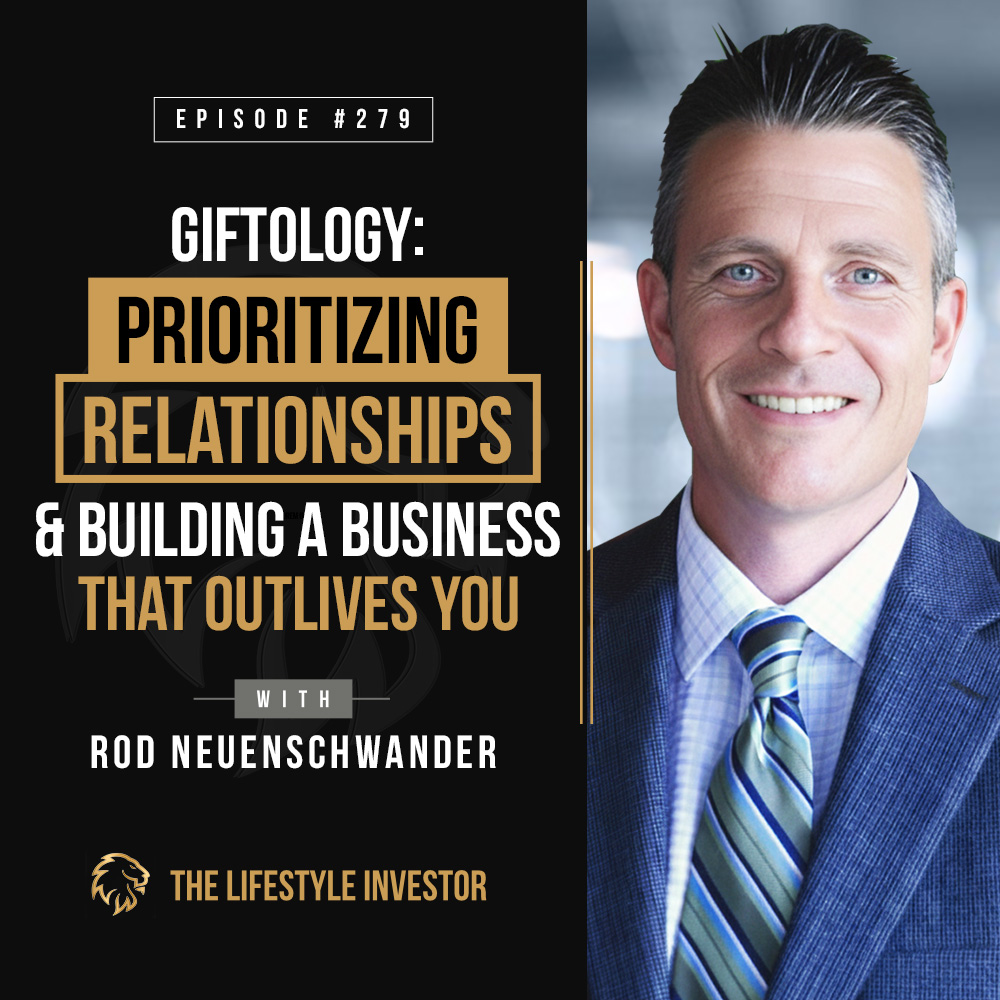
Giftology: Prioritizing Relationships and Building a Business That Outlives You with Rod Neuenschwander – EP 279
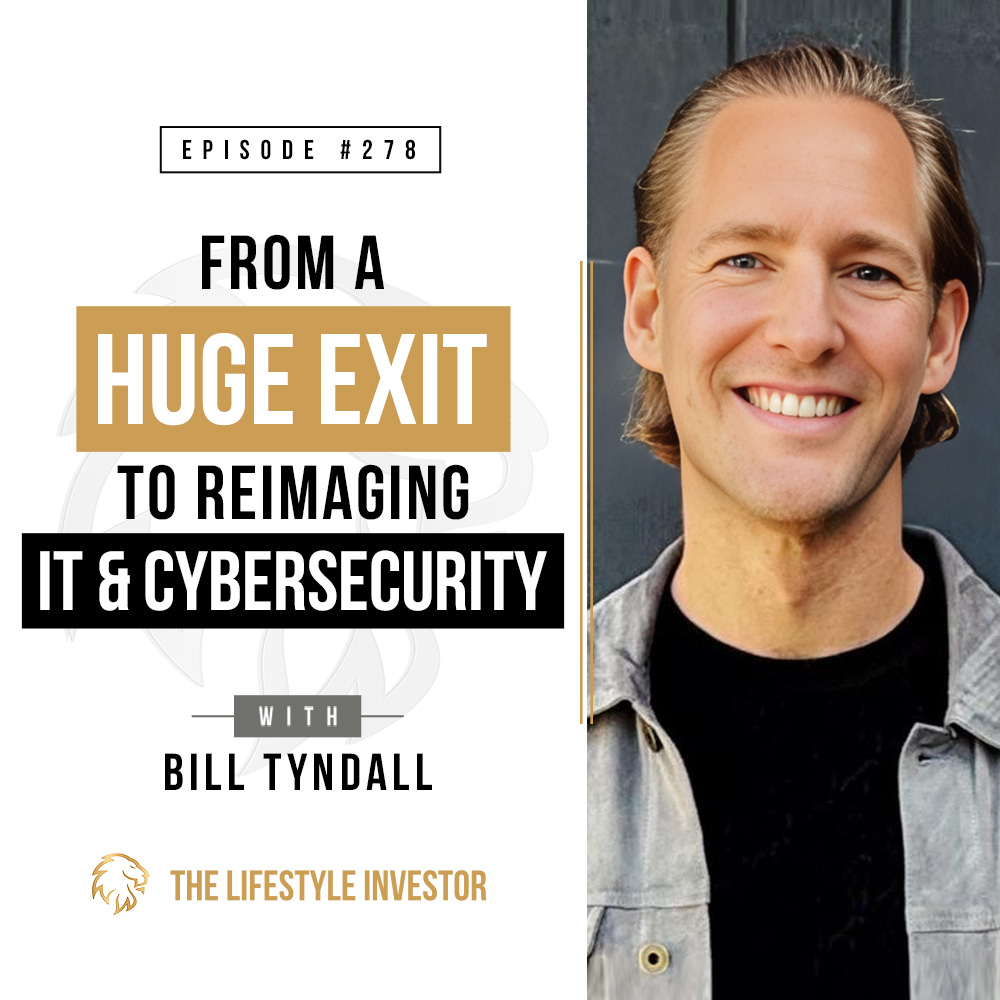
From a Huge Exit To Reimaging IT & Cybersecurity with Bill Tyndall – EP 278