![[Justin Donald] - Optin Preview](https://lifestyleinvestor.com/wp-content/uploads/2020/12/Justin-Donald-Optin-Preview-e1607533704966.png "[Justin Donald] - Optin Preview")
![Logo 1 Gold horiz [Converted]](https://lifestyleinvestor.com/wp-content/uploads/2019/08/Logo-1-Gold-horiz-Converted.png "Logo 1 Gold horiz [Converted]")
Interview with Colin Boyd
Turning One Presentation Into a Multimillion-Dollar Business with Colin Boyd
What if you could spend just one day sharing your product or service with an irresistible offer—and turn that one event into a multimillion-dollar business by harnessing the power of a single presentation?
Most entrepreneurs spend years trying to grow their business through endless marketing tactics, but few realize they could be just one presentation away from the breakthrough they’ve been chasing. Whether it’s on a stage or in a boardroom, one powerful presentation can change everything. Which is exactly what happened to today’s guest.
Today, I’m thrilled to welcome Colin Boyd back on the podcast. Colin is a Certified Speaking Professional, founder of the Sell From Stage Academy®, and author of One Presentation Away. Colin has helped some of the biggest names in the expert space design presentations that convert clients without sales-y or slimy tactics. In addition to experts such as Amy Porterfield, James Wedmore, and Jenna Kutcher, he has also collaborated with major corporations, including Coca-Cola, Suncorp, and Hewlett-Packard, to name a few.
In our conversation, Colin explains how anyone can craft their origin story into a conversion story, one that connects and converts authentically to drive exponential growth in their business.
In this episode, you’ll learn:
✅ How to reframe selling as an act of service and remove feelings of guilt from your mindset.
✅ How to structure presentations that organically leads to a yes and convert more prospects into clients.
✅ How to sell from stage without feeling “salesy,” by using Colin’s framework for turning selling into serving and making irresistible offers that people are excited to say yes to.
Featured on This Episode: Colin Boyd
✅ What he does: Colin Boyd is Certified Speaking Professional, author, and creator of Sell From Stage Academy, a program that helps entrepreneurs, coaches, and thought leaders craft high-converting presentations without feeling pushy. With over 17 years of experience and thousands of stages under his belt, he’s trained industry leaders like Amy Porterfield, James Wedmore and Jenna Kutcher to use storytelling as a business multiplier.
💬 Words of wisdom: “When you sell, rather than thinking you’re taking something from someone, you are just opening up a space for them to commit to solving their problem and getting what they want even more efficiently.” – Colin Boyd
🔎 Where to find Colin Boyd: Website | LinkedIn | Instagram | Facebook
Key Takeaways with Colin Boyd
- The Power of One Presentation: A Lightbulb Moment
- From Half a Client to $10K a Month
- Your Presentation Is Not About You, It’s For Them
- Reframing Selling as an Act of Service
- How to Craft an Irresistible Offer
- Conversion Stories vs. Origin Stories
- The Story That Moves Your Audience to Action
- Designing a Presentation That Leads to More “Yes”
- Creating Your Own Stage For Speaking Opportunities
- Colin’s Mission and More About One Presentation Away
One Presentation That Transform Your Business
Inspiring Quotes
- “In one presentation, you can change the trajectory of your business and your life.” – Colin Boyd
- “When you sell, essentially, what you’re doing is you’re making an offer for someone to enter a space that you’ve created which requires a greater level of commitment, a greater level of energy, a greater level of time, and focused on solving the problem that they have.” – Colin Boyd
- “The conversion story is the one story that when you tell it, for the right person, they’re going to hear your story, but they’ll feel theirs.” – Colin Boyd
- “For me, getting paid to speak is good, but speaking for free and making an incredible offer is much better.” – Colin Boyd
Resources
- ColinBoyd.co
- Colin Boyd on LinkedIn | Facebook | Instagram | YouTube | X/Twitter
- One Presentation Away: Become an Irresistible Speaker and Convert More Clients by Colin Boyd
- Expert Edge Podcast
- Conversion Story Formula
- Sell from Stage Academy
- Amy Porterfield
- Jenna Kutcher
- Messenger
- Tony Robbins
- Taki Moore
- Stephen Covey
- Hewlett-Packard
Want My Team’s Help?
- Tax Strategy Masterclass
Learn the 28 most effective tax strategies the wealthy use to save thousands.
lifestyleinvestor.com/tax
- Free Strategy Session
Get a personalized roadmap to financial freedom.
lifestyleinvestor.com/consultation
- Lifestyle Investor Newsletter
Join The Lifestyle Investor Insider for curated investing insights.
lifestyleinvestor.com/insider
Rate & Review The Lifestyle Investor Podcast
If you enjoyed today’s episode of The Lifestyle Investor, hit the subscribe button on Apple Podcasts, Spotify, Stitcher, Castbox, Google Podcasts, iHeart Radio, or wherever you listen, so future episodes are automatically downloaded directly to your device.
You can also help by providing an honest rating & review over on Apple Podcasts. Reviews go a long way in helping us build awareness so that we can impact even more people. THANK YOU!
Connect with Justin Donald
Get the Lifestyle Investor Book!
To get access to The Lifestyle Investor: The 10 Commandments of Cashflow Investing for Passive Income and Financial Freedom visit JustinDonald.com/book
Read the Full Transcript with Colin Boyd
Justin Donald: What's up, Colin? Good to have you back for round two.
Colin Boyd: Come on, Justin. Hey, it's great to be here. This is going to be good.
Justin Donald: Well, and this is really fun because you're finally back in the US again. So, you guys were living in Newport Beach, and then you're like, "Hey, we think we need to go back to Australia,” where you're from. You spent some time in Australia, and you're like, “I've got to get out of here. I got to get back to Newport Beach.” And so, you just moved back, right?
Colin Boyd: Yeah. I mean, I will say if you've spent any time in Newport Beach, I mean, there are worse places in the world than Newport Beach, and so it's pretty stunning. And, yeah, we moved back to Australia. We thought we were going to move back, and we got there, and it just, I don't know. Something happens as an entrepreneur when you put yourself in different environments and have a sense of purpose in what you're doing. And we moved out of that spot, and we didn't know that that was happening at the time that we were kind of like moving out of a place of purpose. And we got back to Australia, and I had all the trappings. I had a beautiful house, the house of my dreams, new cars in the garage, and I was so unhappy. And so, we decided to move back. But that's a whole another journey. That's a whole transition piece that, yeah, we've been through. So, we're back in Cali.
Justin Donald: And for context, a 5,500-square-foot home, tons of rooms right on the water, okay, with a jetty. All right. I mean, it was like all the toys, all the bells and whistles in your back, but I got to tell you, I'm not surprised, because I did not feel the certainty in our conversation before you left. We had a nice, long chat, and I wasn't convinced that was it. You can let Sarah know that as well.
Colin Boyd: Why didn't you tell me? You would have saved me a couple of $100,000.
Justin Donald: Well, I feel like I was like, “You sure you want to do this,” you know? But, hey, just glad to have you back and glad to have you back on the show, too.
Colin Boyd: Yeah, I love it.
Justin Donald: For anyone that missed the first one, go back and check it out because Colin's just done some awesome stuff. I mean, his big thing is he's the creator of Sell from Stage Academy, and really, you've helped a lot of people brand their businesses, craft a presentation, take their expertise, their genius, and turn it into a way to be able to present and convert sales. And, I mean, a couple of monster names that you have personally coached and worked with. Amy Porterfield has been on the podcast before, so people love her, and Jenna Kutcher as well, so among many other people.
So, I mean, you've obviously done very well if you're coaching the who's who in this space, but I'm really excited because you're now a published author. You've got a book out talking about all this, and we have to dive into that today. But before we get into it, let's talk about the power of one presentation. And I want to understand from your standpoint why do you believe that every entrepreneur is just one presentation away from transforming their business?
Colin Boyd: Yeah. I mean, for me, when I first started my business, I mean, we run a coaching business, but I think that this extrapolates to many types of businesses and entrepreneurs out there. I really struggled to understand how do I get clients. And I was looking on Facebook, I'm like, "Maybe they're in Facebook.” So, I was like, posting on Facebook and jumping in groups, and getting on chat. And this was back in the day when Messenger wasn't like a big thing as well. And I just really struggled to kind of work out a strategic way to get clients. And what happened was so I had these big dreams of running a business and building a great life and impacting people's lives.
And the reality was that I had half a client, and I don't know if you've ever had half a client before. They're like one of those people that they show up every second session and pay you every third. I had one of those. So, let's just say I wasn't at the success level yet. And I had a phone call from a friend. He said, “Colin, I've got a presentation coming up. It's a free speaking engagement.” He said, “I can't do it. Would you like to do it?” And so, it's obviously like a hot lead, because no one wants it. And I'm like, “Okay, let's do it. I'll give it a go.” I'd never spoken before professionally, only at college and at school and things.
And I remember leading up to this presentation, I was so nervous, because all I thought back was when I was in school and college and was just freaking out doing those three-minute presentations on microeconomics, something like that, right? And this was a 45-minute keynote. And I remember walking up the stairs, and the event organizer saw me, and he came running over. He's super excited, and he grabs me on the arm. He says, “Colin, you wouldn't believe this. This is the biggest event we've ever had.” He goes, "We've got 147 people waiting to see your presentation.” So, this is the worst news.
Justin Donald: Now, you've got pressure. Yeah, a lot of people would be like, "That's amazing.” You're like, "Wait a minute, this is a lot of people.”
Colin Boyd: I’m like unqualified. I didn't tell him that at the time, but that's how I felt, right? That's how I felt. And I got up, I did my presentation, and out of the 147 or so people, there was about 125 who gave me their personal details at the end, because I made an offer. And I didn't know at the time, but it was an irresistible offer. So, almost 90% or so of the people gave me their personal details to follow up. I ended up doing a bunch of like discovery conversations, and just about our products and our services. And I signed 10 clients from that one speaking engagement. So, my income went from like zero to over $10,000 a month. This was when I was like 27 years old, and that one experience taught me that in one presentation, you can change the trajectory of your business and your life.
And what was cool was from there, I started using speaking to grow my business, so I would find events. I would speak for free. I would run online presentations, and gradually just built it more and more and more to running a multi-million dollar business and now coaching the biggest names in the world. But at the core of it, I realized that for me, the pearls that were the moments along my journey were that every time I spoke, my business grew, and that was the revelation for me. And over the last four years now, I've just spent time teaching people how to build a presentation that they can use over and over and over again to grow their business.
Justin Donald: So, I love your story because we all have to start somewhere. And I do feel like most people they have imposter syndrome, whether they've made it or haven't made it. In your case, you hadn't made it yet. But I remember those times where I was like, “I don't know, do I deserve to be here? Like, why are all these people showing up to listen to me?” And so, I love just reflecting on that time of life. But you've got a lot of people listening here that are like, “Yeah, sure. That's great for you. That's your business, Colin.” And by the way, I can vouch for the same thing. I mean, turning what I have done into a presentation and taking stages has been revolutionary for the Lifestyle Investor brand, so like I'm with you.
But talk through an example or a story of someone that maybe they're not speaking for a living. They have a business. We have a lot of entrepreneurs that listen, or we have a lot of W-2s that want to transition into entrepreneurship, or investor that have a certain skill set that maybe they don't even realize they can monetize. So, I'd love to hear a story of just someone that maybe you would think, "Well, how on earth would a presentation help them catapult their business or their professional life?”
Colin Boyd: Yeah. I used to do a lot of coaching for people in corporations, and I remember one particular HR director, and I said to her, because, look, she was doing some career development coaching with me. And I said, “Hey, what would be really great for you is to start speaking at industry events.” That wasn't even on her radar. Like, the only thing on her radar was to do a good job in her job, and to show her CEO and board of directors that she was good at what she did.
Justin Donald: And by the way, that's where most people, I feel like, they live. So, I like that distinction right there. And I remember in my life when that was it, all that mattered was the bubble of the business I was in and moving up or being recognized. So, I love hearing this starting point.
Colin Boyd: Yeah. And so, I started working with her, and we found about two or three industry events that she could speak up. She ended up landing one of them. And what was fascinating was the speech was all around different policies and HR practices that she'd implemented in the business to grow their business and their people management. Now, what was interesting was when we were designing the presentation, I remember looking through it, and she was basically just teaching it in a way where she was like, “This is what I did. So, we did this, our team did this, we did this,” and it was just like a timeline of what they did and some of the results. And I said to her, I said, “Hey, this is great, but you're completely missing the point of the presentation.”
And she was like, “What do you mean?” And I said, "You're making this presentation about what you guys did in the business.” And she was like, “Well, that's what they asked me to present on.” I was like, “Yeah, but you're making the presentation about you. You're not making the presentation about them.” And so, I remember coming back to the next coaching session she had, like, in big red writing on her Microsoft Word document. It was like, “It's not about me,” at the top. And so, she completely shifted the angle of the presentation, and she made it about the audience. So, instead of just unpacking the case study, every single point was, "And, hey, this is how this is relevant to you and your business.”
Or when we started the presentation, we really dug into these are the typical challenges that people are having in their business with HR. And these are the desires that people have in their HR department as well. So, we kind of explored the psychology, what I call the audience psychology map, that we explored the audience psychology map of what are the problems they're facing, what are the big fears that they have, and then what are the wants that they want, and then the bigger desires. So, it's kind of like a bit of a flow. And so, all of a sudden, the presentation wasn't about her. It was about the audience.
And I remember she did the presentation at the industry event, and she got off and she said, “Colin, like amazing feedback. It was so fun. Really loved it,” but she said, “The problem is, I now have four job offers on the table from other larger companies that are offering me a lot more of a salary, and now you've put me in a dilemma because I've got all these opportunities on the table.” And she ended up taking one of them, and her career just kept on growing, right? And so, that, for me, is like an example of someone. She wasn't even running a business, but she took the idea of speaking, and it just catapulted her career.
Justin Donald: I love that. Well, and it reminds me of Tony Robbins always says, "People have this desire to have no problems, but the only people with no problems are dead.” So, the goal here is to have higher-quality problems. How do you find better problems to solve? That's a better problem to solve. So, I love that it opens up the door to move up, but it could also open up the door to move into a side hustle, start a company. For those of you that have a business, it could move to really helping create a marketing campaign about who you are and what you do. It could be client acquisition. It could be employee acquisition. I mean, there's so much that can go into it.
I would love to transition here to another idea, I mean, just kind of based on what we talked about already. Everyone's heard of software as a service, SaaS, but what about selling as a service? And I feel like many entrepreneurs feel uncomfortable selling. So, how do you reframe selling as an act of service?
Colin Boyd: Well, first of all, I think one perspective, and I heard this the other day from one of my buddies, Taki Moore. I thought it was so close.
Justin Donald: I love Taki. I got to get him on the podcast. That guy is awesome.
Colin Boyd: Yeah. He's a rock star. When I was living in Australia, we used to jump on the boat with each other, because he lives on an island, as you do. And we would literally boat across. He's such a good dude. But he said that he heard a phrase the other day, which was that money is rather than, because a lot of people have a problem with receiving money, like they feel bad asking for money, and he said, "A great way to think about money is just thank you notes.” He’s like, you get these notes, they're dollar bills, but rather than money, it's a thank you note from someone saying, “Thank you for creating this space for me to invest in myself. Thank you for creating this product for me to improve the quality of my experience of my life. Thank you for creating this service for me to make this job easier for me.”
And I was like, "That's a really cool way to think about it, just like little thank you notes.” Because if you imagine, if you got a thank you note, you're not going to go throw that thing away. I know you've written me a few thank you notes over the time, Justin, and I threw them away right away.
Justin Donald: And same for me of yours. They're in my trash can right now, buddy.
Colin Boyd: I threw them in my trash can. You've kept them. They're still in your trash can.
Justin Donald: I threw them away right now, right when you said that.
Colin Boyd: So good. Yeah. So, like thinking of them as thank you notes. Like, I think that's a cool way to think about money.
Justin Donald: That’s good. I love that.
Colin Boyd: Now, in terms of selling as serving, for me, I think about it like this is that when you sell, essentially, what you're doing is you're making an offer for someone to enter a great a space that you've created which requires a greater level of commitment, a greater level of energy, a greater level maybe sometimes of time, focused on solving the problem that they have. And so, when we make an offer, whether it's a product, a software, a coaching experience, a workshop, it doesn't matter what it is, a product, essentially, you've created a space for them to commit to solving their problem at a greater level.
And so, essentially, for me, when we sell, we open up a space to serve our audience, where they get to solve their problem faster, more efficiently, at a greater level. And if you think about it like this, where do you get the greatest testimonials from? Do you get them from the random person who watches one of your 10-minute B-roll reels on Instagram?
Justin Donald: No, from raving fans.
Colin Boyd: From raving fans, from your clients, right? They've attended your Wealth Summit, they've attended your event, they've attended an in-person workshop or online workshop or a coaching session, or whatever it is they're doing, you're using a product, and they're like, "Oh, my gosh, this has transformed my life or this has made a big impact on my life.” And so, for me, it's ripe in evidence that when you sell, rather than thinking you're taking something from someone, you're just opening up a space for them to commit to solving their problem and getting what they want even more efficiently, more effectively. And so, there's a beautiful commitment and covenant that's created in that process, and it just helps you to serve people on another level.
Justin Donald: Well, and that's a great mindset shift, going from like I'm selling someone to I'm solving their problem, helping them. I'm partnering with them to solve their problem. And that's, I think, where people can start gaining the confidence to make an irresistible offer, because it's about what you can deliver. It's not about what you're getting. And if you have an irresistible offer, then people are happy to pay for it. They're glad to pay. So, I love that mindset shift.
Colin Boyd: That’s so true. Yeah. And if people aren't buying it, maybe the offer is not good enough, right? And it becomes more of a service when the offer gets better, right, and they're actually excited about. I think about it like this. I mean, for you, Justin and the listeners, if you could think about someone who's changed your life and you've actually spent money on them, like I think about, I could probably find five or six different mentors in my life who I've spent a significant amount of money on, but even books like books that I've read that have changed my life. Imagine that author, that creator, that speaker, whatever it was, imagine they were like, “No, you know what? I'm not going to make this offer. I'm not going to sell our program, our book. I'm not going to launch our book because I feel bad. I feel bad that people would spend money on it.”
Imagine what would be missing in your life, like emotionally, maybe relationally, definitely financially, right? Imagine what would be missing in your life if they decided to make that offer about them and go, “No, you know what? I'm not going to sell this.” Now, here's the kicker. The kicker is that you, the listener, us, everyone here listening, you are that person for your audience, like I can't help your audience in the way that you do. Justin can't help your audience in the way that you do. And so, when it's actually our responsibility to learn how to feel comfortable selling, because that can change everything, and it really impacts people's lives,
Justin Donald: That's right. Well, and I can give you an easy example from today that this will probably resonate with a lot of people that are watching and listening. All right. So, I had a buddy that needed to move, and he asked if a bunch of his buddies would help him move. I hate moving. I've moved enough times for several lifetimes, but I want to show up and I want to be there for my friend. And so, we did that today, and I remember him saying, like, he ended up hiring a couple of people to come help at the end. And he's like, “I probably should have just done this earlier.” And I was like, "Yeah, that's like my favorite thing to spend money on.” Like, I love solving for that problem, so I don't have to do it.
Manual labor, like in general, like handyman stuff, like anything like that, but especially moving, I am the happiest camper in the world to spend money. You are solving a problem of mine, and I am so happy. I will get to give you a whole bunch of thank-you notes.
Colin Boyd: I feel exactly the same with me. Anything manual, for me, I am useless. Like, do you know what's so funny? With our house, there was a particular part of the door, and it just needed a little bit of fixing up. And I gave it a go, and then the building inspector came through and looked at it and marked it down as damage.
Justin Donald: You did that bad of a job, huh, Colin?
Colin Boyd: That's how bad I am at it, right? I've got other skills. I've got other very, very good skills, but not that one. So, I appreciate anyone with those skills.
Justin Donald: Yeah, and this is the point. It's like I am thanking them for their service. Thank you so much, right? Like, that really is a gift. And it's the same thing here. When you have an irresistible offer, they are getting that type of value out of it. It's likely life-changing, or it could be life-changing, or at least could be paradigm-changing for them, right?
Colin Boyd: Absolutely. I love that.
Justin Donald: So, let's talk about crafting a conversion story. And I know that you write about this in your book, but I think this is important to just kind of highlight here from the book. But what's the difference between a typical origin story and then like a true conversion story?
Colin Boyd: So, I discovered this about three and a half years ago, and basically, I was watching people present and speak. I was watching tons of presentations, and I noticed that there were some people who told a story where, when I heard it, I wanted to work with them. And there were some people who told a story about themselves. I'm talking about a story about themselves, like, your own story, right? They told a story about themselves, and it was like nice to know, but really, like that's the story that maybe their mum might have been interested in, and not me, right? And it was like, there was a story about how they grew up, and what university they went to, and what degrees they got, and how many kids they have. And it's nice to know, but I'm like, “I don't really care.” Like, I care, but I don't care, right? I'm here to, like, listen for the content and stuff like that.
So, I realized that the people who told the story where they finished it, and I was like, “Oh my gosh, I really feel like they get what I'm going through, even though they went through like different physical things, I feel like they get me.” And at the end of it, I was like, “I think they could help me.” And so, that's when I was really just thinking about this idea, and I realized that most people just tell their journey of their story, and they tell it randomly each time. It's all different types of stories. And the conversion story is the one story that when you tell it, for the right person, they're going to hear your story, but they'll feel theirs. And in fact, the story that I told before, Justin, to get a bit meta right at the start, about me with the half a client, and then going to speak, you reflected after it, and you said, “Oh my gosh, that's so relatable.”
All of us start out at this place. Maybe it's not half a client, but it's like we're struggling to get this happening. We're freaking out to get on a stage or do any sort of. You actually said that to me, and my Dr. Evil part of me goes, “Yes, it works,” right? Because it's my conversion story, right? And it's a true story. It's a real story. But when you tell it in the right way, the audience hears it and goes, "That's really powerful.” And then when you link it to the right idea, the audience will go, “Okay, how do I make that next step?” So, for me, my core idea, my core premise, is your one presentation away from the breakthrough you want in your business. It's the name of my book, One Presentation Away. And so, I actually made my core premise, my core idea, the name of my book. You don't have to do that, but that was what I decided to do. But my story links to that.
And so, the difference, I would say, between a regular origin story is origin stories just tell the journey, conversion stories capture a moment where your vehicle transformed the trajectory of your life. I think about it for you, Justin, I remember you've told me quite a few stories. You do usually talk too much. I'm trying, usually, trying to quieten you down. But, no, I'm joking. I love every conversation with you, Justin.
Justin Donald: We have a good time. And I love that we can really just give each other a whole bunch of crap.
Colin Boyd: Yeah, it's so good.
Justin Donald: That is so fun.
Colin Boyd: It’s so good. You've told me your story, Justin. I think it was when you bought your first mobile park home and you replaced your wife's salary or something like that. And like, for me, that's a good one, like, that's a good conversion story, because everyone would resonate with that of like that struggle to replace income. And then it was like, you had that big, that real big first breakthrough. So, it may not be your conversion, but that was like the one that came to mind for me.
Justin Donald: It's funny. I just had a conversation the other day, and I mean, I was just talking to a friend, or a friend, it was a new friend, right, that didn't know a whole lot of my story. And I had mentioned that as he was asking kind of how I got to where I am. And he literally paused and said, “Oh, that's what I want.” So, it's really funny that you say that, because this just happened within the last two days, and I don't always include that story when I speak to people, so I probably should.
Colin Boyd: Well, that's the one that stood out for me over our conversations. And so, everyone listening needs to find that story. And we go through it in the book, but that particular, in fact, we've got, like, this mini course. It's called Conversion Story Formula. I was chatting with someone today on Instagram, and they were saying that they just read through their story the other day, and, like, gave them goosebumps from just the process of it. And so, I think everyone should discover their conversion story, because that is the story that when you tell it, like if you're on a podcast, if you're asked to do a presentation, if you're asked to kind of go, “Hey, tell me about how you got into this,” you don't tell them how you got into this. You tell them the conversion story.
Justin Donald: Yeah, that's good. So, let's take it one step further then. So, the conversion story is a hook, right? So, now they're interested, they're engaged, but we still need some conversion. And I think sometimes people get a little funny about “selling.” So, let's talk about like a professional, an entrepreneur, that maybe they haven't built their confidence yet, and maybe closing from stage, so they're giving a presentation. How can you design a talk that naturally leads to a yes without someone feeling pushy, like they're trying to close a sale? Because that, to me, has been a big key for me. It's like, "Well, I'm not even necessarily asking for the order. They're asking me because they want to learn more.”
Colin Boyd: I mean, I love it when the prospect is moving faster towards the offer than you're making it. That's the result of great communication and great questions if you're in a one-on-one conversation. But, yeah, in terms of structuring a presentation, for me, first of all, you have to start with the offer in mind. So, it all starts with the end in mind, Stephen Covey. Start with the end in mind and go, “Okay, what's the offer?” And then I look back, and I'm going to go, “There’s kind of three main core sections to look at when you're designing a presentation.” Now, I say sections from the sense of there is obviously an introduction, there's the content, and there's the close. But within the content, there are three things that I'm really looking at.
The first thing is I want to reduce resistances. So, in other words, I want to give people a reframe of perspective of things, so that when my offer comes about, when the offer is revealed, those resistances are no longer as strong or completely resolved.
Justin Donald: Yeah. Kind of like handling objections early. You know what objections could be? Let's open those doors.
Colin Boyd: Yeah, correct. And so, when I'm speaking, I'm actually bringing up concepts that I want them to understand, but they're actually, in a way, handling an objection. I'll give you an example. Like, the one that you brought up before, where you said selling is serving, that for me, because we have a program, Sell from Stage Academy, which you mentioned at the start. I teach people how to sell from a presentation. If people have a resistance around selling in general, they're not going to join the program, because they're going to go, “Look, I just don't feel comfortable selling.” And so, I have to handle that objection upfront, but I don't do it in a way of going, “Hey, guys, I've got a program that I'm about to offer. Let's talk about why selling or let's talk about selling and make sure that you understand it's serving so you're ready for the offer.”
I'm going to teach it in a really helpful way. I'm going to tell great stories. I'm going to share some concepts, some examples, some metaphors, some questions. I'm going to take maybe through a little exercise, and I'm going to really help them to get comfortable with this idea of selling is serving. Now, whether they join the program or not, I get comments all the time, people going, "My gosh, I see selling completely different. This is just changing my life in terms of my perspective of selling. This is going to make such an impact on me.” So, it's valuable even by itself, but it's also valuable for the offer because it basically takes off the emergency brakes that people have coming into it.
So, you really need to think about what is wrong with what I do. That's the question you have to answer. And I usually, to the first piece of content I'm going to go through and talk about, and I won't say what's wrong with what I do, but I'll say something like, "Oh, friend, one of the challenges with learning how to sell effectively is the way you see selling. And so, let's do a big shift today, around rather than selling being pushy, what if selling was an act of service? But don't believe me yet, let's explore this,” and then we can kind of explore it, right? And so, when we do that, we strategically reduce resistances and reframe objections, then we're prepping people for the offer without them even knowing that they're getting prepped for the offer.
And for me, it's actually really powerful, influential communication. Now, obviously, they've still got their choice of whether they want to take the offer up or not, but the problem that most people do is they just teach. They get on the presentation, and they go, “Hey, what's something really useful that I can teach on this presentation? Maybe something that I've taught at my last conference that I ran, or my last business meeting that I was in.” I'll teach that, and then I'll just make an offer. And it doesn't work, because people are overloaded by the teaching. And so, the first piece is the reframe resistance. The second piece is increased desire. So, you've got to teach some content that makes them really interested but not overwhelmed.
And then the last piece is you create clarity of the process. You reveal the vehicle. So, in other words, you show them some sort of unique way of solving their problem, usually in some sort of visual way. And you're going to show them, "Hey, these are the four big steps you need to move through to resolve your problem.” And then when you get to the offer, everything just makes sense. They've reduced resistances, they've increased desire, they've got clarity on the process, and then they're like, “Okay, this is the next step.”
Justin Donald: Yeah, I love it. So, let's talk about practical tips for people getting booked on the right stages, or even creating their own stages.
Colin Boyd: Yeah. I mean, I'm a big fan of creating my own stages. When I first started my speaking career, which was accidental, right, which is the first story I shared, I ended up loving speaking. So, I started applying to conferences, started being paid to speak. I spoke with Hewlett-Packard for like 10 years, all around the world, with different conferences that they ran. And for me, getting paid to speak is good, but speaking for free and making an incredible offer is much better. Like, you can get paid a lot more when you speak for free, and you get paid, or you do a commission split. Now, obviously, that has to be the right context, but the right context is when it's your own stage.
So, if you're hosting your own online event, in fact, it can literally be as easy as if you've got a database or a social media following, you could just create a Zoom meeting. Like tomorrow, Justin, I've got a couple of 100 people signed up to a Zoom meeting. I didn't even create an opt-in page. It's literally a Zoom meeting registration page, but nothing fancy, and it's for people who are earning more than $100,000 a year. I'm going to show them how to get to a million. And I just sent one email to my list and said, "Hey, I'm going to host this Zoom meeting. There's no replay. I'm just going to jump on a meeting and just show you how you can create a million dollars in your expert business.”
And it can be that simple. Sometimes people like overcomplicate it, but it can be as simple as putting a post on Instagram or on Facebook and going, “Hey, I'm going to host a short meeting, a short mastermind on how I did this. If you're interested, comment the word ‘mastermind’ and I will send you over the details.” And so, it can be as simple as just hosting a Zoom Room and getting 10 people in there, 20, 100 people, I don't know, however many you've got in your audience, teaching something useful, following that structure, and then making an offer, and you'll most probably make money.
Justin Donald: That's awesome. I love that. Well, I would love for you to share where we can learn more about you and about each of your businesses, and more specifically, where we can find your book, because we've been talking about all the things that you outline in your book. And if there's anything else that we haven't covered that you want to make sure that you mentioned, please do. But I want people to know where to find it.
Colin Boyd: Yeah. So, the book, OnePresentationAwayBook.com, and there are some really cool bonuses. If you go to One Presentation Away Book, there are some unique bonuses that I don't sell, so you can only get it from buying the book. So, definitely check that out. I mean, the book, for me, is the culmination of speaking for over 17 years on thousands of stages. I mean, you would know this. You've written a best-selling book, like it is over a decade of experiences jam-packed into a couple of hours of reading. And I read books avidly, right? I just love reading books. So, I'd encourage you to go and grab that. The other thing, I mean, for me, I've got a podcast as well, so Expert Edge Podcast, if anyone is interested in listening to me.
I've had Justin on there. I'm going to have him on again. We really explore people's success journey in building expert businesses. And I think the last place would be if people just want to learn storytelling, it's ConversionStoryFormula.com. That's a really cool place to kind of check that out.
Justin Donald: Well, I can't recommend or endorse Colin better than, like, I think he is the world's best at this. And so, I just highly encourage you. If you want to get to a point where you're creating, like, a really good conversion story, something that's a lot more appealing than just an origin story, if you're at a point where you want to figure out how to create a presentation, if you want to figure out how to get better conversion and actually sell products, even if you don't have a product yet to sell, they can help you with that. Any of those, Colin, even though we give each other a hard time, I am literally Colin's biggest fan, because I've seen him in action. I've seen his work.
He and I have been in a small group inside of a mastermind, so I've gotten to know him and his family quite intimately, and I just believe in what he is doing. And there's a reason why your business, Colin, is scaling the way that it is. You guys have taken off, and I'm so excited that you've got this book out to help people.
Colin Boyd: Yeah, I'm excited. I just picture people sitting in their evening chair, having a cup of tea, reading over the book, and then inspiring them to live a bigger life. That's my big goal is that they would read it and be like, “This is really inspiring to live a bigger life.” And that's my goal for the book. So, I hope people get that.
Justin Donald: I love it. Well, I enjoy ending every episode with a question for our audience. So, if you're watching this, if you're listening to this, what is one step you can make today that you can take to move towards financial freedom and really just living a life that you truly desire on your terms, so again, not life by default like most, but a life by design? What's one thing you learned from Colin today that you can take action on to move towards that ideal life? Thanks. And we'll catch you next week.
Sign up to receive email updates
Enter your name and email address below and I'll send you periodic updates about the podcast.
Keep Learning
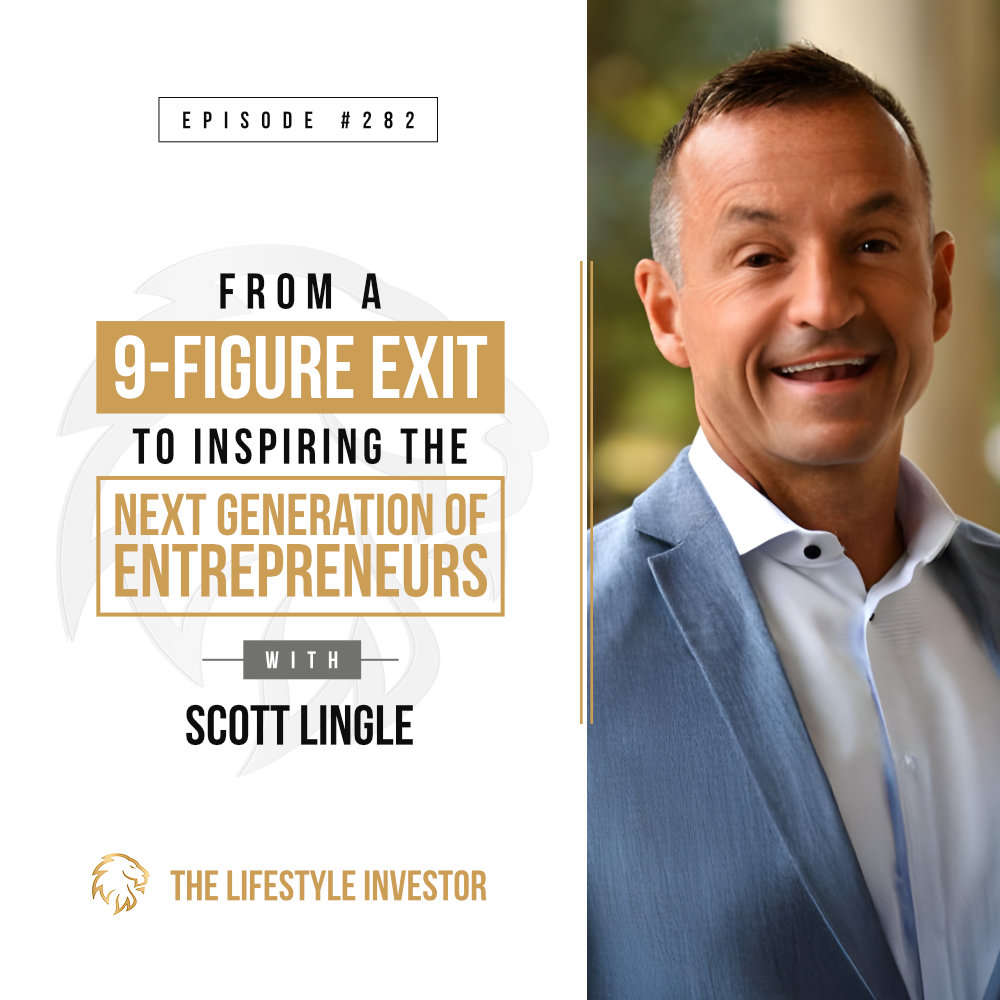
From a 9-Figure Exit to Inspiring the Next Generation of Entrepreneurs with Scott Lingle – EP 282
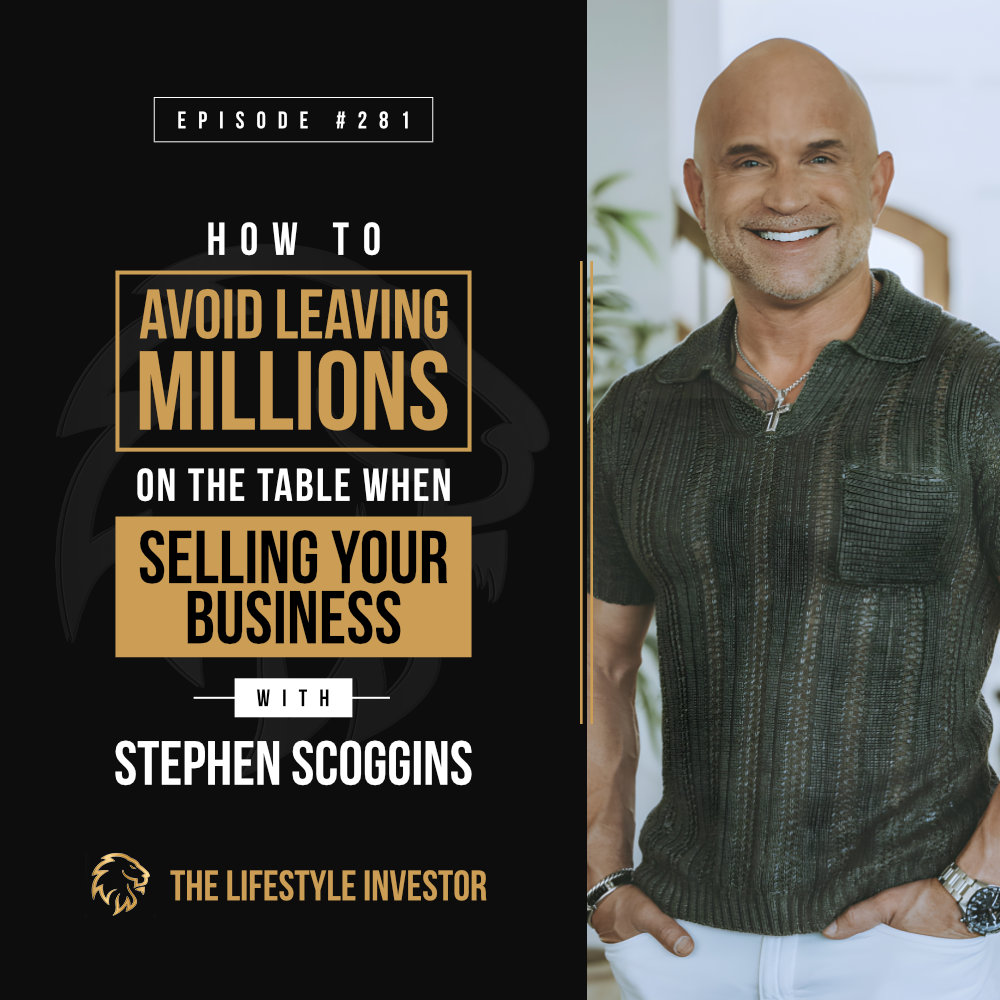
How to Avoid Leaving Millions on the Table When Selling Your Business with Stephen Scoggins – EP 281