
![[Justin Donald] - Optin Preview](https://lifestyleinvestor.com/wp-content/uploads/2020/12/Justin-Donald-Optin-Preview-e1607533704966.png "[Justin Donald] - Optin Preview")
![Logo 1 Gold horiz [Converted]](https://lifestyleinvestor.com/wp-content/uploads/2019/08/Logo-1-Gold-horiz-Converted.png "Logo 1 Gold horiz [Converted]")
Interview with Caleb Guilliams
Whole Life Insurance: The Secret Wealth Strategy of the Rich with Caleb Guilliams
Whole Life Insurance is widely misunderstood, yet for billionaires and family offices, it’s a powerful tool for long-term financial security.
While most people see life insurance as an expense, the wealthy use Whole Life Insurance as a financial foundation—one that offers liquidity, tax-free growth, and a guaranteed rate of return.
In this episode, Caleb Guilliams, founder of BetterWealth, joins me to break down the real benefits of Whole Life Insurance—and how to use it the way the wealthy do.
We discuss why most policies are structured incorrectly, the biggest mistakes to avoid, and why banks and billionaires hold massive amounts of Whole Life Insurance as part of their asset allocation strategy.
In this episode, you’ll learn:
✅ Why Whole Life Insurance isn’t an investment—and how the wealthy use it to build lasting financial security.
✅ The truth about Whole Life Insurance—the key benefits, hidden pitfalls, and the biggest misconceptions that trip people up.
✅ The costly mistakes people make when setting up a Whole Life policy—and how to structure yours for maximum flexibility and returns.
Featured on This Episode: Caleb Guilliams
✅ What he does: Caleb Guilliams is the founder and CEO of BetterWealth, a financial education and wealth-building company. He specializes in helping entrepreneurs and high-income earners use Whole Life Insurance as a strategic financial tool to unlock liquidity, tax advantages, and long-term security. Caleb is also the author of The AND Asset, a book that explains how to maximize financial efficiency using life insurance.
💬 Words of wisdom: “If people understood the multi-use benefits of Whole Life Insurance, there would be a line outside the door.” – Caleb Guilliams
🔎 Where to find Caleb Guilliams: Website | LinkedIn | YouTube | Instagram | X/Twitter
Key Takeaways with Caleb Guilliams
- From Banking to Building BetterWealth
- Why Whole Life Insurance is NOT an Investment
- Why Most Off-The-Shelf Life Insurance is Garbage
- Understanding the Utility of Whole Life Insurance
- Borrowing Against Your Policy to Invest
- Tax Benefits That Make Whole Life a Financial Superpower
- The Major Benefits of Whole Life Insurance
- The Biggest Downsides of Whole Life Insurance
- Avoid THESE Whole Life Insurance Mistakes
Why Whole Life Insurance is Misunderstood
Inspiring Quotes
- “If people understood the multi-use benefits of life insurance, there would be a line outside the door.” – Caleb Guilliams
- “I look at life insurance as a financial foundation that not only protects, but it gives me utility on my dollars.” – Caleb Guilliams
- “You think of money in a high yield savings account as super safe. Your money is more safe in a life insurance contract than a bank.” – Caleb Guilliams
Resources
- BetterWealth
- BetterWealth on LinkedIn | YouTube
- Caleb Guilliams on LinkedIn | Facebook | Instagram | X/Twitter
- The AND Asset: The Secret Way to Save And Use Your Money at The Same Time by Caleb Guilliams
- ConvertibleTerm.com
- Good to Great: Why Some Companies Make the Leap…And Others by Jim Collins
- Jim Collins
- The Richest Man in Babylon by George S. Clason
- Nelson Nash
- Becoming Your Own Banker: Unlock the Infinite Banking Concept by R. Nelson Nash
Tax Strategy Masterclass
If you’re interested in learning more about Tax Strategy and how YOU can apply 28 of the best, most effective strategies right away, check out our BRAND NEW Tax Strategy Masterclass: www.lifestyleinvestor.com/tax
Strategy Session
The Lifestyle Investor Insider
Rate & Review The Lifestyle Investor Podcast
If you enjoyed today’s episode of The Lifestyle Investor, hit the subscribe button on Apple Podcasts, Spotify, Stitcher, Castbox, Google Podcasts, iHeart Radio, or wherever you listen, so future episodes are automatically downloaded directly to your device.
You can also help by providing an honest rating & review over on Apple Podcasts. Reviews go a long way in helping us build awareness so that we can impact even more people. THANK YOU!
Connect with Justin Donald
Get the Lifestyle Investor Book!
To get access to The Lifestyle Investor: The 10 Commandments of Cashflow Investing for Passive Income and Financial Freedom visit JustinDonald.com/book
Read the Full Transcript with Caleb Guilliams
Justin Donald: Well, Caleb, it's good to have you on the show and it's fun. We get to do it in person. We're here at the Four Seasons and filming.
Caleb Guilliams: I love it.
Justin Donald: I love having you in town so I'm glad this worked out.
Caleb Guilliams: It's taken you five years of friendship to have me on your show so I'm honored that I made the cut even though the bar was low.
Justin Donald: You know what? It takes time. You’ve got to work hard.
Caleb Guilliams: That's right.
Justin Donald: You’ve got to work hard.
Caleb Guilliams: How many pickleball games do you have to lose before you could have me on? I don't know.
Justin Donald: Well, we've had a lot of fun on and off the pickleball court, and it really has been fun growing our friendship here over the last few years. And I love that you're a wealth of knowledge in a space that I absolutely love, life insurance.
Caleb Guilliams: Yeah.
Justin Donald: We featured you at our mastermind end of year retreat. And so, you are a wealth of knowledge, you know a ton, and I want to get into that. So, how did you get into life insurance in the first place?
Caleb Guilliams: So, I grew up in Wisconsin. I'm the oldest of six kids. My dad is a PICI molecular biologist. I wanted to follow in his footsteps for about a day until I took biology, and I was like, "You know what, not for me."
Justin Donald: I didn't like biology either.
Caleb Guilliams: Very interested in how money works. My first job was literally gutting chickens and I made a dollar for every chicken that I processed. And so, I'm like working. Justin, I love to work and I read two books, one by Jim Collins, Good to Great, and the other book, Richest Man in Babylon. And those two books really helped me and inspired me at 15 years old to be like, "I want to do something in the money space." I then got a job at a bank when I was 17, worked in every area that I possibly could. And then when I was 18, I got to work in our investment department. When I was 19 years old, the person that was running our investment department left and took another job. At 19 years old when I literally looked like I was 15 or 14, they gave me the keys to the investment kingdom and said, "These 300 clients, you're their guy."
And a very cliche statement was made to me, but it's a cliche for a reason because it's powerful was, "People don't care how much you know until they know how much you care." And even though I was 19 and didn't know much of anything, I cared deeply for people, and the clients were really loyal to me because they knew, like they saw me grow up in the teller line and serve them. So, we lost zero people, which is very unheard of in the world of like anytime you transition or a person leaves, some people usually leave to follow that person. And so, I was like thrown in the ringer and I just made a commitment to myself that I was going to do everything I possibly can to learn, like really learn.
And I think the blessing in disguise was majority of people in the financial world, it's a sales job to pitch something. That's literally what it is. And you get your part and you're groomed and you work for someone. And the goal is when you get 40 or 50 to take over the firm and all. And I did not have a direct mentor, which was a blessing in disguise because I got to go learn from other people that didn't necessarily have skin in my game of like, "We're going to like have Caleb help us grow our business." Like, they taught me how to think about money and I'm just forever grateful for that. And fast forward, 21 years old, I'm learning all these things about insurance, taxes, investing, and I want to start sharing with the world more, like I want to share what I'm learning about life insurance and efficiency, and life insurance is not an investment, all the stuff.
But at the bank, you can't do a podcast like this. It's pretty heavily regulated. And so, I just remember in a really great way parting ways and starting BetterWealth, which is the company that I run to this day. And it's been a fun story. I mean, our first office is in the basement of a Papa John's building.
Justin Donald: Wow.
Caleb Guilliams: And I started with $21,000 in my bank account, which is a ton of money for a 21-year-old. So, I'm grateful for that but it wasn't a ton of money in the grand scheme of who we are competing with.
Justin Donald: For starting a business.
Caleb Guilliams: We're starting a business, had a couple of people that really believed in the vision and mission, and now we're in all 50 states. We've had a fun run and love what we get to do. And so...
Justin Donald: That's awesome.
Caleb Guilliams: That's a story in a nutshell.
Justin Donald: Well, I love hearing that. And just prior to this, we had recorded on your podcast, and we kind of dug in deep on alternative investments, which is so much fun. And now we get to dive in deep on life insurance, something I'm also passionate about. But one of the things that you had mentioned, and I agree with this, you've said life insurance is not an investment, and I would love to have you elaborate on that because I feel like a lot of people look at it as an investment. So, what do you mean that it's not an investment?
Caleb Guilliams: Yeah. So, what I mean investment is when I think of an investment, I think of something that there's risk tied to it, and there, hopefully, is a greater upside, but there is a chance of loss. And investments are super regulated. Insurance, literally, when set up properly, you can't lose money. So, when people, the number one criticism if you type into Google like, "Should I invest my money into life insurance?" the number one thing that they'll say is high commissions, and then another thing that they'll say is bad rate of return. And so, normally, what people will walk away from is, "Oh, life insurance sucks as an investment and people are just making a killing trying to write your life insurance."
And trust me, I'm like, I'm aware of that and there are many people in our space that make that statement more than believable because our industry has a ton of people like that. But it's interesting because my epiphany was like, "Okay. If life insurance was an investment," another way of saying that is, "If I was not putting my life insurance for the purpose of gaining a rate of return," but if there's other utility that I could give my dollars, and if I could get my money and all those benefits of life insurance and I could have the ability to reinvest in actual investments like myself, my business, real estate, market alternatives, if I could literally take a dollar and get more jobs, it's almost like the iPhone that gives... Your iPhone is more than a phone.
Justin Donald: Right.
Caleb Guilliams: It does so many things. In fact, you probably do more things on your phone than actually call. And so, that was like the epiphany that I had was like, okay, if people understood the multi-use benefits of life insurance, there would be a line outside the door. But it's actually not because it's in an investment, it's a place where you can store, protect, grow, and use all at the same time. And when I learned that, Justin, I was like, "Okay. I'm going to make this message known to people because it's misunderstood and it's misunderstood maybe for a reason."
Justin Donald: Yeah. And by the way, I think most off-the-shelf policies are garbage. And I think most agents out there don't know what they're doing. And so, I think there are a lot of people that have really, I guess, miseducated the public on what a good life insurance product is. So, I do want to talk about that today. But before I do, we talked on your show about the asset allocation of the wealthy. What do the billionaires do? What do the centimillionaires do? And life insurance is a component of these individuals' entire makeup, their investment makeup. Why is that? Well, because if anything should happen to the people with life insurance, there's a death benefit. So, it props them up instead of the financial fact of just running out in the middle of the night on your family. If you pass away early, that is the toll that it takes on your family financially without life insurance in place.
So, you've got this death benefit, but there are so many more living benefits to it. And so, this is one where if someone is -- we have a lot of people that try to maximize their investment dollars and they want to get the best return on their money that they can. And what that means is they often put too much risk on those dollars. So, not all dollars are meant to be maximized. The wealthiest people have a percentage in different buckets and in different categories. And so, I would consider life insurance, whole life specifically, in the fixed income bucket. Fixed income being what bonds are, and treasuries, and having that rate of return that is better than being in some sort of savings account, or a CD, or a checking account even where you're not making any money or very little money.
And so, this one though, your IRR in life insurance is generally 4% to 6%, like that is consistently what you're going to find somewhere in that range. And so, yeah, if you're earning that on all your money, you could probably earn more somewhere else. But if you have a percentage that's earning that, that offers you liquidity to be able to buy other assets and do other things like I've done since I was 24 years old, there's a compounding effect that happens, and you can take this money here and earn your 4% to 6%.
Caleb Guilliams: Yeah.
Justin Donald: And you can take this, you can borrow against it, use it over here, and earn another 15% to 20% or whatever it is that you would otherwise invest in. And so, I'd love to hear your thoughts on this.
Caleb Guilliams: Number one, thank you. Number two, if we look at an IRR of 4% to 6%, a lot of times we'll hear that statement and you immediately compare it to other assets that are like, okay, 4% to 6% maybe like bonds. When life insurance is set up and used properly, it has tax benefits, which would essentially mean it works similar like a Roth. Once your dollars are in, it grows tax-deferred. You can use them tax-free through a policy loan and then get passed on income tax-free. So, that 4% to 6%, well, what's the equivalent if you have to add taxes? If you're listening to this or watching this in California, like now you bring state taxes up and now you're taking that lousy 4% to 6%, and now it might be more like 6% to 9%. I'm not saying that life insurance gives you 9% rate of return, but when you start factoring in things like taxes, things that this is like after the "fees," these are after the commissions.
So, now you have to factor in fees in this other category. And then the other thing, when someone understands like this is where I love when I talk about life insurance, when you understand like, okay, you're telling me that I get the 4% to 6% back to you when you factor in taxes, that's higher. You're also telling me that death benefit is also increasing that I can use for estate planning. And you're also telling me that I get to use all this pool of liquidity for whatever I want. And like you start getting to a place where you're going like, "Why do insurance companies allow you to do this?"
Justin Donald: Totally.
Caleb Guilliams: And it totally flips from saying that this is a terrible investment to being like, if we're talking about a foundation, we're in a beautiful hotel right now. This hotel is only made possible because it has a foundation that no one sees. And I just think about that similarly when I think of financial wealth, especially for business owners or people that do invest in alternatives, I think if you have potential for upside, you should have a moral obligation for a greater foundation. And so, I look at life insurance is just a financial foundation that not only protects, but it gives me utility on my dollars, but also gives me a baseline, a bar that's like, okay, no matter how bad I do, I'm at least earning that 4% tax beneficial like that's the bar, my family's protected.
And then the 'and' which I wrote the book, The AND Asset, because that was so profound that the idea of giving your dollars more than one job that 'and' allows me to really start thinking about hitting doubles, triples, and potentially some home runs in my life when it comes to investing.
Justin Donald: And when you learn what the wealthiest people do, where they have 5% to 15% in fixed income anyway, it just becomes a no brainer because this is money they're allocating for 4% to 6% returns.
Caleb Guilliams: That's right.
Justin Donald: So, you don't want all your money there but a portion of it makes sense. So, I'd love for you to share even some of the other benefits you talked earlier about some of the pros. Like, I look at some of the pros as saying, "Well, banks, gosh, they're so darn risky. Their solvency ratios are atrocious here in the US and worldwide." But, I mean, we think those of us in the US were like, "Oh, our banks are so good and so safe." No. They're actually horrible compared to many banks around the world and we've seen a bunch go under. Life insurance companies, a lot different. Life insurance companies are way more financially sound than a bank by a landslide. They have to have all their cash reserves on hand at any time in case every person under contract passed away.
Caleb Guilliams: Everyone could take their money out and there would still be money in an insurance company versus a bank. It's 10% and you're done.
Justin Donald: That's right. And so, I'd love to hear you expand on just some of the other benefits as you see them. Like you said, there's this paradigm shift that before it was like, well, could you earn more somewhere else to like, "Whoa, actually, this is so good. Why would I not be maxing out up to 15% of my net worth in whole life insurance?"
Caleb Guilliams: So, what I'll do is I'll go through the benefits, some of the benefits, and then I think it would be important for us to talk about the cons as well, what to look out for. If there's time, we could talk about the framework of how you should set this up if you want to go down this path. So, when I think of the pros, and if you're listening to this, I'm going to do my very best, think of like a person that is putting their money somewhere. And I'm going to be like drawing arrows out of those dollars because one of the theses is a dollar gives yourself more jobs and so I'm going to try to explain that. So, the first benefit is understanding the long-term growth benefit, lifetime growth. And not all assets are created equal. A lot of times people commit to a compounding strategy, but then they kill the goose that lays the golden egg.
You're compounding your money until you hit retirement, and then you're taking your money out, like that sounds crazy to me. And so, the idea is life insurance over a long period of time was going to compound from, you got it right, 4% to 6% internal rate of return, you start factoring in some of the tax benefits of there. You start factoring in that there's no percentage-based fees. You start factoring in the fact that there's creditor protections. You start factoring in the fact that this is some of the safest, like you're talking safer than you think of money in a high yield savings account as super safe. Increase that safety, like your money is more safe in a life insurance contract than a bank.
Justin Donald: Yeah, it's contractually guaranteed.
Caleb Guilliams: Right. So, in that bucket, the idea of long period of time, things are compounding. I am also like, "Your death benefit is going to compound." You might say, "I don't care about my death benefit." Great. But an increasing death benefit is actually an asset on your balance sheet. And it's actually something that you can use while you're alive because if you have a guaranteed windfall, if I have $50 million of death benefit on my life, you better believe banks and opportunities look at me different than if I have zero.
Justin Donald: That's right.
Caleb Guilliams: So, it's just like that's a benefit. There's also things like chronic illness riders. Chronic illness riders are things, God forbid, no one should hopefully use them, but statistics will say that one in every five people will ultimately use these types of riders. And it's essentially like if something happens to you, if you're chronically ill, if you can't perform certain activities of daily living, you can start spending your death benefit while you're alive. All these benefits on its own are pretty cool, but the fact of the matter is, all these get better over time with compounding. Second arrow. So, okay, we talked about all the... You can see where some people, Justin, think that life insurance can be an investment because you can create a pitch where it's like, "Wow, with all these benefits, I would outperform putting my money in the market."
I don't like making that argument, but some people do. And you can see where sometimes life insurance gets compared to an investment even though it shouldn't. The second arrow is controlling your money, liquidity. Like, your greatest financial need, as R. Nelson Nash would say, who's the author of Becoming Your Own Banker would say, is your need to finance, your need for liquidity. They also say the golden rule is: those who have the gold make the rules, things like that.
Justin Donald: That's right.
Caleb Guilliams: So, have like access to capital, having liquidity of your money. Yeah. Liquidity over a long period of time could have an opportunity cost, but like having control over capital, it can be very valuable. It also can be a negative thing if you're listening to this or watching this, that doesn't have much self-control. If you have liquidity and you're just going to go sports bet or go gamble that money away or spend it, maybe having liquidity and control is a bad thing. But if I'm talking to the person that looks through the lens of entrepreneurship or opportunity and they're seeing opportunity all over the place, a lot of the biggest constraint is not having capital to be able to make that happen.
So, the second real arrow drawing out of life insurance is not just it compounds with all the benefits that I just mentioned, but you have the ability to use that money and you can use it by collateralizing that money, which essentially means you get all the benefits of compounding and you get to use that at that capital. And some people say, "Well, why should I borrow to use my own money?" That's a great question. You don't have to if you don't want to. You can withdraw that money. It's a private contract. You get to make the rules. The reason you would potentially want to borrow is you get all the compounding benefits and not just the IRR, but there's other benefits to insurance that if you understood that, it almost always makes sense, especially in the accumulation phase, to take a loan and give yourself more options than just withdraw that money.
Justin Donald: And your money is working in two different places in that instance, right? So, you have your guaranteed contract of what you're going to earn no matter what and then the opportunity or the upside of what the other money is being used for. So, at a minimum, you're doing like one layer of what the banks do and fractional reserve lending. Only it's a lot more responsible manner of doing it.
Caleb Guilliams: That's right. And when you start understanding that dual purpose, again, that's where I wrote the book, The AND Asset. It's like you're telling me I get this and this. The third arrow, I don't like the word retirement, but I think it's important to understand like what does retirement mean. A lot of people, when they think of retirement, they're thinking of future cash flow, "I want a future cash flow stream." And more options in retirement is usually better than less options. And we want the goal for retirement is how can I have cash flow and maximize legacy? Usually, those are two things that people care about. They don't want to run out of money. They want to increase their cash flow. They want to leave something for the people that they love the most.
Life insurance, in short, just give yourself so many options. It can be a better bond. You can do things with annuities and your pensions that you can't necessarily do without life insurance, and that uses the death benefit. You can use tools like reverse mortgages that can be a dirty word, but it doesn't have to be. And sometimes you can use those options with life insurance. There's people that even sell their death benefit. This might be a little morbid, but if you have that $50 million of death benefit and you're old and if you need money, that 50 million is guaranteed upon your death. Do you think that there's some savvy investors out there that potentially would buy that guaranteed?
Justin Donald: Most certainly, I know. There are companies that do it.
Caleb Guilliams: Again, this is not an endorsement but it's like there's people that would potentially use their guaranteed of dying someday to potentially get money now. And so, there's a lot of things that open up if you understand the power of a life insurance contract. So, we have compounding benefits. We have being able to use your money while it compounds. We have the optionality in the future. And then the fourth arrow is up above like think of it as an umbrella, all at the same time you're protecting your estate, yourself, and your ability to earn income. Like, you are your greatest asset, your ability to think and provide value.
And so, if you can insure and protect that ability to create, like that alone is so valuable and the reality is you can do that and all the other benefits. Those would be like the pros. I'll let you share any thoughts. I do want to talk about some of the cons, but when you understand the multi-aspect utility, it becomes like, what's the value of creditor protection? I don't know, but it might be the most important value depending on what happens in your life.
Justin Donald: That's right. 100%. And I definitely want to get to cons. Before we do, something that I think is important is for people that do have whole life. They now are in a position where if you know you're going to make X dollars on a death benefit or you know you have cash value that you can take out of your policy, well, now you actually have the freedom and flexibility to spend down all your other assets.
Caleb Guilliams: That's right.
Justin Donald: Right? And so, again, you talked about optionality, but I wanted to give a real specific option there for people that are retiring. Well, now they can spend down their other accounts and not feel like they have to keep that money for later that, well, what if we're living longer and longer? Well, now, you don't have to worry that whatever nest egg you've built provides the cash flow for the rest of your life because you've got another asset.
Caleb Guilliams: An example of that is a reverse mortgage. It gets a bad rap, but at the end of the day, your kids want money or the house. And the life insurance, a permanent life insurance product would allow you to take money out of the house and give your kids the option, "You want the money or you want the home?" instead of having to make that decision that may be more emotional than you want.
Justin Donald: Right. I love that. So, let's talk about the cons. I do think it's important that we weigh both things because whatever we're looking at, there's probably pros and there's cons to it. We can talk about the pros and the cons of venture. It's high risk but it's high return. We can talk about the pros and cons to private credit. We could really dissect it. So, let's talk life insurance. What are the pros and cons? And for me, by the way, when I was young and looking at this, I mean, I got my first whole life policy when I was 24 years old, so I was young, I was single, didn't have any kids. But I saw in the future the value of this and the importance of this. And I remember early on it was like, "Ooh, I don't know if I should be affording the whole life."
Maybe I should get convertible term because that was better for what I could afford. But then I noticed that I should probably convert it because actually having that whole life is better, and subsequent policies that I have gotten have been full life, and I've taken out as much as I can on my life. And so, that has been a huge blessing for us. We've used it as a bank. We bought all of our real estate that we own through our whole life policies. I've invested in probably 50 or more investments using policy loans over the years. So, for us, it's been incredible. But let's also talk about the cons so people can weigh the options.
Caleb Guilliams: Yeah. I'm going to talk about the cons assuming that you're with the right people. And then what we can do if there's time is talk about what to watch out for when you're setting up this policy. Because that's like you have to understand that 95%, and I just made that up, but 95% of people that sell life insurance are not going to give you what Justin and I have.
Justin Donald: That's right.
Caleb Guilliams: So, that's a disclaimer but assuming that you're getting this right, there's still cons with working with people that do things right. First con is not everyone can qualify health-wise. You might be listening to this or watching this, and you may be unable to get life insurance based on your health. Now, there are ways around this, meaning like you could still be an owner of the insurance policy and potentially have life insurance on your spouse or a person on your team or your kid or your grandchildren. But the reality is there are some people that are watching this and listening to this that cannot get life insurance because of their health. Very few financial products actually have that. And so, that's a con.
Con number two is you're not going to have all your money immediately. If that's important to you like if you need a place where you put all your money in, and you needed immediate, life insurance is not for you. It usually takes a few years to have more money than what you put in. Now, if you set it up properly, it's a few years and not 20 years.
Justin Donald: Well, and if you set it up properly, you should be able to take about 90% of the total you put in in policy loan.
Caleb Guilliams: Correct. And so, you still get a high access to your capital. But I just want to be upfront with that. There are some people that, again, I don't think this is what you teach, but like there are some people in the crypto space, some in the real estate space that need access to all their money. And I just tell them like, "Hey, life insurance is like if the whole financial foundation is kind of unattractive to you, then this is probably not the asset for you." Those are the two main cons to really understand. And then I would think the third thing would just be like this is not going to outperform long-term investments. We've already made that disclaimer. The reality is you don't have to choose between that or you can do both.
But like I always tell people that like, do not put your money thinking that this is an investment and don't be upset 30 years from now when there's an opportunity cost of, "Oh, like my money only grew X when it could have been X, Y, and Z."
Justin Donald: Yeah. And on your podcast you said, "Hey, Justin, what's better, investing in gold or investing in Bitcoin?" And I answered, "Both."
Caleb Guilliams: Yeah.
Justin Donald: Right? And so, to me...
Caleb Guilliams: Great politician answer.
Justin Donald: Yeah. To me, whole life is the same thing. Should you be investing your money and also buying a whole life policy? Yeah. For me, I think you should do both. I think it's important. It's not one is better than the other. Each has their place. Each has pros and cons assigned to it and you've got to figure out what outweighs the other and what percentage makes sense. I mean, I know people that literally have half of their net worth in whole life insurance. We've got a gentleman, an awesome guy in our mastermind that his whole strategy, his whole philosophy is that he wants 50% liquidity in his portfolio at any given time. He's a big name and he's been on my podcast before.
And so, for him, it's like he has 50% of his net worth tied up in whole life insurance or in products that would be in that category. So, to me, that's a little bit high but that has worked really well for him. And he's been very liquid and he's done well financially like it's been a good move. So, it's hard to say what's right or wrong. This is where I think people need to come up with their own investment criteria, come up with their own goals, make sure that they're kind of laying things out in a way that's best for them and their family.
Caleb Guilliams: Yeah, I love that.
Justin Donald: So, let's get into what do we be aware of, right? Because there are some bad actors in this space, just like there are in all kind, you know, there are bad actors in financial services, bad actors in oil and gas, bad actors in other alts. But you've got them on both sides of the aisle, public equities, private equity, like it's there. So, what do we need to look out for?
Caleb Guilliams: So, I'm assuming that the person listening and watching this is someone that wants to use their policy as an asset while they're alive. So, I want to be clear. I'm going to say some things, but if there are some people that use life insurance, all they care about is estate planning, they're uber-uber wealthy, they're trying to leverage this as an estate planning, this is not relevant for them. With that said, with people that are watching this or reading my book, they're like, "I want a policy that gives me high yearly cash value that I can give my dollars more than one job," the biggest mistake is working with somebody that is not setting up the policy for maximum cash value, not giving you flexibility, not using special riders like term riders and PUA riders. I'll give them the benefit of the doubt that they might not know, but you also get paid more money when you don't set it up correctly.
So, it's almost like there's an incentive to give you a less optimal policy, which I think show me an incentive and I'll show you an outcome kind of feel. Like, that is the problem with our space is we're not necessarily incentivized to do the right thing. And that's where I think a lot of people like I have people that hate me, like people hate life insurance in general. But then I have people in the life insurance space who don't like me because we're shedding light on our channel and people are like, they're almost like information's like threatening. And if anytime freedom of speech or information is threatening to you, you might not be on the right side of history, I'll just put it that way.
And so, that would be like my whole thing, and we don't probably have time to like geek out in all the areas but what we do with people is we try to figure out what is your outcome, what is your goal, and we take your capital that you have. A lot of people come to us with lump sums of money that they want to get into life insurance and then some people don't have a lump sum, but they want to put money over time. We take that and we reverse engineer around that number. So, I believe death benefit is very important but when I'm talking about permanent life insurance, I'm optimizing for cash value. I'm optimizing for what is the best thing for your dollars.
And then, by the way, if we need more death benefit, we can get you convertible term on top of that because that is the most efficient way, the cheapest way to protect you and also give you options in the future. I'm not going to give you kind of like a mixed whole life that it sounds great because it's all in one, but it's more expensive to insure you and it's less effective for your dollars. So, I'm a big fan. I actually own ConvertibleTerm.com. I don't know if you knew that.
Justin Donald: No. That's awesome.
Caleb Guilliams: I'm a big fan of convertible terms. I own ConvertibleTerm.com and I'm a big fan of whole life insurance that's maximized. And that would be like the deal is have two policies. If you care about protecting your family, you want options in the future, but reverse engineer those dollars. And it would be a good idea to see multiple scenarios. I mean, if someone is not able to show you maybe the pros and cons of working with different companies, again, there's great companies out there. I think it's important to know like not every insurance company can be great across the board, because if you are, that probably means you're not insuring your risk properly.
So, there are certain insurance companies that are great for kids. There are certain companies that are great for people that are in their 60s and 70s. And so, it doesn't make one right or wrong. There are certain companies that are like, "We're committing to super high net worth people versus that..." So, you just have to understand pros and cons. And that's how I would answer that question.
Justin Donald: I like that. And for years I've told the Lifestyle Investor community, you want a policy that has the lowest commissions because it gives you access to the most cash value, which is going to ultimately help you. It really compounds your wealth faster. So, I like that you agree with that. We're very much in alignment on so many levels. So, where can our audience learn more about you and BetterWealth?
Caleb Guilliams: Yeah. So, we have a YouTube channel called BetterWealth and so you can literally type that in. And our video will probably be out and so make sure to go check out the interview that I did with you. And then if anybody in your audience emails me, caleb@betterwealth.com, tell me that you came from the show, and I will give you a copy of our AND Asset book and we have a bunch of resources as well. And, obviously, if they're in your community, we've done some cool things for just your members, which I'm really honored and excited about. But if anyone emails me at caleb@betterwealth.com, they'll get a copy of my book. We'll even pay the shipping and handling. Obviously, we want to serve your audience extremely well. And I really believe that this strategy could be the it factor to helping some of the people in your audience go to the next level.
Justin Donald: Well, thank you. I appreciate it. You know your stuff. It's been so much fun having you on the show. And more than anything, I just want our audience to learn about whole life insurance and all the benefits under the banner, life insurance. Now, we didn't get into other, I mean, there's premium finance, which if you have the right company, that can be great, but probably not the best starting point. Private placement life insurance, that's great but also probably not the best starting point. I mean, generally, you need to put $10 million of premium in that.
Caleb Guilliams: Yeah. It's a great strategy if done properly.
Justin Donald: Literally, the single greatest tool of the ultra-wealthy. So, I'll throw that out there so more to come on that. But thanks for being on the show. And to our audience, I end with a question every time. What is one step that you can take to move towards passive income and really create the life that you desire that's on your terms, so not a life by default, but a life by design? Think of one thing that you gleaned here from Caleb and apply that and move forward. Thanks! And we'll catch you next week.
Sign up to receive email updates
Enter your name and email address below and I'll send you periodic updates about the podcast.
Keep Learning
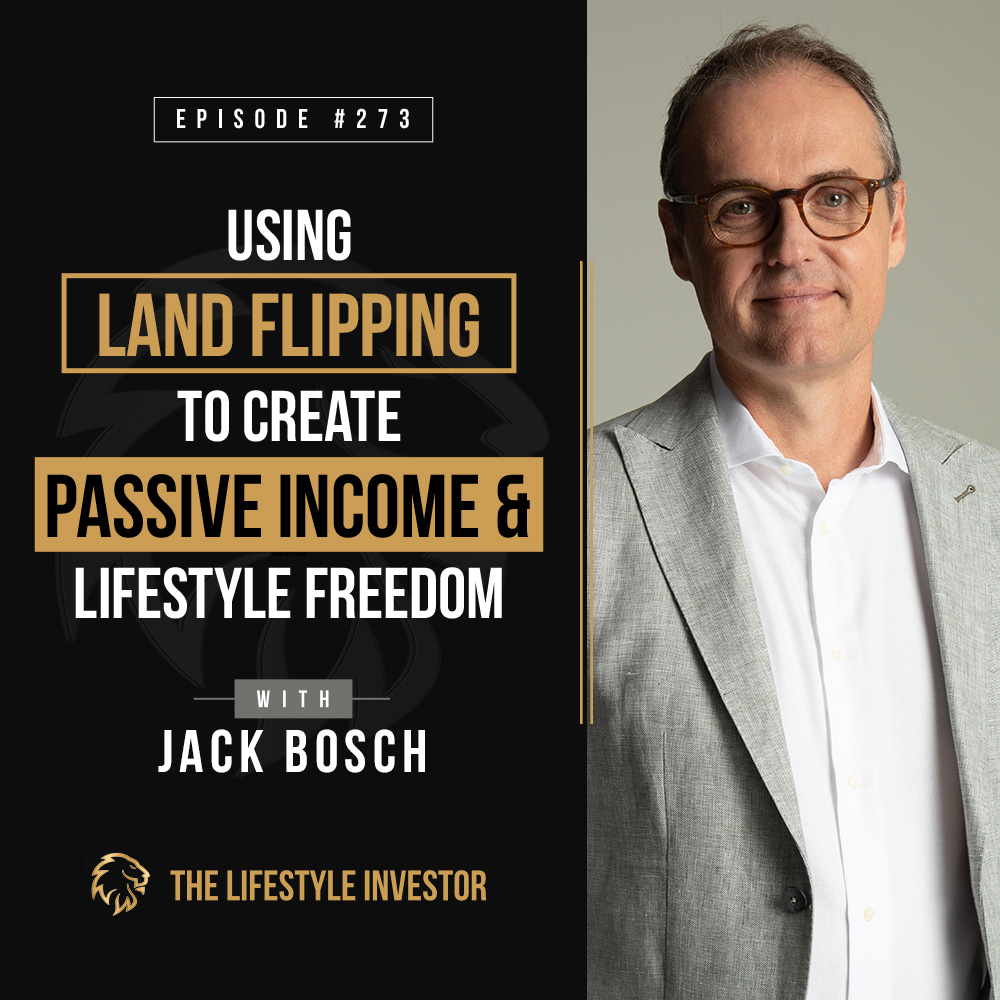
Using Land Flipping to Create Passive Income and Lifestyle Freedom with Jack Bosch – EP 273
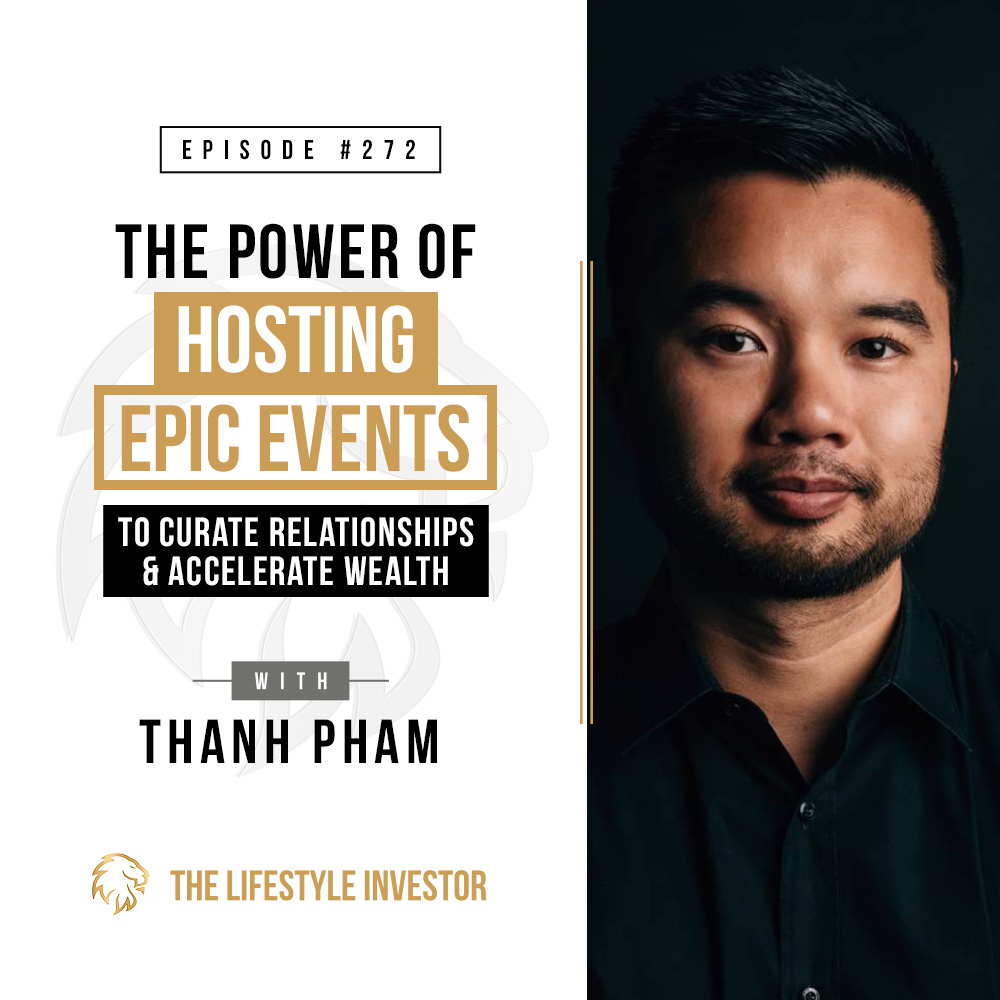
The Power of Hosting Epic Events to Curate Relationships & Accelerate Wealth with Thanh Pham – EP 272
