![[Justin Donald] - Optin Preview](https://lifestyleinvestor.com/wp-content/uploads/2020/12/Justin-Donald-Optin-Preview-e1607533704966.png "[Justin Donald] - Optin Preview")

![Logo 1 Gold horiz [Converted]](https://lifestyleinvestor.com/wp-content/uploads/2019/08/Logo-1-Gold-horiz-Converted.png "Logo 1 Gold horiz [Converted]")
Interview with Cal Callahan
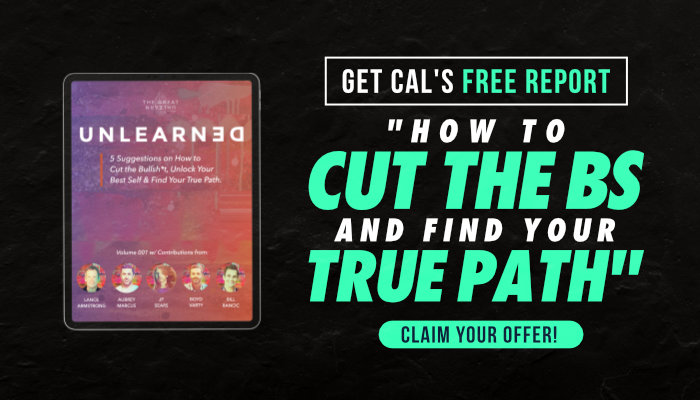
TLI Member Spotlight: Cash Flow Mastery with Cal Callahan
Today’s guest is Cal Callahan, a retired trader and founder of Unlearn Ventures, an incubator and investment fund that prides itself on backing bold and innovative projects. He also hosts the Great Unlearn Podcast, where he helps men and women unlearn their old ways of thinking that no longer serve them and build a life of integrity and meaning.
In today’s episode, Cal and I explore the ups and downs of generating, maintaining, and leveraging wealth for long-term returns. Cal shares the challenges he faced during his 25 years as a trader, and how he learned to manage his money effectively amidst a lot of confusing advice.
We also dive into practical investing strategies that won’t leave you cash-poor despite being asset-rich and how to avoid the common wealth-management mistakes that so many entrepreneurs make after they exit their business.
In this episode, you’ll learn:
✅ Cash flow and passive income strategies for slow and steady wealth accumulation rather than risking your capital on volatile ventures hoping for quick 5 to 10x returns.
✅ How to overcome the challenges of investing in private equity, stocks, and bonds, and identify deals and assets that offer tax advantages and steady returns.
✅ How to leverage Qualified Opportunity Zones and Asset Depreciation to mitigate huge tax liabilities on significant capital gains.
Featured on This Episode: Cal Callahan
✅ What he does: Cal is the founder of Unlearn Ventures, an incubator and investment fund focused on innovative projects. He also hosts The Great Unlearn, a podcast that encourages people to rethink what they know about topics like spirituality, health, relationships, and fitness. Cal’s strength lies in helping people question and let go of old beliefs, allowing them to create a more genuine and satisfying life for themselves.
💬 Words of wisdom: “I identified three different cycles where I got in a cash crunch. I was like ‘dude, you have all this money, and yet you’re in this position of real stress.’ I was looking at the wrong playbook. I was looking at this this idea of net worth is what you want to build. Now it’s time to really create true safety by starting to invest in assets that cash flow.” – Cal Callahan
🔎 Where to find Cal Callahan: Instagram | LinkedIn | Facebook | TikTok | X/Twitter
Key Takeaways with Cal Callahan
- Asset-rich, but cash-poor
- The truly wealthy don’t nitpick over every penny
- Overcoming cash flow anxiety
- Passive income > net worth
- When to aggressively invest, and when to pull back
- 9-figure exits require strategic planning
- Using cash flow and diversification to protect wealth
- How to offset capital gains taxes
- Viewing government as a partner, not an adversary
- The perks of investing in Qualified Opportunity Zones
Cal Callahan | Are You Asset-Rich, But Cash-Poor?
Cal Callahan Quotes
“I identified three different cycles where I got in a cash crunch. I was like ‘dude, you have all this ‘money’, and yet you’re in this position of real stress.’ I was looking at the wrong playbook. I was looking at this this idea of net worth is what you want to build. Now it’s time to really create true safety by starting to invest in assets that cash flow.” – Cal Callahan
Resources
- The Great Unlearn
- The Great Unlearn on YouTube
- Cal Callahan on Instagram | LinkedIn | Facebook | TikTok | X/Twitter
- The Great Unlearn Podcast
- TLI 033: The Great Unlearn with Cal Callahan
- The Great Unlearn Episode 60: Investing in Your Financial Freedom with Justin Donald
- Codie Sanchez
- Elon Musk
- Tony Robbins
- Peter Crone
- Dumb Money by Ben Mezrich
- Fox Business
- Dumb Money
- Bringing Down the House: The Inside Story of Six M.I.T. Students Who Took Vegas for Millions by Ben Mezrich
- 21: Bringing Down the House – Movie Tie-In: The Inside Story of Six M.I.T. Students Who Took Vegas for Millions by Ben Mezrich
- The Antisocial Network by Ben Mezrich
- The Accidental Billionaires: The Founding of Facebook: A Tale of Sex, Money, Genius and Betrayal by Ben Mezrich
- Ben Mezrich
- Michael Lewis
- Andrew Left
- Citron Research
- Bausch Health (formerly Valeant Pharmaceuticals)
Tax Strategy Masterclass
If you’re interested in learning more about Tax Strategy and how YOU can apply 28 of the best, most effective strategies right away, check out our BRAND NEW Tax Strategy Masterclass: www.lifestyleinvestor.com/tax
Strategy Session
The Lifestyle Investor Insider
Rate & Review The Lifestyle Investor Podcast
If you enjoyed today’s episode of The Lifestyle Investor, hit the subscribe button on Apple Podcasts, Spotify, Stitcher, Castbox, Google Podcasts, iHeart Radio, or wherever you listen, so future episodes are automatically downloaded directly to your device.
You can also help by providing an honest rating & review over on Apple Podcasts. Reviews go a long way in helping us build awareness so that we can impact even more people. THANK YOU!
Connect with Justin Donald
Get the Lifestyle Investor Book!
To get access to The Lifestyle Investor: The 10 Commandments of Cashflow Investing for Passive Income and Financial Freedom visit JustinDonald.com/book
Read the Full Transcript with Cal Callahan
Justin Donald: Well, hey, Cal, good to be here in your home studio recording for the Lifestyle Investor podcast. This is fun.
Cal Callahan: Hell, yeah.
Justin Donald: What’s really neat is, I have been pretty strategic over the years about never having a repeat guest because I feel like there’s just so many people out there that I want to interview and get to know and share their story that I just haven’t done that much. So, between you and Codie Sanchez, you’re the only two people that I have actually done a repeat interview with.
Cal Callahan: What an absolute honor.
Justin Donald: Ain’t that fun?
Cal Callahan: Like, hell, yeah.
Justin Donald: So, I thought you’d appreciate the short list, the great company that you share and just, I think the world of you and what you’re building with The Great Unlearn and just even some of the cool discoveries that we just talked about in the show that we did for your podcast.
Cal Callahan: Yeah, it hit me several different times in different ways in just discussing, sharing your journey. And the light bulb finally went off, right? Maybe I’ll just share a bit of it right now, but…
Justin Donald: Yeah, please do.
Cal Callahan: For those who didn’t listen to the previous episode, I spent 18 years in Chicago as a trader, did really well, retired from trading in 2013. We moved to Austin. We’ve been here the last almost 11 years. When I left trading, I completely left trading and did a lot of investing. I’d been investing many of the years that I was a trader. So, probably the last 25 years, I’ve been really investing in real estate, private equity, a little bit of public stuff. But over the past 10 years since I’ve been in Austin, when I don’t have a steady trading income coming in, I have to rely on my investments. And I identified three different cycles where I got in basically a cash crunch. And the first time it happened, I was so frustrated with myself, I was like, dude, you have all this “money” and yet, you’re in this position of real stress.
It happened again. And I was like, “Dude, what are you like? Come on, get your sh*t together.” And it’s like, then I get my sh*t together and it looks as though everything was great the last couple of years. And when things tightened up, I’m so heavily weighted in real estate and private equity. In other words, things that are not liquid that I’ve really been at the mercy of the markets, and they haven’t been very merciful lately. And so, I’ve got in this other cycle that I’m starting to emerge from, and it occurred to me in your share that I was just looking at the wrong playbook. I was looking at this idea of net worth is what you want to build and continue to grow that net worth, that number and everything would be great. And I was completely discounting this idea of cash flow and I had some investment advisors in the past who I didn’t necessarily work with, but I had consulted with, and they had always brought up cash flow. And it’s so, so unsexy to me.
And like, I’m a trader, I like to take risk. I want to get the 5x, the 10x, like I’m okay losing money here and there. And it was like, a bit of this unbridled trader kind of energy. And I just realized it’s no longer serving me, and I’ve learned a lot in that space. But it’s time to really create true safety in starting to invest in assets that cash flow, and when possible, like moving those assets from private equity over. We talked about on my podcast. I’m sure everyone here will listen to it, but just in case you don’t…
Justin Donald: For sure, listen to it. It’s awesome.
Cal Callahan: Yeah, again, I get so many private equity deals and I’m getting way better ones today than I got five years ago. And I’ve understood intuitively that the most important thing that I can say is no. And through our conversation, I realized that none of these investments are going to change my life in an appreciable way because (a) I am not going to be able to invest that much money into them because I just don’t have the capital right now. And because of that, the return, no matter how great it is, multiple of a small amount is not going to change my life. What is going to change my life is change to a new strategy that is sustainable, that I’m not at the mercy of so many other variables than what I currently feel like. So, I mean, I’m still processing a lot of this from just an hour ago, but it feels really liberating. I see the path very clearly. And I am really looking forward to working with you and your team and really being able to execute that plan.
Justin Donald: I love it. I mean, it’s so exciting. And your story is amazing. Your story is one of great success and your story is also one that I feel like most people kind of fall into. And what I mean by that, I mean, obviously most people actually aren’t doing great financially. So, of the percentage that are, your story resonates because this is what I hear a lot with the people that join our community, which is I made a lot of money. And I was using a certain playbook and I was trying to optimize the returns. And by the way, I’m guilty of this, too, where it’s like, I want to optimize, get the best return I can on these dollars because you gained your wealth via concentration, as most people do. You did so on the investment front as a trader. A lot of people do it on the entrepreneurship front as a business owner, and there’s a transaction and there’s a lump sum of money. In your instance, it was just accumulated over time, but it’s still a lump sum of money, right?
And so, either scenario, that’s kind of what happens. And I think that for most people, that concentration is when you earn the money that way, it’s almost like, okay, well, I need to keep doing that. But the wealthiest people don’t. They turn to diversification, and instead of trying to optimize every dollar, they say, hey, this allocation, this percentage, I’m going to optimize. But this percentage, I don’t have to optimize because it’s actually a hedge. In case the economy goes into a downturn, we can make money over here, right? So, the whole idea of stocks versus equities versus bonds or fixed income, you’ve got uncorrelated assets where maybe it’s investing in wine, bourbon, art, tequila. Maybe it’s just some sort of Scotch or other type of whiskey, artifacts, those are generally uncorrelated to the stock market. Cannabis, hemp, CBD, in some instances, if it’s publicly traded, it’s correlated, but there are ways to do it where it’s not as correlated, right?
And so, I think most people, they still have this approach of number one, I’m really good at what I do even though the thing that I’m transitioning to isn’t what I was doing before. I’m an entrepreneur, I crush it there, I’m going to crush it in investing. Or I’m a trader, I crush it in investing, so I’m going to crush it over here in alternative investments, right? And the skills, they don’t translate that cleanly that easily. But also, it’s an approach. It’s the wrong mindset for most, which is let me put all my assets back in.
We hear the story of Elon Musk doing this with his first company and then kind of rolling it into the next, the next, the next and putting all his chips in. And for him, it worked out. For 99.9% of everyone else, it doesn’t work out. But we don’t hear their story, we hear Elon’s story. And so, I think it’s good to recognize that there’s this different playbook and that playbook, instead of trying to optimize every dollar, it’s, hey, we’re going to put 15% to 25% in public equities, and we’re going to do this over a nice allocation of a large cross-section, an index that covers a large amount of stocks, right? And then, on the private equity side, it’s going to be 20% to 30%. And we’re going to go in smallest percentage on the riskiest thing, which would be seed round. And then, maybe it’s 10% or 7% on venture. So, you have maybe different rounds. So, maybe it’s not all seed. It’s a little beyond that, right?
And then you get some secondaries, you get into some private equity deals. And so, that whole portfolio is a percentage. You’ve got real estate. You’ve got private credit. So, that’s the private side of the public fixed income bonds and treasuries, right? But having both, I think, is important. And figuring out what that allocation is because if you have the whole portfolio, the whole pie chart that’s broken down, now, the money is working in harmony. The capital is working in different sectors. So, the blended performance over the long haul is going to perform better than being highly concentrated in any single asset class. It’s a fascinating approach. It’s a much different way of doing it. But you look at the wealthiest people in the world, this is how they do it.
Cal Callahan: Yeah. No, it makes sense. Just as you were sharing that, I became aware of this fear I have of having too much dry powder, this, if I have X amount just sitting there and it’s not being taken advantage of. As you had said earlier, sure, you can put it in Treasury or whatever and you’re actually getting something from it today. So, let’s say…
Justin Donald: Versus in our lifetime.
Cal Callahan: Again, let’s say you’re not getting anything that’s not available, like there’s something about it for me where that’s really challenging. And so, that’s what I’m going to be running up against, like, over the course of whatever this period of time is, as I start to gather resources again, instead of writing checks. And so, how do you suggest, like, how do I work through that?
Justin Donald: Well, I love the question because the question is a high-quality question, right? Tony Robbins always talks about that you’re always going to have questions, but the goal is to have higher quality questions or you’re always going to have problems, the goal is to have higher quality problems, and so, to upgrade your questions, upgrade your problems. And so, when I think about it, that’s a good quality question that was just asked there that’s going to produce an answer or a result that’s different than the questions that maybe you’ve asked before. They produce a different…
Cal Callahan: Yeah. Why do I keep f*cking this up? It’s like, that’s not getting me anywhere.
Justin Donald: But I do think it’s a lot mindset. I think that people underestimate the impact that mindset has on everything because there’s still this desire to make sure that we’re not missing out, we’re not losing out. We’re not missing out on a return where we’re getting all the dollars to work. But if you think about it from short term versus long term, maybe the short term, you lose money because you got money sitting in cash. And so, someone focusing on that lens is like, oh, I can’t sit in cash then because I could be making 5% more on my money or 10% more on my money. But the person who then thinks long term and says, yeah, well, I’m only making 5% of my money today when I could be making 10 to 15, but the moment one of these killer deals comes around and I have the capital to do it, well, now, all of a sudden, I just made 20% on that deal or 25% or 30% and it totally negates the short season of sitting in the cash.
And so, I think we’ve got to allow ourselves, and by the way, I’m guilty of this, too. So, what you’re talking about, I have lived this and I will say that sometimes, it still comes back and I still live it, right? And I got to go back through the reps again or check my investment criteria to figure out, like when I was in a strong emotional place, what decisions did I make? And what do I need to therefore make today when emotionally I’m feeling swayed versus I made something, a criteria based on facts when I wasn’t in a highly emotional state? And I need to trust that over where I’m at today. But this is where we get into mindset, where we can say, hey, actually, it’s okay to not be optimized on these dollars because these dollars are not here to be optimized.
Cal Callahan: Yes.
Justin Donald: Right? These dollars, we’re going to optimize these dollars, and we want to be good at it, but we’re going to allocate differently. And so, I just think it’s figuring out what is reasonable and comfortable to you. And maybe it’s a small percentage on the dollars that aren’t optimized today.
Cal Callahan: Well, as I was thinking about it, it’s like, okay, well, how has it felt over the past, like the last 10 years to be trying to optimize all those dollars? It hasn’t felt very good. There are periods it feels great. But right now, I don’t feel great. And there have been periods where I hadn’t felt great. And so, I only need to look at my own experience with that and start to just shift like, again, just looking at things through a different lens. And I’ve never had the 25-year view. And just to like have that be something that really resonates today, I think is the type of thing that can hold a much bigger vision for where I want to be in 25 years, and then I get to create shorter term goals that I orient towards. And that looks like shifting from private equity investment into cash flowing, low-risk opportunities, which again, I mean, look at those things. I have no deal flow there because it’s just not something I’ve been calling in. So, it’s going to be interesting to see what that space looks like.
Justin Donald: Yeah, there’s no doubt. And it’s a different approach. I like cash flow deals first because I just think the playbook opens up when you figure out how to take care of what it costs you to live your life or what it costs you to at least get by at the bare minimum. I think, everything changes. The script, the game, it all shifts in a very positive direction. And so, I like to really help people think about how do we win that game first? How do we get utility out of these dollars today? Most private equity, long-term deals, stock market, qualified plans, it’s hard to get the utility on those dollars or it’s impossible to get the utility on some of those dollars, right? But there are dollars we can get utility on today.
And we’d even talked earlier about the difference between net worth and live– I would say financial independence and passive income. And I always put, it’s funny, I gave a message where I kind of had the passive income-eating net worth. It’s like this is way more important to me than the net worth because the net worth is going to naturally grow as the passive income grows. But we might as well create some utility today or a lot of utility today to live a better quality life, buy time back, and then we can figure out all the other stuff. We can go more long term, but let’s solve for the immediate life issues, the things that we’re dependent on, the things, if money is not solved for, then we are living every day to solve for the financial equation.
When you solve for the financial equation, then you don’t spend any time solving for the financial equation. And that’s where the game comes in. That’s where it shifts from, like, I need to do this. There’s a stress around money or a stress around lifestyle too. Wow. Now, I have this freedom, like, this weight is lifted off me. I can breathe freely and I get to choose my adventure, right? It’s a totally different set of circumstances and it’s my goal to help people get there first because it creates a lot more options in the aftermath.
Cal Callahan: Yeah, a dude like this reminded of a couple weeks ago, but he reached out and he had just invested in a– what is it? What is the stuff you put around your shrubs and stuff like that? Mulch. Mulch farm.
Justin Donald: Yeah, okay.
Cal Callahan: And I forget what he paid for it. But he’s getting 20 grand a month in passive income and just relative to what he paid is like, holy sh*t, that’s a great number. And I don’t have the ability to do that right now, but I get now, reflecting back on that and the conversation we’ve had today, it’s like, oh, that is really sexy.
Justin Donald: Yeah, it’s interesting because for a long time, I would say there was a little bit more of a stigma of it being not as cool to have a mom-and-pop business, to have this SMB, small and medium business. And it was way cooler, way sexier to invest in venture capital or some sort of venture fund or in private equity. Like, that was sexy. Wall Street has always done a good job with their massive education around how they need to have all your money, and that’s the way to do it.
But if you pay attention to social media, you pay attention to some of the trends that are going on, what’s actually becoming really, in vogue, like, today’s popular thing, like pop culture is, and I would just say the cool thing to do is lifestyle businesses, boring businesses, mom-and-pop businesses, real estate rentals, so real estate that produces cash flow. But it is the cash flowing deals. They’re actually becoming cool and sexy and more the coveted thing, whereas it’s a flip flop in what have been the major industries before the private equity and the venture.
Cal Callahan: Totally. So, I’m getting on– I’m not part of the forefront of this shift.
Justin Donald: I like it, I like it. Well, I think about a number of things around this. And by the way, I appreciate your openness, your vulnerability to come on the show and just say, “Hey, here’s me, here’s where I’m at, this is real life,” because you’ve done very well. And by most people standards, you have won the game. You’ve crushed it. You are in a stratosphere of your own. And we’re talking in vague numbers, but so, our audience here understands, you have done very well. You have succeeded at a high level. Your home is one of the coolest homes I’ve been in.
Actually, your podcast studio that we are in right now is in a castle that’s not even your primary home. This is a secondary home on a whole bunch of acreage. And this room is incredible. This whole estate here is incredible. And you were able to find this deal, I guess, at an auction, I believe, right? And you got an under-market deal here that you were able to put together and buy this. And I remember hearing about it, and I was like, “You got it for what? That’s unbelievable.” Like, I don’t know the real estate around here, but I knew that was under market, which is cool.
So, I just want people to know, you have won and you’ve done well, but what you’re still doing is you’re still learning. Or as you like to say, you’re unlearning. You’re unlearning the way that you did it before and you’re learning the way that you want to do it moving forward. And so, I commend you because I think most people just arrive.
Cal Callahan: Well, thank you. And listen, I’ll be the first to say there’ve been many years I thought I had it figured out in this investing thing. I love that Peter Crone likes to say, life will present people in circumstances to show you where you’re not free. And I am certainly not free in this space in a way that a number in my account would suggest. And so, with that in mind, you talked earlier on my podcast that it’s really cool to see you kind of pop out of it. It’s like, yeah, I’ve been in that mindset for 25 years, and had enough maybe success there to affirm that this is the right way. And I hadn’t really had– I wouldn’t say any mentors that– actually, I probably did have mentors, but I wasn’t open to really listening because it didn’t feel like my path.
And so, it’s encouraging to me that as a 52-year-old man, who’s been investing in this stuff for 25-plus years, to wake up today and see that I can do this completely different and actually get the freedom. That’s really what I want with my financial kind of situation is just true freedom. And it wasn’t until today that I understood the mechanics of what’s keeping me stuck. And the beautiful thing is it’s 100% within my means and control to change it, to shift it. And so, that’s really encouraging and really exciting. And I’d say it would have been nice a couple of months ago when I wake up in the middle of the night and couldn’t f*cking sleep to have had this. But you know what? I wouldn’t have been able to receive it. And I had to go through that f*cking dark night of the soul, again, like, talk about beating yourself up. Like, how did you get here again, man? Get your sh*t together. There’s a lot of shame around that.
And I was in it for longer than I would have liked. And the one thing that started to come out of it is I started to figure out some ways to generate income, which were there at the time when I was really struggling, but I was so in the tunnel that I couldn’t see it, and I started to just kind of be me again. And things started to happen and I started to generate some income, and then I started to figure out other ways, too. I had a decent amount of money in a real estate fund. Even if I had to take a penalty to take it out, I would have done it because I wanted to have that security again.
And I started to get really creative on what other things are out there where I can pull in some money. Dude, years ago, I had put some money in two different jet card companies and put 100 grand in each. I used them both ones. We don’t fly private. We did twice as a thing. It was fun. Then it got really expensive and, like, that’s stupid. And so, then I just pulled back in 150 grand. But I couldn’t see that two months ago. And it’s like, there’s other ways of where else can I just pull some chips off the table? Do I need to take a little bit of a loss here or sell out of something early here? Maybe. But what’s 25 years look like? This thing right here, how locked up I feel is not going to get me closer to 25 years. I need to start to unwind this slowly. I would say, I can do it slowly, I can do it responsibly. But also, if I get a little bloody, that’s okay.
Justin Donald: Totally. And by the way, I would also say that the stresses that we all experience from time to time, sometimes greater than others, but when we get into that place and we’re like, how did I do this again? I’m just paddling to stay above air and not drown here. Like, I’m barely grasping breaths of air. I think it’s in those times of struggle where we become the most resourceful, right? So, it’s like that struggle actually creates some creativity, some getting outside of the box, thinking differently. It’s like out of necessity. There’s no other options. I have to solve for this. And we become resourceful. And I think that there’s something beautiful in that. I recognize and completely relate with when you think you know it, no one else is getting through to you. When you’re like, hey, I’m good at this, no one else is getting through, right?
Cal Callahan: You don’t even have to be a dick about. You’d just be like, thanks to this coolness. Like, this is me, this is who I am.
Justin Donald: That’s right.
Cal Callahan: Just wrapped in that identity.
Justin Donald: 100%. But the problem is, for those that have been investing, we’re now, as of a year ago up until today, and we’ll see a lot more of this, most people thought that, I’m such a good investor. Why? Because you could do no wrong in the last 10 years, right? So, that season gave people a false sense of confidence.
Cal Callahan: Big time for me, yes.
Justin Donald: And because of that, they know how they made money inside of one small microcosm of the economy or microcosm of a sector of real estate or a sector of private equity, whatever. It worked in that season. It worked in that moment, but that same deal wouldn’t work today. That same deal wouldn’t work 20 years ago. That same deal won’t work 10 years from today. That same deal won’t work, you said, 25 years as you’re thinking top down, where do you want to be in 25 years? And so, it’s like, we got to be careful that what we think we know is actually what we think it is. Like, did we really learn good habits? Did we really make good investments? Did we really make good decisions? Or were we rewarded based on luck, timing, circumstance? And that the whole causation debate, what was it? Like, are you that good of an investor? When I say you, I mean everyone. Like, am I that good of an investor? Or everyone listening here, everyone watching here, are you that good or the people you know? Or was it just the right place at the right time in a season where it was hard to go wrong? But that season shifted.
And today, a lot of those deals don’t pan. And a lot of those deals are going to literally fall apart. I mean, we’re already seeing it. The last six months, we’ve seen a bunch of this. I mean, some funds that they literally target these real estate deals that are falling apart or these private equity deals that are falling apart and getting them for crazy low prices because they just have to be bailed out.
Cal Callahan: Yeah. And that’s again a shifting of, for me, perspective on what are the ways to generate income and how to– still hard for me to unlock the net worth thing, but really building something, building your kingdom, whatever you want to call it, and just to start to zoom out and for me, to pick my head up and it feels really good to, honestly, this is a f*cking no more private equity. I’ve looked at a lot of deals, and my due diligence is okay, I rely a lot on gut, and I have some other friends who look at deals, and so, they ask some different questions. So, that’s really helpful. But I felt like I’ve been completely hooked to that wagon. And there is definitely an identity in that, and it’s like, I’m happy to start to kind of unlock that piece.
Justin Donald: Right. Shed it. Shed what doesn’t work. Shed what’s then moving you down one path that you don’t want to be on and pursue the path that you do. Like, that to me is why I’m so excited to spend time with people like you who are willing to make the change, make the move. But to me, it’s about buying your time back. It’s about truly creating a life by design, not a life by default. It’s not being on autopilot and being so busy. It’s thing to thing to thing. Not thinking. It’s like life that is happening, right? Life that is, you’re defaulting into this life. Life by proxy, versus a life by design, a life with intentionality, living truly.
And by the way, you live really well. Like, you’ve got a great lifestyle. I’ve seen you have a blast. Your 50th birthday party was one of the coolest parties I’ve been part of. You had, like, just, I mean, a classic bit.
Cal Callahan: Better than it is, right?
Justin Donald: That played for your 50th with fun wigs and just, I mean, it was a total blast. And you guys travel all over. You’ve got a really cool place in Coeur d’Alene, where you guys will summer. So, from a lifestyle standpoint, man, you live the life. And I love that. And I’m so excited for what it looks like when passive income is the fruit that you live that life by, right? It’s like, a lot of people will have a big exit and they’re like, I don’t know what to do. I got a whole bunch of cash. And a lot of these people join our group. We have tons of people who’ve had eight, nine-figure exits that join Lifestyle Investor Mastermind. And it’s not exclusively that. We probably have 40% or so that have had a big exit, another 40% that have a business, an entrepreneur, and then 20% high income earning executive or professional, right? Doctor, lawyer, C-suite, highly paid salesperson, you name it. So, that’s kind of the breakdown.
But we see all the time people that they have all this money, but what ends up coming out is this scarcity around money. So, it’s the most money they’ve ever had, but they’re like, oh, my goodness, if I keep spending money, then my net worth is dwindling. And I’ve got no cash flow. I had a business, I could cover all my expenses, but now I don’t have a business. So, that number in my bank account or that number that I see on my personal financial statement, like every single week or every month, it’s dwindling down. And so, it’s funny, they’re the richest they’ve ever been, but they’re literally the poorest mindset or the scarcest around money that they’ve ever been.
Cal Callahan: So, how do you help them shift with that?
Justin Donald: Well, I think…
Cal Callahan: And I understand it’s kind of a broad question, but think about maybe one person that, how would you have guided him or how did you guide him?
Justin Donald: Well, I mean, I can think of one person in general, specifically, who he’s like, I’m not going to change my lifestyle. This is my lifestyle. So, I recognize if I don’t solve for this, I’m going to run out of money. This seems like enough money for the rest of my life. You look at taxes, on that big number. And by the way, this sounds crazy, but you have a nine-figure exit, you think you’re probably set for life. Well, nine-figure exit with taxes, let’s say you lose half of it. You don’t have any good strategies or any good plans, right? Let’s say that you get divorced, you lose half of that. Let’s say that you think you’re as good at investing as you were at being an entrepreneur and you lose half of that, and then you show up and you’re like, wow, I had enough for the rest of my life. Now, if I live my current lifestyle, in 10 years, all my money will be gone, right? So, we see a lot of that, which is fascinating.
And so, how do we help people cover their lifestyle with passive income? How can they first, not focus on taking homerun swings, how can we focus on singles and doubles that have plenty of protection on the downside? Deal goes bad, you’re not losing everything. A deal goes bad, maybe you lose some, but you don’t lose all, right? But as it performs well, it’s also less risky. You’ve got some cash flow. Every single month, you get cash flow, or every single quarter, that deal is de-risked. You’re getting some money back versus it being locked up. My joke of early stage investing, seed round investing is, like, zero percent, interest-free loan for an undetermined period of time and the highest risk asset, right? It’s more asset class.
And so, it’s the opposite of that. It’s like getting dollars back with regularity, a cadence where you can live it on, but the deal’s been de-risked all steps along the way, and you actually have an asset that’s worth something that should everything go wrong, you can sell it. There’s intrinsic value in that versus a company going to zero, right? And so, we just help them figure out how they can invest in a way that in a worst-case scenario, they don’t lose everything and they don’t even lose most of it. And in a best-case scenario, they do really well. But what’s likely going to happen is not the worst case, is not the best case. I want to take both into consideration, but it probably happens somewhere in the middle.
So, how do we get that lifestyle income? Once they have that lifestyle income, it opens up the playbook, right? Now, we can say, hey, all right, let’s look long term at some deals. Let’s look at long term, getting a 3, 4, 5, 6x, maybe even a 10x, right? I mean, maybe it’s greater than that, but those are home run swings. I would rather start with the sure thing, get the cash flow where it means to be, and then pivot from there. Diversify even more from there.
Cal Callahan: All my expenses are out of control.
Justin Donald: Well, there’s always– and by the way, some people say, hey, let’s decrease expenses. That’s a lot harder than what I always say is, how do I buy assets to equal those expenses, right? And so, those are the two games you play. You’re either decreasing expenses or you’re increasing revenue or income coming in. We could look at this on a business standpoint. You’re an entrepreneur. You have revenues. You have costs. You have your net profit. We can even dwindle it down even further to cover in debt service and what’s left over and yada, yada, free cash flow, all that.
But the same thing is true on a personal side of things, right? What does it cost to live? What are your expenses that equal that cost? So, what do you need to earn? Where are you at right now? What’s that delta? We can either decrease those expenses or we can increase the income coming in or both at the same time. And the playbook could be as simple as, hey, let’s just get some of these expenses covered every month or every quarter or every year, depending on the cadence, depending on the cash flow, depending on the capital to put to work.
But I think most people want it, they think that it’s overwhelming. What do you spend in a year? Well, that’s a lot. It’s a lot more than what you spend in a month. So, it’s like, let’s focus on that month because that’s a bite-sized piece. And then instead of saying, hey, how do we do it in one fell swoop? Most people aren’t going to do it in one fell swoop. So, how do we do it over time? Maybe it’s a focus of like, hey, in the next three to five years, this is the play, but in order to get there, this is what we need to be doing on a quarterly or a monthly basis.
Cal Callahan: Yeah, I love that because my inclination, I think, like many men who are– there’s a problem, here’s a solution, let’s enact it immediately. It is to be patient with it. And like I said before, it’s not that you don’t maybe get beat up on a few things, like be willing to– that was one of the things as a trader, I felt like separated the good traders and the great traders. The great traders could have a bet on they loved, absolutely loved, and they just had to get out. They had to puke it for a loss. They still loved all the fundamentals, but it was hindering them from everything was stagnant at that point and they weren’t able to trade.
And so, fortunately, that was one thing I did. One of the many things I learned as a trader was I was able to put the ego aside and puke when I needed to puke. And I’ve already experienced a little bit of that recently with just trying to move some things around. And there’s more of that to come, but also the balance with patience, which is just not my greatest asset right now.
Justin Donald: And I just finished the book Dumb Money. I don’t know if you’ve read it. It’s so good. It’s about the meme stocks going on. Ben Mezrich is one of my favorite authors. And as you know, I’m flying to New York City tomorrow to be interviewed on Fox Business. And so, the movie that I want to watch is Dumb Money. They turn it into a movie.
Cal Callahan: Oh, really?
Justin Donald: Before I ever watch the movie, I always read the book. So, I downloaded the movie. I’m ready to go. I’m going to watch it tomorrow. And I finished the book literally last night.
Cal Callahan: So, is it good?
Justin Donald: It’s a fantastic book. I mean, all of Ben Mezrich’s books are fantastic. I mean, he did Bringing Down the House, 21, Social Network. I mean, Accidental Billionaires is an incredible book. I mean, I could go on and on and on. Like, him and Michael Lewis are my two favorites. I read all– every book that they’ve ever written, they’re just so good. But the point is, the people that made money, made the most money in the meme stock, GameStop and all these other ones that…
Cal Callahan: AMC was a big one, right?
Justin Donald: AMC, just retail investors versus Wall Street. But on either side, the people that made the money were the ones that actually followed their plan and got out without trying to maximize. So, if you’re trying to maximize and optimize every dollar, then it becomes harder to get out versus taking a winning position, or at least taking part of a winning position so that you are in the win. And then maybe you let a little bit more ride. But you pay attention to the traders, again, both sides that made money in this and made tons of money, they’re the ones that said, hey, we need to clock this game right now. We might miss out on more, but let’s just take a winner while it’s a winner.
Cal Callahan: Yeah. Similar to as a trader in the trading pit, sometimes you’re able to buy something at such a ridiculous price or sell something so high. And you have a lot of it. So, what do you do? You just hit, like if you sold it really high, you just come in and you buy it back at whatever the market is. And so, you’re going across the bid offer, you’re going to pay up for it, but you’re locking in a huge winner. You don’t do it for all of them necessarily. You let some other ones ride maybe, or you have a position that’s going so far your way. You just sell 20% of it. Like, let’s lock this thing in.
Conversely, you got one that’s going against you. You sell some of it out. Like, I hope that’s a bad trade because that means my 80% that’s left is good. So, it’s this whole mentality of having a plan which I love, and I’m curious, I’ve got two questions. One, do you remember if they mentioned a guy named Andrew Left in the book?
Justin Donald: Nope, they did not.
Cal Callahan: He is an advocate short seller who took down– what was the big pharmaceutical company in Canada six, seven years ago that was up into the 300s, and he showed that they were basically a fraud and took them down? So, that’s where he made his name. His company is, well, formerly Citron Research.
Justin Donald: Oh, maybe they did mention him. Citron was…
Cal Callahan: He got run over. He got death threats and everything because he shorted AMC. He’s like…
Justin Donald: Yeah, he was in it.
Cal Callahan: Yeah. He’s like, this is, what are we talking about here? It was pretty ugly for him. He no longer does it. I think just for the whole energy of it, just felt really bad. But he’s been sued. He’s never lost. And his whole thing. he and his team do research. And then when they find some sh*t going on, they short it and then they share their research. So, they take their position and then they share, like this is why we shorted it. And the market either agrees or doesn’t agree. And so, they get sued obviously, by a lot of these companies. Oh, Valeant. Valeant, I think was the name of the company. Anyway. That was one question. So, yeah, I may have to read that book.
Justin Donald: Oh, it’s good. It’s worth it.
Cal Callahan: Let’s say, I have one of these private equity investments that is going to have an exit a year from now. What’s the simplest way to protect myself from a huge tax gain? And now, first question is if I invested two years ago and I held it for three years, am I taxed at long-term capital gains or is there some other funky thing that they try to get me on?
Justin Donald: Yeah, so as long as it’s been invested for over a year, it should be long-term capital gains. And there’s a lot of strategy. So, if someone is an entrepreneur, they’re probably going to have a lot more options than if they have a W-2 job, like a formal job. Then it opens the playbook for more options. Also, if someone is purely an investor by IRS standards, they live in this world of passive income. So, even something like that would be passive, right? You’re not actively doing that. Then there’s just even more resources available. But a lot of this can be done via depreciation and assets, maybe real estate. So, you can offset some of those gains. You can do this on some film. There’s plenty of IRS. There’s tax code that…
Cal Callahan: The film one seemed like it was more of a short term, right? Well, income…
Justin Donald: Well, there’s all different types of things, right? So, there are tax credits. I mean, Georgia has some really good ones, California. So, it just depends. But I think the bottom line is there are resources out there, there’s allocations out there. There’s also paying your kids. There’s also the Augusta rule where you can rent out your home for 14 days based on market rate that you’re not taxed on. I mean, the list goes on and on. So, it’s like a whole bunch of small things added up ends up being something pretty big.
But there are strategies out there to do it. But the time to start researching them is now, right? Most people have the transaction and then they’re like, oh, what do I do? And then they don’t have enough time to do anything or they just pay the tax. I think that we should pay what we owe in tax, but we shouldn’t be tipping the government, like we should be utilizing the tax code for what it is, the tax code, the playbook. The playbook is designed to give you as a taxpayer, opportunities or advantages, if you’re partnering with the government, helping them do the things that they want to do.
So, the government is always trying to solve for affordable housing or just housing in general, for agriculture, for solar, or renewable energy, right? I mean, so a handful of other things. So, if you can just help solve for those things that there are clear paths in the tax code that say, hey, you can take these credits or you can take these deductions. And so, most people are like, “Hey, IRS, I can’t do this.” And that’s not it. It’s not all the stuff you can’t do. It’s hey, here’s the playbook, here’s what we need as a government to make sure that we’re thriving. We’ve got to solve for these. If you partner with us, we’ll share some of those benefits with you.
Cal Callahan: That makes perfect sense.
Justin Donald: A different way to look at the playbook, right?
Cal Callahan: Yes.
Justin Donald: And to look at it as a playbook, not a you can’t do this or you have to do this. No, it’s a playbook. What does it say? What does the government want? Great. Let’s not look at the government as the adversary. Let’s look at the government as the partner. How do I show up in a way where I’m partnering?
Cal Callahan: Boy, is that a different mentality?
Justin Donald: Yes.
Cal Callahan: Originally, they were a partner. And then when I woke up, they became an adversary. So, there was an unlearning. And I got to learn that sh*t now they’re back to being a partner. They’re both.
Justin Donald: Yeah. Now, it doesn’t mean they have your best interests in mind.
Cal Callahan: That’s right.
Justin Donald: They have their best interests in mind. But when those get aligned, then you can win.
Cal Callahan: Here’s a question. I know it’s your podcast, but I’m sure everyone wants to hear about this, who’s ever been curious about it and if they haven’t heard of it, I think it’s an interesting thing. What’s your understanding? Have you looked at all at this ability to work with natural law and be outside the tax system?
Justin Donald: So, this is as deep of a rabbit hole as one can get into it.
Cal Callahan: That’s why I explored it a little bit three years ago. I don’t have the capacity for this.
Justin Donald: It’s intense. My findings are that this exists. I know people that have done it.
Cal Callahan: High-net-worth people.
Justin Donald: Yes.
Cal Callahan: Because the people I’ve heard from are not high net worth, they’re just like I’m getting out of this thing. It’s like you don’t have as much to lose.
Justin Donald: It’s a lot harder when you’re high net worth because you’re dependent in some ways upon that. So, for example, sometimes people that have a minimal lifestyle or are already kind of travelers or, I guess, the digital nomad crowd, it’s a lot easier when expenses are low to just say, I’m opting out of the system. I’ll figure it out. It becomes a lot different when you have a family. It becomes different when you want to rely on the government or like, I mean, if you’re buying real estate and you want to use agency debt, that’s the government’s arm, right? So, there’s a benefit for being in the system and that you can get non-recourse loans that are 30 years in term with really low interest rates. Or even the banking system, maybe you’re not doing it through agency financing, you’re doing it through local banks or regional or national banks. Well, you probably need that system to help you out. For people that are not looking to grow their wealth or their assets that way, it’s easier for them to opt out. So, again, I’m not an expert in this. I’m nowhere even close to an expert.
Cal Callahan: It’s so deep. You’re right.
Justin Donald: It is. But there is definitely some truth to, I mean, you can renounce. That’s one thing that’s totally separate, but you can also just opt out of the system depending on, if you can give up all that the system actually gives you, that you may realize you don’t need, but most people probably would have a hard time with it, I think.
Cal Callahan: Okay. Yeah.
Justin Donald: I say the jury to a certain degree is still out, but for most people, I don’t know that it’s reasonable or as feasible from just like, can it be done? I think it can. But does that actually hamstring some of your freedom? I think it might, but it depends on your lifestyle. It depends what you’re comfortable with. It depends what you want to use in the system.
Cal Callahan: Yeah. And my expertise is not, as I say, doing my own research. I’m not into that type of thing. And for that, the stakes seem so high that I would, on the one hand, have to be relying on someone to really guide me through it, an attorney or whatever to do it. And it’s just like, I’d be potentially saving, doesn’t seem worth it, yeah, so it’s…
Justin Donald: It’s tricky. I mean, I feel like if you can figure out how to get the system to work for you, not you working for the system, that’s the name of the game. And so, do you have to opt out if you’ve already won the game? When you figure out the financial freedom side of things, you win the game. The game changes. You may not want to opt out of this system that has created such freedom for you. And you can also be a resource to others to find that, to help them, to coach them, to mentor them. You’re also giving back in a good way. I mean, it could be charitable giving, but it’s also investing in things that the government needs. This is good for people. This is good for agriculture. It’s good for renewable energy. It’s good for housing, right? So, there’s ways that you’re offering a lot of value also. So, when the game buys a lot of financial freedom, but in the process of doing that, I think our responsibility grows for the impact that we can and should have on the world.
Cal Callahan: Did you put any resources towards the– what is it? Qualified Opportunity Zones?
Justin Donald: Yeah. So, I think that in kind of where we are today, we’re kind of getting close to the end of that being, what I would say like early on, I think there’s just a lot more benefits than there are today. We’re kind of at the end of that story. Now, if it gets extended out, which there’s talk about that happening, could it become more viable again? Sure. Did I look at a lot of stuff early on? Sure. Did I get invested in some things that– let me put it this way.
A lot of people lost or are going to lose a lot of money doing this strategy by investing in deals that are not good deals, but it was the tail wagging the tax dog of like, well, I get to save money. So, the only time I ever invested in Opportunity Zones is if I would have invested in the deal straight up regardless. And then, oh, yeah, by the way, it’s in an Opportunity Zone. And that for me has been how I’ve done every one of them. And so, I’ve said no to most of them and I’ve gotten into just a small handful of them. But the ones that I got into, it was so good even without it. It was like, wow, that just amplified it. It was like, a deal on steroids because the Opportunity Zone also existed.
Cal Callahan: Yeah. And the reason I asked because we were obviously talking about working with the government, and that was a great program that they put together. And my guys in Chicago, who I do a lot of real estate investing with, I’ve had a couple of funds and back in ‘18 and ’19, I put some money in and they had the same thesis as you. We’re only looking at things that are great deals, period, and that we would underwrite and approve. And then we get the benefits on top of that.
Justin Donald: And getting back into it back then, I mean that’s good. That’s much better timing than getting into it today. I think it sunsets in what? 2026 and some of it. So, I mean…
Cal Callahan: It was weird. It’s like there’s a window where it says 7 to 10 years. In 10 years, you get the most benefit. After seven, you can…
Justin Donald: That’s right. There’s two different kind of flagpoles, if you will, with different markers of benefits. At a certain point in time, you will pay the taxes on the money that was deferred, right? You just aren’t going to pay taxes on the gain of what was beyond that. So, it was nice as a deferral play and it’s nice as a tax-free growth play on the additional dollars if the deal was good enough to do it. And so, yeah, I think for the right deals at the right time, it was fantastic. And hopefully, this is extended and we’ll see how that looks. I mean, they are right now talking about extending the bonus depreciation, again, which has been shortened.
Cal Callahan: I don’t know what that is.
Justin Donald: So, basically, you can accelerate the depreciation on real estate or even buying a 6,000-pound vehicle or a jet or whatever, where you can take the full depreciation that would be over a longer schedule in year one. So, a lot of people use that to offset taxes. And it was a 100% bonus depreciation, and then it dropped to 80% and then 60% and then 40% in the coming years, right? It’s kind of dropped down. So, I think this is– I’m trying to even remember, I think we’re in a 60% year now. It was 80% last year, or maybe last year was the last 100% year. And then, this year is 80%. I think it’s 60%. But regardless, they’re talking about extending it out back to 100%.
And then, what ends up happening is you will be able to go back and accelerate, maybe whatever you weren’t able to do at 100%. So, it’s not like you miss out on a year. You kind of get to walk it back. But that’s only if it– I mean, we’re not the full way to that going through each of the houses, if you will. Yeah, it’s all fascinating stuff. This is why I love talking about, I love having a community where we can geek out on tech strategy and wealth creation and doing so at a really high level, right? World-class educators and experts and instructors and finding people that you can play the game of business in life and wealth creation at a much higher level than you are at now or have done in the past. And so, it’s just a blast. So, I love talking about this stuff. We can talk about it all day. I love having you on the show. Thanks for joining us again. And this has been cool. Where can people learn more about you, Cal?
Cal Callahan: Instagram, cal.callahan. I’ve been putting some stuff out there lately. And then my website is TheGreatUnlearn.com, and then the podcast is The Great Unlearn. It’s on all platforms.
Justin Donald: Love it.
Cal Callahan: Be sure to check out our episode that– we covered a teensy bit in this conversation, but it was amazing, a lot that you shared that is going to be really helpful for a lot of your audience too.
Justin Donald: Well, thank you. I was sharing off camera that I think you are just a phenomenal interviewer. So, I just want to again reiterate, check out Cal’s show. The Great Unlearn is awesome, has some amazing guests on there. And we definitely covered some stuff there that I haven’t ever covered on any of my podcasts, right? You ask great questions and it evokes and elicits a different answer. And so, I would love for people to learn more about you and what you’re doing and what you’re up to in the world.
Cal Callahan: Amazing.
Justin Donald: Not to mention you’re a fitness freak of nature.
Cal Callahan: And getting back there.
Justin Donald: Yeah, it’s amazing. You inspired me in a season of, let’s just call it, complacency, right? And so, it’s awesome. And so, I’ve never not known you to be in impeccable shape. And as I sit here today, I’m like, man, you’re keeping the main thing the main thing.
Cal Callahan: Thank you. I appreciate you, brother. Thanks for having me on.
Justin Donald: And for all of those of you tuning in, listening, watching, I love ending every episode with a question. This question is the same question every week. What’s one step you can take today to move towards a life by design, not a life by default, one that’s on your terms? And what’s something you can do, you can take directly from Cal today, a lesson, an idea, a thought that you can implement to get one step closer. Thanks. And we’ll catch you next week.
Sign up to receive email updates
Enter your name and email address below and I'll send you periodic updates about the podcast.
Keep Learning
From a 9-Figure Exit to Inspiring the Next Generation of Entrepreneurs with Scott Lingle – EP 282
How to Avoid Leaving Millions on the Table When Selling Your Business with Stephen Scoggins – EP 281