
![[Justin Donald] - Optin Preview](https://lifestyleinvestor.com/wp-content/uploads/2020/12/Justin-Donald-Optin-Preview-e1607533704966.png "[Justin Donald] - Optin Preview")
![Logo 1 Gold horiz [Converted]](https://lifestyleinvestor.com/wp-content/uploads/2019/08/Logo-1-Gold-horiz-Converted.png "Logo 1 Gold horiz [Converted]")
Interview with Adam Jason
Disrupting the Colombian Coffee Market with Adam Jason
Adam Jason is a Partner at Legacy Group, an investment firm in Latin America focusing on top-tier businesses and high-net-worth accredited investors seeking exceptional returns. Adam has a background in advising Fortune 500 companies and investment banks and has represented them in public and private offerings exceeding $10 billion.
In our conversation, you’ll hear Adam’s remarkable journey from Big Law to scaling Green Coffee Company to become the #1 coffee producer in Colombia’s fiercely competitive market. What’s truly remarkable is they have embraced eco-friendly practices and prioritized worker welfare in an industry where this is far from typical. This not only fueled their growth but also helped them create an appealing story that resonates with coffee lovers worldwide.
Adam shares the strategies behind developing and scaling the Green Coffee Company brand, which has successfully competed against giants like Starbucks and Nestle. Plus, you’ll learn how he leverages coffee and agriculture to diversify income through coffee byproducts.
In this episode, you’ll learn:
✅ How Green Coffee Company became the largest coffee producer in Colombia with 400 full-time and 2500 part-time workers, and the strategies that allowed them to be profitable for three years straight and attract $80 million in investments.
✅ Why the wealthiest are putting part of their portfolios into agriculture, a sector that offers opportunities for diversification and, in some cases, outperforms real estate.
✅ How Adam and GCC are shaking up the coffee industry in Colombia by setting new standards for worker rights, challenging giants like Starbucks with eco-friendly practices, and creating a compelling brand story that resonates with coffee lovers everywhere.
Investing with Legacy Group
Are you an accredited investor interested in learning more about investing in GCC? If so, email investor.relations@legacy-group.co
Featured on This Episode: Adam Jason
✅ What he does: Adam Jason is a Partner in Legacy Group, a leading investment firm in Latin America with a strict focus on high-quality LATAM businesses for international high-net-worth and accredited investors that can produce outsized returns. Before joining Legacy Group, Adam worked for two international law firms, Jones Day and Vinson & Elkins, where he advised leading Fortune 500 companies and investment banks in the areas of corporate finance, corporate governance, securities regulation and international business transactions, and represented them in public and private debt and equity offerings exceeding an aggregate of $10 billion.
💬 Words of wisdom: “When people purchase our product, they feel like they’re buying from a company they’re proud to be affiliated with.” – Adam Jason
🔎 Where to find Adam Jason: LinkedIn | X/Twitter
Key Takeaways with Adam Jason
- The origins of Green Coffee Company
- Becoming the largest producer of coffee in Colombian
- Setting new standards for worker rights in the coffee industry
- Every brand needs a great story
- How Colombian convinced US citizens they have the best coffee
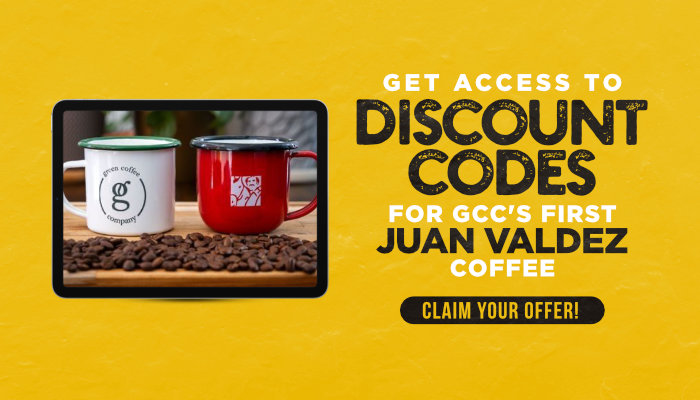
- The only US company to secure the coveted Juan Valdez brand
- What makes coffee and agriculture a great investment
- Turning coffee waste into multiple income streams
Turning the Green Coffee Company into an 8-Figure Empire
Inspiring Quotes
“We said early on, we have to treat these people correctly and do things in a different way. One, because it’s the right thing to do, two, because it adds business value, and three, when we first started this business, we were viewed very skeptically as the gringos who were coming into the country and might not have the best of intentions. So, we had to set a different standard for ourselves.” – Adam Jason
Resources
- Legacy Group
- Legacy Group on Instagram | LinkedIn | YouTube
- Email contact for investors
- Green Coffee Company
- Adam Jason on LinkedIn | X/Twitter
- Cole Shephard
- Juan Valdez
- James Hickman
- Brandon Maxwell
Tax Strategy Masterclass
If you’re interested in learning more about Tax Strategy and how YOU can apply 28 of the best, most effective strategies right away, check out our BRAND NEW Tax Strategy Masterclass: www.lifestyleinvestor.com/tax
Strategy Session
The Lifestyle Investor Insider
Rate & Review The Lifestyle Investor Podcast
If you enjoyed today’s episode of The Lifestyle Investor, hit the subscribe button on Apple Podcasts, Spotify, Stitcher, Castbox, Google Podcasts, iHeart Radio, or wherever you listen, so future episodes are automatically downloaded directly to your device.
You can also help by providing an honest rating & review over on Apple Podcasts. Reviews go a long way in helping us build awareness so that we can impact even more people. THANK YOU!
Connect with Justin Donald
Get the Lifestyle Investor Book!
To get access to The Lifestyle Investor: The 10 Commandments of Cashflow Investing for Passive Income and Financial Freedom visit JustinDonald.com/book
Read the Full Transcript with Adam Jason
Justin Donald: What's up, Adam? Good to have you on the show.
Adam Jason: Hey, Justin. Good to be here. Thank you very much.
Justin Donald: Yeah. This is fun. Well, you and I met a while back and I think right out of the gates, I'm like, hey, a guy with two first names, Adam Jason. I like you. I like your style. I'm a guy with two first names. I feel like we’ve got to stick together, you know?
Adam Jason: We have to. Everybody says you're not supposed to trust us, so we got to trust one another.
Justin Donald: I don't get it. It's crazy.
Adam Jason: That’s right.
Justin Donald: That’s so crazy. But I've had a lot of fun getting to know you and really kind of being in the mix with the cool stuff you're doing with the Green Coffee Company and with Legacy Group. And we'll certainly get into all that but I think your background and, by the way, we need to get into all that because you guys have some like incredible partnerships that are forming, some you're not allowed to speak about, but one I know we can speak about. But before we get into some of that fun stuff, you have a really cool background and one that I think is highly desirable, something like if I could go back in time, I think some of the most beneficial skills to have, for even me, for what I do, like if I could pick any background, it's your background.
And so, you've got experience being an attorney. You graduated incredibly high in your class at New York Law, magna cum laude. You have worked with a lot of big-name brands, Fortune 500 companies, in a couple of different capacities. So, I'd love for you to talk a little bit about that and kind of the pivot from being in legal to being an entrepreneur, starting a company, getting into agriculture, getting into coffee of all things, the most consumed. That and water I think are like the two most consumed products.
Adam Jason: Yeah.
Justin Donald: Yeah. I love your background.
Adam Jason: Thank you, Justin. Yeah. Maybe the craziest part of the story is I'm talking to you today from Colombia, South America, which is a long way from Buffalo, where I was born and raised, grew up. So, yeah, I'm hopeful that my background kind of resonates with your group. I know we share some common themes in terms of working in corporate America and then going on to entrepreneurial endeavors. So, as you mentioned, yeah, I really started my career in law, worked at a couple of the largest law firms in the world representing Fortune 500s, Wall Street investment banks, really focused on IPOs, corporate finance, board governance advising on M&A transactions, kind of the gamut when you're talking about corporate capital formation and expansion, etcetera.
And like many people, I think, in corporate America or whatever you want to call it, just kind of regular W-2 life, you get to a point in your career where you think about whether it's time to make pivots. You got to make key career decisions. So, the way things work in the big law firm world is usually about 7 to 10 years it takes to become a partner at the law firm that you're with. And I was hitting that point. I was about a year or two away from making the partnership decision. And really your choices at that point of your career in the law firm world are threefold. It's become a partner at the firm, go work in-house at a client that we have on the roster, or do something different.
And I really kind of had the entrepreneurial itch. I was fortunate to get a good job offer from one firm in Houston while I was living in Dallas, but it also gave me a month break between the two firms, and I took advantage of that to do some traveling. I found Medellín, Colombia back in 2017, saw some interesting things on the ground. You spent some time here as well, so you kind of seen some of the same dynamics that were attractive I think that I saw, opportunities in real estate, just lack of efficiencies that we'd see in a developed market like the US that creates business opportunities often in developing markets.
I got thinking, met some interesting people, folks that were doing different things, working with US-based investors. And at the time, ran into my now business partner who was starting the Green Coffee Company and was getting things off the ground with an initial capital raise. My background as a capital markets attorney, IPO attorney, etcetera, really raising money from investors doing it, obviously, in compliance with US legal systems and everything that's required there, but also the strategy and things around it.
So, I went back to the US, started the new job in Houston and was helping with the business that we now have here in Colombia in my free time, basically, helping with that initial capital raise. And I just started to see more and more opportunities thinking about my own career. Looking ahead at the partners at the law firm and thinking about the life that I wanted for myself and I said, "You know what? I'm 32. I'm single. No kids. Let me sell everything. Take a shot, move down to Colombia, and get really involved in what's going on with the business.” And it's been a great move.
Now, I have the family here. I have my first daughter on the way. Business is going well and pretty happy with the decision. So, it's kind of taken that jump from corporate America to entrepreneurship. And I couldn't go back. I would say that.
Justin Donald: That's awesome. Well, it's a great story and just a great background. Congrats on your new daughter. You are a girl dad. I love that.
Adam Jason: I am. Yeah.
Justin Donald: I think that that's so fun.
Adam Jason: Thank you.
Justin Donald: It's just so many neat things to look forward to. I just did a daddy-daughter day with my daughter.
Adam Jason: Nice.
Justin Donald: Actually, it's just us this whole week, so we are actually like 8 or 9 days that’s just the two of us.
Adam Jason: Great.
Justin Donald: My wife is visiting her parents and helping them out and we just have so much fun. You are going to love it.
Adam Jason: I'm excited. I'm excited. Thank you.
Justin Donald: Well, it's cool seeing you going from working with like the biggest banks in the world, right? You're super modest. You didn't talk about how your clients were JP Morgan and Morgan Stanley and Citibank and Goldman Sachs. So, all the big boys out there. And then from the standpoint of like outside counsel for some of these big firms, you've got Sherwin-Williams and Reynolds Tobacco, Procter and Gamble, Macy's, Yeti, I mean, some, some very big household names. So, it's really neat to see that. Now, I had this thought. I was going through some of your information and I saw Ithaca College. It brought me back. All of a sudden, I remember the movie, Road Trip. I don't know if you remember that movie.
Adam Jason: Sure. I do.
Justin Donald: And that was a road trip from Ithaca to Austin. So, it's connecting the two of us here because that's where you started, and that's where I am right now. And so, I just had a laugh here in prepping here a little bit. I actually don't really do a whole lot of prep for podcasts because I like to keep them organic, but I also like to know some backgrounds. And so, I saw that I was like, “Ah,” I just had such a good laugh with some Tom Green moments.
Adam Jason: You know what the secret is, though? I'm pretty sure they actually filmed it at Georgia Tech.
Justin Donald: Okay.
Adam Jason: Yeah. So, if you know the scene like where he's in the football stadium, I played football at Ithaca and that is not the stadium that we had.
Justin Donald: That’s funny.
Adam Jason: Yeah.
Justin Donald: Oh, that's good. I feel like they’re trying to represent both Ithaca and Cornell at the same time kind of creating one college out of it. But yeah, so very cool. Very cool.
Adam Jason: It’s a movie trivia for you as well.
Justin Donald: Yeah. That's right. Well, your background, you've done over $10 billion in aggregate transactions on the IPO side of things or offerings of debt, offerings of equity, which is really impressive but you take that skill set and then you plug it into being with the Green Coffee Company and with Legacy Group, I think that's just a 1 + 1 + 10 potential for you. And for those of you that didn't get a chance to check out Cole Shephard’s podcast that I did with him a while back, your business partner, great episode. We dug into a lot of the details, and this was back when I got involved with Green Coffee Company.
But tell us a little bit about Legacy Group, and that's the asset manager for Green Coffee Company. You guys call it GCC. Tell us a little bit about that relationship. And I think you serve on the board of GCC but you're a founding partner of Legacy Group.
Adam Jason: Yeah, partner with Legacy Group so as an asset manager for Green Coffee Company but GCC is really our flagship business. And in the last year and a half or so, Cole, who you just mentioned and myself have really kind of gone in-house to focus almost all of our efforts there. So, I sit as vice chairman. He’s the chairman of the board but really we're active in the day-to-day business in terms of strategy, working with investors, everything that kind of goes into trying to build a business, hiring the right management team, overseeing the key metrics, all of that.
The thesis really, business really developed as a result of demand from folks, folks like Lifestyle Investor listeners and those in your mastermind. So, circle back to 2017, we had a group of real estate investors here in Colombia that were looking for some diversification away from strictly commercial real estate, but they didn't want to get too out in left field in terms of asset classes. So, they didn't want to invest in, call it, speculative tech companies or they wanted things that have assets that also kick off some cash and that they can touch and feel and on easier jump for commercial real estate folks.
We looked at the market and said, "What has that similar characteristic?” Agriculture is about as close as you can get to it, right? And then you look at what does Colombia offer in terms of agriculture? Coffee's the national product of the country. We saw some opportunity there to really and I think our eyes to this, our view of the full scope of the opportunity where it was much more narrow at the time. We really just wanted to create, call it, an asset management product that could compete with commercial real estate. So, buy some farms, put some infrastructure on those farms, kind of consolidate and make investors a reasonable return, something that's competitive with what they're getting from commercial real estate in Colombia.
As we looked under the hood and kind of peeled back the onion, we saw the huge market opportunity that existed for coffee here in Colombia and it's really driven a ton of interest from investors in what we're doing here. And we've needed to continue to put capital into the business to take advantage of those opportunities. So, we've gone from buy some farms to what's become the biggest producer of coffee in the country. Let's continue further down the value chain. Let's sell more consumer-based products that have higher profit margins and let's put a bunch of capital and investor attention on this.
So, we've brought in about $80 million of capital to Colombia to invest in the Green Coffee Company. As you know, we're in the final stage of our current funding round, now that we're looking to close out here in the near term. But really, it's take advantage of the huge opportunity that exists in coffee here in Colombia, I think which would be surprising to a lot of your listeners. Nobody has ever really fully exploited the way they should have in the past.
Justin Donald: Yeah. And I love that you guys are doing things in a very green way, kind of the right way, the right processes, even with the way that you treat people. But even like going above and beyond the call of duty, so not just checking off the boxes of the minimum standard, and I'd love for you to share about it. I remember, so I've been to Colombia a number of times, had family in Medellín for a while, spent some time in Cartagena. Just really, really loved my time there. And I remember before I even knew about you guys, we had toured some fincas which are kind of like farm ranch style things out there, which I'm not sure if you even call your coffee farms that you're buying fincas. You might call them fincas.
But that was kind of like my first experience with it and seeing just how vast of an opportunity it is. And then when I met you guys, I was really impressed with the idea, the plan, and this is way back when. You guys were not profitable. This was like that we knew the plan to get profitable but this was early days. And so, it's fun to see how far you've come and that you guys are actually running a profitable company now. So, I'd love to hear you talk about some of the standards that you adhere to, the way that you treat your people, the compensation, the reason you're able to retain people so long through caring for them, treating them well, paying them higher wages than most. And then even just the standards that you employ across the board that are much higher standards than the bare minimum of what the country of Colombia would require.
Adam Jason: Yeah. I mean, I think, to take a step back and think about what is the history of agriculture in Colombia for the average farmer and the average farm worker, it is not very good. It's a country where companies like Starbucks and Nestlé come to extract value. They get all the money in coffee. You know, if you're going to sell, take 1 pound of coffee, for example. Maybe the farmer gets $2 for that when their costs are $1.50. And then Starbucks turns around and sells that same, turns that same pound of coffee into 55 cups and charges $4 a cup for that coffee.
So, it's been a very hard road, I think, for the traditional farmers and even those that work on the farms. So, the history of coffee in Colombia is very fragmented. About 95% of all the farms are 5 acres or less. So, you don't have, contrary to popular belief, a lot of big players coming into the market, consolidating farms and starting from farms versus participating at the end of the value chain, like in the retail cafes, the Starbucks, and those folks in the world. So, we saw things a little bit different and said, "We can realize a lot of value if we start at the beginning of a chain, control our own production, control our own infrastructure, control quality, control the whole process start to finish.”
But also, that comes with we have 400 full-time employees and 2,500 part-time workers that come to collect the coffee, which is still done by hand climbing the sides of mountains. And we said early on, we have to treat these people correctly and do things in a different way. One, because it's the right thing to do, two, because it adds business value, and three, when we first started this business, we were viewed very skeptically as the gringos who were coming into the country and might not have the best of intentions. So, we had to set a different standard for ourselves.
So, things we take for granted in the US like health care, pensions, workers compensation, we implemented those things for the benefit of our workers when nobody else in coffee is getting those, and really in most of the agriculture sectors across Colombia. You go to these smaller farming towns here in the country, and they're not anything that anybody from the US I think would find desirable in terms of living standards and those kind of things. So, it makes us proud to see what we're doing in the communities with school uniforms, hospital development, educational development.
Some of the small farming towns where it was all traditional rice and bean restaurant, now you got like Peruvian restaurants opening up and real estate values going up. So, we're proud of the impact it's having but it's not at the same time, I think this is important, it's not a charitable endeavor. You know, all of that drives value for the business and gives us the right story to tell for the ever-demanding, ever-increasing demanding standards of current consumers. You know, if you look at Gen Z and millennials, they want to know where their coffee is coming from and what the story is of the companies that they're purchasing from.
So, by doing things right, controlling that origin story, which again, nobody else really has, if you're Nestle or Starbucks, you're buying from a whole bunch of different producers. There's no way you can tell a consistent story about what's going on at the farms and how their workers are being treated. They just can't do it because it's just not possible. But we get the benefit of telling that story, and we're really starting to see it resonate with the market.
Justin Donald: Yeah. And you guys are kind of cutting edge on a lot of the green movement to the way that you grow, the way that you produce. I think a while back, you guys were, I don't know, top ten, top five in terms of size in Colombia. But now you're officially the largest coffee growers in the country of Colombia, which is also one of the largest growers in the world of coffee.
So, a pretty prominent position. And I think of like Bordeaux versus Napa. There's way more rules and regulations, just ways of doing things that are healthier for crops, healthier for people, healthier for production, and even so many restrictions of what you can and can't do, whereas in the US it's not the case. We use a lot of different pesticides and fertilizers and things that maybe might not be the best for consumers, right, end user. And so, I'd love for you to talk a little bit about that, some of your standards there.
Adam Jason: Sure. Yeah. I mean, when we first started talking to you, we're the third-largest producer in the country. And I think when Cole was on your podcast and we first talked to your mastermind, our goal was to get to number one. We did that back in 2022. We got to become the largest producer here, and now we're about three times three larger than anybody else. And it's really from the US consumer standpoint, the only coffee market that matters. What do I mean by that?
So, if you go to the market, statistics would say that when the US consumer goes to the grocery store and they have the option of single origin coffees, meaning everything comes from one place and they see Guatemala, Brazil, Honduras, Colombia, 71% of the time they choose the Colombian coffee. Why is that? Because the Coffee Federation and every interested party here in Colombia spent 50 years with the Juan Valdez name and all of the marketing dollars, about $1.4 billion, being put into the US market to convince consumers that Colombian coffee is the best in the world.
I think it's up there in terms of quality and those standards, but the US consumer has that in their mind. So, for us, in terms of business growth, we're fortunate we're in Colombia and we found a product that really sticks as the third-largest producer of coffee in the world. So, it's got a lot of supply but most importantly, it has that position in the mind of the consumer. It wouldn't serve us, for example, to be the largest producer in Vietnam or the largest producer in Brazil really if we're trying to sell that single-origin product, which we are, to a US audience.
And then the things on the sustainability side, whether it's how we treat the employees as we mentioned or what do we do with the environment? You know, the average coffee processing facility to make 1 kilo of coffee needs about 40 liters of water. Our facilities that we invested in here require about 1 liter of water. So, we're talking about millions and millions of liters every year that we're saving. We're processing 20 million pounds of coffee a year at this point. It's just a massive amount of environmental impact we have, which all go into telling that right story and making sure that when people purchase our product, they feel like they're buying from a company that they're proud to be affiliated with.
So, it's trying to put all those pieces together. It's definitely been a challenge and we still got a lot of work to do. But you're right. We've converted the company. We've been profitable the last three years, and growing that profitability and revenue pretty substantially. So, when we started talking to you, we're at about 1.3 million of revenue. Two years ago, we did 10.1, and we closed out 2023 at about 20.3 million, with hopes to double it here again in 2024. So, exciting stuff, but lots to do.
Justin Donald: Yeah. No, kidding. And I remember, I mean, you guys weren't even close to profitability. And for me, I rarely invest, I mean, it's a small percentage of my portfolio that invests in companies that are not profitable. So, I am risk averse and I will take some chances. I will take some risks. They'll be in a calculated format. It'll be generally from income that is coming from assets that produce surplus income so I'm not taking dollars that I could get or that I needed cash flow on. I'm trying to be taking the cash flow from those assets that are going to produce it again month after month. And I invest in something that may be a little bit higher risk.
Now, this one, you guys had a good plan. I believed in the strategy. I believed in just this whole idea of aggregating and becoming the largest and what that would do at scale. And you're proving it out because you mentioned the name, Juan Valdez, which is most we consider the biggest name or one of the biggest names in coffee, specifically here in the US. And you guys now officially have brokered a partnership with them for the rights to North America for Juan Valdez. This is incredible.
Adam Jason: That's right. Thank you. Yeah. I mean, it's the Juan Valdez brand. Maybe the story it'll be interesting to your listeners. It's pretty cool. But we grew up with it. You watched the Super Bowl 30 years ago and there were Juan Valdez commercials. You see them on TV. You see it everywhere. That's owned that brand by the Colombian Coffee Federation. Colombian Coffee Federation was basically set up to provide a minimum floor and pricing for the small coffee farmers. Again, 95% of them are super small. They're not going to export directly, sell to Target, or whomever. So, they need somebody who's going to buy their coffee.
The Coffee Federation use the Juan Valdez brand to, again, create that consumer impression and drive up the price for Colombian coffee so they can make more money on the resale after they bought from the small farmers. 2002 they decided to take a different path, I'd say, in terms of their go-to-market strategy, and really went more into the cafes and competing against Starbucks, really with a Latin American focus and less money put into the US market. But it's really kind of a fun entrepreneurial story and credit to Cole, who we mentioned before, my business partner, for kind of seeing the opportunity, which I was a little skeptical on because I thought he was trying to get us into the cafe business.
But we're looking at the financial statements for Juan Valdez, and they were not doing really much at all to go after the supermarket channels in the US, the retail market in the US. They’re focused on the cafes, but you have this huge brand power. There are surveys that have been done in the market that show 90% market awareness of the brand, some valuations of it, like $400 million from just a brand standpoint, but they're not using it at all to get into Target, to get in front of consumers, or to go after big institutional clients like airlines and hotel chains and those kinds of things.
So, we said, "Look, what is our goal? We got to sell 30 million pounds of coffee in the next three years to get to our IPO goals and think about what we want to do for the investors. What is the best way we can give ourselves the best chance we can give ourselves to do that? It's let's get our hands on the best possible brand for when consumers think of Colombian coffee. And let's use that brand and put our coffee in that bag instead of trying to build a brand on our own, which everybody knows can be really hard and risky.”
Justin Donald: Yeah. It's like a startup, right?
Adam Jason: It's a startup.
Justin Donald: Thinking about in that route, that's a true startup.
Adam Jason: It's a startup. It's a startup. And so, we saw the underutilization of the brand, and we just started the conversations with the Coffee Federation. It was a slog. I mean, it took us about a year to close the deal. I mean, Juan Valdez here, if you come to Colombia, is viewed as basically like a national asset. So, it's highly political. Again, the same story of, "Is the Colombian Coffee Federation selling the Juan Valdez brand to these white guys from the US or are they doing something that's inappropriate?” So, a lot of it was figuring out the political hurdles but everybody saw the joint value proposition.
So, what the deal ultimately gives us is the exclusive rights to use the Juan Valdez brand for the US and Canadian retail channels and institutional channels. So, we're the only ones in those market who have the opportunity to put Juan Valdez on supermarket shelves, to go after the hotel chains of the world and get in there, to go after the airlines and all those other institutional channels. So, critical for giving us, I think, the push we need to move the volumes of coffee that we need to do, and we think it can be really competitive. Our coffee is just fundamentally better than Starbucks, better than Dunkin' Donuts.
And because we control the production because we're growing our own coffee, we get to compete at a much better price point than even they can because coffee fundamentally is a commodity, and they pay market price for coffee just like everybody else. But we're growing our own, so there's a built-in margin there for us. So, we're excited about the product that we can take to market and use that Juan Valdez brand and want to bring back some of the old fun marketing that I think people might remember of, "Grab life by the beans,” and some of the cool retro stuff that we think could be attractive to the audience these days.
Justin Donald: Oh, it's awesome. I can't wait to see some of the advertising and marketing dollars going in some of the cool commercials and slogans. I think that's going to be awesome.
Adam Jason: Yeah.
Justin Donald: You know, it's funny, yesterday I was talking with my parents, and I was telling them all about Green Coffee Company and how excited I was about you guys and all the stuff that you're doing.
Adam Jason: Awesome.
Justin Donald: And I said, and we just had this new partnership with a pretty big brand name. And I said, "Any idea who it is?” And my mom's like, "Well, my favorite coffee that you ever bought us and you went on a trip to South America, and the best coffee you've ever brought me back is Juan Valdez.”
Adam Jason: Nice.
Justin Donald: And dad agreed with that. And so, in my parents' mind, this is the brand. And they were so excited to hear about this and hear about the positive because they love it. And for them to see it in the stores I think is going to be really, really exciting.
Adam Jason: Great.
Justin Donald: Yeah. You know, when I think about I was going back, I was like, "Why did I invest in Green Coffee Company? Why did I invest with you guys?” Because this is more of an atypical investment for me but at the same time, I love the space, and I've wanted to get in the space. I've got a friend, James Hickman, who runs Sovereign Man, who owns some blueberry farms and has done very well with that. I've known some other people in the coffee space. I got a handful of friends that have done very well in coffee. My buddy, Brenda Maxwell, had his own brand and label.
And so, I remember learning way back then. I had a Cutco retail store at that time, and we were bringing coffee in to sell it. So, we were doing some partnerships, and I remember learning that Starbucks, why is Starbucks so consistent. Well, because they over-roast their beans so that way there's consistency in the flavor. So, you can go to any Starbucks anywhere and it tastes the same.
Adam Jason: That's right.
Justin Donald: But it's actually not ideal in terms of freshness and quality. But people just kind of got used to that. And when you taste something even better, it is mind-blowing. And so, experiencing that and then diving into all that I do, I totally geek out on the family office reports that come out in the big banks, Goldman Sachs and JP Morgan and all these groups, KKR, UBS, like all of them come out with like their family office reports. Like, here's where people are investing their money and without any variance across the board, every single one of these. So, think about the wealthiest people in the world, how do they allocate their money?
In about 1% to 2% of the portfolios from every single one of these reports, these are the brand-new reports that just came out last month for every big bank, every family office group, every aggregator of family office detail, and investment detail and asset allocation. So, this is consistent across the board that it's either 1% to 2% of the net worth of all the wealthiest people that are in this report is in agriculture. And so, it is a very important piece to a complete portfolio. And so, I remember reading that and I read these reports every year and I dig into them. These are 100-page reports in some cases. But that, to me, was very eye-opening that that is a mainstay in all these wealthy family's portfolios. And I did not have any at that point. And so, that's when I made the decision to invest with you guys.
Adam Jason: Nice. Yeah. Right. I mean, if you took those reports and looked at like what is their total collateralized asset position, now, that should be pretty substantial. And think it's, again, going back to the initial thesis of what's something that's similar to real estate because you have that asset base. You know, agriculture is right there. So, it has that same inflation protection that comes with real estate, right? Inflation goes up. People start paying more for coffee. It elevates the underlying land value because of the assets coming off of it that are more valuable. So, it's really, I think, a very similar investment.
The one thing that I think is exciting about agriculture is it gives you the ability to, I think, outperform real estate in the sense you could take those commodity products like a blueberry or coffee, for example, and turn them into consumer goods, where you're selling them at a higher price point, higher profit margin, building brands, driving up multiples, driving up margins, those kind of things that I'd say with real estate, there's always a cap, right? It's very hard to make multiples on your money in a single-family home or a piece of commercial real estate.
But agriculture gives you the benefit of if you can get there, if you can do things in the consumer product space to really turn it into an enterprise versus just kind of more traditional maybe two times your money, three times your money, and max with a strong commodity that you control kind of beginning to end. If you have the right story, you can really create something interesting while still having that downside protection. Like, for us, people invest in Colombia and they're always nervous, right? “What's going to happen? Am I going to lose all my money?” those kind of things.
So, we have to do our part to make sure that it's an investment that people are comfortable with, and that needs to be making sure that we're not overleveraged and that we have that good asset base that people want to see. So, right now, we're sitting about $102 million of assets. We've brought in about $80 million of capital, and we have only $20 million of debt. So, unless we were in some kind of fire sale situation, which is unusual when you're a profitable business, we're still looking at having $1 of assets for every dollar of capital that we've brought in from investors. So, that gives you your downside.
But then when we talk about the Juan Valdez coffee and what we can do in retail, and then we haven't talked about the byproducts and what we're doing in alcohol with the gins and vodkas and things, you can really start building in high revenue, high multiple channels that can really be something special. That's our thesis.
Justin Donald: Yeah, I love it. Well, and we definitely should talk about that real quick before we wrap up with what you're doing with the alcohols, but, one of the things that I think about, there's this dichotomy here of like real estate to business. And often I would pick real estate over business, especially if it's early stage. Maybe if it’s later stage, really profitable, I might pick business over real estate. But with real estate, there generally is a ceiling, but you likely are going to lose less if things go wrong. So, you've got appreciation each year. That's probably going to give you a nice, I don't know, ten-ish percent, let's call it 7% to 15%, whether it's a hot or slow market, that it creeps up each year.
And then if you're in a rental market for real estate or rental segment, then you basically have the ability to create a lot of value, but once you fully occupy it, then that's the ceiling, whereas in business you're taking a lot more risk. There's a lot more downside, especially if you don't have collateral or the business doesn't have the same value. If something goes wrong, there's nothing to cover. But the upside is tremendous, right? You can have exponential returns, which you're likely not going to get that on the real estate side of things.
So, I do like the marriage that you guys have where it is you've got the collateral to back it. You've got that dollar per dollar. You don't have much debt. You guys are profitable, but you have the upside potential on some of these white label partnerships and the new partnerships and talk about the alcohol because this is really cool. I mean, I have a friend, my buddy, Drew, who I'm going to have on the podcast soon. He's in my mind like the master of taking waste and turning it into a profitable business where most people just get rid of it.
I remember he had this company that they were paying him to get rid of this waste, paying him very well. So, he started this company to get rid of the waste and then he found someone that wanted the waste. So, he was being paid to get rid of it. And then he took that same waste, and he sold it because it was actually beneficial to this one unique niche. And I'm going to wait and tell the whole story when he's on the podcast. But to me, this is what you guys are doing, where you're figuring out, "Hey, how do we capitalize on every part of the business? How do we leave no stone unturned?” So, please share some of that story.
Adam Jason: Sure. So, if you come to the coffee farms like we've done here in Colombia and wherever coffee is growing, really, I think you'll see it and it grows in like a cherry format. So, it looks similar to a cherry fruit that you would see if you go to the supermarket. So, you take out the bean and that's the coffee that you drink. You have all of that extra cherry that for the history of coffee, nobody's really used. A lot of water content but it's also packed with sugars, proteins, fiber. And it also, to your point, creates a ton of waste if you don't do anything with it and really becomes a pollutant.
There's no great usage for it right now in the industry. Some people say they use it for fertilizer. It's not effective. If it was that effective, people would use that instead of traditional fertilizer, right? So, we looked at that and said, "What can we do with all of this basically waste, one, to save on our costs of throwing this stuff essentially into the garbage? But how do we use it to drive up revenues for the business?” So, we went into about a two-year process of studying the different use cases, work with some universities here in Colombia. I really found that the best way, kind of the best use case, I would say, is to utilize those sugars to distill them down into ethanol and create gins, vodkas, products that we could go after the Colombian market with.
So, I have a couple of bottles here just to kind of show what they look like. Most people would think, “Oh, it probably tastes like coffee.” But really what we're doing is you're taking the sugars and like anything, you distill them into that pure ethanol and those become the base formulas for a vodka or a gin or those kind of things. So, we've built our test distillery here at the farm. It does about 10 liters per day, which we are working on to do the recipe creation. And then the financing that we're doing right now is really going to get plowed into building a full-scale distillery.
That's going to be a 12,000-liter-per-day facility, which translates into about 25,000 bottles of vodka or gin on a daily basis. And we see a big opportunity to go after the local market where there are no gins, vodkas. It's not like you're going to specs there in Texas or whatever where you walk in and there's a million different options. Here, you're getting mostly imported products, selling at really high price points that really exceed what most of the Colombian population is willing to pay for the alcohol products that they buy, but that we can compete in because, again, we're really just recycling garbage.
So, for us, the cost of one of these bottles is really the bottle and the cork or whatever we use to close it. So, we're talking about $1.50, $2 a bottle to produce it. Again, we think we can do something pretty interesting there. And that again, it adds to the revenue flow. And then Colombia I don't think will get as big a pop as like a Casamigos tequila selling in the US. But when you start going from commodity Green Coffee products to selling liquor products, you start getting into multiples on revenue and those things which are obviously more exciting to investors than just selling commodity market, commodity products on an exchange.
Justin Donald: Yeah, that makes sense. I love it. I love the play. Hey, I also think there needs to be some sort of marketing around what a true espresso martini, yeah, it needs marketing out of, right? I mean, it’s good. That’s pretty good. So, hey, Adam, this has been so much fun. I love what you guys are up to. Thanks for spending some time with us today. I know you were just in the US and you're back now in Colombia, but we appreciate you making the time. Where can people learn more about you and about Green Coffee Company?
Adam Jason: Sure. I guess I'll just quickly share the details on the capital raise. We're finishing up the last 2 million of a $15 million raise. Credit investors 100K only. We're really trying to do 5.5, 6X people's money in a quick period with getting to a US IPO in 2026. Big goals, but very doable if you add up kind of the different revenue streams that we're looking at. People can contact us if they're interested. It's investor.relations@legacy-group.co. Hopefully, Justin, you can put the email in the notes for people. But yeah, we're looking for additional investors to close it out, had great support from your group, looking to do that. And then I'm easy to find on LinkedIn as well.
Justin Donald: Wonderful. Well, it's been so much fun hanging out and hearing your story and seeing all the cool progress that you've had with Green Coffee Company and just how you're using your incredible skill set to benefit the industry and the company. I like to end every episode that I do, asking our audience one simple question, and that's this: What is one step that you can take towards moving in the direction of financial freedom, living a life that you truly desire, something that is on your terms? So, most people are used to living a life by default and my challenge is to live a life by design. So, what's one thing that you can take from Adam today to move you closer to financial freedom? Thanks for tuning in, and we'll catch you next week.
Sign up to receive email updates
Enter your name and email address below and I'll send you periodic updates about the podcast.
Keep Learning
The Power of Hosting Epic Events to Curate Relationships & Accelerate Wealth with Thanh Pham – EP 272

How Live Challenges Created Predictable Cash Flow and $100M+ in Revenue with Pedro Adao – EP 271
