![Logo 1 Gold horiz [Converted]](https://lifestyleinvestor.com/wp-content/uploads/2019/08/Logo-1-Gold-horiz-Converted.png "Logo 1 Gold horiz [Converted]")
Interview with Rod Neuenschwander
Giftology: Prioritizing Relationships and Building a Business That Outlives You with Rod Neuenschwander
The strongest and most successful businesses are built on strong and meaningful relationships. And when life delivers unexpected loss, the strength of those relationships becomes an asset that is more valuable than you could ever imagine.
Rod Neuenschwander is the longtime business partner of the late John Ruhlin and the operational force behind Giftology. After losing his best friend and co-founder, Rod faced an impossible challenge: preserving John’s legacy while leading the company into its next chapter. What has happened since then has been a remarkable transformation that is still grounded in relationships, faith, and leadership.
You’ll hear how Rod helped turn grief and crisis into clarity, why relationships—not tactics—are the most durable growth strategy, and how leaders can build organizations that thrive beyond any one person.
For anyone who has never worked with Giftology or isn’t familiar with John Ruhlin’s work, I highly recommend checking out the podcast I did with him on the Art of Gift Giving to learn more about this great company and hear from John himself.
In this episode, you’ll learn:
✅ Why gifting and generosity often falls flat and what made John Ruhlin so great at it.
✅ How Rob’s book became a case-study in real-time and created a One-Page Recovery Plan to help companies move forward after tragic loss.
✅ How Giftology’s new membership program, Rich Relationship Society, helps make relationships your #1 business growth strategy.
Featured on This Episode: Rod Neuenschwander
✅ What he does: Rod Neuenschwander is the co-founder and operator behind Giftology, where he helped scale the company alongside John Ruhlin for nearly two decades. With a background in turnarounds, finance, and operations, Rod specializes in transforming businesses through clarity, culture, and relationship-driven growth.
💬 Words of wisdom: “It was never about gifting, even though it’s called Giftology. Gifting just happened to be the vehicle that John used most to really demonstrate the value of that relationship.” – Rod Neuenschwander
🔎 Where to find Rod Neuenschwander: Website | LinkedIn
Key Takeaways with Rod Neuenschwander
- Introduction & Honoring John Ruhlin’s Legacy
- How Giftology Goes Beyond Gifting
- Why Gifting & Generosity Fall Flat (ROR vs ROI)
- Preserving The Culture and Mission Beyond the Founder
- A One-Page Plan To Transform a Company Through Crisis
- From Crisis to Clarity: Rod’s Purpose For His Book
- Integrating Values Without Compromising Results
- Learn To Trust Your Instincts By Making Mistakes
- Building a Relationship Operating System That Scales
- How to Connect with Rod and Giftology Programs
Relationships Are Your #1 Growth Strategy
Inspiring Quotes
- “We solve business problems through relationship solutions.” – Rod Neuenschwander
- “We help leaders love on relationships, because everything rises and falls on relationships.” – Rod Neuenschwander
- “Wisdom has been equaling when my mind is clear and I have a calm spirit.” – Rod Neuenschwander
- “You just need to learn to trust your instincts. And the only way you’re going to learn to trust your instincts is make mistakes.” – Rod Neuenschwander
- “We believe with AI and all the different channels that are out there, they’re all good things, but we believe relationship marketing is going to be on the rise.” – Rod Neuenschwander
Resources
- Giftology
- Giftology on LinkedIn | YouTube
- Rod Neuenschwander on LinkedIn
- From Crisis to Clarity: A Proven Framework to Transform Your Business on the Brink by Rod Neuenschwander
- I.C.H. Relationship Society
- John Ruhlin
- EP 30: John Ruhlin on The Art of Gift Giving and Building Great Relationships
Want My Team’s Help?
- Tax Strategy Masterclass
Learn the 28 most effective tax strategies the wealthy use to save thousands.
lifestyleinvestor.com/tax
- Free Strategy Session
Get a personalized roadmap to financial freedom.
lifestyleinvestor.com/consultation
- Lifestyle Investor Newsletter
Join The Lifestyle Investor Insider for curated investing insights.
lifestyleinvestor.com/insider
Rate & Review The Lifestyle Investor Podcast
If you enjoyed today’s episode of The Lifestyle Investor, hit the subscribe button on Apple Podcasts, Spotify, Stitcher, Castbox, Google Podcasts, iHeart Radio, or wherever you listen, so future episodes are automatically downloaded directly to your device.
You can also help by providing an honest rating & review over on Apple Podcasts. Reviews go a long way in helping us build awareness so that we can impact even more people. THANK YOU!
Connect with Justin Donald
Get the Lifestyle Investor Book!
To get access to The Lifestyle Investor: The 10 Commandments of Cashflow Investing for Passive Income and Financial Freedom visit JustinDonald.com/book
Read the Full Transcript with Rod Neuenschwander
Justin Donald: What's up, Rod? Good to have you on the show.
Rod Neuenschwander: Hey. Thanks, Justin. Appreciate the invite.
Justin Donald: Yeah. Well, I'm looking forward to our conversation. It's always a pleasure getting time with you. You've been up to a lot of really interesting things over the past number of years, from helping turn around companies to scaling Giftology in new and different directions. And so, I mean, I can't wait to dig in and talk about you and what's happening and what's new.
Rod Neuenschwander: Yeah. Looking forward to it.
Justin Donald: No kidding. I know it's been a crazy season. You and I had the chance to, I feel like, really bond a lot this past year over our dear friend, John Ruhlin, passing. A blessing that has come from that is I feel like you, and I have talked more than we ever have before, and I'm really enjoying that we have that. We're part of a text group every day. And I'm just thrilled that we're getting closer, the two of us.
Rod Neuenschwander: Yeah, me too. That's been the hardest time of my career and my life. He’s my best friend too, 18 years of business partner. So, there's all kinds of bad, but the good is that I didn't have the closeness of the connections that I do now, and so there's a blessing in that.
Justin Donald: Yeah, no doubt. It's been a long stretch. It's been challenging emotionally. I mean, I can tell you, I've lost family members many over the years, and nothing has even come close to hitting me the way that the passing of John hit me. I felt ill-equipped, like I've never gone through anything like this before. And I felt like I didn't know what to do or where to go or how to respond, or how to help, or how to even react. I mean, it was just such a weird time in my life, and I know the emotions are ultra similar for you.
Rod Neuenschwander: Oh, wow, yeah. And we were in a transition mode when we were getting ready to launch our next book project was going to get kicked off. And we really felt like this next transition our goal was to make John more of like a household name and Giftology. We're known in certain circles, but we felt like this was that move. So, it was just a devastating blow to not see him in that light, because I just felt like he was destined for. But our belief is that he's going to be known anyway. It's just going to be different, and the impact is going to be expanded through this is what our belief is, and we're positioning the company to do that.
Justin Donald: Yeah. Well, I'm thankful for that, and I know that you guys were leading and heading up some new initiatives even before this tragic situation happened, where you guys were pivoting. You were going in a different direction. You were bringing other people in to speak. You were creating online programs and membership-based programs. And your way that you are looking to expand the company, expand reach and influence, wheels were in motion, and I'm excited to hear about some of the changes that have happened. Actually, before we even get into that, maybe we just recap. So, if you're just tuning in and you have not heard the original Giftology podcast, I would encourage you to go back to the John Ruhlin episode and check that out, because that lays a really good foundation and groundwork for gifting and relationship building and all the genius that John brought to the equation.
And just as a little recap from you, Rod, I'd love to just talk about Giftology in general, like you guys talk a lot about how generosity can drive business growth, and I want to talk about how the right type of gifting actually reshapes and improves relationships and certainly revenue as well.
Rod Neuenschwander: Yeah, 100%. And we've been doing this a long time, Justin, and my job in this partnership was helping John operationalize and scale what he was doing, and we were doing it long before Giftology and before John was known on stage as the guy.
Justin Donald: Well, and that's your gifting, right? So, you have acted, and just so everyone knows your background, you've acted as a CFO or a COO or a combo of both roles over your career. So, this is very much John would always talk about how your business could never survive without you as the operator and financial genius of the operation. He was the true visionary going out and building relationships, and asking for crazy orders, and having crazy unique ideas that he was always trying out, right? Like, he was the super creative over here, and you're the one that's like you've got the glue holding things together.
Rod Neuenschwander: Yeah, 100%. And so, maybe we'll get into that too like the background, because I think that'll help scope how these two entities that we ended up having sort of materialized. But to answer your question, the thing about that we realized over time was that it was never about gifting, even though it's Giftology. Gifting just happened to be the vehicle that John most used to really demonstrate the value of that relationship. And so, the pivot that we were making is we just didn't want to launch another Giftology book, right? We wanted to be like, what is the main thing? And it really centered on the relationship. And so, the education platform you're talking about that we had done in beta was developing around that central bull's eye for the brand is now relationships.
And that was being developed, and we realized what we kind of do is we solve business problems through relationship solutions. And Mike and our team came up with that kind of concept and sort of led the charge in development of these programs that were fortunately in place prior to John passing. But then, since that point, the book wasn't written. The program was in beta, but it was getting really good responses to why we sort of, you know, one of the last conversations John and I had was signing off and like, "Yeah, we're going to fund and expand this program.” We already had Sarah on staff at that point, helping develop that and this book project. That's what we were going to do. And then, unfortunately, he wasn't here to see that through.
But then, how the team has taken that since, and not we could talk about how we got there, but the framework in my book talks about, like, what we used to sort of like transition the company and transform, but we were legitimately able to do three years' worth of planning and one year's worth of execution. So, what we were able to do this past year was really focused on that and develop what we now call the relationship operating system is really how John showed up in those relationships. And we put it in the very tangible steps and forms for others to show up for relationships like John did for his, which includes gifting, right? And we handle all that too, but it's beyond just that too, and now that's been front and center. Now, we have tech coming out to support those efforts. Now, we can build off those things that we just never had before. That's been the last year of our lives.
Justin Donald: Well, I love the growth. I love the new direction, the bigger picture that's really happening from this. What I think about is there are a lot of mistakes that a lot of people make who are not strong gifters, or who are not strong relationship builders. And I'm curious, like when you look at it, what common mistakes do you see leaders making, trying to use gifting or generosity as a business strategy, but fall flat authentically?
Rod Neuenschwander: Yeah. Well, first, I would say, number one, is you can't fake it. I mean, if you're not truly understanding the power of relationships in your world, we call it ROR versus ROI. If you're really looking for ROI, and ours generate ROI, we have proof. We have 20 years of history to prove it, but it's not a mathematical equation. That's what we call ROR. It’s like you invest in relationships because ultimately, that's how we're wired. So, you can't fake it, but there's also, like, unique ways that people can show up. So, like, now the relationship operating system allows is demonstrations of value. I mentioned earlier at John's, we're known as Giftology because that was John's primary method. But there are others, right?
And so, in our model now, we support and help our clients understand what their primaries are. And so, we call it our connection plan. So, part of the process is they truly understand what's natural to them. Our team helps support them in that effort. And then, of course, we do gifting campaigns as well to help expand their reach and whatnot. But that allows them to be really it's just something that they're already really good at. And then now our tech that we're building is supporting those and those efforts as well that'll be coming out later this year. That's how we have sort of leaned into it and helped support leaders in that way, is they have to be natural. It can't be forced. And so, that's one of the biggest pivots.
Justin Donald: I think that's great. Well, Rod, I love all the moves that you're making with the company, and I just think that John would be proud. He is proud. You co-founded an incredible company with him. And I actually just want to honor you, because you were the first person to step up and say, "Hey,” in this loss of your best friend, co-founder, I mean, you two were inseparable. You manned up and said, "Hey, the family's taken care of. Fifty percent is always and forever going to go to the family.” I just want to recognize and tip my hat to you, because I think that was an incredible move, and it tells me a lot about your friendship and being partners with you. So, thank you for that. The family thanks you for that.
Rod Neuenschwander: Thank you.
Justin Donald: So, what have you learned from John's legacy about building a mission that lasts beyond just one person? Because this almost has become, you know, it's interesting because what you talked about in the relationship building and having a legacy, leaving a legacy, doing all these things, you're actually able to live it out. You're actually able to prove it. You're actually, every day growing John's legacy and his vision for the company, and in ways that I don't know would be possible in light of his tragic loss.
Rod Neuenschwander: Yeah. Well, there's a couple of things that come to mind. First is I've always been in the role of operationalizing what John does so naturally, right? And so, what that ultimately resulted in is, over the course of time, us bringing in a very talented team. And one of the things that if I'm being honest with, Justin, is I don't know why it took a crisis for us to see how really talented they really are, right? And so, that's on me, but watching them sort of develop through this is pretty amazing. So, early in my career, my very first job after I graduated with a psychology degree somehow I got a job with an accounting firm, right, in their consulting group.
Justin Donald: How did that work out? That's hysterical.
Rod Neuenschwander: But now looking back, I see it. There's 26 to 30 partners in the firm. They're like a top 100 firm type of thing. And they talked endlessly about their founder, and they had at that point, there were still partners that were directly interfaced with the founder. And the intentionality that they took on making sure that that made its way into how they train new people, how they hire new people, how they think, and those core elements of that existed long past their 1930s founding, right? And so, that stuck with me, and the fact that we have a team that's been around, in some cases, 10 years, I mean, we have a long-standing, really talented team, and our executive team has been here for a long time.
And so, as we right now, our focus is on the transformation that we're still in the middle of, but there's going to be a lot of intentionality along on the lines of tying it back directly into what does it mean for us to transition to the next group of leaders that come on board with the same principles, the same core things that make Giftology Giftology, that are John, right? And so, that's what we're doing. And some of it's just fun stuff, to be honest, Justin, because like our software we have coming out, it's a CRM plugin that supports the activities that we learn in our education platform. But it's agnostic to CRM, so nobody's going to change CRMs, right? This enables them to connect and follow the same things that we're teaching in the education platform.
But it gives us an opportunity to do some really cool things, like we had this thing where I called it John's list, where it's just the top key relationships that would be continued that John was constantly working and our team was supporting with him on. And so, we can do cool things, and even within the software, is like we're actually calling it John's List. It's going to be a future version of the software, probably sometime mid-year next year, where we're actually going to have that, where they identify their top. And it's a rotating list of people that they're connecting with. We call them like allies. They're not necessarily clients, but they're just really good people to have connections with. And so, we called it John's List, and our team helped him to do that, and we're going to provide that. So, that's a way for us to, like, a little small token of like, “Hey, it's always going to be John's list,” right?
Justin Donald: I love that. John's list and allies. I mean, I think that's so cool. I love hearing some of these changes. I'm curious, like, what other ways you're evolving Giftology to meet today's relationship and marketing challenges, but also at the same time staying true to the core principles.
Rod Neuenschwander: So, the book that I wrote, I have a background in turnarounds, and so we actually drew two companies as we go. One company people don't know about because we never had to market it. The other company is obviously Giftology. But in that other company, we worked with founders through crises and to wealth-creating events.
Justin Donald: Yeah. And you did a lot. I mean, that first company was substantial.
Rod Neuenschwander: Yeah. We generated about $30 million of wealth-creating events from companies that are in crisis and through that same timeframe that we built Giftology up. We've done less recently. But within that book, there's a framework that I use to help transformation. So, the book I wrote is actually about transforming a company in crisis, and I'm using our current situation as like a real-time case study, which that's not out there very much. But I bring that up because I think the framework that I use, and I explain in the book, helps. It's made up of four primary levels. I call it the one-page recovery plan. It has a clear purpose statement, a go-forward operating plan, go forward financial plan, and go forward team plan, and it's all done on one page because it helps you focus on the highest priorities.
But the clear purpose statement is not a mission statement. It's more of a rally cry, but it ties in the direction. So, for Giftology, for example, so we help leaders love on relationships, because everything rises and falls on relationships. That's our belief. That's John's belief. So, everything that we do at Giftology, even though it looks different today than it did 12 months ago, has the same purpose behind it, and that provides the purpose. The rest of the framework provides the guardrails. And so, we allow our team a lot of autonomy to operate within. And you make decisions knowing that not everything's linear, right? And so, you don't know until you actually do it, right?
Because you learn along the way, and that's how we versioned along the way, but we're anchored in that same direction because it's centering us. And so, I think that's how the framework just allowed us to continue to do that.
Justin Donald: And what's the name of the book?
Rod Neuenschwander: It's From Crisis To Clarity.
Justin Donald: Well, it's a fitting title.
Rod Neuenschwander: Yeah. So, From Crisis to Clarity: A Proven Framework to Transform Your Business on the Brink.
Justin Donald: Well, and I love that, because most people who write on the topic of turnarounds or crisis or whatever, they've done this maybe as a consultant, from a consultant standpoint, right? And so, you get a lot of education from that front, but you've actually done it boots on the ground, like running these companies and currently running Giftology. And so, I just really want to encourage people to pick it up, because I think I've seen you operate. I know how detail-oriented you are. I know how long-term focused you are, and how you actually line everything up to achieve the results that you want to get. And you really are a master at it. So, I hope people take the opportunity to read your work and be able to make those implementations in their businesses as well.
Rod Neuenschwander: Yeah. Well, I appreciate it. I don't know of another book that's a real-time case study. It's kind of our version of walking around with somebody videoing us as we're doing our daily life of like we're in the middle of it, all right? But I wrote it because I had promised John I would write a book. So, when we had done all these turnarounds in all these years, and you know John, so you know that he could be annoying.
Justin Donald: He pestered you and pestered you and pestered you. I already know.
Rod Neuenschwander: 100%.
Justin Donald: He did the same thing to me, too. I actually put in my acknowledgements in my book, “Thank you, John Ruhlin, because without your persistence, I don't know if I would have ever written the Lifestyle Investor.”
Rod Neuenschwander: Yep. And that's who he is, right? But it's funny, because I felt like that book would allow me to do three things at once. One was after John passed, I was being asked to join a podcast, and people wanted to talk about gifting, right? And so, I was like, "Man, they're going to be disappointed,” because that's not why. I developed the systems. Our team is the executors. They're brilliant at it. They're amazing. And so, I started just doing a podcast on, like, talking about, like, how we built the brand. And then one day, I was like I wonder if I could write a book in real time about the framework we've used to transform other companies that find themselves in crisis, and use our current situation as a real time case study, and then that would allow me to speak about Giftology, because we're using it as the primary and then we add in 20 years of history of other opportunities.
Justin Donald: And a healthy way to, like, work through the crisis on its face, right? It's like you are going through an emotional or riding an emotional roller coaster. So, I feel like there's a therapeutic aspect of it where it's like, let's actually implement this right now. Let me put my energy and effort into this, instead of despair, instead of sorrow.
Rod Neuenschwander: Yeah. Well, and then part of it too is like, I think it just has a different vibe to it, because you know when you're on the other side of things, and you look back, and all you remember is, like, the high points of like, "Well, we did this.” It makes you sound brilliant. Well, it's the missteps along the way.
Justin Donald: Yeah. You capture everything because it's real-time. “Hey, we missed here. Let me tell you what happened or let me tell you the pivot we made because of it.”
Rod Neuenschwander: And I think that there's a deeper like a realness and a rawness to it. At least I think so, like maybe I'd be biased on that as the author, but I think there's a rawness to it that is sort of woven in it because it's real. It's right now.
Justin Donald: So, what advice would you give entrepreneurs that want to integrate their values into their business without compromising results?
Rod Neuenschwander: There’s probably three major things I would say. Our values, my values personally, are based on my faith in John's, too. We are believers, and so I'm going to speak from that perspective.
Justin Donald: That'd be great.
Rod Neuenschwander: I don't think we're called for anything but excellence, right? And so, the way I read the Bible, I don't think we're supposed to be mediocre just because we're Christian. And so, John, I felt strongly like, “Hey, we develop the talents and skills that you have and to your utmost ability to serve as many people as you can,” right? And do so with excellence. So, that's number one. I'd say number two, I think one of the major things is focus on the organization. If you can focus on the health of the organization, it sort of removes yourself from the equation, and now you're no longer central like you're no longer the most important thing, right?
Justin Donald: Which is hard sometimes for us to do as the leaders, the entrepreneurs, the visionaries. The ego gets in the way. So, I love hearing this.
Rod Neuenschwander: Yeah, 100%. And I think that just changes kind of how the approach you take to things, but that's been something that we've done in all the companies we try to do is like, "Hey, the organization comes first before the founder’s needs,” because the founder’s needs long term are met by a healthy organization, right? And so, that's just sort of the approach I take. And the third thing that I do is, I think I have to focus on growing my personal faith, so as I become more Christ-like in how I show up, it's going to impact my ability to be authentic in how I lead.
Justin Donald: Yeah. I mean, that's powerful, and I mean, I love that you lead from a place of faith first. It informs your business philosophy. It informs your business decisions. I know that you're involved in a number of Christian leadership programs and giving initiatives and I love that you can make that the bedrock of not just you and your personal values, but that of your business, that of Giftology and doing great things with this vehicle, not just for your employees, not just for your clients, but for the world at large, based on the core values that you live by every day.
Rod Neuenschwander: We do it imperfectly, right? So, it's not a perfect thing, but I think, honestly, it's been obedience as well. I mean, doing turnarounds, there's been some pretty messy situations, and in those situations, every vantage point, somebody could say something was done unethical. Like, when you're walking to a company, they owe people a ton of money, like, it is what it is, right? There's like nothing I can do about that except make the company healthy, right? And so, we just have to focus on being obedient. And so, the way I've sort of experienced that over the last 18 years is, for me, personally, wisdom has been equaling when my mind is clear and I have a calm spirit.
And so, for me, my prayer has always been, "Give me a clear mind and a calm spirit,” because when there's a messy situation like that, there's a lot of options to go forward. And how you come up with a one-page recovery plan, the model works when you're focusing on the right things, right? And the point of the one-page recovery plan is to, on the operating side, for example, is like the what and why of your business. Three to five things, that's it. That's all you get in my model, right? And so, what's the highest priority? And it can't be like, it's not one page because it's like 8 font either. It's like, what is the highest priority? You have to really think deeply about those things when there's other options. And for me, I know when I got it right when my mind is clear, I have clarity, and my spirit’s calm. And so, when we experience those things, we move with speed.
Justin Donald: Yeah. It's powerful to hear you articulate it. In my own daily walk and in the way that I try to lead our family and investments, and lead our business or group of businesses, I am constantly praying for clarity and wisdom. I mean, these are recurring prayers where I'm asking for these things on pretty much a daily basis, and that God would just open up the doors that He wants me to go through and close the doors that I should not, and that I can have clarity and wisdom to recognize that message and not try and do things of myself and make decisions solely based on what I think is best, because I have shown that I'm good at screwing things up.
Rod Neuenschwander: Yeah. Hey, I'm legal with you. John and I, literally I keep all these things as relics, as kind of like, hey, whenever you think you're amazing, just go look at the barn at my dad's farm, whereas all our stuff that we thought at one point was going to be awesome, and they're all living there just to remind us that not every idea is going to mint us gold.
Justin Donald: Well, for sure, and I think that one of the blessings that in the moment doesn't feel like a blessing is when things totally implode, poor decisions are made, you make decisions without enough information, you make emotional decisions in the moment. It's like all these things I've done that have led to poor results, and like today, though, I feel like I'm a much better decision maker, because those mistakes, those lessons learned, as painful as they were, and many of them were super painful, I rarely repeat those mistakes. I make plenty of new mistakes, but I don't often make the same mistake twice.
And I feel like once you can get past the pain, and you can actually get to a point in time where you don't want to play victim, and you're not trying to blame everyone else, and you can own your mistakes, you can actually then have some breakthroughs of, "Wow, I see this light that I didn't see before. I wish I had seen this.” But sometimes you just can't learn those lessons without the pain. When things go well all the time, your ego takes over, and you just think you're better than you are. So, it's in the pain in these lessons, where I find me personally, and I think most would agree, the most learning that helps me be that much better.
Rod Neuenschwander: And to that point, like I tell our team all the time, because they're a young executive team, unbelievably talented, and they're young. I was like, “Hey, you just need to learn to trust your instincts. And the only way you're going to learn to trust your instincts is make mistakes.” And so, I believe the way our operating philosophy and the model that we use in the one-page recovery plan has enabled them to do just that. Because I keep telling them all the time, like, "Listen, you're not going to make a decision that's going to take the company. That's my job, right? If we make a decision that's it's going to put us in peril, that's because I made a bad decision, not you. So, go make the decisions, make them fast, because that's how you're going to learn.”
And along that way, to your point, you're going to make some mistakes, but then you're going to learn, because now you trust your instincts, because you know you've developed it, and the only way you can develop it is by doing it.
Justin Donald: That's right. So, before we kind of wrap things up here today, why don't you talk a little bit about your new membership program and the power of getting involved in that group? Because I'd love for more people to have exposure. I mean, John was one of my early podcasts, and then we relaunched it when the second book came out, and really, the unfolding of your new program came out, but it was in total beta mode. And now I feel like you guys have had a lot of iterations. So, I'd love for you to discuss that, because I know we have an audience that is eager and readily available to check it out.
Rod Neuenschwander: Yeah. No, that's fantastic. So, we call it the R.I.C.H. Relationship Society, and it's anchored on their relationship operating system. It's our way of saying, "Hey, let's help you make relationships your number one growth strategy.” And they come into that through multiple training areas with either through a group or individualized, depending on how they want that to be done, and they join that platform. And what we're trying to do is help them understand how to identify, connect, equip, track, celebrate, and scale. That's the essence of the operating model in how they show up for relationships. And then they're going to be trained on that.
One of the calls that we have on the onboarding is the connection plan, and through that connection plan, be personalized to their individual needs and natural tendencies, and skills. And then they join the platform as well as live coaching, live training. We now are introducing as part of the platform, the CRM plugin.
Justin Donald: This is the new software, right?
Rod Neuenschwander: This is the new software that will allow them to, based on their connection plan, will enable them and their teams, right? So, this is for managers of teams, too. And the software portion came because of the request from members that had multiple team members. How do we train our people to learn how to use relationships and operate in that way? And so, this enables us to be able to support them in that effort, and so they can track, gives them time, like demonstrations of value. We talked about how they can use that, and the workflows are going to be designed to help support them and their teams to do that. And then it has a reporting behind it. And so, all the stuff that you would need as a manager to help them, because we do all those things for all the other growth things like the digital, whatever else, but nobody does it for how they show up, for their relationships.
And so, it enables them all to do that and then be coached on continual growth in that area. And that happens every single month. And so, the platform has been amazing to see just how we can help show up for people and use them. And I'm really excited when the software comes out to help on that side of it, too, or just take it to another level.
Justin Donald: That'll be incredible. Where can people learn more about that and Giftology, so all the different programs you have? I'm sure it's all at Giftology.com, but why don't you list it out so people can find it? And then also, where people can find your book?
Rod Neuenschwander: Yep. So, giftologygroup.com will have all the information to reach out to us and learn about the program, and that would be the easiest and fastest way for that. My book is businessonthebrink.com and it's also available on Amazon.
Justin Donald: Awesome. Any last thoughts you have as we wrap things here today? I want to make sure we covered everything.
Rod Neuenschwander: Appreciate it. I mean, we're excited about the future. It's been a difficult year and a half, to say the least, but we're ending this year. Our goal was to understand what the future of Giftology looks like, and we have crystal clarity on what that looks like. And my book, Justin, was what I tell our team is like, “Hey, this is when we're switching from defense to offense.”
Justin Donald: Yeah, that's good.
Rod Neuenschwander: And so, this is us doing that. And we believe with AI and all the different channels that are out there, they're all good things, but we believe relationship marketing is going to be on the rise, and we're providing people a way to do that operationally in our operational plan and our small…
Justin Donald: Systematically, too.
Rod Neuenschwander: Systematically, right? And that's what I mean by operation like it's a systematic way to do it, but our systems are designed how we supported John, right? So, everything that we built is how our team supported John, right? And so, people were going to get the same type of solution by working with us. And we've learned this over the last 18 years, and that's what beyond Giftology centers on, and that's what this new go-forward operation model is doing for our clients. So, we're super excited about it. We think the future, we want to help as many people as we possibly can and make relationships our number one growth strategy.
Justin Donald: I love it. Well, Rod, it's been so good catching up and hearing all the progress. You're a great friend. I'm thankful for our friendship. I'm thankful for how great of a friend you are to the Ruhlins, as their family is very near and dear to our hearts. As you know, my wife and Lindsay are very close, and you've just really been a godsend for them. So, thank you for that. Thank you for your friendship. I'm so excited that we could do this here today.
Rod Neuenschwander: Absolutely. Well, thank you for the invite. I appreciate it.
Justin Donald: Yeah, I just want to wrap up with a closing comment. I make this comment, this question after every episode, but this is for those of you tuning in, you're watching it, if you're listening it. What is one step you can take today to move towards financial freedom and really move towards living life on your terms, a life that you truly desire, not by default, but by design? And how can Giftology help you on that mission? Thanks, and we'll catch you next week.
Sign up to receive email updates
Enter your name and email address below and I'll send you periodic updates about the podcast.
Keep Learning
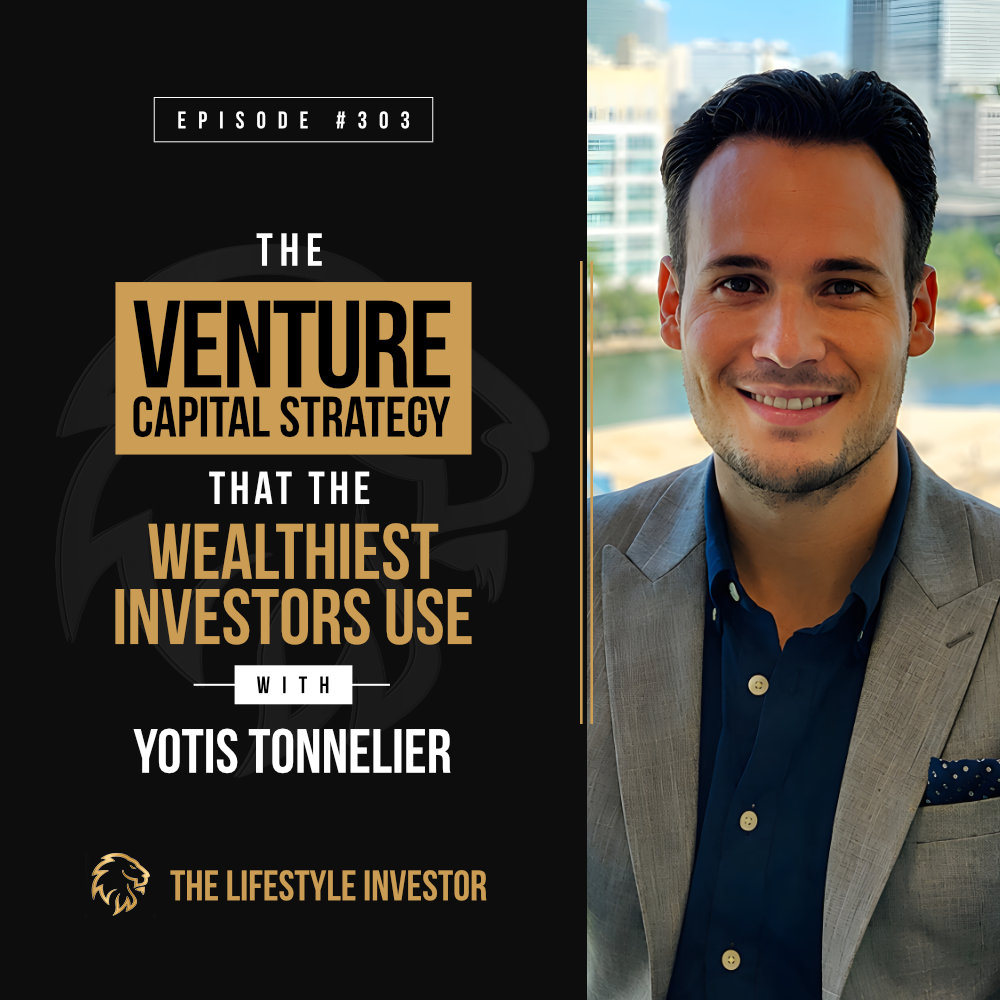
The Venture Capital Strategy That The Wealthiest Investors Use with Yotis Tonnelier – EP 303
Why Creativity Is the Ultimate Wealth-Building Skill with Nick Nanton – EP 302