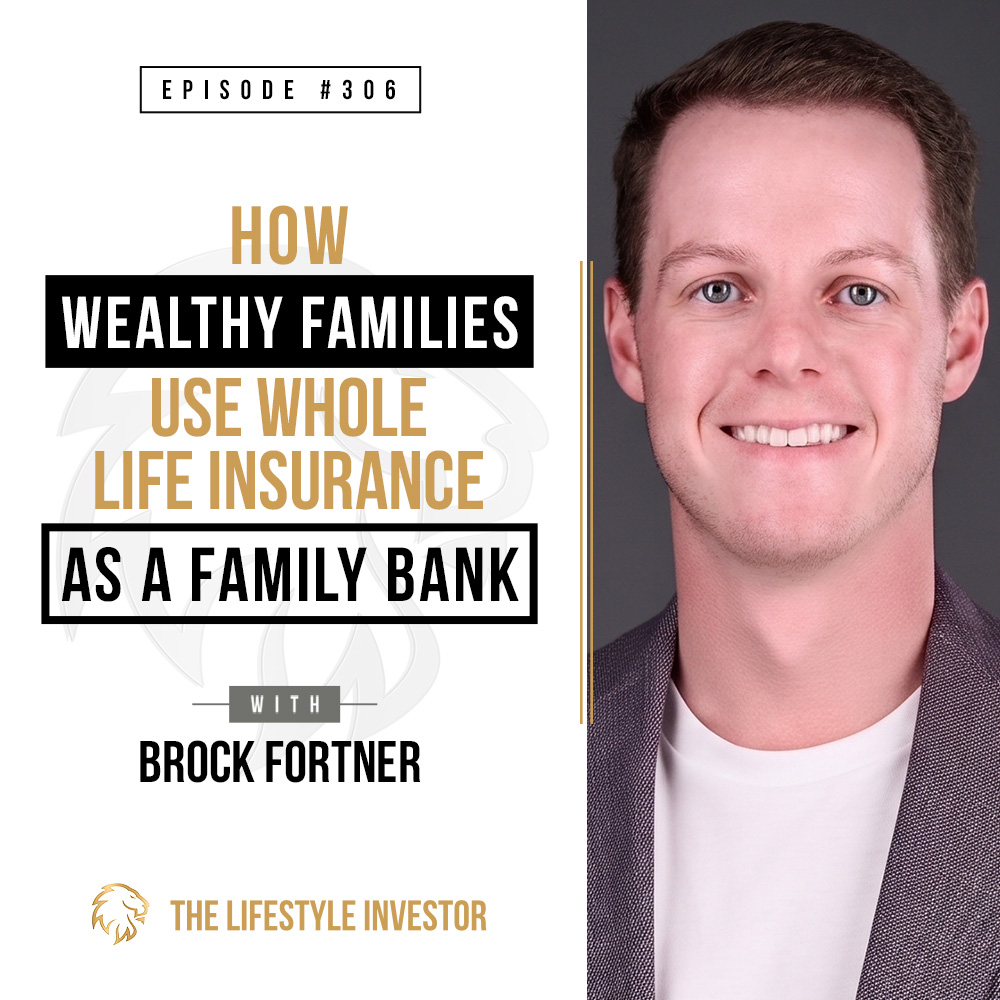
Interview with Nicholas Kusmich

Becoming a Category of ONE & Generating Over $600 Million in Revenue with Nicholas Kusmich
Today, I’m talking with Nicholas Kusmich. Nicholas is the founder of H2H Media Group, a consulting and META advertising agency which has generated over $600 million in revenue since 2007!
Nic helps entrepreneurs predictably scale their revenue and time by easily getting more clients with marketing that doesn’t suck. He’s known for delivering the highest returns on investment in the industry and is responsible for over 10 billion ad impressions and over 55 million leads.
He works with A-List clients including the world’s most recognized thought leaders, New York Times best-selling authors, and the top Inc. 500 companies, creating advertising campaigns that actually convert.
In this episode, you’ll learn:
✅ How to eliminate your competition and dominate any industry by creating a “category of ONE” business.
✅ The “Contextual Congruence” process that combines direct response marketing with social behavior – and how to use it to transform your marketing efforts and dramatically boost ROI.
✅ The #1 reason most entrepreneurs fail to implement ideas – and a simple strategy Nic uses to take action and turn ideas into reality.
Featured on This Episode: Nicholas Kusmich
✅ What he does: Nickolas Kusmich is an international speaker, strategic consultant, Founder of the H2H Media Group, Creator of the Art Of Lead Generation Intensive and the leading authority on Facebook and Social Advertising.
💬 Words of wisdom: “You’re only one relationship away from things completely changing in your life.”
🔎 Where to find Nickolas Kusmich: Website | Facebook | LinkedIn | Instagram
Key Takeaways with Nicholas Kusmich
- Intro to Nicholas Kusmich
- Overcoming a challenging childhood
- The accidental entrepreneur
- The Facebook ad revolution
- Creating a “category of one” business
- From $500 gigs to $600 million in revenue
- Understanding premium buyer psychology
- The power of “Contextual Congruence”
- Why most entrepreneurs fail to execute
- Crafting a lifestyle-focused business
- The return on lifestyle (ROL)
Inspiring Quotes
“One consideration that some people who can afford to make is, what is the return on investment, what is the return on effort, and what is the return on lifestyle? When you bring those two, three things together, you make some fairly good decisions about how you lead and live your life.” – Nicholas Kusmich
Resources
- NicholasKusmich.com
- Nicholas Kusmich on Facebook | LinkedIn | YouTube | X
- Phoebe Mroczek
- Brad Weimert
- Nick Nanton
- Plenty of Fish
- McLaren
- Mazda
Tax Strategy Masterclass
If you’re interested in learning more about Tax Strategy and how YOU can apply 28 of the best, most effective strategies right away, check out our BRAND NEW Tax Strategy Masterclass: www.lifestyleinvestor.com/tax
Strategy Session
The Lifestyle Investor Insider
Rate & Review The Lifestyle Investor Podcast
If you enjoyed today’s episode of The Lifestyle Investor, hit the subscribe button on Apple Podcasts, Spotify, Stitcher, Castbox, Google Podcasts, iHeart Radio, or wherever you listen, so future episodes are automatically downloaded directly to your device.
You can also help by providing an honest rating & review over on Apple Podcasts. Reviews go a long way in helping us build awareness so that we can impact even more people. THANK YOU!
Connect with Justin Donald
Get the Lifestyle Investor Book!
To get access to The Lifestyle Investor: The 10 Commandments of Cashflow Investing for Passive Income and Financial Freedom visit JustinDonald.com/book
Read the Full Transcript with Nickolas Kusmich
Justin Donald: What's up, Nick? Welcome to the show.
Nicholas Kusmich: Justin, I know we've been having this like long time in the making, so I'm super excited to be having this conversation with you and seeing where it goes.
Justin Donald: Well, me too. I've heard nothing but great things about you from friends, from team members. I know you and Phoebe Mroczek had a chance to connect and our friends from before. And she does incredible work for us and had the highest of praise for you. Yeah, I'm just excited. And we share many mutual friends such as Brad Weimert and Nick Nanton and many others.
Nicholas Kusmich: Yeah. No, we've been rolling in the same circle together for some time. So, it's finally time that me and you had a good conversation.
Justin Donald: Yeah, this is fine. Well, I'm excited to have you on. I mean, you're known in many circles as kind of like the king of marketing. Like, you just do it better than anyone else and I want to uncover all that. But I'm also curious what led to you becoming an entrepreneur. You know, a lot of people have a hard time making that pivot. You know, you can get comfortable in corporate America or get comfortable with the status quo of whatever maybe you do after college or maybe a shift here or there, but you started your own agency and you've done very well. You've partnered with and have clients that are some of the biggest name brands out there. So, I'd love to hear your story of how you got to where you are today and what you're doing in the world.
Nicholas Kusmich: Yeah. So, I'm careful to call myself an entrepreneur for two reasons. One, I know that the show and what you represent is the Lifestyle Investor. Like, I see myself as a lifestyle entrepreneur. When I got into like if I think entrepreneur, I'm thinking about some of my buddies who run $100 million businesses, who're making great change in the world and innovating tech and coming out with stuff that's benefiting all of humanity. I'm not to say marketing doesn't do that but that was never the intention, getting involved. I grew up with a lot of lack. I'm an only child, and my family couldn't support our daily needs, essentially.
And so, it was just a thing of like, can I just have something that is going to allow me to have the lifestyle I desire to when I eventually get married, have that, and now I have my kids and all that but like to provide the lifestyle that I think I deserve and that I always wanted and to escape this life of lack that I grew up in? And so, I say that to say again, I see myself as a lifestyle entrepreneur, not so much as an entrepreneur-entrepreneur. I don't think my business will ever be sold. I don't think anybody ever wants it. I mean, it's heavily geared around me, but the flip side to that as well is I feel like I was kind of thrust into this role by mistake. And what I mean by that is like I never woke up one day saying, "Hey, I want to be an entrepreneur and have my own business.”
It was, as I mentioned, I was an only child. I witnessed my father have his first heart attack when I was four years old. From 4 to 17 when he passed away, God, probably 100, 150 emergency visits at the hospital. So, at a very young age at right around 15, 16, my father had his third stroke, which meant he couldn't work anymore. And him and my mom had this small convenience store business but he couldn't do that anymore, which meant my mom couldn't run the business anymore. So, they let that go. My mom at, whatever, 40 plus, 50 plus years old is now looking for a job for the first time in her life. She can't really speak English very well.
So, I remember specifically one day, it was a Saturday afternoon, she came home with tears in her eyes and I tried to question her and she wanted to avoid it. And I'm like, "Mom, like, what's going on?” And she goes, “You know, I went for a job interview to fold clothes at a laundromat. And they said no because I couldn't speak English very well.” And so, I was just like, "Okay. Enough is enough. I'm the only child.” So, at 16, 17, I was essentially like thrust into figuring out how to be the primary breadwinner for my family. Like, my father couldn't work anymore. He was very sick. My mother was having a very difficult time finding work, and so I just had at it. Right? I was like, "How am I going to do this?”
And unfortunately, as an impressionable like 16-year-old, 17-year-old, you get these emails that say something like make $1 million in 30 days. I'm like, "That's me. I want that.” So, it led me down this like crazy rabbit hole of stuffing envelopes and surveys and network marketing and everything in between. But the silver lining in it all and I'm condensing years of failure into a short conversation here, it introduced me to a guy by the name of Corey Rudl, who was one of the first-ever persons to teach people internet marketing. I don't even think it was called that back then. And I consumed this course. I'm like, "Oh, there might be something here.”
And so, I kind of dove in and I followed the advice of create an e-book and then sell the e-book on the internet. But I was really ashamed so I did it under a pseudonym or a ghostwriting name called Mark Mercato because I heard alliteration is really good. So, I literally like the stars aligned from the perspective of I started, I created this e-book. The internet told me I got to sell it on the internet. I was too late to Google ads, and it just so happened that during that time, Facebook had come on the scene and started releasing ads in beta and the dating site, Plenty of Fish, came on site and said, "We're doing the same thing. You can utilize all of our customer data and run ads.” So, I was like, “I don't know what the hell I'm doing, but let's give it a go.”
And back then was the Wild Wild West and, again, long story short, I started selling e-books. Then someone said, "Turn it into a course.” So, I'm like, "Okay. Let's turn it into a course.” Started selling a course. I was spending a dollar, making $1.10, spending a dollar, making $1.50, spending a dollar, making $10. I'm like, "Okay. I think I figured this out.” Fast forward just a little bit. And I remember, now this is 2011. Yeah, 2011. I'm sitting in a room full of entrepreneurs, and again, this is my first time responding to an ad to be a part of a mastermind-y kind of thing. And the guy at the front of the room basically asked, "How many people in this room are using Facebook ads to grow their business?” And I think 100% of the hands went up, including my own.
And then the second question he asked was, "And how many of you are finding it profitable?” And my hand was the only one that stayed up. And it was like one of those like light bulb moments to say, "Okay. I think I have something here. Let's just run with it.” And so, the agency was born. Actually, first, the consultancy was born, and that's where people were just asking, “Nick, can you teach us how to run ads?” And I said, “I don't know, but I sure as hell will try. Just pay me $500 and we'll figure it out.” And then that started snowballing. And then people were like, “Nick, to be honest with you, I don't want to learn how to do this. It seems so complicated. Would you do it for us?” And again, I was like, “I don't know, but pay me $500 and we'll figure it out.”
And one thing led to another. And of course, now we have what we have today. So, like, totally necessitated by force because of my family situation. And then again, just super grateful that the stars aligned at the time it did, and I was at the right place at the right time to have things open up the way they have right now.
Justin Donald: Well, that's an incredible story. And it's great that you could show up in a way for your family to be able to serve and be able to provide, especially as a young kid, which is awesome. I feel very blessed to have been in a similar situation, though financially, my parents, they weren't great, but they were able to get by in order for me to have any livelihood. I had to start working. I started working in seventh grade and never stopped. And so, it was great to kind of flex those muscles at a young age and learn how to handle situations that normally most people don't learn for years and years ahead of where they are, where you or I were at that point in time.
But it's also interesting then to see what it's grown into. So, back in the day, people like it was cool that you are one of 100 or whatever the number was that was actually profitable on Facebook ads. So, yeah, you had something going on. It's interesting though, back then I'd be curious what percentage of the world even use Facebook ads, whereas today it is such a mainstay. And then it's also funny to consider what you think you're worth versus what you're worth, like your value of the dollar changes and then like your time, your energy, your effort. I think it's so funny where it's like $500, I'm your guy and I'll do anything you need, right? But now you can charge a premium price because you're an outlier in the space.
Nicholas Kusmich: Yeah. Again, and this is not necessarily a humblebrag per se but, I mean, I do feel like there was a sense of luck. There was a sense of the universe aligning. There was a sense of being in the right place at the right time. Because as the story goes, you're only one relationship away from things completely changing in your life. And somehow intuitively, although I didn't know that or I didn't hear someone tell me that back in 2011, I acted like that was the case. So, like my antenna was open. I'm just like, "Okay. I'm one relationship, one conversation, one idea, one concept away from things working out, hopefully.” And again, when I was in that room and I saw the hands go up and then my hands stayed up, I'm like, "Oh, click, that might be it.”
And then I made a relationship with someone who was able to introduce me to other people. And then it kind of just snowballed into that fact. But I think to your point, if we all just kind of, and I don't know if this is true or not, but if we approached life as though we were just one idea, one thought, one relationship, one handshake away from things drastically changing for us, and then we lived accordingly to that rule, who knows what could happen? And I think I'm just an innocent bystander of that reality mixing and matching and taking us to where we are today. And again, I think and you'll probably relate to this, Justin, as well, because of where we came from, there's just this element of half of it's like that entrepreneurial fear of like I know what it was like before and there's no way I'm going back there so like let's stay on.
And then the other half of it is just this like entrepreneurial gratitude of just like I know what it's like to not have this and I'm just going to like treat every client and every person and every conversation to the best of my ability because who knows? If this all disappears tomorrow, I may not have all this but I will have the relationships and the client relationships and the goodwill or the karma that we put out to the world to hopefully swing back at me another way. So, yeah, I'm grateful that I can walk this journey and see where it takes us.
Justin Donald: I love that. I mean, I love just the mindset of, "Hey, we're one relationship away,” both on the positive side and the negative side. Like, you got to be careful. Like, nothing is a done deal necessarily, right? But also, if you don't like the situation you're in, you are one relationship, one conversation, one mindset shift away from living a different and better and upgraded life. So, I like that. And then just living in a space of gratitude. I mean, what better thing can you do for your mind, for mindset, for self-esteem, for relationships around you than to be in a place of gratitude, always picking out what's going great and what you see as a blessing versus what you don't have, what you wish you had, what you were chasing. So, that's awesome.
Now, you're a small little company that people are paying you $500 to be able to work with you, now has done over $600 million in revenue since 2007. So, I mean, you guys are big-time but I'd love to know what you do differently. Why are you an outlier? Why are you best in class? What's the product and service that you deliver that's so differentiated and so much better?
Nicholas Kusmich: Yeah, I appreciate you asking it that way. And I think there are two ways to answer it. One is the logistical, practical way. And what I mean by that is I just have more reps. Like, I was one of the first 100 advertisers on Facebook. And this is going back to whatever year that was. I can't even recall. And so, it's the constant reps because if you look out into the marketplace, most of the people who are doing any form of marketing now or, "Hey, say, come join my thing and I'll help you coach or build you or whatever.” Five years ago, they were selling crypto or they were selling insurance, and nothing against that. Like, we all pivot in our lives.
But to think you could come on the scene five years ago and compete with me who's been playing for two decades and putting in the reps and the blood, sweat, and tears. Most people have never even gone through a proper business cycle, and they're just riding the up of the wave that's currently out there and just wait. Like, when that crash happens and you see it. And again, I'm not talking bad about anybody but you see people who are agency owners and all of a sudden like, "Oh, shoot, I should just start consulting and teaching because the agency thing is too hard now,” and then they teach and they consult and they're like, "Oh, man, I shouldn't be doing that anymore. I should be in the SAS space so I don't have to deal with people.”
So, I think from a logistical standpoint, I don't think there's very much that can beat just reps like shots on net, right? You look at the greats, the Tiger Woods and the Michael Jordan, whoever, any great who's great at anything, the Kobe's of the world and they're the first on the court. They practice before everybody else and they stay last to leave. Now, I'm not saying all of us have to do that. Again, I have a lifestyle business. So, there was a season for that but, A, is just the reps, the straight-out agony of going through the entrepreneurial journey and getting up every time you get beat down. On the other side of it, though, I think the key and anybody can do this, is understanding what some might call category positioning.
See, you can approach any marketplace in one of two ways. I'm going to enter into a market and I'm going to be better, faster, cheaper, more recognizable, carry more influence, have more followers like all of that stuff. But I would argue that that positioning is a race to the bottom. And what I mean by that is because if you're always trying to be better, faster, cheaper, like if you're going to be cheaper, not so great. If you're going to be better, there's always going to be someone who’s going to be on your heels trying to outcompete you if you're faster. And the problem with the marketplace is when they look at that, it means they're always comparing you to everybody else. And so, now you're in this battle of like, "Let me show you why I'm better, faster, or flashier or whatever.”
The alternative, however, is rather than competing in a category, it's to create your own category so that you're in what some of the authors call a blue ocean or uncontested space. And the key distinguishing difference there then is I'm not going to show you or try to prove that I'm better, faster, cheaper, more effective. I'm just going to show you why I'm different. And if I'm different, you have one of two choices. A, I don't like you and I don't want to work with you because your style, your way, your form, your function is not what I want or, B, I do like you, and I have nowhere else to go because you're the only person who does what you do. So, I think I caught on to that quite early on. And that can be done in different ways.
That can be done in really niching down. That could be coming up with a unique concept or an idea that no one else has understood. Like, there's different ways to do that but I think why we have gotten to the place that we've gotten is understanding. And I'll throw it out there. The focus that we focus on and the place that we want to be is I have spent the last five years intimately dissecting luxury buyer psychology. I want to know why when a woman goes out and buys a $5,000 or a $6,000 or a $10,000 purse, why that person doesn't buy a $100 purse? I want to know the mindset of why someone walks into a dealership and drops $800,000 on a car without ever driving it and without ever even having a sales presentation versus the other person who's trying to sell, and I use the story of McLarens and Mazdas because I have a McLaren. I like McLarens and Mazdas rhymes. So, it's a great idea.
But like, why when the person walks into a Mazda dealership, does that salesperson have to like prod and try and wheel and deal? Why do first-class plane tickets sell like this? And why do economy have to be set on deal? So, I spent a long time digesting, understanding the buyer psychology of what I would call a luxury buyer, in my world, I call it a premium buyer because we only work with premium high-ticket businesses, if you will. And for whatever reason, and I don't know why, Justin, nobody's ever done that. Just thought about premium buyer psychology. And what I find in the marketplace is, and this is the example that I use so forgive me for the metaphor, a lot of people who have higher value services or products or masterminds or coaching or whatever, I'll call that the McLaren.
A lot of people have these McLarens that they're trying to sell. They treat it, however, like it's a Mercedes, and they're selling it to Mazda buyers, and they wonder, "Why am I having a hard time selling my McLaren to a Mazda buyer?” Because I'm treating it like it's a Mercedes. So, I just say, "Hey.” Here's an example of what I mean by that. Mazdas represent to me low-ticket funnels or processes or marketing, right? Let me like wheel and deal you. Let me capture a lead. Let me nurture that lead over time. Let me get you on a webinar or a challenge or read my free book or whatever. Nothing wrong with that but these are all attempts to take a low-ticket transaction and try to convert that into a higher-ticket transaction.
But you don't see Mercedes, you don't see McLarens, you don't see the private jet companies, you don't see all the Louis Vuittons and the Chanels of the world being like, "Hey, buy one purse, get one free,” or, "Come here, download my free cheat sheet and I'll show you why our leather is better.” Like, you don't see that. So, a combination of recognizing that we sell premium, we sell very high ticket stuff, all of our clients sell high-ticket stuff, so when everyone else is talking about here's the next best marketing tactic or funnel or whatever, I'm just like none of that really matters. If you want a better funnel, go to someone other who claims to be a funnel expert.
In my world, what I'll show you is how to attract only McLaren buyers. And when you have that, the conversations are easier, the closes are better and everything happens much more effectively. So, I don't know if that answered the question, but that's kind of how we position ourselves in the idea of category design.
Justin Donald: I love it. It's brilliant and it's a great marketing play, even on the three categories. It's catchy, it's clever, but it's clear. You produce clarity through that example. So, I appreciate that. And to kind of like take that into my industry and what I do, we see a lot of people. You probably relate to this. We see a lot of people. So, like you, your industry, there are tons of agencies, tons of people building funnels. By the way, some of them are great. Most of them are not. You know, most of them do not have a proven track record. Most of them it's like in our community, we had all these people in the real estate space, specifically multifamily. But all over in real estate and during the last decade, everyone did well.
Why? Because it was a frothy market. And so, everyone thought that they were really good. And so, they marketed to people about how great they were and didn't even know that they weren't good until now. They're realizing they weren't good and that they didn't know everything and they didn't have proper protections in place. But because that market was so frothy, it invited so many people in. And I've got to imagine your industry is very much like that where you have people like that were doing something totally different. Now, all of a sudden you're an expert in multifamily and you've been doing it one year but that's what's happening. And then that gets exacerbated by people with large social media followings that somehow have fooled the masses into thinking that you're better than you are based on the number of followers rather than the expertise that you really have.
And it is just an incredibly sad situation when people are making investments through big-name influencers. And I'm not going to call anyone by name. You know, I want everyone to be able to do well and figure out their stuff but I also want to warn the masses that a big social media following does not mean you're actually good at what you do. You might be a good marketer, you might be good at social media, but most of these people with big followings aren't actually good at the thing that they're teaching, the thing that they're selling. And if you look at their expertise, it's very lacking. And so, when times change, the economy changes. That is a recipe for disaster.
And you see it in your industry because we have hired so many different agencies now and have been so disappointed with performance even when we've spent a decent amount like we're not trying to be skimpy with what we spend, but sometimes it's like some of these groups, the more expensive they are, the worse their performance is. It is just painful. How many I would say imposters there are out there or people that, I guess, it's easy to talk people into spending what an agency spends painting a picture of what it will look like. And I like this model of figure out your market, figure out this price market fit, make sure you're marketing to the right people, and hire a company that is trained, has the track record, the people have experience, they've been in the industry for a while, and they have tons of raving fans that they've helped scale their company.
Nicholas Kusmich: Yeah. And to that note, I mean, in my space anyways, I used to say because very few people did it was if you're going to hire any… Well, hell, if you're going to hire anybody to do anything that can be tracked to any degree, then there has to be accountability levers in place. I was talking to a prospect the other day. I don't really do too many prospecting calls myself but he was a referral and having this conversation, we talked about it. I mentioned price. As soon as I mentioned the price, he almost kind of like, "Whoa, that's more than we expected.” And I said, "Did that take you back a little bit?” He goes, "Yeah, a little bit.” He goes, "But how many people have you talked to, to say that if I can't meet your KPIs, you don't pay me?” 100%.
If I'm a performance-based agency, which fortunately or unfortunately, I am. That's the world I got into. I hear some of these agencies were basically like, "Hey, Mr. Bank, like, we'll just put ads up there and show impressions to the world and we won't track anything, and you pay us a lot of money to do that.” I wish I got into that business but it's too late now, right? Actually, we're a performance-based agency. But I simply said, "Look, what are your key performance indicators? How many leads? How many of those? What do you need? How many phone calls in order to close and you do your part?” They told me that number. I evaluated whether or not we could do that as an agency for them.
And once I did all the math and I looked at it and I played it out and I said, "Okay. If we build this for you, we can definitely do that,” then there's a simple win-win. Either I will do that or you don't pay, period. Now, so I used to recommend, "Hey, everybody, like only work with people who are willing to put their money where their mouth is and pay after results and whatever.” But nowadays, and I don't know if you've noticed this, Justin, in your industry, at least in my industry, now everybody is saying, "Hey, if you don't make $1 million in seven days, you don't pay.” And what they're not realizing is they bury in the contracts and the agreements to make it virtually impossible for you to meet their qualifications and to actually get the “refund.”
So, now what I have to tell people because we get people shopping around all the time and saying, "Well, Nick, the other people say the same thing.” I say, "Here, here is our agreement. You look at it, you send it to your lawyers, you analyze that, and ask for their agreements as well because I think you'll be surprised when you notice to qualify for their refund, it's next to impossible.” So, I think it's just good practice for people out there to say, "Hey, if we're going to hire anybody on any sort of performance scale for anything, it doesn't even matter if it's marketing or not, make sure there's a performance element to it so you're mitigating the risk. And then secondly, make sure you have your lawyers or your internal team or whoever actually get a copy of the agreement beforehand so you're not finding yourself stuck in a hole somewhere and never to be able to get that money and now locked into something where they don't actually have to perform on their end.”
So, the world has changed and come a long way, unfortunately, but yes, true, if you can design a category, understand who your ideal prospect is in that category, speak to them in a way that they understand to at least start the conversation. And then when you have a conversation with a prospect, just put your money where your mouth is and mitigate the risk. And that's the one thing I might just say about premium buyers is premium buyers don't have price objections. They have risk objections. They don't care how much it cost as long as you deliver on your end.
So, rather than focusing so much on the price, which they shouldn't have an objection for anyways, focus on mitigating the risk ethically, normally like performance-based for that individual so that when they look at your agreements, it's a win for you if you win and you shouldn't. With like me, it's a win for me if we all win collectively but it's a loss for me if I don't perform. And that just creates a nice kind of cohesive relationship so everybody wins.
Justin Donald: I love it. Well, these are great trade secrets and knowing what the competition's up to and how you can get locked into an agreement that makes you think or they may say one thing so you're under one impression but the contract actually is something totally different. And that, I mean, that happens all the time in our industry and it's really sad and deceptive. And for us, it's a lot of these fees. It's these hidden fees that people don't know about where these sponsors make money even when the investors don't, even right out of the gates before anything's happened with the deal. So, that, to me, is just a non-starter. And I like educating people on that. And I like hearing what you're talking about. I think that is really powerful to get into contracts and agreements with the people that make the most sense.
And you made a comment that I think is so true where you said your clients don't have price objection. They have risk objection. And I'm the same. People, well, we get into talking about, well, how much do you spend on your CPA? I only spend a few thousand dollars and I'm always like the barometer of lowest price isn't the best way to survey CPAs. And they're like, "Well, what do you pay?” And my answer is always, “I don't know. It's different every year. It depends on so many things.” But I actually don't care what I pay if they save me more in taxes.
Nicholas Kusmich: Than what I pay them.
Justin Donald: Than what I pay them, right? So, the price is it's a total moot point, right? It is all about the value that I get. And so, if you can save me a 100K, 200K, 500K, $1 million in taxes, great. Charge me what you need to charge me. If I just came out of the gates and said, "My CPA is $50,000 a year or $100,000 a year,” most people would say that's crazy. But our team is just so ultra-talented that I'm happy to pay whatever their rates are and their rates are premium rates but they always save me multiples of what I pay them in taxes.
Nicholas Kusmich: I think it's a great point, and I think in all businesses, my business and your business, the people who are in the real estate, multifamily space. Like, there's a couple of things that need to be measured, right? Now, in my space, ROI in your space, the same thing. Return on investment, obviously, a key indicator. I don't think we need to talk about that. Everybody realizes that. Cool. Done. Make sure you're investing in things that give you an ROI. Otherwise, it’s a bad investment. But beyond that, there's what I would also call ROE, which in my world is also just as important and it's what you've alluded to, which is return on effort.
So, if I could pay a CPA $50,000 who's going to save me $300,000, yes, it's an ROI but it's also an ROE. Like, the effort involved for me to just cut a check to make that transaction happen is well worth the $50,000 even if there was another CPA whose, well, I only charge a ten but I need you to do these million laundry list of things in order for me to do my job. F that. Like, here's 50K. You do that. So, there's a return on effort, which I think is not so much calculated for a lot of people. And then thirdly, and I hate to say this on a podcast where we're talking about ROI and ROE but there are some decisions that I made that were 100% ROL, which is return on lifestyle or return on bliss or return on joy or return on happiness or whatever you want to call it, right?
You know, a great example of this, and this might paint me in a picture that people don't appreciate. And if this triggers you, I apologize. So, I like cars. I didn't like cars before until my friend took me out and said, "Come, let's drive some supercars.” I'm like, "Why would I want to do that?” It's like, "Well, let's just hang out.” So, I did, and we started driving supercars. I'm like, "Oh, I get why people are really into these things.” Anyways, long story short, like last year, I bought a car that I had my eye on. It's only 700 were made all in the world. It cost me about $800,000 to do that. And like, financially, it makes zero sense. Zero. Like, "Oh, well, can you…?” No, I daily drive my car so it's not an investment.
It only depreciates every single day that goes by so there's no return on investment there for sure. Your return on effort doesn't count. But the bliss, the joy, the lifestyle. Like, I moved from Toronto to the West Coast of Canada. I live in a town called Kalona right now. When we bought our home here, we overpaid for it just because that's how the market was, unfortunately, at the time of buying. But we had a choice. It's like, yes, we might not see an ROI like we had hoped but the return on lifestyle for me to look out my window and see the lake and the mountains, and that's what I get to. Like, there's just to bring up my kids in this environment, that's all return on happiness, bliss, lifestyle, however you want to word it.
And I think some of us avoid that. Now, I'm not saying be irresponsible and spend money on something you can't afford. That's irresponsible. But I can't tell you the number of like super successful people who are in my world, for example, and they're afraid to buy a nice car or move their house or whatever. And I'm just like, "Well, why? You have the capability to do it. What's stopping you?” And there's mindsets and all that that we could talk about. But ultimately, I think one consideration that some people who can afford to make is, what is the return on investment, what is the return on effort, and what is the return on lifestyle? When you bring those two, three things together, you make some fairly good decisions about how you lead and live your life.
Justin Donald: Yeah. That is well said and I love it. I couldn't agree with you more. Obviously, we're big proponents here of being lifestyle investors. And, yeah, you need to invest in your lifestyle and things that are important to you and things that matter. And everyone has different things that matter to them but it's important to figure out what those are and to live that, to live those values, to experience those things with the people that matter the most. And so, I love that you do that. We talk about that all the time. And it's also interesting because a lot of people, they built their wealth because they were really scarce. It was through a scarcity mindset. It was through thriftiness. And that did get them to the level that they're at.
And for most people, though, to go to the next level, you really have to kind of shift that mindset, shift to protocols. Just like in a business, as you scale your business, you hit one plateau and what work to get you to that level no longer works to get you to the next level. And so, you do need to retool. You do need to say, "Okay. Well, I've been so thrifty all this time. I've scrimped and saved and haven't lived life to its fullest. But what would it look like if I did? And how would I feel if I did that? And what else would I invite into my life because of maybe how I'm showing up and how I'm living by choosing me or choosing the family or choosing the things that I'm passionate about or that I just enjoy?” And there's a lot to be said about that. I think you absolutely nailed it, return on lifestyle.
Nicholas Kusmich: Yeah, yeah.
Justin Donald: So cool. Well, any last thoughts before we wrap things up here?
Nicholas Kusmich: Oh, it's always a loaded question. And for different people, it's a different thing. Well, maybe I'll end with a story that helps me to this day. And I was speaking of masterminds. I know pre-show we're talking a little bit about masterminds. I was sitting in a mastermind that we all paid $25,000 to be a part of. And when you pay that kind of money to be a part of a mastermind, sometimes the mindset is like, how can I just squeeze every last minute to make my value worth it? And so, we're sitting there at session one, morning one, the guy gets up on stage and he starts talking, and he gives some ideas about best practices that are working.
And the guy beside me, let's just call him Carl, was taking notes, closes up his folio, and literally, again, he's old school. He didn't even have a laptop. Literally, closes up his handwritten folio leather folio, puts it in his leather briefcase. This is probably like 20 minutes in, 21 minutes into the first session on day one of a three-day or four-day thing, and he runs out and he's like, "See you guys, I'm done.” And my curiosity couldn't just stop me. So, I ran out the back and I chased him on my car. Where are you going, man? And he goes, "Oh, I got my 10X idea. I got my $250,000 idea for the quarter.” I’m like, "Okay. So what?” He goes, "If I stay here any longer, I'll be distracted from executing that. And I just got what I need. So, I'm leaving and I'm going to implement so I can at least 10X my investment this quarter just by doing that one thing.
I'm like, "That's unique. Like, why do you think about it that way, Carl?” And he just says, "Let me tell you a story called Broken Bridges.” And it was a metaphor or an analogy. And he goes, "Here's the problem, Nick, that I had early in my life, and hopefully I'll pass this on to you so you can use it in your life.” He goes, "Early on in my life, I was in the digital advertising space. I had all these connections. I was part of all these masterminds, and I was bombarded with all this amazing information.” And so, what it means was like I'm over here and the goal or the objective is over here on the other side, and I want to bridge that gap and so I start building a bridge. And maybe the bridge is a YouTube ad. Someone told me I got to. So, they start building a YouTube ads bridge.
And then just as they start building, they go to another trip, or they read a new book, or they see another thing or have another conversation, they're like, "No, no, no, no. You know what you need to do? Strategic partnerships. Strategic partnerships are the way to go.” He's like, "Oh God, strategic.” Okay. So, he starts building that bridge and you kind of get where I'm going with the story. Ten years passed, he said, “Nick,” and he's like, "Ten years passed and I basically look back on my life over the ten years and all I saw was a series of unfinished broken bridges that never got me there. And as soon as I realized that, I focused on one bridge at a time. And once I build it and I get there, then I'll go back, cross that bridge, and think about creating a new bridge.”
And this was probably eight years ago, Justin, that he told me this story, and I haven't been the same since. That's just what I do. Even reading books, I'll read a book. I'll get to a point where it tells me what to do. I'll close the book and I won't come back to that book until I implemented that very thought because I had years of accumulation of amazing information that I should be doing of which I applied none of. So, it's kind of the approach that I take now. Hopefully, that's a great bow that people can think about and apply in whatever they're doing right now.
Justin Donald: It's beautiful. I love it. And, I mean, I think we're all probably guilty of trying to consume as much information as we can, and most people are really lousy at the implementation. You know, I feel blessed that I, at times, I mean, this is a blessing and a curse but I can become obsessed with implementation to the point that it can get a little crazy, but like I just can't stop thinking about it. So, I at least have that. It's like the curse is like I go to bed thinking about all these things and it's hard to like clear my mind. But the gift is like I have all these things that I want to pursue and I'm actually good at kind of…
Nicholas Kusmich: Getting it done?
Justin Donald: Yeah, getting it done and getting a lot of them done. So, hey, this was just a great time today. I'm so glad we got a chance to connect. Yeah. Where can our audience learn more about you, Nick?
Nicholas Kusmich: Well, so the blessing and the curse. Speaking of blessing and curse is that I am actually the only Nicholas Kusmich on the planet. But the curse of that is you got to figure out how to spell Kusmich. So, all social channels are Nicholas Kusmich. Website is Nicholas Kusmich and so it's easy to find me there. We're trying to put out more and more stuff. I know we're going to prepare a special gift for your listeners as well. And so, we'll let people know how to do that. But, yeah, anything Nicholas Kusmich, fortunately, if you can spell it right, K-U-S-M-I-C-H, you'll find me. And we got some good stuff that we're trying to put out there all the time to help people with.
Justin Donald: That's awesome. Well, I love ending every episode that we do, the question to our audience. And my question today is the same one that we have every single week and that is this: What is one step that you can take today to move towards financial freedom and move towards living a life that's on your terms, the one that you truly desire so, again, not a life by default like most people, but a life by design? So, pick one thing from today, just one, something awesome. I mean, Nick said tons of cool stuff, but pick one of them that's going to get you closer to financial freedom and take action on that thing. Thanks so much and we'll catch you next week.
Sign up to receive email updates
Enter your name and email address below and I'll send you periodic updates about the podcast.
Keep Learning

What Two 9-Figure Exits Taught a Serial Entrepreneur About Investing with Ben Rubenstein – EP 308

Why Asking for Help Is a Superpower for Success with Nathan Thomas – EP 307