Interview with Bronson Hill
Unlock The Millionaire Mindset & Invest Like the Rich with Bronson Hill
Building wealth isn’t just about what you do—it’s about how you think. And the ultra-wealthy know that financial success starts in the mind.
That’s exactly what today’s guest, Bronson Hill, discovered after interviewing over 2,500 millionaires. Through those conversations, he uncovered the habits, mindsets, and investment strategies that separate everyday earners from those who achieve true financial freedom.
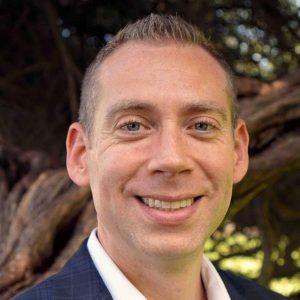
A former medical sales professional, Bronson walked away from a high-paying career to pursue passive income, scaling his wealth 20X in just a few years. Bronson is a general partner in 2,500 multifamily units worth over $250M, and has personally raised over $45M for real estate and private equity deals.
In this episode, we dive deep into the psychology of wealth, why who you surround yourself with determines your financial future, and the hidden investment strategies the ultra-wealthy use to build lasting fortunes.
In this episode, you’ll learn:
✅ The mindset shift that helped Bronson 20X his net worth—and the surprising reason most people stay broke.
✅ How 2,500 millionaires built their wealth—and the biggest investing mistakes to avoid.
✅ The investment strategy ultra-wealthy investors use to outperform the stock market.
✅ The hidden “Wealth-Worthiness” belief that silently holds most people back from financial freedom.
Featured on This Episode: Bronson Hill
✅ What he does: As the Managing Member of Bronson Equity, Bronson is a general partner in 2500 multifamily units worth over $250M. Bronson is the host of The Mailbox Money Show where he breaks down the investor mindset and has personally raised over $45M for real estate and his private equity deals. Bronson is the author of the best selling book, Fire Yourself; Replace Your Working Income with Passive Income in 3 Years or Less, and is a regular contributor to YouTube and his blog.
Bronson is a regular keynote speaker and leads The Wealth Forum, an exclusive mastermind for affluent passive investors, providing unmatched investment opportunities within a growth-oriented community. Bronson is a frequent guest on podcasts like the Best Ever Show with Joe Fairless and was a speaker at the large Limitless Conference with Ken McElroy.
📘 His Books:
- Fire Yourself: Replace Your Working Income with Passive Income in 3 Years or Less
- Rich Brain: The Science of Wealth-Worthiness & Financial Success (Coming Soon!)
💬 Words of wisdom: “Most people believe you either have wealth or you don’t. There’s the haves and the have-nots. But the research shows the opposite. 86% of millionaires are ‘self-made’. So, almost nine out of ten did not come from money. This means being wealthy is not about having money or not having money. It’s about the habits and the person you become.” – Bronson Hill
📩 Free Resource:
Get Bronson’s guide, How to Use Inflation to Your Advantage. Text INFLATION to 33777
🔎 Where to find Bronson Hill: LinkedIn | Facebook | Instagram | YouTube
Key Takeaways with Bronson Hill
- Finding Mentors: Make Yourself Valuable to Valuable People
- The 4 Investments That Provide the Biggest ROI on Your Life
- What 2,500 Millionaires Taught Bronson About Building Wealth
- The Mindset Shift That Separates Millionaires from Everyone Else
- The Truth About Wealth—Why Anyone Can Build It (If They Do This)
- The Millionaire Habit Most People Overlook
- Fire Yourself: Replace Your Working Income with Passive Income in 3 Years or Less
- Rich Brain: The Science of Wealth-Worthiness & Financial Success
- Why Ultra-Wealthy Investors Allocate 45-59% of Their Net Worth to Alternative Assets
- The Billionaire Wealth Playbook That Wall Street Doesn’t Want You to Know
- The One Financial Habit That Will Set You Up for a Lifetime of Wealth
“I Interviewed Over 2,500 Millionaires”
Inspiring Quotes
- “Most people believe you either have wealth or you don’t. There’s the haves and the have-nots. But the research shows the opposite. 86% of millionaires are ‘self-made’. So, almost nine out of ten did not come from money. This means being wealthy is not about having money or not having money. It’s about the habits and the person you become.” – Bronson Hill
- “Make yourself valuable to valuable people.” – Bronson Hill
- “Most people look at my life or look at others and say, ‘Oh my gosh, how in the world did this person do this?’ Well, it just came from steady action toward a goal, changing your approach, and keep trying new things.” – Bronson Hill
Resources
- Bronson Equity
- Bronson Hill on LinkedIn | Facebook | Instagram | YouTube
- Fire Yourself: Replace Your Working Income with Passive Income in 3 Years or Less by Bronson Hill, Ken McElroy
- Ken McElroy
- Jim Rohn
- ChatGPT
- Tony Robbins
- Theodore Roosevelt
- Robert Kiyosaki
- Rich Dad Poor Dad: What the Rich Teach Their Kids About Money That the Poor and Middle Class Do Not! by Robert T. Kiyosaki
- How to Win Friends & Influence People by Dale Carnegie
- The Wizard of Oz
- P. Morgan
- UBS
- Goldman Sachs
- Morgan Stanley
- Apollo
- KKR
- Charles Schwab
- MONEY Master the Game: 7 Simple Steps to Financial Freedom by Tony Robbins
- Employee Retirement Income Security Act (ERISA)
Tax Strategy Masterclass
If you’re interested in learning more about Tax Strategy and how YOU can apply 28 of the best, most effective strategies right away, check out our BRAND NEW Tax Strategy Masterclass: www.lifestyleinvestor.com/tax
Strategy Session
The Lifestyle Investor Insider
Rate & Review The Lifestyle Investor Podcast
If you enjoyed today’s episode of The Lifestyle Investor, hit the subscribe button on Apple Podcasts, Spotify, Stitcher, Castbox, Google Podcasts, iHeart Radio, or wherever you listen, so future episodes are automatically downloaded directly to your device.
You can also help by providing an honest rating & review over on Apple Podcasts. Reviews go a long way in helping us build awareness so that we can impact even more people. THANK YOU!
Connect with Justin Donald
Get the Lifestyle Investor Book!
To get access to The Lifestyle Investor: The 10 Commandments of Cashflow Investing for Passive Income and Financial Freedom visit JustinDonald.com/book
Read the Full Transcript with Bronson Hill
Justin Donald: What's up, Bronson? Good to have you on the show.
Bronson Hill: Hey, Justin, great to see you again, man. I always learn something when I'm around you and I always appreciate the value you bring, man.
Justin Donald: Well, thank you. That's super kind and I appreciate that. I really enjoyed speaking at your event here. You just recently held an event in Austin, and this last week was quite the marathon for me. It's my busiest week of the year because we put on two back-to-back events, both of our retreats for the Lifestyle Investor Mastermind community and for the Tribe of Investors Mastermind community. And it is an intense week. It's an awesome week and your event happened to fall on day number seven. And so, it was seven days of speaking and I'm excited that my voice has recovered somewhat. It's still a little bit raspier than normal but I'm through it. I'm through the thick of it. And it was really fun being around your community.
Bronson Hill: Yeah. It was great. Really great having you, man. Just you added a ton of value. And thanks for coming after a marathon week. And I know it sounds like some of us are a glutton for punishment. We just stack it all up back-to-back rather than spread it out, you know? So, thanks again.
Justin Donald: Well, it's just easier. It's easier like we could do two different events but I mean I feel like I get into flow. We have everything lined up with these hotels. We have things lined up with sponsors. It's just an easier way to do it but, yeah, I do feel like a glutton for punishment inside and towards the end of the retreats every single year. And, hey, shout out to you because not everyone does this. I have spoken at a lot of places over the years. You had a really nice speaker package and gift and I just wanted to publicly share that it was very thoughtful and very kind and went above and beyond expectations. So, I thought you should hear that. And it's kind of fun having everyone hear it.
Bronson Hill: Yeah. Thanks, man. Well, I appreciate you showing up. You brought some of your books and I just want to shout out. Everybody knows you and your book. But, man, I read this book maybe whenever it came out a couple of years ago. And I just loved, I mean, it was some stuff I just never heard of, the invisible deals and some of the things that you talk about and some of the examples. And I said, "This is a guy I need to learn more about and spend more time with," so I've been grateful to be your friend for a couple of years here.
Justin Donald: Well, thank you. And one of the things I think you're great at is you get out of your comfort zone or maybe it's still inside your comfort zone, but you're persistent about being in front of the people that you want to be in front of. And it reminds me of my journey. And there were tons of people that I wanted to meet with that I could just never get in front of. But because I tried so many times to so many people, I ended up still getting in front of a lot of people and it was helpful. I had people take me under my wing. I had people speak at different events that I did that I feel like maybe I had no business being able to get them. And I want to be available in a resource in that same way where I feel like people really did me a solid and I want to help do a solid wherever it makes sense.
Bronson Hill: Yeah, I know. It really is something I think and I think a lot of passive investors don't realize the value of just really pushing to be in the right rooms and, I mean, hence your mastermind and my mastermind. It's just like it's so important that you're continuing to reach out to people. And I've been floored at times the people that I've been able to connect with, people like yourself. I had Ken McElroy's become a really good friend. He did...
Justin Donald: Love Ken.
Bronson Hill: And just like...
Justin Donald: Well, we did that panel together.
Bronson Hill: That's right. Yeah. I had put you guys together.
Justin Donald: You know, with you guys. And Ken is just a brilliant man. He's been on the show and he's just such a great guy. I hung out with him last time I was in Phoenix.
Bronson Hill: Yeah. I'm sure you have friends like that. There's a guy. He kind of reached out to me through a network and this guy's probably worth $500 million in his 80s, and he just wants to give back. So, it's amazing how some people that are... And Ken's the same way and just when you're willing to really serve and ask and reach out, it's just amazing. If you come with value and you come and you say, "How can I really add value to what you're doing?" It's a totally different approach than somebody saying, "Hey, I want you to mentor me or I want this from you."
And so, sometimes the more successful a person that I find, the more I have to come from a service-first approach of how can I serve this person in what they need, what they're trying to promote. And it just opens up doors because it's just like everybody's coming to you, Justin, and say, "Oh, I want this and I need this and give me this." But when someone shows up with just, "Hey, how can I help you? And here what are you working on? And I saw you're doing this," and, "Maybe I can help in this specific way," and they already have thought it through, it's like that's a huge thing that it's pretty rare that type of thing happens but it's amazing.
Justin Donald: Yeah. You stand out. When you do that, when you show up, and you offer value versus asking for something, you stand out of the crowd and that's how you can form some really amazing relationships with people that maybe from your standpoint, you don't belong in the same room as, but to them, they don't look at it that way. They look at it as like, "Hey, I have a chance to get back," or, "I really like this person," or, "This person is hungry and eager and I don't have a whole lot of people like that in my life." Right?
Bronson Hill: Yeah.
Justin Donald: And so, it's cool.
Bronson Hill: And the more successful people you find, they'll always have problems that they're trying to solve. And so, if you can come and say, "Hey, can I help solve this problem?" And it's just such a way, I mean, it goes back to, I mean, this has kind of been the success and what's really catapulted my life really is the quote by Jim Rohn that says, "Make yourself valuable to valuable people." Right? So, you find somebody you're getting value from and instead of showing up with an ask, you show up, well, what's the give? "What can I give this person to create value?" And out of that, it's like when you create value, you create value for yourself as well.
I mean, it's almost impossible for when you create a value for someone if someone says, "Oh, thanks so much," and then walk away, it's like you've created so much goodwill to a very amazing person that you like and respect. So, I think it's just a great way to live your life. And in business, it works super well.
Justin Donald: I love it. Well, I hope that my friend, Zach Post, is listening to this podcast. Shout out to Zach. He's listened to every podcast episode I've ever done. I'm good friends with his parents. He's just an incredible guy and he is looking to level up and he's been reaching out to a bunch of people on the show to see who will take him under his wing. And I hope that you are listening to this segment, Zach, because this is how you get ahead, adding the value and reaching out. And I just think that is an incredible thing. And so, I think Zach just turned either 17 or 18.
Bronson Hill: Amazing.
Justin Donald: And he is hungry and learning and it's been really cool.
Bronson Hill: That's incredible.
Justin Donald: So, one thing I want to talk to you about, you talked about the power of getting in the rooms and you talked about the power of having the right people mentors around you. And so, for me, I've always said that there are like four main areas that to me are the most important areas that I spend money, that I invest in myself or I invest into people around me. So, number one is with peer group and getting around like-minded people, but people playing the game of life and business at a higher level so masterminds and other types of communities. Number two is mentors, finding the people that can take you under their wing and sometimes maybe they'll do it for free because they want to give back. Often you're going to need to pay for their time.
You're not even going to show up as relevant until you can put yourself in a position where they recognize the value is you compensating them for their time. The third one is in just education in general, and this could be in books, in podcasts, in conferences, in seminars, in just whatever the educational aspect is paying to be around people, whether maybe it's not a mentor, maybe it's not a peer group, maybe it's not a mastermind, but just spending money to be on trips or to be in the ecosystem or orbit of certain people. And then number four is experiences, epic experiences with loved ones, family, friends. And that, to me, those are my four categories that I enjoy spending money the most. And I found that those are the categories that have helped me level up in my own life. And I'd love to hear your thoughts around that because it sounds like we share a similar interest in that and you've been able to level up based on mentorship and peer groups and that sort of thing.
Bronson Hill: Yeah. So, just a little bit of my background. I was a well-paid medical sales professional for ten years and I enjoyed what I did. I worked in heart surgery. I enjoyed. It was very intellectually interesting and I wasn't working that hard. I worked 30, 40 hours a week but I still didn't have control over my time. And so, a lot of people talk about financial freedom but really, I wanted time freedom. And so, to me, it would give me this space if I had time freedom to write books and to travel and to do things with family and create those adventures. And another quote from Jim Rohn is you're the average of the five people that you spend the most time with.
And so, I found in any area of my life, just as you mentioned those different areas, ones that are really important to me are faith, health, and then also family or friends or getting around certain people and then just the growth, having growth in my life. And so, if I can get around people that are making more money than I'm making, if they're intellectually curious in a way I'm not, if I'm traveling in a way they're traveling, just getting around people that are doing things at the next level, it's going to rub off on me. Even if I'm, for a while I've been an athlete, I run these Spartan races, which are fun, but I hired a coach, which was the number one guy in the world at my age, which is great because I learned things that I never would've learned and apply to other areas of life.
So, sometimes even, too, you get a breakthrough in your personal development or in your health, and it leads directly to a business breakthrough. And so, that's the amazing thing about success is when you start experiencing success in one area or growth in one area, it has this dramatic spillover effect that you're... And even to yourself, you're someone now who you show up and you're able not only to survive or do okay, but you actually can thrive and take it to the next level. And so, most people look at my life or look at others and say, well, "Oh my gosh, like, how in the world did this person do this?" Well, it just came from steady action toward a goal, changing your approach, and keep trying new things, being willing to sometimes fall on your face and just being willing to get around people that are at the next level.
Justin Donald: Well, I love everything you just said there. And one of the other things that I think you've done a great job of is you surround yourself with really smart people. We've talked about it, but you actually surveyed over 2,500 people, all high-net-worth individuals. And you kind of collected and aggregated a bunch of data from them. And I know you're going to talk about this in your book, but I'd love to get a sneak peak. And when I say in your book, your newest book, and we can get to your current book and the book that's about to go out. But share with us some of this research that you were able to kind of glean takeaways from.
Bronson Hill: Yeah. So, I've had the privilege of interviewing over 2,500 millionaires, average net worth of $2 million or higher and it's just been fascinating. A lot of it has been around some of the investments that we do or others do but asking questions around, "What are some of your goals?" or, "What are the things that have made you successful? What are some of the mindsets that have kind of helped you get there?" And one of the things that has really come out, has really stood out to me is this idea of wealth-worthiness. And I've never really heard anybody talk about it in this way, but it's very similar to kind of the self-talk that we have to ourselves.
So, again, the example I gave to you earlier I was sharing like let's say I'm at a party, and if I'm single and I see a beautiful woman and I want to go talk to her, but my self-talk or my belief that am I worthy of a great relationship with a beautiful woman, if it's not good, I'm negative, and I'm saying, "Oh, she won't like me anyway? And who am I to be talking to a beautiful woman?" how do you think that conversation is going to go? Right? It's not going to go very well. And so, it's the same with wealth. We don't think it directly carries over but the things we say to ourselves directly lead to business, leads to wealth.
And so, the person who's making $100,000 a year will typically find out a way to make $100,000 a year. Somebody is making $1 million a year, they'll find a way to make $1 million a year. It's kind of this internal thermostat, right, that's set at where we're at. Now, you can develop it over time or somebody has one success and you're making more money and you're having success in business and investments and it kind of gradually grows over time. But for others and like in my life, it happened just over a several-year period, I basically 20X my net worth and became a seven-figure entrepreneur. And a lot of it came from these practices and just really developing that wealth worthiness and just the worthiness and general mindset.
So, that's one of the biggest things I think that I found is just that most people really, you know, and it's funny, people that are very wealthy, they look at things like affirmations and whisperings and these kind of things. And a lot of them have practices in those areas but like 98% of the population thinks they're just like the dumbest thing ever. So, it's funny when you find people that are outliers and yet they have these practices that are unconventional, but these things actually do work. And so, those are a couple of things that I discovered in kind of doing some of the research.
Justin Donald: Yeah. I think there's a lot of truth to the wealth worthiness I guess topic or theme here. And when I think about it, I mean, I know a lot of people that they don't believe they're ever going to be more, they're ever going to make more, they're ever going to move up. And so, they almost paint their reality right there on the spot. But what I found from like peer groups of people that are playing the game of life and business and health and wealth creation and all this, their mindset is different. And the more I hang out with them, the more I start to think like them. And I remember early on, I remember thinking, "Wow, these guys think so big. You know, these people. I can't believe their normal talk is so grandiose."
But then after spending time with them, I start thinking that way. I start talking that way. And I do think it rubs off. I think that, I mean, Jim Rohn said it best when he said that you're the average of the five people that you spend the most time with. And it's so true.
Bronson Hill: Yeah. It really is. It's peer group cannot be understated. I mean, that's one of the habits we found in the research that people that were wealthy, you talk about mentors, you talk about affinity groups or masterminds. These are things you're paying to be in the room. These are things that people that are wealthy have either all had a mentor. They've had people that are at the next level maybe. And actually, one thing that was surprising to me that I discovered and this is through some research as well, is that most people the narrative today in culture is that you either have wealth or you don't. There's the haves and the have-nots, but the research is actually the opposite. Fidelity Investments did a study in 2019, and they found that 86% of millionaires are self-made. That means almost nine out of ten.
Justin Donald: Yeah, it's actually higher than it used to be, which actually tells me that more families are not maintaining their level of wealth. That means generationally they're losing their wealth through the next generation.
Bronson Hill: Yeah. Actually, there's two. One is that the first generation makes the money. Second generation, hope they keep it. Third generation is usually gone or squanders it. But it also says that for someone who did not come from money and I didn't come from money, both my parents are teachers and just had a pretty humble single parent, four kids in the family, like a pretty humble middle-class upbringing. But these are things that you can learn. And I think for someone that doesn't have resources, most people, that's their story. I mean, there are some that come from this big family fortune or trust fund, whatever, but that's really the exception rather than the norm.
So, it's almost nine out of ten did not come from money. This means these principles and these habits and I really think being wealthy is not having money or not having money. It's the habits and it's the person that you become. And then that usually follows. You become that person. You take those actions and then you see the wealth. But again, the narrative in our culture is very different. So, it's just interesting to see that, that a lot of these people were self-made and I was surprised how many were.
Justin Donald: That's incredible. Well, like you, I'm the product of a very middle-income family or lower middle-income family, product of the public school system. But I just always wanted more than what I saw. And so, I didn't know how to get there. I was convinced I could figure it out because I'm a really good copycat. Even when I didn't know anything about anything, I was really good at figuring out what people were doing and just kind of copying what they did, whether it be sports, in weight training, whatever it is. And so, I just knew if I could get around these people, I could figure it out. I would just do what they did. And so, I'm curious what other research you were able to kind of put together from the studies. Or are there any other themes that really kind of shined?
Bronson Hill: Yeah. So, the habits really, because the first thing was really the mindset of how you can develop that. I have it in the book. I'm going to talk about some strategies on how to actually develop your wealth worthiness or your worthiness around any area of your life, like how you actually develop that, because a lot of it, Tony Robbins would say about 80% of success in life is just psychology, just getting the right psychology around something and then 20%...
Justin Donald: 20% skill, 80% psychology.
Bronson Hill: So, once you get that in place where you really feel that sense of wealth-worthiness, because if you don’t get that right, no matter what you do, you’re still going to walk into rooms and feel self-defeating. And this is like 93% of people have either self-defeating behaviors that they do, and we all have these things and once you can start to work on those, it’s really powerful.
And then so, the habits we talk, one, is really getting in the right rooms with people, getting people the next, so that’s huge, that’s a rocket fuel for sure. The second one is that these people that are wealthy, they are so hungry to learn. It’s been said the average person in the US reads less than 12 books a year and 50% read four books or less. So, people are not reading. The average CEO reads 50 to 60 books a year. I know, in your book, you talk about you read 125 books a year. And I read about, I think, over 98 last year.
But it’s just this idea of being hungry for learning. And so, there’s different ways to do it. Books are one way, learning course. Now, we have YouTube. We have so much information out there and with ChatGPT, there’s so much you can learn. But it’s just this desire to continue to grow and learn because like you said, you were talking about copying other people. Success does leave clues, as Tony Robbins would say, right? That we can just watch what other people are doing, and so, by reading, and I don’t just read just in finance or in business, I read in biographies. I read other types of books because there are so many themes. When I see how Teddy Roosevelt handled this situation, it’s like, oh, that applies to me over here, and I can use that. And you almost get to kind of put that in your life in this specific way.
So, I think that just the desire for education, the desire for learning, and whether that’s about investments, that’s about taxes, it could be around other, just even historical figures, it’s a really valuable thing to have a hunger for learning. And I think, even if it’s unrelated to business, if you show up and you’ve read, culturally, you’ve read different things, it gives you the ability to relate to a lot of more people and makes you a much more interesting person, which gives you more access to different rooms and be interesting when you show up in an amazing room.
Justin Donald: Yeah, I couldn’t agree. I have some friends that their strategy was, you tear other people down and you make yourself look bigger and smarter and better, and that just never felt good to me. And there is this other strategy where it was, well, what if you just work on yourself and you become really smart and really knowledgeable and really well read and you work on some soft skills so you can communicate well with people and you can engage and you can kind of get an edge with eye contact and really trying to treat each person that you’re communicating with as the only person around not being distracted by other people walking by. And it’s little things like that where I feel like you can elevate. So, you don’t have to put anyone down because that’s naturally going to attract a lot of people. And more than anything, it makes you stand out. And so, I like that thought process. I like what you just shared.
Bronson Hill: Yeah, I think, I mean, just seeing, too, what people actually do, there’s a lot of people that say a lot of things about wealth, that you have to go to Ivy League. I mean, it’s all the things that we know, the Robert Kiyosaki, go get a great education and Rich Dad Poor Dad, the things that he kind of said, oh, it’s actually very opposite. But again, when you just really are curious and you just have lots of questions, you show up with a humble approach and it’s kind of that, was it Socrates went around and super smart guy who just walk around and say, “I don’t know anything. What do you know?” And just asking questions and just being curious.
I mean, one of the things I found, people that are very successful and continue to be, because I don’t think success is just monetary, it’s really enjoying your life. It’s really being able to be someone who continues to grow and learn. So, I think when we stop growing, we stop learning, we actually start dying. And so, some of the people I respect the most are in their 70s or 80s, and they are just so curious about everything.
And I want to be, either people, when they get old, they’re either like kind of that crotchety old person, they’re just like no one wants to be around them, or they’re like the nicest people you’d ever meet, right? They’re curious, they’re happy, they’re grateful. And I want to be the latter. I want to be that kind of person and that’s what creates a rich life. And you just meet people that have lots of money, they’re that way. You meet people who have no money and they’re that way. And it’s just being that your spirit has this wealth about you. You show up and you’re just a gift everywhere you go.
Justin Donald: That’s right. Well, I learned a long time ago from many books, one of them, How to Win Friends & Influence People, just ask more questions than speaking, let other people speak more than you, and use their name often, use their first name often. I think that those couple of strategies have served me really well, but it also helps me stay engaged, too, in these conversations with people.
Bronson Hill: For sure, yeah.
Justin Donald: So, tell us a little bit about each your books. I know you’ve got one that’s not out yet, it should come out really soon, but you have one that is out. So, tell us a little bit about each and maybe the difference and what you’re excited about with the new book.
Bronson Hill: Yeah. So, from these interviews and again, for our business, I wrote this book behind me, Fire Yourself, which is Replace Your Working Income with Passive Income in 3 Years or Less. And it became an Amazon bestseller. It really is designed for many of these people I spoke with, “I’m a physician and I’ve got a net worth of $5 million. I’ve only done stocks. I’ve got a money person that handles my finances that are a financial advisor.” And I just kind of go through why that plan really doesn’t work and why. I know you’re a big fan of alternative assets and why the ultrawealthy use alternative assets.
So, you don’t have to be ultrawealthy to understand it, but it’s just getting into the mindset of like, why is this plan not working? I was a registered investment advisor for a few years as well, which is known as an RIA, and I still call myself an RIA or a recovering investment advisor, because I just kind of saw behind the curtain, like The Wizard of Oz, right? Once you see something, things aren’t quite really as they seem, there’s so much misalignment of interest. So, it really just creates a plan for how do you actually vet deals, how do you evaluate them, what are some of the asset classes that are out there?
We did a lot with multifamily investing in a real estate to start. We kind of branched out to do other businesses and other types of things, but I think it just gives people a framework. When you approach any investment, really, what are your goals? Cash flow, appreciation, or tax benefits. And if you’re doing that, if you’re trying to solve that problem, one of those problems, what could be some approaches you could use when you look at different types of investing? So, that one came out about a year ago.
And then Rich Brain is the new book. It is almost fully written. I’m working on it. And then I’m basically going to either decide to self-publish again or I might try to get a publisher on that, I’m not sure, but I’m very excited for it. I just hope it helps a lot of people that are just saying, “Okay, how do I actually level up my mindset, my thinking? And what are the actual steps that I do to create wealth?”
Justin Donald: I love it. Well, and to your point here, I just want to throw out some stats because most people don’t realize that alternative investments are the name of the game in the circles of the ultrawealthy, high-net-worth individuals. And so, if you look at the average performance over the last number of years in the S&P 500 index, you’re going to see, generally, I mean, if you take the last 30, 50, 100 years, you’re going to generally see just under 10% is kind of like the consistent return, 9.5%, 9.6%.
Alternative investments generally are going to perform at 50% greater over that same time frame than public equities in the stock market. And so, that’s why you have a lot of family offices and a lot of wealthy people that are investing in these alternative investments, anywhere from 45% to 59% of their net worth in alternative investments. This is what the data shows across J.P. Morgan private clients and UBS private clients and Goldman Sachs private clients, and I mean, all these different groups, Morgan Stanley. And then you have these private equity groups like Apollo and KKR that put these out, and then the family office groups that put all these out. And so, I love talking about it.
But what a lot of people don’t realize is in the stock market, you basically only have 4% of money managers that outperform over the last 15 years, actually outperform the S&P 500 index. So, that means 96% of the people managing your money, for those of you that are in public equities, don’t perform as well as you just putting your money in an index, but they charge you more. And if you look at over the last 30 years, it’s actually less than 1%. So, you got 4% in the last 15 years, less than 1% in the last 30 years, meaning most people aren’t repeating in a 15-year period of time. So, the successful ones inside of 15 years, their strategy worked maybe in that economic era, but didn’t otherwise.
So, the cheapest way to have exposure to the stock market is to invest in an index, to do it via Charles Schwab or one of these platforms that you can use to invest on your own. It’s the lowest cost and it’s showing to be the highest performance. And so, that is so fundamental, but so many people don’t understand it. They don’t know the stats. And so, I think it’s important to share the real numbers with people of what’s out there. So, this is why ultrawealthy people, and by the way, ultrawealthy only have 15% to 25% of their net worth in the stock market. And it’s not for the return that they’re getting on the stock market, generally, so that they can leverage what they have in the stock market to buy more alternative investments, to get more alternative assets under ownership.
And so, it’s pretty fascinating that the rest of the world does not know this. They don’t understand it. They don’t recognize that the game the wealthy are playing is different than the way that they are being taught through education, through the universities, through the financial planners and advisors, really the financial services industry from Wall Street, from the people that are spouting off on these different networks on what to buy and what not to buy. And then Wall Street just, it’s a behemoth in the financial services space. And they control the narrative. They control everything, even to the point that they call what most of the wealthy people, the majority of the investments of the ultrawealthy, they call that alternative investing. Like, it’s a small little piece over here when really, it’s the majority of the wealthy class.
Bronson Hill: Yeah, it is really interesting. There was a time, if you were in the 1930s, people would look at you and you said, “I’m going to put a bunch of money in stocks.” They’d have been like, “Oh, my gosh, why would you do that?” Because it was like a lot of people, the stock market went down by 89% over a few years. And I mean, there’s a reason why they call them in other ways sort of alternative asset, you call them real assets, right? They’re actually something you actually physically own or you have much more limited ownership or a private deal or something, but it is interesting.
And the reason I thought a lot about this, too, I know you have as well, but the reason why Wall Street has taken over finance from Main Street is just there’s so much money that’s been spent and they’re not playing the same game we are. I mean, they’ll say the average mutual fund is 1.2% fees or 1.5%. But Tony Robbins had this book called MONEY Master the Game, and it said that the actual fees were more like 3.2%, right? And if your returns are... I mean, that’s a substantial amount of your returns that it’s taking. It’s almost like a tax year, you’re taking out and you’re getting worse performance.
And so, these are things I think people just don’t understand. They don’t... and I think we just don’t talk about money. If you have something to you that’s amazing about these masterminds that you run and I run, it’s like we actually get wealthy people together and we talk about how we invest and we talk about the challenges we had or the losses or the difficulties. And it’s all very educational, right?
And we talk about, I’ve worked with this group for 10 years, they’ve been phenomenal, or I don’t ever work with these guys. And it’s just that sharing of knowledge that whenever there’s money going into stuff like there is in Wall Street and there’s just billions and billions of dollars that goes through advertising for these Wall Street firms and even after ERISA, which was the Employee Retirement Investment Act, or what it stands for back in the 70s and 80s, it basically formalized, okay, we’re going to start putting a lot of money from retirements into this. But I would much rather, and I think, the wealthy as well, they’d much rather go in alternative real assets because there’s just so much more upside for it, there’s so much more control. There’s so many more positives we can get into.
Justin Donald: Yeah, 100%. I mean, and let’s just break it down. I mean, I think that it’s important for people to know the real numbers because the stock market used to have over 10,000 companies. I mean, 25 years ago, it was much more robust and vibrant than it is. Now, it’s still a small percentage compared to like how many private companies there are. So, you’ve got about 400 million small private companies in the world and 400,000 large private companies in the world. I mean, that’s a ton. And you’ve got about 40,000 only that are listed in the world and only 4,000 today listed in the US. So, you’re under 1% of US businesses that are served by these capital markets. And when you think about that, and it’s a fraction of it, right? So, it’s a very small amount.
And when you think about what it takes to be publicly listed, it’s like four years and $40 million, it’s hard to get it done. And then when you do get it done, you’re now often in a tougher situation because it’s, I mean, you spent so much money to get there. It’s just hard to beat that spot price of the S&P 500 index. You’ve got retained earnings. You’ve got all these different things that you have to worry about. And so, I think, to limit your investments to less than 1%, like, what is it, 0.16%, something like that, of the number of companies out there, I mean, that’s what most people are doing where they’re fully concentrated in the stock market.
Bronson Hill: Yeah, and a lot of things, whether it’s you have counterparty risk when you start dealing with financialized assets such as stocks and people, it’s funny the stock market goes down by 30%, nobody really, oh, yeah, it’s just kind of what it is. Buy more. And so, these kind of narratives are out there. And I think being an investment advisor is a lot about just the psychology of managing people with their money to say, “Hey, I don’t sell. Buy more.”
But I also think, too, if you look at performance, it’s just overwhelmingly like, I don’t know if it’s 2 to 1, but almost 2 to 1 of like smaller companies tend to really significantly outperform larger companies. And we feel like there’s a safety of buying publicly traded or some of these big companies, but it’s just not true. Look at the data, it’s like, it’s so much more efficient to buy smaller or even private deals.
One example we see in real estate is we do multifamily syndication and it’s like, well, why wouldn’t somebody just want to do a REIT? Well, I tell people, well, REIT typically is multibillion dollars, sometimes $50 billion, $100 billion. They’re going into very large assets in large markets and you own that market. So, it could be, and if there’s underperformance, which of the one of a thousand different buildings underperformed or which ones of it, versus having a specific strategy for a specific property? It just gives you much more sense, even if you’re not actually controlling it physically, it gives you more idea of what’s actually going right or wrong in that one specific property.
Justin Donald: That’s right, yeah. And if you’re investing in one of these 4,000 companies, there’s a real legitimate chance that most of these companies are struggling to get by. I mean, what it takes to be listed, to remain listed, all the compliance, I mean, it is hard to be a publicly traded company. So, I just think this is great food for thought for people to think about. It’s not that you don’t do it at all.
There’s this community, by the way, of 120 members are all 100 million net worth and higher, most of them in the billionaire class. And they literally have less than 5% of the net worth of that combined community in public equities. And so, it’s not that you don’t do it, it’s just that you figure out what asset allocation makes the most sense to you and you operate by trying to get more exposure in the way that the wealthiest people do. What do they do? How do they grow their wealth? Why are they so much better than everyone else? Because it’s done through a manner of diversification, right? It’s not this concentrated effort. Everyone thinks it’s, how does a billionaire become a billionaire? Well, they sold their company for $1 billion.
Now, that’s generally not how it happens. That’s a rare situation. Now, there may be an exit involved. Maybe they sold it for 50 or 100 or 200 million. But most billionaires exist because they figured out how to build that wealth through diversification and through compounding of those assets over time. So, it’s important for people to recognize that. Bronson, this has been awesome. Why don’t you tell people where they can learn more about you?
Bronson Hill: Yeah, well, I have a gift for your audience. I’ve got a guide. People talk about inflation and say, oh, inflation’s only 2.7%, and I think it’s substantially higher than that. There’s an incentive to underreport that. But we have a guide how to use inflation to your advantage, and so, that’s one thing we know of certainty over the next 20, 30 years, there’s going to be a substantial inflation. So, some strategies using real estate, using debt, using precious metals or borrowing, so that if you text the word Inflation to 33777, I’m happy to share that with you. I’m sure I’ll share the link with you as well, but love to share that with your audience.
Justin Donald: Amazing. Well, thank you so much. Anywhere else we can go to learn more about you?
Bronson Hill: Yeah. Also, my website, BronsonEquity.com, you can check it out there. I’m on the social media as well, if we’re connecting with anybody that I can help you with. I love talking about these topics and about investing.
Justin Donald: Wonderful, Bronson. Well, thank you. And I like ending every episode with a question. So, the question to our audience, if you’re watching, if you’re listening, what is one step you can take today to move towards passive income or financial freedom and really living life on your terms? So, most people live life by default, so what can you do today to take one step to living a life by design full of financial independence, financial freedom to the fullest? Thanks for tuning in, and we’ll catch you next week.
Sign up to receive email updates
Enter your name and email address below and I'll send you periodic updates about the podcast.
Keep Learning

What Two 9-Figure Exits Taught a Serial Entrepreneur About Investing with Ben Rubenstein – EP 308

Why Asking for Help Is a Superpower for Success with Nathan Thomas – EP 307